
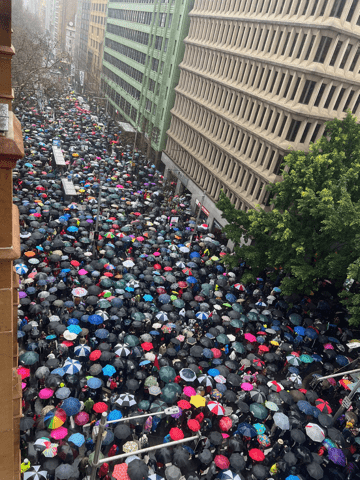
In the heart of Sydney, where the harbour gleams,
A river of souls flows over steel and dreams.
Tens of thousands strong, beneath a weeping sky,
Marching for humanity, where dignity defies.
Flags of hope unfurl in the relentless rain,
Voices rise as one, breaking silence’s chain.
For rights etched in blood, for lives torn asunder,
They cross the iconic bridge, a thunderous wonder.
From every walk of life, the young and the old,
United in purpose, their stories untold.
Chants echo like waves against tyranny’s shore,
Demanding justice, peace, forevermore.
No storm can quell this outpouring of grace,
Humanity’s fire in a sacred embrace.
For the oppressed afar, for the voiceless near,
Sydney’s march whispers: We will not fear.
In the downpour of hearts, a new dawn is born,
Where dignity reigns, and rights are adorned.
Tens of thousands, a tide that won’t be denied,
Humanity’s symphony, in unity amplified.
by Bakchos
Introduction
On August 3, 2025, the iconic Sydney Harbour Bridge became a symbol of collective defiance and compassion as tens of thousands of Australians braved torrential rain to participate in the “March for Humanity.” Organised by the Palestine Action Group Sydney, the event drew an estimated 90,000 participants according to New South Wales police, with organisers claiming numbers as high as 300,000. This massive turnout, despite shocking weather conditions that included heavy downpours and gusty winds, underscored a profound outpouring of humanity. It was not merely a protest, but a vivid demonstration of the best in people: empathy, resilience and a unified call for justice in the face of ongoing atrocities in Gaza.
The march traversed one of Australia’s most recognisable landmarks, closing the bridge to traffic and transforming it into a river of umbrellas, flags, and chants. Participants from diverse backgrounds – families, students, activists, and even notable figures like Julian Assange – marched in solidarity with Palestinians enduring what many international observers describe as a deliberate campaign of starvation and genocide. This essay explores the significance of the march, its context within the broader Israel-Palestine conflict, the absence of antisemitic rhetoric as experienced by attendees, and the irrefutable evidence of Israel’s policies that have led to widespread disbelief in Prime Minister Benjamin Netanyahu’s assertions. At its core, the event was anti-genocide, not antisemitic, highlighting a global shift in public sentiment toward accountability and human rights.
The march represented a pivotal moment in Australian activism, where ordinary citizens came together to voice their opposition to policies that have caused immense suffering. It was a day when the rain-soaked streets echoed with calls for peace, and the bridge, usually a conduit for daily commutes, became a pathway for moral reckoning. The event’s scale and spirit challenged narratives that portray such gatherings as divisive, instead revealing them as unifying forces that celebrate shared human values.
Historical Context: The Roots of the March
To fully appreciate the March for Humanity, it is essential to situate it within the long-standing Israel-Palestine conflict, which has seen renewed intensity since October 7, 2023. The initial attacks by Hamas on Israel resulted in tragic losses, but Israel’s subsequent military response in Gaza has been marked by overwhelming force, leading to over 40,000 Palestinian deaths, including a significant number of children, as documented by health authorities in Gaza. This escalation has provoked widespread international criticism, with allegations of war crimes, including the strategic use of starvation as a method of warfare.
In Australia, demonstrations in support of Palestine have been ongoing since the conflict’s latest phase began, mirroring the country’s diverse population and its tradition of standing against global injustices. From the anti-apartheid campaigns of the 1980s to opposition against the invasion of Iraq in 2003, Australians have a history of mobilising for causes that transcend national borders. Sydney has been a focal point for these efforts, hosting numerous rallies, but the March for Humanity distinguished itself through its unprecedented scale and its choice of venue – the Harbour Bridge – which symbolised connection and unity in a divided world.
The idea to march across the Bridge was met with initial resistance. New South Wales Premier Chris Minns expressed concerns over public safety and potential disruptions, but a Supreme Court ruling just one day before the event cleared the way for it to proceed. This judicial endorsement energised the organisers, who positioned the march as a celebration of humanity’s core principles rather than a platform for conflict. Descriptions from those involved highlighted the anticipation, with many viewing it as a stand against what they saw as complicit government policies that echo support for oppressive regimes.
The conflict’s roots trace back decades, to the establishment of Israel in 1948 and the subsequent displacement of Palestinians, known as the Nakba. Over time, issues like settlement expansion, blockades, and military occupations have fuelled cycles of violence. The current crisis in Gaza, however, has been particularly acute, with the blockade restricting access to essentials like food, water, and medical supplies. International bodies have repeatedly called for humanitarian corridors, but these pleas have often gone unheeded, leading to a situation where famine looms large. The March for Humanity was, in many ways, a response to this inaction, a call from the global south – represented in Australia’s multicultural society – to address the north’s indifference.
The Day of the March: Defying the Elements
August 3, 2025, began under threatening clouds, with weather reports warning of persistent rain that could easily have discouraged participation. Yet, as people assembled at Wynyard station, the adverse conditions only seemed to strengthen their determination. By late morning, the Harbour Bridge was shut down to vehicles, and a vast crowd commenced their journey, voices raised in unison with messages of freedom and an end to violence.
Visual accounts from the day portrayed a dynamic, orderly procession that stretched the length of the bridge. Crowds were described as immense, with people noting that they could neither see the front nor the back of the line, emphasising the sheer volume of attendees. Police estimates pegged the number at 90,000, a figure that, while substantial, was contested by organisers who believed it understated the true turnout. The rain, far from being a deterrent, became part of the story – a testament to the participants’ commitment, much like the unyielding spirit of those in Gaza facing daily hardships.
Attendees arrived prepared, donning rain gear and carrying symbols of solidarity such as Palestinian flags and banners calling for justice. The diversity was striking: parents pushing strollers, seniors walking with canes, and youth leading chants created a mosaic of ages and backgrounds. The atmosphere was charged with emotion, yet peaceful, as marchers moved forward under the relentless downpour. Notable individuals added to the event’s prominence; Julian Assange walked alongside journalists and athletes, drawing attention to the links between freedom of expression and global human rights struggles.
The march’s route over the ridge offered stunning, if stormy, views of the Sydney Opera House and the harbour, but the focus remained on the cause. Chants and songs filled the air, reinforcing themes of empathy and resistance. Despite the weather’s challenges, there were moments of joy – shared smiles, impromptu dances, and acts of kindness like sharing umbrellas – that highlighted the human element at the heart of the gathering.
An Atmosphere of Inspiration and Unity
The true beauty of the March for Humanity lay in its ability to inspire and unite. Contrary to predictions of disorder, the event unfolded with remarkable composure, fostering an environment of upliftment and shared purpose. Participants spoke of a deep sense of connection, where the collective energy created a palpable wave of solidarity. It was a day that showcased the finest qualities of humanity: compassion in the face of suffering, courage against odds, and a refusal to remain silent.
Importantly, eyewitness experiences confirmed the complete absence of antisemitic remarks throughout the march. This observation aligns with the organisers’ strict stance against any form of hate, ensuring the focus stayed on policy critique rather than prejudice. Previous demonstrations had occasionally faced scrutiny for isolated incidents, but this event demonstrated how careful planning and inclusive messaging can prevent such issues. Jewish individuals participated actively, some identifying as anti-Zionist, which further illustrated that opposing specific government actions does not equate to animosity toward a people or faith.
The march’s title, “March for Humanity,” encapsulated its essence, a plea for universal rights, including immediate ceasefires, unrestricted aid delivery, and accountability for violations. It drew parallels to iconic movements like the civil rights marches in the United States or anti-war protests worldwide, where ordinary people effected change through nonviolent action. In Sydney, this translated to a powerful display of multiculturalism, with immigrants from Middle Eastern, Asian and European backgrounds marching alongside Indigenous Australians, all bound by a common ethic of justice.
The event also sparked conversations about broader societal values. In a time when polarisation dominates headlines, the march offered a counter-narrative: that empathy can bridge gaps. Attendees shared stories of personal motivation, some driven by family ties to the region, others by a general commitment to human rights, creating a tapestry of individual narratives that strengthened the collective voice.
Debunking Myths: The March Was Anti-Genocide, Not Antisemitic
One of the most persistent misconceptions surrounding pro-Palestine activism is its alleged overlap with antisemitism. In Australia, there has been a noted increase in antisemitic acts since late 2023, ranging from graffiti to online harassment. However, linking these directly to peaceful protests overlooks the nuanced reality. The March for Humanity served as a model of how advocacy can be conducted ethically, with no evidence of hateful rhetoric emerging from the day.
Critics, including government-appointed officials tasked with monitoring antisemitism, have advocated for restrictions on public demonstrations, deeming them risky. Yet, such positions risk undermining fundamental freedoms like the right to assemble. The march’s success in maintaining a positive tone challenged these views, showing that criticism of state policies can coexist with respect for diverse communities. Accusations of antisemitism are sometimes used strategically to deflect from legitimate concerns about human rights abuses, a tactic that has been critiqued by scholars and activists alike.
At its heart, the march targeted the systemic issues in Gaza, such as blockades and bombardments, rather than any ethnic or religious group. This distinction is crucial and supported by human rights organisations that label Israel’s approach as involving elements of genocide through deprivation. By focusing on these facts, the event reinforced that anti-genocide advocacy is a moral imperative, not an expression of bias.
Expanding on this, it’s worth examining how media portrayals influence public perception. Often, isolated fringe elements are amplified to discredit entire movements, but in Sydney, the overwhelming majority adhered to principles of inclusivity. This not only debunked myths but also set a precedent for future actions, encouraging organisers globally to prioritise anti-hate measures.
The Crisis in Gaza: Deliberate Starvation and Disbelief in Netanyahu’s Claims
The march’s urgency stemmed from the dire situation in Gaza, where policies have led to intentional deprivation, pushing populations toward famine. Experts from the United Nations have decried the use of thirst and hunger as tools of war, pointing to calculated restrictions on water and food supplies. Calculations by Israeli authorities reportedly determine minimal caloric intakes for survival, yet aid deliveries fall far short, resulting in widespread malnutrition.
Humanitarian reports detail heartbreaking cases: children succumbing to starvation, with one documented instance of a teenager wasting away to a fraction of his healthy weight. Food security assessments warn of catastrophic famine levels, where entire communities face existential threats. Aid organisations accuse blockades of systematically hindering relief efforts, despite international calls for access.
Prime Minister Benjamin Netanyahu’s assertions that starvation is not occurring in Gaza are met with scepticism worldwide. Even allies have contradicted these claims, acknowledging the reality of severe hunger. Blame is often shifted to Hamas for aid mismanagement, but evidence from ground reports shows that entry points are arbitrarily closed, and convoys are targeted. Relief agency leaders have labelled this as engineered famine, a violation of international law.
This growing disbelief reflects a broader erosion of trust in official narratives. Public opinion, informed by independent journalism and eyewitness accounts, no longer accepts denials at face value. The march in Sydney amplified this sentiment, with participants demanding transparency and action from their own government, which has maintained ties with Israel amid the crisis.
To delve deeper, consider the mechanics of starvation as a weapon. It involves not just withholding food but destroying infrastructure – farms, water treatment plants, and hospitals – creating long-term vulnerabilities. In Gaza, this has led to diseases exacerbating malnutrition, with children particularly affected. The international community, through resolutions and reports, has urged intervention, but political stalemates persist, fuelling grassroots movements like Sydney’s.
Broader Implications: A Global Call for Change
The March for Humanity’s reverberations extend far beyond Sydney, contributing to a worldwide chorus demanding reform. In Australia, it has intensified scrutiny on foreign policy, prompting discussions about arms exports and diplomatic stances. Politicians face pressure to align with public sentiment, which increasingly favours humanitarian priorities over strategic alliances.
Globally, similar protests in cities like London, New York, and Berlin underscore a shifting paradigm, where social media and instant communication amplify voices from the margins. The march highlights the role of civil society in holding power accountable, reminding leaders that inaction has consequences. It also fosters hope, demonstrating that even in adverse conditions, people can and will mobilise for good.
Furthermore, the march intersects with other issues, such as climate justice and indigenous rights, as environmental degradation in conflict zones worsens humanitarian crises. By bridging these causes, it builds coalitions that strengthen advocacy efforts. Today is a milestone, a moment when humanity’s better angels prevailed, challenging cynicism that people thousands of miles away are too disconnected to care enough to demand change for those who have been denied their own agency.
Sydney’s March for Humanity was an extraordinary display of resolve, protesters defying shocking weather to stand for Gaza’s plight. It was a beautiful, inspiring testament to the best of people, free from antisemitism and cantered on anti-genocide principles. As proof of deliberate starvation mounts, Netanyahu’s denials ring hollow. This event reaffirms the power of unity in pursuing a more just world, where empathy triumphs over indifference.
Such marches influence younger generations. Students and youth, who formed a significant portion of the crowd, are likely to carry this experience forward, shaping future activism. Educational institutions, faced with government regulation whilst endeavouring to support students, can now see the depth feeling in the broader community and could teach about global conflicts and civic engagement. The success in the march’s peaceful tone sets a benchmark for protest organisers, emphasising de-escalation and inclusivity that could be referenced as an example of peaceful protest. And whilst the event disrupted daily life briefly, businesses and tourism adapted, with some even supporting the cause through donations. The economic ripple effect underscores how local actions tie into international dynamics, building further upon constructive protest action.
Conclusion
The March for Humanity enriched Sydney’s identity as a city of diversity and activism. Art installations, music and poetry created during or inspired by the event continue to circulate, preserving the memory and message. It will continue to spark dialogues in homes and workplaces, breaking down barriers and fostering understanding. Participating in such a large-scale event can be transformative, boosting a sense of agency among individuals and communities. For those feeling powerless amid the distant tragedy, the march provided an outlet for expression and solidarity with the people suffering in Gaza. It was more than a protest; it was an affirmation of life, dignity, and hope. Amid the rain, Sydney shone as a beacon toward Eternity, illuminating the path toward peace.
Video tweeted courtesy @MaryKostakidis, 3 August 2025.