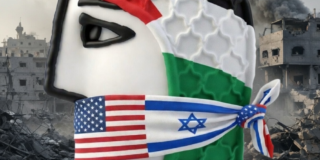
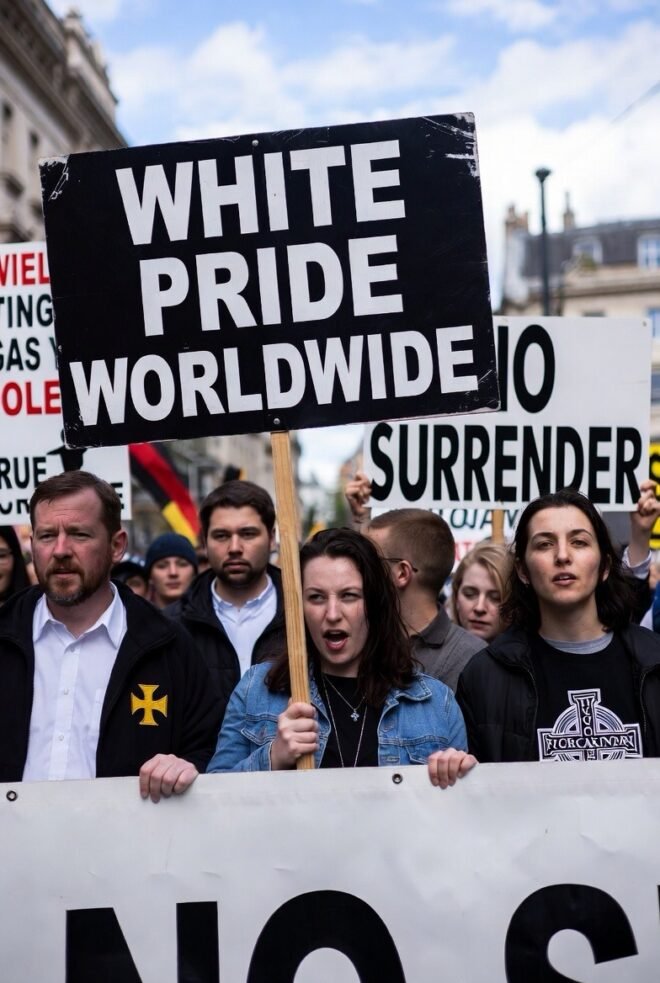
The phrase moral cowardice is rarely employed with the seriousness it demands. It conjures images not merely of political timidity or calculated expediency, but of an ethical failure so profound that it permits the normalisation of hatred and violence within the very communities that should be most vigilant against them. In the contemporary moment, when digital transparency exposes extremes in real time and civic debate is incessantly broadcast and archived, the refusal of political and cultural groups to confront their own radical fringes becomes an epidemic with serious consequences. The phenomena I describe here are not isolated aberrations, but interlocking dynamics that feed one another: neo-Nazi tendencies that find refuge or soft-peddled tolerance within segments of mainstream conservative politics, far-left currents that at times rationalise or excuse violent acts committed in the name of anti-imperialism, and radical settler violence in the occupied territories that is enabled or minimised by elements of the Israeli political establishment. Each of these strands manifests distinct grievances and ideologies, yet they converge in three troubling characteristics: brazenness in expression, the exploitation of others’ atrocities for moral cover, and communal excuses that permit impunity. The result is a self-reinforcing ecosystem of extremism that corrodes democratic norms, undermines social cohesion, and erodes the moral obligations that should guide political communities.
The concept of moral cowardice requires careful definition because it operates at the intersection of politics, ethics, and social psychology. It is not merely political calculation; it is an active choice to prioritise short-term objectives; electoral advantage, organisational unity, media attention, over the fundamental duty to condemn and expel ideologies whose core tenets reject the equality and dignity of others. Moral cowardice is manifest when leaders and institutions repeatedly offer equivocations, euphemisms, or rhetorical deflections rather than unequivocal denunciations of hate. It is visible when party platforms, campus coalitions, or governmental apparatuses treat hatred as a manageable nuisance rather than a toxic force requiring decisive remediation. Over time, those equivocations compound. What begins as a tolerated fringe becomes a legitimised presence. Public discourse shifts; boundaries of acceptable rhetoric widen; violent acts are reframed as understandable reactions or even as legitimate forms of political expression. When this dynamic plays out across different ideological terrains, right, left, and nationalistic settler movements, the synergy among them becomes lethal. Each feeds on the outrage generated by the others, repurposing that outrage as evidence of some larger conspiracy, grievance, or moral justification that absolves its adherents of responsibility.
In examining the phenomenon on the right, it is important to recognise that neo-Nazism and white supremacist ideology did not materialise abruptly. They draw on long historical currents of racial pseudo-science, nativist imaginaries, and exclusionary conceptions of national belonging. What is new in our era is the degree to which these ideas are being aired publicly and the speed with which they can spread on digital platforms. Where once such views might have been confined to marginal publications and secretive forums, today they appear in channels that intersect with mainstream conservative media, youth political organisations, and the social networks that structure political mobilisation. The problem intensifies when leading figures and institutions, whether through deliberate amplification or lazy tolerance, provide those fringe actors with oxygen. Every instance in which a public figure hosts or platformises an individual with deeply antisemitic, racist, or Holocaust-denying views, every case in which a party leader dismisses, jokes about, or minimises extremist rhetoric, contributes to an atmosphere in which hatred can organise and flourish.
Equally troubling is the phenomenon of opportunistic recruitment. Young people, seeking ideological coherence or belonging, may swap the social media feeds of mainstream political influencers for the more extreme echo chambers where identity is forged in binary terms and enemies are readily identified. Youth wings of political parties have historically been a seedbed for future leadership; when those spaces become breeding grounds for extremist sentiment, parties that fail to intervene ensure that such attitudes will only become more entrenched. The moral failure here is multidimensional: it implicates individuals who propagate hateful tropes, the gatekeepers who decide who gets airtime and legitimacy, and the communities that rationalise or ignore the problem for fear of discord. The cumulative effect is to erode public trust and to render democratic politics less hospitable to pluralism.
Examining parallel dynamics on the progressive left requires a different but equally critical lens. The roots of left-leaning advocacy for oppressed peoples, including Palestinians, stem from a long tradition of solidarity with anti-colonial struggles and a commitment to human rights. That moral impulse has produced vital political progress over the decades. Yet it also carries the danger of binary framing, where all actions by an opposing party are construed as embodiments of evil, and where calls for solidarity can morph into uncritical support for actors who employ terror or endorse genocidal aims. When advocacy becomes identification rather than analysis, solidarity can inadvertently excuse or normalise violence. This becomes particularly dangerous when the distinction between opposition to a state’s policies and hatred toward a people collapses. The transformation of anti-Zionist sentiment into antisemitism can be subtle at first: rhetorical tropes that invoke collective blame, conspiratorial talk about Jewish influence, or the erasure of Jewish self-determination gradually cross a line that some activists either do not see or choose not to police.
The moral failing in these contexts often takes the form of selective outrage and theoretical contortions that justify complicity. When organisations and leaders of the left decline to denounce or to clearly and consistently separate legitimate critique of state policy from endorsement of terror, they enable extremists to hide behind the language of resistance and liberation. This equivocation is particularly evident when fringe groups or demonstrators cheer or otherwise validate acts of violence carried out by militant organisations while claiming to be motivated solely by human rights. The human toll of such rationalisations is not merely rhetorical. Jewish students who feel targeted on campus, communities that face harassment, and people whose identities become proxies for foreign policy grievances all bear the cost when moral clarity is surrendered to political expediency.
Turning to the context of Israel and the occupied territories, the issue of radical settler violence presents a stark example of how state and non-state actors can collude, whether deliberately or through institutional negligence, to create a permissive environment for brutality. Settler movements that envision an expanded state controlled exclusively by one ethno-religious community often employ tactics that range from legal restriction and economic pressure to physical violence and dispossession. When state institutions charged with upholding law and order fail to investigate and prosecute these acts consistently, the signal is unmistakable: violence against a particular population is tolerable. The erosion of accountability may occur through overt political protection, through prioritising coalition stability over the rule of law, or through narratives that frame settler actions as patriotic and defensive rather than criminal and abusive.
This dynamic of impunity deepens the moral collapse because it transforms individual acts of violence into normalised state practice. Young settlers who are socialised to view Palestinians as obstacles rather than neighbours come to see violence as instrumentally valuable, while law enforcement actors who repeatedly file reports without indicting perpetrators contribute to a cycle of fear and resentment. The moral price paid by a democratic society that permits such practices is enormous: citizenship is hollowed out, minority rights are subordinated to ideological projects, and the state’s legitimacy as a protector of all its residents is compromised. When such practices are then invoked by external actors, whether to justify retaliatory terror or to stoke international condemnation, the feedback loop only accelerates.
The interplay among these three domains, neo-Nazi tendencies on the right, pro-Hamas sympathies on portions of the left, and radical settler violence in the Israeli context, creates a unique ecology of mutual exploitation that sustains violence and mutual radicalisation. Each movement, in its own rhetoric and through digital amplification, seizes upon the most sensational actions of the others to validate its own narrative of victimhood or moral certainty. Neo-Nazi actors point to Israeli military operations and settler violence as evidence of long-standing Jewish malevolence, thereby justifying renewed antisemitic fervour. Radical settlers cite militant attacks carried out by Hamas to morally license assaults on Palestinians, framing them as necessary self-defence or pre-emptive deterrence. Supporters of Hamas point to settler violence and state repression as indispensable predicate for their resistance, thereby obscuring the moral agency and culpability of the militants themselves. This triangular exploitation is less a set of direct alliances than a shared willingness to instrumentalise suffering and to invoke the worst actions of the other as evidence that all moral claims are invalidated.
Digital platforms accelerate this dynamic in consequential ways. Social media normalises spectacle, rewards outrage and privileges the most emotive content. Videos of violent incidents, graphic images of suffering, and incendiary rhetoric spread quickly and without context, and they are often reframed in ways that detach them from their local and historical nuances. A clip of a settler attacking a Palestinian farmer becomes for distant audiences a symbol of a genocidal policy; a narration of Hamas’s brutalities becomes an abstractive proof of an irredeemable enemy. Far-right influencers use evidence of state repression abroad to stoke domestic xenophobia and to argue that diasporic or transnational communities are existential threats. Far-left influencers, in turn, cherry-pick footage and testimonies to construct narratives of absolute victimhood that excuse violence. The net effect is that digital ecosystems allow extremist messages to be amplified selectively, making it harder for moderates to interpose nuance and for institutions to demand accountability.
The normalisation of hatred through such channels is not merely a rhetorical problem; it has tangible, measurable effects on public safety, electoral politics, and the capacity of institutions to mediate conflict. The spread of antisemitic, racist, or Islamist extremist content contributes directly to spikes in hate crimes and threats; it skews public opinion by framing debates in binary moral terms; and it corrodes trust in institutions that appear either complicit or impotent. Democracies that cannot maintain the integrity of civic discourse risk becoming captive to an ethos in which fear and contempt replace deliberation and mutual respect. Moral cowardice, in this sense, becomes a structural feature of a political system, not merely an episodic failure.
Confronting this epidemic requires both conceptual clarity and practical courage. Conceptually, the distinction between legitimate political expression and hate-motivated extremism must be reflexively maintained. Critique of state policies, including vocal support for oppressed peoples, must be protected as part of democratic discourse, but it must also be unambiguous in its rejection of collective blame and in its refusal to rationalise terrorism. Similarly, institutions and leaders on the right must be willing to excise and ostracise individuals and groups who deploy racist and antisemitic rhetoric, even when doing so risks fragmenting coalitions. The calculative decision to tolerate a fringe for the sake of an electoral majority is ultimately self-defeating, because it undermines the moral coherence and credibility of the broader movement.
Practically, the fight against moral cowardice requires a multipronged strategy. Political parties must develop clear standards and enforce them with consequences that are visible and meaningful. Universities and civil society organisations must cultivate cultures in which dissent is robust but constrained by codes of conduct that protect vulnerable communities. Law enforcement and judicial systems must be strengthened to ensure that crimes against marginalised populations are investigated and prosecuted impartially. Media organisations must commit to responsible amplification; they must be wary of amplifying voices that spread hate while continuing to cover extremist movements critically and comprehensively. Digital platforms must be pressured to refine content moderation policies that are attentive to context and that prioritise the prevention of coordinated harm without inappropriately curtailing legitimate expression.
There is also a moral dimension to the remedies that cannot be reduced to technical fixes. Communities must renew commitments to empathy and historical literacy. Teaching curricula that contextualise the histories of persecution, colonisation, and displacement can inoculate younger generations against simplistic narratives of us-versus-them. Intercommunal dialogues that are not tokenistic, but genuinely interrogate grievances and fears can erode the mythologies that fuel extremist recruiting. Religious and civic leaders must take the risk of moral clarity, publicly condemning the abuse of religious narratives to justify violence and articulating visions of pluralistic belonging that are rooted in dignity rather than in exclusion.
The political calculus must change because the long-term costs of tolerating extremism vastly exceed the perceived short-term gains of quieting internal dissent. Parties and movements that tolerate hate for the sake of unity may succeed in short-term objectives, but they will ultimately hollow out their own legitimacy. Moreover, the global interconnectedness of these movements makes local tolerances potentially global threats. Radicalisation in one region can reverberate across continents, creating sympathies, money flows, and ideological justifications that transcend borders. Policies and practices that might appear to be local disciplinary matters must be viewed through the lens of global civic responsibility.
Resistance to moral cowardice also demands bravery at the individual level. Whistleblowers who expose extremist sympathies within organisations, citizens who call out hateful rhetoric in their communities, and journalists who persistently report on abuses despite backlash are the front line of defence for democratic societies. Their courage must be recognised and protected. Political leaders who risk short-term backlash to make principled stands deserve support from the electorate and from civil society institutions. The moral psychology literature teaches us that norms are shaped by perceived rewards and punishments; societies that reward clarity and sanction equivocation will gradually shift behaviour in healthier directions.
It is crucial to acknowledge the complexity and difficulty of disentangling legitimate grievances from extremist exploitation. Many people who protest state violence, advocate for national self-determination, or challenge economic injustices do so for sound moral reasons. The moral obligation is not to silence these voices but to insist on the universality of human dignity and to reject any ideology that instrumentalises suffering to justify violence. The preservation of moral clarity does not mean simplifying history or denying the agency of communities; it means refusing to offer blanket absolution to actors who commit atrocities in the name of righteous causes.
One of the most pernicious aspects of the epidemic of moral cowardice is its gradualness. Erosion seldom happens in a single dramatic moment. Norms weaken incrementally as more exceptions are tolerated and as rhetorical boundaries are redrawn. That gradualness is precisely what makes the phenomenon so insidious: it allows actors to claim plausible deniability while underlying structures shift. This is why vigilance, institutional memory, and sustained civic pressure are indispensable. It is also why education and cultural work – including art, literature, and public history – matter profoundly. They shape the narratives through which societies understand themselves and provide the imaginal resources needed to resist simplification and hatred.
Responding effectively to these epidemic calls for alliances that transcend conventional political alignments. Opposition to antisemitism, racism, terror, and settler violence cannot be the exclusive domain of one ideological camp. Such harms affect the moral health of any pluralistic society. Thus, principled coalitions that include conservatives, progressives, religious leaders, and civic activists must be cultivated around the shared commitment to human dignity and the rule of law. These alliances need not collapse into bland centrism; they can maintain principled disagreement on policy while uniting against the corrosion of civic norms and the exploitation of violence for political gain.
Finally, confronting moral cowardice requires a renewed emphasis on leadership that models moral responsibility. Leaders who speak plainly, who accept the reputational and political costs of principled stands, and who institutionalise ethical standards into the practices of their organisations provide the decisive counterweight to the incentives that produce cowardice. Moral leadership is rare because it is difficult and because it often entails short-term sacrifice. Yet without it, the cycle of mutual exploitation among extremists will continue to metastasise.
The epidemic of moral cowardice is not an inevitable fate. It is a condition sustained by choices – choices by journalists who amplify harmful voices, choices by political leaders who prioritise electoral arithmetic over ethical clarity, and choices by communities that rationalise or dismiss the harm done by their own fringes. Recognising the problem is the first step toward reversing it. The next steps require institution-building, brave leadership, and a civic culture that prizes moral clarity as highly as political success. If societies value democratic norms and human dignity, then confronting and expunging extremism must be non-negotiable across the political spectrum.
The stakes are profound because the alternative is a polity in which hatred is normalised, in which violence becomes an acceptable instrument of political expression, and in which the bonds of mutual respect that hold diverse communities together are irreparably damaged. The task, then, is not simply to oppose particular instances of hatred, but to restore a political imagination that understands inclusion as strength and moral clarity as imperative. This restoration requires difficult conversations, sustained institutional reforms, and the courage to prioritise ethical responsibility over the expediencies of the moment. Only by confronting the epidemic of moral cowardice can societies hope to halt the mutual exploitation of extremism and to reclaim the moral foundations of civic life.