
Introduction
In the landscape of American history, few events reveal the raw, institutional ferocity of racism with as much clarity as the Tulsa Race Massacre of 1921. In less than 24 hours, a thriving Black community in Tulsa, Oklahoma, Greenwood, widely known as “Black Wall Street”, was systematically attacked, looted, and burned by white mobs aided by city forces. Scores were killed, thousands displaced, businesses and homes turned to ashes. For much of the 20th century, the episode was omitted from textbooks, obscured by silence and deliberate erasure. Today, as survivors and descendants demand recognition and repair, the massacre’s legacy reverberates in the racial wealth gap, policy failures, and the moral fabric of the nation.
This post is an extended look at that legacy. I’ll walk through the historical context that gave rise to Greenwood’s prosperity, the tragic spark in the Drexel Building elevator, the 18 hours of violence, the immediate and long-term aftermath, the courageous resilience of Greenwood residents, and the ongoing debates about reparations and remembrance. At the end I’ll share ways you can learn more and act – because remembering is only the first step toward justice.
Historical Context: Greenwood’s Rise amid Racial Tensions
To understand why Greenwood flourished and why it became a target, we must look at the cultural and political climate of the early 20th century.
Greenwood emerged in the wake of the land rushes and oil boom that made Tulsa a wealthy, rapidly growing city. Segregation laws and social practices kept Black Tulsans concentrated in a small district north of the Frisco railroad tracks. In that space, necessity bred innovation. Black entrepreneurs built hotels, newspapers, theatres, restaurants, shops, barbers, doctors’ offices, and banks. Money recirculated inside the community, often many times before leaving, creating a potent, self-sustaining economy.
This economic success was both remarkable and precarious. Black World War I veterans returned home demanding respect after fighting for democracy overseas, and the Red Summer of 1919 had already exposed the country’s propensity for racially motivated violence. The Ku Klux Klan enjoyed a rebirth in the 1920s, and white resentment of Black prosperity festered. In that mood of fear, jealousy, and entitlement, Greenwood’s achievements – symbolised by figures such as OW Gurley and JB Stradford – came to be seen by many white Tulsans as a threat.
The spark that ignited the massacre grew from rumour, press sensationalism, and a long-standing willingness among white communities to resort to mob violence with impunity.
The Precipitating Incident: An Elevator, a Rumour, a Rallying Cry
On Memorial Day, May 30, 1921, Dick Rowland, a 19-year-old Black shoe shiner, stepped into an elevator in the Drexel Building on South Main. The operator was Sarah Page, a 17-year-old white woman. Accounts differ, but the most plausible version is that Rowland accidentally stepped on Page’s foot when the elevator lurched; she screamed, and Rowland, alarmed by the potential for misunderstanding, grabbed her arm before leaving.
What followed was a rapid mutation from minor misstep to life-threatening accusation. The Tulsa Tribune’s next-day headline, “Nab Negro for Attacking Girl in Elevator,” and an especially inflammatory editorial (later reported but physically lost) stoked white anger. Rumours of an attempted sexual assault spread through the white community, and by the evening of May 31 a large, angry crowd had gathered outside the Tulsa County Courthouse where Rowland had been taken for his protection.
It is crucial to remember how common and dangerous these rumour-driven allegations were in an era when white accusations against Black men, especially those involving white women – could, with little scrutiny, lead to lynchings., Sheriff Willard McCullough, mindful of the recent lynching of Roy Belton and the likelihood of mob violence, refused to hand Rowland over. A series of encounters between Black residents, many of them armed World War I veterans, who came to offer protection, and the swelling white crowd, eventually produced a scuffle. A shot rang out in the darkness. Whether accidental or intentional, it triggered an organised, premeditated wave of violence against Greenwood.
The Massacre Unfolds: 18 Hours of Terror
From approximately 10:30 p.m. on May 31 through the morning of June 1, 1921, Tulsa endured an assault that resembled military action more than a spontaneous riot.
The initial shot outside the courthouse sent a scared, outnumbered group retreating toward Greenwood, pursued by a white mob. Over the next several hours, violence spread. White rioters – some deputised by police and given brute orders – conducted shooting and looting missions throughout the Black district. Eyewitnesses described neighbourhood-to-neighbourhood assaults: homes and businesses looted, families fired upon while fleeing, and arson set deliberately along Greenwood’s commercial heart.
Accounts of machine guns mounted on vehicles and reports, though debated among historians, of airplanes flying overhead, dropping incendiary materials or firing, contributed to the sense that Greenwood was being treated as an enemy target. Whether or not the latter is conclusively proven, many survivors reported seeing aircraft during the assault, and the scale of organised destruction left little doubt that the attackers were equipped, coordinated, and sanctioned.
By dawn, more than 35 city blocks had been destroyed. Nearly 1,256 homes were burned, along with churches, schools, the Black-owned hospital, two newspapers, theatres, hotels, and scores of businesses. The violence was indiscriminate and brutal. Respected professionals, doctors like A.C. Jackson, business leaders, and small property owners, were murdered or had their livelihoods stolen. The National Guard eventually declared martial law, not primarily to protect Greenwood’s residents but to restore “order,” which tragically meant disarming and detaining Black residents even as white rioters faced no prosecution.
Human and Material Toll: Counting Lives, Counting Losses
Official early counts of the dead were small, 36 recorded by the Oklahoma Bureau of Vital Statistics, but historians and later commissions have concluded that the real toll is far higher. The 2001 Tulsa Race Riot Commission estimated between 100 and 300 deaths, largely Black residents. Many bodies were reportedly disposed of in ways that obscured the scale of the massacre: some were thrown into the Arkansas River, others buried in unmarked graves. Researchers and advocates have continued searching for mass graves for decades; excavations and renewed investigations in recent years have revived those efforts.
The material losses were equally catastrophic. The Red Cross and other relief agencies documented enormous property damage: more than a thousand homes destroyed, hundreds of businesses razed, and millions of dollars in losses (an amount that translates to tens or hundreds of millions in today’s dollars). Insurance companies denied many claims, citing “riot” exclusions in policies. City and state officials refused to accept responsibility. An all-white grand jury quickly absolved white perpetrators of criminal responsibility and blamed Black residents instead.
Perhaps the most damaging immediate consequence was the crushing of intergenerational wealth. Many Greenwood residents kept savings and valuables in their homes rather than trust them to white banks. When houses were burned and personal documents destroyed, titles, savings, and years of accumulated capital vanished in a single night.
Immediate Aftermath: Detention, Relief, and the Start of a Cover-Up
By the morning after the attack, Greenwood looked like a battlefield. Martial law meant that, while an entire Black neighbourhood lay in ashes, Black Tulsans were rounded up and placed in makeshift detention centres: the fairgrounds, convention halls, and horse stables served as holding pens. Thousands were left homeless. The Red Cross, under the leadership of people such as Maurice Willows, provided immediate food, shelter, and medical care, but the relief could not replace what had been destroyed.
Dick Rowland was quietly released and escorted out of town; charges were dropped. No white participants were held to account. Insurance claims were denied en masse. The local press and official records were scrubbed or disappeared. Perhaps most damaging was that the city government and many white Tulsans attempted to make the massacre a problem of Greenwood’s “moral failings” or to recast it as a “riot” rather than a coordinated attack with official acquiescence. For decades, the public record in Tulsa downplayed or erased the truth.
Rebuilding and Resistance: Greenwood’s Remarkable Comeback – and the Limits of Recovery
Even amid trauma and systemic obstruction, Greenwood’s residents showed extraordinary resilience. Within months and years, many rebuilt, reopening businesses and churches. By the mid-1920s Greenwood had once again become a vibrant commercial district, boasting hundreds of businesses. The Stradford Hotel, which had been a landmark, was partially reconstructed; many merchants returned to try to rebuild livelihoods and community networks.
Yet rebuilding could not replace what was lost. Much of the economic base had been permanently eroded. Black homeowners who had lost property and wealth rarely recovered full economic standing. The city’s attempts to rezone Greenwood for industrial use and to impose reconstruction rules, ostensibly for safety but practically designed to make rebuilding prohibitively expensive, were legal battles that drained limited community resources. And later public policies, including discriminatory urban renewal, the construction of I-244, and redlining, inflicted further damage on North Tulsa’s economic prospects.
Long-Term Effects: Intergenerational Trauma and Economic Dislocation
The massacre’s consequences did not end with the ashes. The destruction of property, loss of documents, denied insurance claims, and subsequent policy decisions combined to create an enduring hole in Greenwood’s capacity to pass on wealth and opportunity.
Research linking the massacre to measurable economic decline among Black Tulsans is striking. Compared to similar cities, Tulsa experienced long-lasting declines in Black homeownership, occupational status, and earnings. The resulting racial wealth gap is part of a national story that the Tulsa events make painfully local and personal.
Intergenerational trauma, psychological and cultural, also shaped community life. For decades, survivors’ silence, whether self-imposed or enforced through fear of retaliation or shame, allowed the trauma to fester privately. Only generations later did many families begin to share stories publicly, and the absence of public acknowledgment compounded the wound.
Modern Recognition and the Quest for Reparations
For most of the 20th century, Tulsa’s massacre remained a suppressed chapter. It wasn’t until the 1970s and later that scholars and journalists, along with courageous survivors, began bringing the story back into public discourse. The 75th anniversary in 1996, the work of historians like Scott Ellsworth, and the efforts of community archives and museums rekindled attention. In 1997 the state established an investigative commission which, after years of research, issued a 2001 report recognising the scale of the killings, the property losses, and the role of public officials. It recommended measures including direct payments to survivors and descendants, scholarships, and investments in North Tulsa.
Implementation stalled. Many reparations advocates point to systemic legal and political barriers: statutes of limitations, legal doctrines barring retroactive liability, and entrenched resistance to acknowledging collective responsibility. Several civil suits by survivors or descendants have been dismissed on technical grounds.
Still, progress has occurred. Oklahoma now requires teaching about the massacre in public schools; museums and memorials, most prominently Greenwood Rising, offer visitors context and artefacts. The state and city have held commemorations and funded some scholarship programs for descendants. National attention surged with the 100th anniversary in 2021 – President Biden publicly acknowledged the massacre, and renewed searches for mass graves and prosecutorial reviews were launched in earnest.
Debates around reparations persist. Proposals vary in scope and ambition: from a trust fund targeted to descendants for housing, education, and business development, to broader local economic revitalisation efforts, to federal legislative solutions such as HR 40 (a bill calling for a national study of reparations) that could provide a blueprint for more systemic redress. Economists and advocates have floated concrete figures for compensation and targeted investments; whether political will match moral claims remains unresolved.
Lessons for Racial Justice Today
The Tulsa Race Massacre forces uncomfortable questions about how a democratic society can allow – and even enable – domestic terror against a subset of its citizens. Similar episodes, the Wilmington insurrection (1898) and the Rosewood Massacre (1923), among others, reveal patterns: Black prosperity spurs white fear; white violence is often state-aided or state-ignored; legal and cultural instruments are used to erase accountability.
From that history we can extract policy lessons relevant today:
• Truth-telling matters. Comprehensive, state-supported truth commissions help document abuses and create an evidentiary basis for redress.
• Repair must be material. Financial compensation, investments in housing, education, and entrepreneurship, and other structural remedies are necessary complements to apologies and memorialisation.
• Education is prevention. Mandatory curricula that honestly teach episodes like Tulsa’s help interrupt denial and cultivate civic responsibility.
• Institutional reform is essential. Police accountability, equitable urban planning, and anti-discrimination enforcement help limit the institutional conditions that allow racial violence to recur.
Personal Reflections
I’ve long believed that history is not merely something to be learned; it’s something that calls us to shape the present. The story of Greenwood and its people is both heartbreaking and inspiring, an indictment of systemic violence and a testament to human resilience. When I read survivor testimonies, stories of parents burning photographs to hide family histories, of children dragged to safety and never returning home, I feel the moral imperative to act.
Reading and Resources
Books and scholarly works:
• Scott Ellsworth, The Ground Breaking: An American City and Its Search for Justice
• Tim Madigan, The Burning: Massacre, Destruction, and the Tulsa Race Riot of 1921
• Mary E. Jones Parrish, Events of the Tulsa Disaster (1922)
Reports and archives:
• The 2001 Report of the 1921 Tulsa Race Riot Commission
• Greenwood Rising Museum (exhibits and educational resources)
• Tulsa Historical Society archives
Conclusion: Remembering to Heal
The Tulsa Race Massacre is not merely a tragic footnote; it is a structural example of how economic envy, radicalised fear, media incitement, and complicit institutions can combine to produce catastrophic harm. Greenwood’s story – of flourishing black enterprise, targeted annihilation, and dogged resilience – forces us to confront uncomfortable truths about American history and our collective obligations moving forward.
Remembering the massacre is not enough. Memory must be married to action: truth commissions, reparative economic investments, educational reforms, and community-driven healing. Whenever we meet again with debates about equity, policing, urban policy, or reparations, let Greenwood’s story inform our moral compass. The victims and survivors deserve not just our condolences but our concrete efforts to repair harm and ensure such violence never occurs again.
If you found this post meaningful, please share it with a thoughtful caption, support local Tulsa efforts where possible, and consider following organisations doing long-term work to restore Greenwood’s prosperity and honour its people. History is a teacher – if we listen, we can do better.
Vale Viola Fletcher
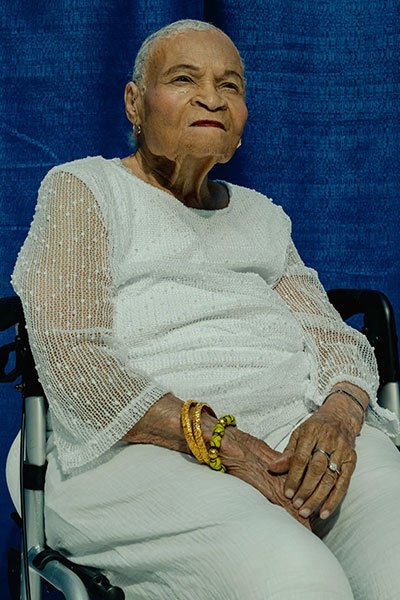
Viola Fletcher, one of the last two known survivors of the 1921 Tulsa Race Massacre and a plaintiff in a symbolic lawsuit seeking reparations for the attack – one of the worst episodes of racial violence in American history – has died. She was 111.