
Introduction
Few ideas have been more potent in shaping the modern world than the set of principles that coalesce under the name “Western values.” Born from an inheritance of Greek rationalism, Roman legalism, Judeo-Christian moral claims, and Enlightenment commitments to reason and rights, these values created a political and cultural grammar that prizes individual liberty, the rule of law, open inquiry, and the accountability of power. For much of its existence, the United States presented itself, sometimes imperfectly, sometimes hypocritically, as the most convincing embodiment of that grammar: a constitutional republic that promised life, liberty, and the pursuit of happiness to an enormously diverse population.
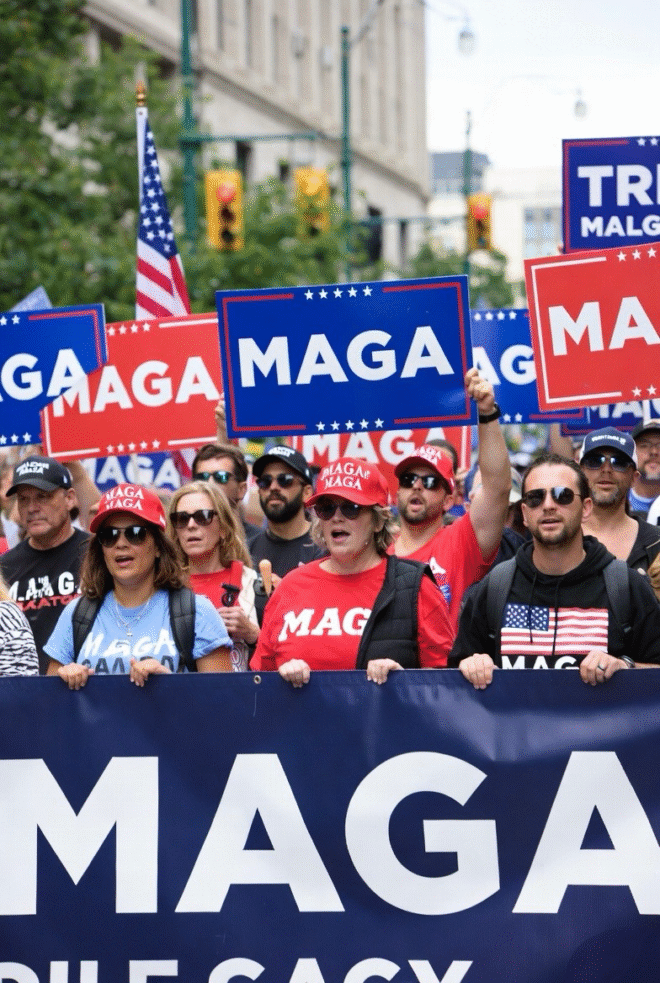
Yet in recent years, a palpable unease has settled over the country. Political life has hardened into antagonistic camps; civic institutions that once commanded broad respect now draw suspicion from large segments of the population; economic mobility has plateaued even as wealth concentrates at the top; debates about identity, immigration, and education increasingly fracture public life; and malign foreign influences exploit and amplify existing divisions. Taken together, these trends point not merely to discrete policy failures but to a deeper drift away from the norms that undergird Western liberalism.
This essay examines why the trajectory of contemporary American politics and culture presents an existential challenge to the Western ideals that historically animated the country. It aims to be diagnostic rather than merely polemical: to describe the phenomena, explain why they clash with core principles, and propose paths by which civic life might be reinvigorated. The goal is neither to romanticise an unblemished past nor to cast moral judgments in the language of partisan victory. Rather, it is to show how certain tendencies, left unchecked, threaten to hollow out the civic and institutional capacities that make pluralist democracy possible.
Defining Western Values in the American Context
Before assessing the contradictions, we must be explicit about what we mean by Western values and how they have historically manifested in the American project. The list below is not exhaustive but captures the pillars that make the argument coherent:
• Democracy and civic participation: Government legitimacy rests on consent, representation, and mechanisms that make popular will actual and accountable.
• Rule of law: Laws govern, not men; the judiciary is impartial, and even the powerful are subject to legal constraints.
• Individual rights and freedoms: Freedom of speech, religion, assembly, and the press are protected as essential conditions for human flourishing.
• Equality and meritocracy: Formal equality before the law and a social structure that rewards ability and effort, while offering pathways for social mobility.
• Secularism and pluralism: Separation of church and state, and the accommodation of diverse beliefs and identities within a shared civic order.
• Economic freedom tempered with social responsibility: A market economy that encourages innovation, but with redistributive and regulatory mechanisms to prevent gross inequities.
• Rational discourse and truth-seeking: A culture of deliberation grounded in evidence, critical thinking, and an openness to changing one’s mind.
These principles are not immutable laws of nature, nor are they universally and uniformly applied. America has a fraught history – slavery, segregation, displacement of indigenous peoples, and discriminatory practices that contradicted its ideals. Much of its moral and political progress has involved corrective measures – legal reforms, social movements, and institutional redesigns meant to bring practice closer to principle.
Nevertheless, the value framework listed above provides a set of expectations against which contemporary developments can be judged. When politics, institutions, and social life persistently drift from these norms, the consequences are not merely cosmetic: the very legitimacy of the system is put at risk, and with it the capacity of the polity to govern itself effectively and justly.
Political Polarisation and the Decline of Reasoned Discourse
One of the most visible and corrosive trends is deepening political polarisation. Healthy democratic life depends on citizens recognising one another as compatriots with competing views – rivals in policy but fellow participants in a shared project. When polarisation hardens into moralised enmity, compromise becomes suspect, the normal give-and-take of politics ceases, and the public realm fragments into separate media ecosystems and social spheres.
The harm unfolds in several interrelated ways. First, polarisation erodes trust. Democratic institutions – courts, legislatures, administrations – rely on a baseline of reciprocal legitimacy. When large groups believe that opponents do not merely disagree on policy but are illegitimate actors seeking to destroy the polity, procedural norms lose their force. Judicial decisions are dismissed as partisan, electoral outcomes are rejected as fraudulent, and oversight mechanisms become tools of retaliation rather than guardians of accountability.
Second, polarisation short-circuits deliberation. Western thought, especially since the Enlightenment, emphasises the testing of ideas through argument, evidence, and critique. When politics becomes performative and tribal, incentives shift from truth-seeking to signalling: politicians and activists cultivate loyal audiences by offering narratives that affirm identity and grievance rather than by engaging with complexity. The result is policy stagnation on pressing issues that require technical competence and cross-partisan cooperation – budgetary management, infrastructure, immigration reform, and climate mitigation, to name a few.
Third, polarisation increases the risk of political violence and authoritarian turn. When the mechanism for addressing disagreement, peaceful competition for votes, is delegitimised, actors may resort to extra-legal means. Historical and contemporary comparisons demonstrate that polarisation is a precondition for democratic erosion; it opens space for demagogues who promise decisive action in exchange for the suspension of constraints.
Addressing polarisation requires changes in political incentives and civic culture. Electoral reforms that reduce winner-take-all stakes, decentralised governance that localises conflict where compromise is more feasible, media reforms that reduce economic incentives for sensationalism, and civic education focused on critical thinking and the value of pluralism can all help. Crucially, political leaders and intellectuals must model humility and recognition of legitimate disagreement rather than treating opponents as existential threats.
Immigration, Integration, and the Fragility of Pluralism
Immigration has long been a regenerative force in American life. Immigrants have enriched the economy, revitalised communities, and animated cultural renewal. At its best, immigration is consistent with Western pluralism because newcomers are expected to integrate into a civic order that respects rights, observes the rule of law, and participates in democratic life.
Yet contemporary debates reveal strains in the integration compact. Rapid demographic change, uneven economic incorporation, and uneven institutional support for assimilation have generated anxieties. The concern is not with newcomers per se, but with the perceived breakdown of shared civic norms. When distinct communities exist in parallel, minimising contact and mutual understanding, social cohesion frays. This dynamic is exacerbated when political entrepreneurs exploit fears about cultural displacement for electoral advantage, or when public institutions fail to provide language instruction, civics education, or pathways to full participation.
Compounding these structural challenges are cultural clashes over values: gender roles, religious practices, public comportment, and schooling. These differences are normal in a plural society, but they become problematic when one side insists that the other’s private or religious convictions must be privileged in public policy or when appeals to cultural difference excuse violations of universal human rights or civic standards.
Western pluralism is preserved when integration emphasises both respect for diversity and a commitment to shared civic rules. Policies that support economic inclusion, English-language acquisition, civics education, and clear legal pathways to citizenship reinforce the expectations of mutual adaptation. Conversely, demonising immigrants or demanding unconditional cultural conformity both miss the mark: the former deepens alienation; the latter undermines liberal commitments to conscience and association.
Economic Inequality and the Betrayal of Meritocracy
Economic dynamics are central to the viability of any political order. For much of the twentieth century, Western democracies sought to reconcile market dynamism with social protections: capitalist incentives for innovation, coupled with safety nets, public investments, and regulatory frameworks to reduce gross inequities. The American Dream rests on the belief that effort and talent can yield upward mobility, not on assurances of equal outcomes.
In recent decades, however, rising inequality, declining social mobility, and the concentration of wealth have put stress on that bargain. Technological change, globalisation, and policy choices have produced winners who accumulate outsized political influence and losers who perceive that the rules are rigged. The political consequences are profound. Perceptions of unfairness fuel populist resentments on both the left and the right: the left demands stronger redistribution and public ownership; the right insists on protectionism, nativism, or authoritarian leadership. Both trends can produce policy distortions that run counter to Western norms: either an over centralised state that suppresses individual liberties or an unregulated market that corrodes common goods.
Meritocracy, as a principle, depends on reasonably open opportunity structures. When access to education, healthcare, and networks is contingent on socioeconomic status, claims of formal equality ring hollow. This is not merely moral criticism; it is pragmatic. Democracies where large swaths of the population believe the system is unfair are more prone to instability and less likely to generate the human capital needed for economic competitiveness.
Restoring the meritocratic promise requires policy attention across multiple domains: progressive taxation that funds public goods, investments in early childhood education and vocational training, robust anti-monopoly enforcement, and social insurance programs that lock in basic security without extinguishing incentives. Importantly, such reforms must be structured to preserve individual rights and not to concentrate arbitrary bureaucratic power.
The Erosion of Institutions and the Rise of Cynicism
Institutions, courts, the civil service, the press, universities, are the structures through which democratic norms are translated into practice. They mediate between private interests and public decision-making, sustain expert knowledge, and provide arenas for deliberation. When institutions erode, whether through capture, neglect, politicisation, or delegitimisation – the machinery of governance falters.
Public cynicism about institutions is itself destabilising. When citizens assume that judges are partisan, that journalists manufacture narratives, or that academics indoctrinate rather than educate, they are less willing to defer to institutional judgments. This cynicism can become a self-fulfilling prophecy: as institutions lose authority, bad actors find it easier to subvert them; as subversion occurs, cynicism grows.
The politicisation of normally nonpartisan agencies is particularly damaging. When inspectors general, regulatory commissioners, or public health officials become seen as instruments of factional advantage, the impartial application of rules becomes less credible. Likewise, the fragmentation of media into echo chambers undermines common knowledge: in many debates, participants now inhabit different factual universes, making consensus or compromise practically unattainable.
Rebuilding institutional trust demands a combination of structural reforms and cultural renewal. Structural measures include stronger insulation of certain positions from partisan turnover, transparent appointment processes, performance accountability that is evidence-based, and legal protections against undue influence. Cultural renewal requires elites, political, media, and academic, to recommit to norms of honesty, restraint, and professional ethics. Above all, institutions must deliver results that are perceived as fair and competent; competence is itself a source of legitimacy.
Information Disorder, Social Media, and the Crisis of Truth
A related and entwined problem is the breakdown of shared epistemic foundations. The rise of digital platforms has vastly increased the speed and reach of information, but it has also lowered the barriers to spreading falsehoods and amplified content that provokes outrage rather than comprehension. The sociotechnical architecture of many platforms rewards attention-grabbing claims and polarising narratives; algorithms optimise for engagement, not accuracy.
When public debate is dominated by sensational claims, conspiracy theories, and targeted misinformation, sometimes domestically produced, sometimes foreign-backed, democratic deliberation suffers. The public square becomes noisy, trust in expertise declines, and the very concept of a fact becomes contested. Citizens increasingly choose news sources that confirm prior beliefs, reinforcing polarisation and making shared problem-solving more difficult.
Responses to information disorder must balance the twin values of free expression and a functioning factual basis for public life. Heavy-handed censorship risks violating fundamental liberties; laissez-faire platforms produce epistemic chaos. Practical approaches include strengthening independent journalism, improving media literacy education, implementing transparent content moderation practices with robust appeal mechanisms, and developing civic institutions that provide verified information in accessible ways. Regulatory frameworks should be careful and targeted, aimed at reducing demonstrably harmful disinformation campaigns, particularly those originating from hostile foreign actors, without suppressing legitimate contestation.
Foreign Interference and Geopolitical Contention
Domestic fragility invites external exploitation. When political and informational ecosystems are polarised and brittle, foreign actors can target social fissures to reduce cohesion and influence policy outcomes. Cyber operations, disinformation campaigns, economic coercion, and covert influence networks are tools that external rivals can wield to advance geopolitical objectives.
From the vantage point of Western values, the problem is twofold. First, foreign interference undermines sovereignty and the capacity of citizens to self-govern. Second, it often amplifies the most corrosive narratives – extremist, conspiratorial, and delegitimising, further eroding trust in institutions and in one another. Democracies that fail to invest in countermeasures, cybersecurity, resilient media ecosystems, public education on influence operations – risk weakening their internal defences and thereby conceding strategic advantage.
Addressing foreign interference requires both defensive and proactive strategies: strengthening cyber and electoral infrastructure, increasing transparency in political advertising and foreign funding, international cooperation to set norms of conduct in cyberspace, and robust legal tools to deter covert operations. Equally important is cultivating a civic culture that is sceptical of simplistic explanations and attuned to the ways in which external actors seek to manipulate domestic debates.
Cultural Debates, Memory, and the Politics of Recognition
Another domain where tensions with Western values emerge is the politics of memory and cultural recognition. Societies grapple with historical injustices, slavery, colonisation, displacement, and debates about how to remember and teach the past are both necessary and often contentious. A mature civic culture can reckon with past wrongs while reaffirming shared commitments; an immature one reduces history to a zero-sum moral accounting that delegitimises entire traditions.
When public education focuses exclusively on narratives of national guilt without offering frameworks for redemption, common identity can fray. Conversely, when history is monopolised by celebratory myths that obscure wrongdoing, marginalised communities lack recognition and redress. Western liberalism requires a balance: honest historical appraisal coupled with an inclusive civic horizon that allows multiple identities to coexist under a shared political umbrella.
Policy levers here include education reforms that emphasise critical thinking and complex histories, commemorative practices that recognise suffering without erasing achievements, and public forums that foster dialogue about contested legacies. Political leaders and cultural institutions play a special role in signalling whether debates will be inclusive and constructive or performative and exclusionary.
Paths Toward Renewal: Principles and Practical Proposals
If the diagnosis above is sound, what follows? Renewal will not occur through a single policy or a charismatic leader. It requires sustained institutional repair, cultural recalibration, and political reforms that change incentives. Below are several interlocking proposals that aim to restore alignment between American practice and Western ideals:
1. Reinforce democratic procedures and reduce zero-sum stakes. Consider electoral reforms, ranked-choice voting, redistricting independence, and moderate campaign finance transparency, that lower incentives for extreme mobilisation and encourage coalition-building.
2. Strengthen institutional independence and transparency. Create clearer protections for nonpartisan civil servants, insulating key regulatory and oversight functions from overt partisan manipulation. Increase public reporting and audit mechanisms so that institutions demonstrate competence and fairness.
3. Tackle economic inequality structurally. Invest in education, child care, and workforce training; enforce antitrust laws; reform tax codes to be progressive but growth-friendly; and expand social insurance to reduce raw insecurity without dampening initiative.
4. Invest in civic education and media literacy. A polity that understands how institutions work, recognises the value of pluralism, and can evaluate sources critically is more resilient to demagoguery and misinformation.
5. Reform immigration policy to encourage integration. Create more reliable legal pathways, prioritise language and civic education, and balance labour market needs with social cohesion. Integration is a two-way street: societies should expect adaptation from newcomers while offering opportunity and protection.
6. Build resilient information ecosystems. Support independent journalism, encourage platform transparency around amplification algorithms, and develop rapid-response public fact-checking institutions that can blunt coordinated misinformation campaigns.
7. Promote cross-cutting civic spaces. Encourage institutions and cultural practices that bring citizens from different backgrounds together, community forums, civic associations, and mixed-use public projects, so social bonds are built across difference.
8. Strengthen international cooperation on norms and cybersecurity. Democracies should coordinate to deter foreign interference, set standards for digital conduct, and support global institutions that defend open societies.
Conclusion: Reclaiming the Ethos
There is nothing inevitable about democratic decline. History offers many examples of societies that confronted internal decay and reinvented themselves, sometimes through wrenching reform, sometimes through cultural reorientation. The central task facing the United States is to re-establish the social contract that makes pluralist liberalism viable: a contract in which citizens recognise one another as free and equal participants in a shared public enterprise, where institutions are trusted because they are competent and fair, and where economic arrangements afford broad opportunity rather than naturalise inequality.
This task requires political courage and civic humility. It will involve sacrificing short-term partisan advantage for long-term institutional health, investing public resources in shared goods, and recovering a civic rhetoric that emphasises duties as well as rights. It requires leaders who can make the case for inclusive national projects and citizens willing to engage across difference.
If Western values seem under strain in contemporary America, it is because those values are not self-sustaining: they must be actively upheld through practices and institutions. To abandon them is to trade a fragile pluralism for brittle forms of belonging, belonging defined by exclusion, grievance, or coercion. To renew them is to recommit to a polity that prizes human dignity, deliberative reason, equality before the law, and the rule of institutions. That recommitment will not be easy, but it is essential if the American experiment is to remain not a hollow emblem but a living example of the Western ideal.
Ultimately, reclaiming the American Dream is less about nostalgia than about stewardship: protecting and renewing a civic inheritance so that future generations inherit a society capable of reconciling diversity with common purpose, liberty with order, and prosperity with fairness. The alternative is a slow unravelling of everything the nation claims to stand for. The choice, as ever, remains in the hands of citizens who must decide whether to preserve the institutions and attitudes that make pluralist democracy possible.