“My tale harks back to the “Dreaming Times”:
The Moon-man with his brother wrought:
The heroes sang their magic rhymes;
And we lived deathless, fearing nought.”
The Myth of Wolgaru
Character is the architect of achievements. That assertion matters now more than ever, because the structures we build – intellectual, moral, social – are the direct outcome of our choices about truth, empathy, and responsibility. In a media environment saturated with instant commentary and fractured authority, character reveals itself in whether we accept idle prejudice as knowledge or insist on verification; whether we let marginalised voices be drowned out by loud, uncredentialed claims; and whether we treat history as a contested set of facts or as a malleable narrative to be wielded in service of power. This essay is a deliberate interrogation of a contemporary harm: the proliferation of far-right accounts on platforms like X (formerly Twitter), often with tiny followings and no academic or cultural ties, that position themselves as authorities on pre-settlement Indigenous cultures – only to propagate reductive, contemptuous, and dangerous distortions. It argues that the antidote rests in demanding sources, amplifying Indigenous voices, reclaiming reading as a practice of liberation, and rebuilding institutions of knowledge with humility and justice.
The phenomenon is straightforward in form and corrosive in effect. On social media, a user with a handle and a handful of followers can claim to be an “expert” on Indigenous histories; they post assertions that range from careless simplifications to outright falsehoods, often garnished with pejorative adjectives such as “primitive,” “barbaric,” or “inferior.” These are not romanticised myths of noble simplicity; they are explicit denigrations that replay colonial narratives crafted centuries ago to justify dispossession and violence. Far from being rooted in anthropological methods, archaeological data, or Indigenous oral testimony, these statements typically recycle tropes that validate conquest and assimilation. Their content is less about illuminating the past than about reinforcing contemporary hierarchies.
Why do such accounts gain any purchase at all? Partly because social media rewards simplicity, outrage, and repetition. Emotionally charged content spreads faster than sober analysis; echo chambers foster confirmation bias; anonymity lowers reputational cost. But there is also a deeper legacy: centuries of colonial storytelling laid the groundwork. For European empires, the invention of the “savage” served as moral cover for land seizure, forced conversion, labour exploitation, and cultural suppression. Those narratives persisted in academic disciplines, school curricula, and popular culture long after formal empire receded. Contemporary disinformation campaigns exploit those sedimented misconceptions. When someone with no formal credentials claims that Indigenous governance was primitive or that pre-colonial societies lacked complexity, they are not introducing a novel argument; they are repurposing an old justification for domination.
It is essential to situate the modern spread of these claims within a historical context because doing so exposes both their intellectual bankruptcy and their political function. From the earliest contact moments, colonising agents minimised Indigenous political sophistication to make dispossession look like progress. Consider, for instance, the Iroquois Confederacy: its governance structures influenced Enlightenment thinkers and are argued by some historians to have had conceptual echoes in the formation of the U.S. federal system. Yet early colonial accounts often dismissed such organisations as primitive or incidental. Similarly, Mesoamerican civilisations – whose cities featured astronomical observatories, sophisticated calendars, writing systems, and monumental architecture – were long mischaracterised in European accounts as curiosities rather than complex polities. Archaeological and ethnographic research accumulated over the last century has repeatedly confirmed what Indigenous oral traditions have long held: pre-colonial societies across continents were diverse, adaptive, and inventive.
These facts matter because the misrepresentations are not merely intellectual errors; they have immediate social consequences. Misinformation about Indigenous cultures enables and rationalises policy decisions that continue to harm Indigenous communities. For example, arguments framed around the idea that Indigenous peoples are less capable of managing land or resources have been invoked to oppose land rights, forest stewardship, and self-determination. When online narratives assert that recognising Indigenous rights will lead to chaos or reverse progress, they often serve the interests of extractive industries and political movements that resist redistribution of power. The recent Australian Voice referendum brought these dynamics into sharp relief: a flood of disinformation portrayed constitutional recognition as a threat to social cohesion, misrepresented the nature of “voice” as a political instrument, and trafficked in fear-based messaging about land and privilege. The result was a public debate polluted with false or misleading claims, which had tangible effects on Indigenous mental health and civic participation.
Social media mechanics amplify these harms. Algorithms favour engagement; emotionally charged falsehoods are more engaging than nuanced historical explanation. Bot networks and coordinated accounts can seed lines of argument that are later taken up by larger, more visible profiles. Low-follower accounts can function as initiators of memes that later bloom into mainstream discourse. Platform moderation, when it exists, often fails to keep up – rules against hate speech may overlook coded language or dog whistles that carry clear derogatory implications for Indigenous peoples. Moreover, harassment and coordinated attacks in comment sections can effectively silence Indigenous contributors, driving them off platforms where they might correct misinformation.
Tackling this problem therefore requires both micro-level and systemic responses. On the individual and community level, media literacy is non-negotiable. Demanding sources is the first, simplest, and most effective step: when presented with a bold claim about pre-colonial practices, settlement dynamics, or cultural characteristics, ask for evidence. Who is the author? Are their credentials transparent? Do they cite peer-reviewed research, primary sources, or Indigenous oral histories? If an account’s claims rest on unnamed “experts” or on articles that have no academic or community basis, treat those claims as highly suspect. Learn how to use basic verification tools – reverse image search for photographs, cross-checks of citations, and searches for scholarly consensus. These habits do not require advanced technical skills; they require intellectual discipline and a refusal to be a passive conduit for assertions that might harm others.
But media literacy alone will not suffice. Demand for sources must be coupled with the deliberate amplification of authentic Indigenous voices. Indigenous scholars, storytellers, writers, and activists offer not only corrective facts but the context and ethical frameworks necessary to interpret history responsibly. Their perspectives reveal the living continuities between pre-colonial and contemporary cultural practices, and they illuminate the persistent effects of colonial policies on present-day realities. Boosting such voices matters because it shifts the epistemic centre: rather than asking outsiders to interpret Indigenous histories, it foregrounds those who inherit and steward those traditions. Practical steps include promoting Indigenous-authored books, podcasts, academic work, and community media; ensuring Indigenous representation on editorial boards; and supporting platforms and organisations led by Indigenous people. This is not charity – it is a matter of justice and epistemic integrity.
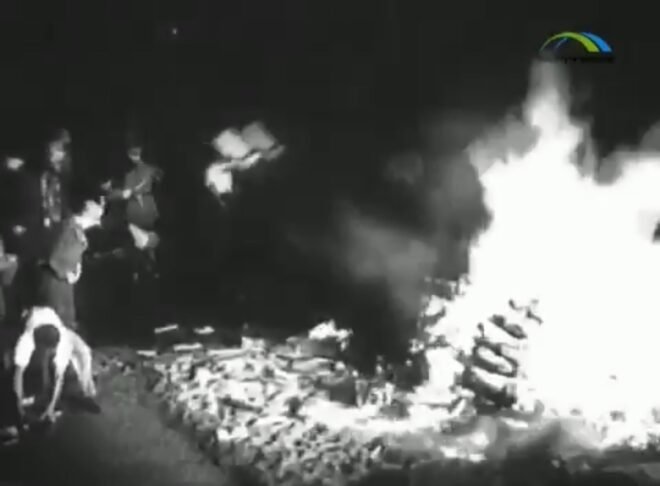
Reading plays a uniquely powerful role in this transformation. Mark Twain’s aphorism – “Books are the liberated spirits of men” – captures both the emancipatory promise of reading and its ethical imperative. Reading exposes us to multiple viewpoints, forces us into extended attention spans, and cultivates habits of critical thinking. Twain also noted, pointedly, that refusing to read leaves one no better off than someone who cannot read – an admonition for those who opt instead for quick, emotionally gratifying social media takes. Books by Indigenous authors, histories that centre Indigenous methodologies, and the scholarship of decolonized anthropology all offer sustained, evidence-based counters to superficial online claims. Libraries – physical and digital – function as civic commons where individuals can familiarise themselves with the breadth of human experience beyond the curated feeds designed to maximise engagement through outrage.
The academic disciplines that once served colonial projects are themselves undergoing revision. Anthropology, archaeology, and history are increasingly embracing decolonizing methods that privilege Indigenous epistemologies and co-authored research. This shift matters because it not only corrects factual errors but also challenges the authority structures that allowed dismissive narratives to persist. Collaborative fieldwork, community-controlled archives, and repatriation efforts all destabilise the old model in which outside scholars “studied” living communities as objects. When Indigenous people interpret their own oral histories and archaeological sites, those interpretations bring forward nuance that far-right social media accounts lack by design.
Concrete, place-based examples help illustrate the falsity of so-called “primitive” labels. The Mississippian polities of North America, centred at sites like Cahokia, supported urban populations, engineered large-scale earthworks, and coordinated extensive trade networks. In the Andes, the Inca developed a vast road system and terrace agriculture that transformed steep landscapes into productive fields. Mesoamerican calendars and astronomical observatories reveal systematic long-term observation and mathematical sophistication. These accomplishments are not relics of a static past; they have living descendants in contemporary Indigenous knowledge systems, agricultural techniques, and governance traditions. When far-right propagandists dismiss these traditions as inconsequential, they ignore centuries of innovation and adaptability.
The psychology of belief helps explain why these falsehoods persist, and why they are so emotionally resonant for certain audiences. Confirmation bias inclines people to accept information that fits preexisting worldviews; identities shaped by nationalism or racial superiority are particularly receptive to narratives that validate dominance. Social identity theory shows how group membership can drive derogation of out-groups – making pejorative depictions of Indigenous peoples psychologically satisfying for those seeking to shore up in-group esteem. Social media compounds these tendencies by curating content that reinforces affiliation. Countering these psychological currents requires both cognitive tools – training in critical thinking, inoculation against misinformation, and exposure to corrective information – and social interventions that change the contexts in which people form beliefs. Educational curricula that include robust Indigenous history, public conversations led by Indigenous scholars, and respectful cross-cultural exchanges can reorient collective understandings over time.
Digital resistance must be multi-pronged. Platforms should be held accountable for the design choices that prioritise virality over veracity. Practical reforms include algorithmic transparency, stronger enforcement of hate-speech policies that account for coded language, investment in community-led moderation that understands local contexts, and support for features that allow collective verification (for example, community notes or trusted-source tagging). Civil society organisations can create rapid-response fact-checking networks specialising in Indigenous issues; governments and philanthropic funders can support media literacy programs targeted at vulnerable populations; and technology companies can collaborate with Indigenous groups to ensure accurate representation of cultural content and proper handling of sensitive materials.
At the same time, trauma-informed approaches are necessary when fighting disinformation that targets historically oppressed communities. Harassment and rhetorical violence have real psychological costs. Platforms must provide better tools for reporting and protecting users who are subjected to coordinated attacks, and public institutions should back Indigenous leaders facing threats with legal and practical support. This is about more than free speech – it is about protecting the conditions for robust democratic participation, including the right to speak about one’s history without being drowned in slurs and falsehoods.
Policy responses can also help rebuild trust in knowledge. Funding for Indigenous-led research, incorporation of Indigenous epistemologies into national curricula, and equitable representation in cultural institutions (museums, archives, broadcasting) each play roles in re-centring authoritative voices. Repatriation of artefacts and collaborative curation are important symbolic and practical steps. They challenge the narrative that Indigenous cultures are museum-bound relics and instead assert their ongoing vibrancy.
There are instructive case studies that illustrate both the problem and the potential pathways forward. The Australian Voice referendum, for example, demonstrated how misinformation about constitutional recognition could be weaponized to inflame anxieties. Campaign materials circulated in social media drew on centuries-old tropes – suggesting special privileges, land giveaways, or constitutional chaos – none of which matched the legal and constitutional analyses produced by scholars or Indigenous organisations. The rebound effect was not merely political defeat for a particular proposal; it deepened racialised resentment, emboldened hate speech, and made future conversations about structural reform more fraught. Yet in the aftermath, new coalitions formed to invest in long-term education, legal literacy, and community engagement – efforts that recognised that corrective measures cannot be ad hoc.
Similarly, the COVID-19 pandemic showed how misinformation targeting Indigenous communities had dire health consequences. Vaccination campaigns met resistance in some areas because of fabricated stories about government conspiracies or misrepresented medical claims. Indigenous-led health outreach projects that combined scientific information with culturally grounded communication strategies proved most effective. This reinforces the central thesis: authenticity and cultural competence are indispensable in countering false narratives.
The work of rebuilding knowledge systems is neither quick nor easy. It requires patience, humility, and a willingness to confront uncomfortable truths about how our histories have been shaped. It also demands individual discipline – a cultivated habit of reading, of listening to those with lived experience, and of preferring rigour to rhetorical flourish. Mark Twain’s admonition about reading is not elitist; it is a call to cognitive responsibility. When large publics trade reflection for instantaneous verdicts, they hand narrative control to those who benefit from distortion.
Character matters because the choice to verify, to uplift, and to oppose dehumanisation is an ethical commitment. Achievements – whether social, cultural, or political – are built on the conscientious practices of many individuals: teachers who incorporate Indigenous books into syllabi; librarians who ensure access to diverse sources; community organisers who elevate local storytellers; journalists who insist on Indigenous expert comment; and ordinary social media users who refuse to retweet a claim without a source. These acts add up.
Looking forward, the vision is not utopian; it is a pragmatic, justice-oriented roadmap. It includes integrating Indigenous histories into mainstream education early and substantively; funding Indigenous media and scholarship; designing social platforms that privilege context and provenance; supporting legal protections for cultural heritage; and cultivating civic habits of verification. Technology can assist – apps that help identify the provenance of images or flag contested narratives, platforms that surface Indigenous-authored resources when cultural topics trend – but technology is subordinate to ethics. There is no algorithmic substitute for character.
To conclude: misinformation about Indigenous cultures is not an abstract epistemic problem; it is a form of ongoing colonisation, enacted through words, images, and institutional neglect. It thrives where ignorance has been normalised and where powerful actors find it useful to obscure history. The remedy is not merely more data but a reorientation of how we value knowledge: favouring sources with integrity, centring those with living connection to the histories under discussion, and treating reading as a civil practice that builds empathy and insight. When we insist upon sources, amplify authentic voices, and educate with humility, we do more than correct falsehoods – we construct a public sphere capable of recognising shared humanity and of crafting policies that honour dignity and rights. Character, then, remains the architect of achievements. If we are to build anything durable – reconciliation, justice, an informed citizenry – it will be because enough of us chose integrity over convenience, curiosity over contempt, and slow, careful learning over the seductive quick fix of provocative lies.