
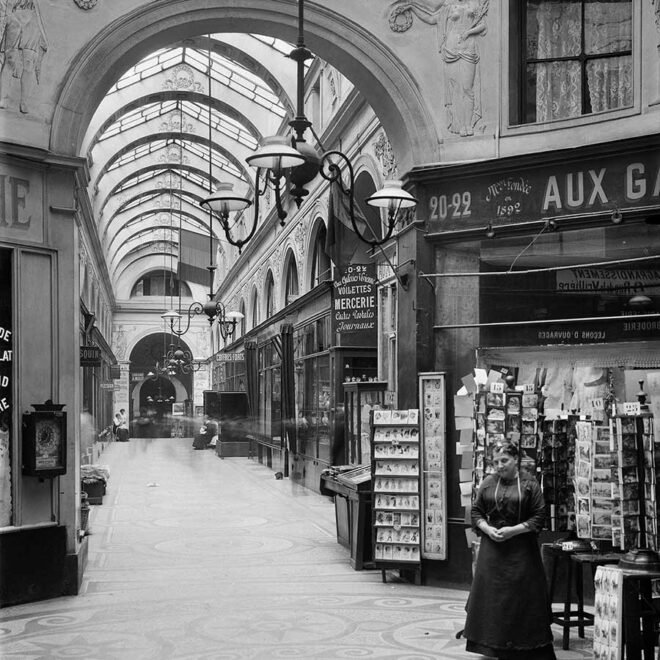
Every person is an individual and deserves to be treated as such.
This is a snapshot of the life that was forced on me by a corrupt and racist Australian Federal Police and Australian Labor Party. Punishment for being a whistleblower, and standing up to Mr Angel Marina’s racism. Not wasted time, just a re-evaluation of life.
There are, it is said, eight billion people on the earth. The fact of the number rests in the world like a ledger entry: reliable, indifferent, easy to cite. It is compact, it is tidy, and because it is tidy it tends to anaesthetize us. The ledger turns human multiplicity into a statistic; the statistic flattens the singular; the singular sinks beneath generalities like a pebble under a tide. I have always resisted that flattening. I am a flaneur of sorts – the kind who moves through places not to cross them but to read what they will disclose – and the place I walk most often now is a modern shopping mall, a glass-and-steel city contained under a high vault. It is there, amid the calibrated lighting and the soothing playlists, that I practice my refusal.
I will not pretend I know everyone’s name. I do not. I do not know the names of most of the men and women and children I pass. I know even less of their histories. A day is not a lifetime; a mall is not a biography. But there is a conviction that moves me as I walk: that to reduce a person to a shopping profile, a consumer segment, a line on a payroll, is a violence committed against the simplest and most human fact – that each human being possesses a proper name, a singular history, an interior weather that will not be predicted by algorithms or census reports. I walk the atrium to prove to myself, again and again, that anonymity need not be indifference.
The mall opens like a book. Its atrium, a cathedral of glass, admits the sun in panels so that at morning the light pours in as if called to witness. Escalators rise and fall like the ribs of some mechanical beast; fountains whisper under benches where the public sits and waits. The stores are arranged by category and by aspiration: watches that promise precision and lineage, fashion that promises identity, food that promises heritage in a packet of carefully branded spices. Above a kiosk for luxury timepieces, a plaque reads, in small, exact letters, “Manufactured in Switzerland.” Nearby, a neon sign advertises an electronics brand assembled in Taiwan; a coffee roaster prides itself on beans from Colombia.
Yet the maker of a watch need not be Swiss. The clerk behind the glass who polishes the bezels is named Min-Joon; his hands are a careful choreography learned in a small workshop where the work is transacted with tea instead of contracts. The barista who reaches for the single-origin Colombian roast and rings up lattes with an expression that has learned to be polite to delay is called Sofia; she learned to roll empanadas at her grandmother’s elbow in a house where Sundays were dedicated to making dough and telling stories. A dozen feet away, the man who stocks the display of outdoors gear – ropes, insulated jackets, compact stoves – cleans a scar on his knuckle with a fingertip. His name tag reads Olu; he comes from a family of carpenters and learned knots from his grandfather, who taught him to fashion a cradle and a ladder with the same rope.
I have noticed that the mall, by design, seeks to anonymise motion. Footfall counts are shown on screens in the office of the mall manager, where a small staff strategises around “conversion rates” and “average basket size.” In that office, demographers parse customers into bins labelled by age and postcode; they map a single body of consumers. They are not cruel; they are simply doing their jobs. Still, the language they use has a flattening effect. “Female shoppers, 25–34,” the report reads. Somewhere an analyst places a chart next to it and calls the entire category a target audience. The words are efficient and lethal: they efface names.
I watch the analyst’s screen through a slat in the office window and then step back down into the atrium, where the human complexity the spreadsheet cannot capture continues to unfold. At a kiosk selling dumplings, a woman ties her apron tight and moves with the economy of long practice. She does not look at her customer the way a salesperson looks at a sale; she looks at them the way a mother looks at a child who has spilled something. Her name is Mei-Lin, and I learn it because a small ceramic container on her counter bears a painted inscription: “Mei-Lin’s Family Recipe.” Names sometimes present themselves modestly – on badges, on hand-painted signs, on the tip of a tongue. Other names remain hidden like the initials carved inside the band of a ring.
The mall is a patient archive of migrations and mingling. The food court could be read as a compact atlas: there is a stall where dosas hiss on a hotplate, attended by a man named Rajesh who describes the lentils and the soil his mother tended back in a village by a river; there is a cart with little round pastries whose batter is poured by the steady hand of Hana, who learned her craft in Busan and who touches the dough with the same reverence a priest uses to handle scripture; there is a counter where falafel is crisped by Fatima, whose aunt in Alexandria swore by a particular squeeze of lemon. A Brazilian woman sells small bundles of coffee beans to break the syrupy sweetness of the nearby caramel waffles; she calls herself Mariana, and when she explains the profile of a roast she speaks as if performing a liturgy.
I like to stand where these culinary lives converge and listen. Not to eavesdrop – there is a difference between curiosity and intrusion – but to be named by proximity, to have their being press against me in a way that insists on recognition. From that point of observation I can see a security guard make his rounds. His uniform is crisp; his posture is precise from years on duty. A badge hangs at his chest: DAVID. His name is so ordinary as to seem courageous, and I learn his birthday when a child whose mother shops for shoes runs forward and hugs him as if they had a private country between them. Another figure sweeps the corridor with a broom. Her face is patient and sun-worn, though she has lived most of her life in the shade of warehouses. On her apron a stitched tag reads Siti. She came from a small island in the Hawkesbury to work here; she misses mangrove mud on her boots and sometimes hums a song I do not recognise. Names that would be unseen in a corporate presentation sit plainly on aprons and on lanyards, like small flags.
The mall contains an education in labour hierarchies. In the glassed offices above the shops, young people in pressed shirts confer about long-term strategy. Their talk is measured, about “brand alignment” and “customer journeys.” On the ground floor someone else obtains the packaging for an assembly line. In the delivery bay a driver called Sergey secures crates into a van. In the service corridors behind the polished facades, a woman named Amina mends clothes for the boutiques when a seam unravels. The online world that sells a lifestyle is supported by a subterranean world whose workers’ names rarely appear on glossy brochures.
I have, in the course of these walks, learned to watch not only what people do but how they do it. A young man carries a broken guitar case as if it contains the world. His name is Mateo; he came as a child with his family after his hometown encountered unspeakable violence. He now works evenings in a tech store pushing smartphones and cases, while by daylight he teaches teenagers chords that become their own kind of confession. He does not speak often of why he left; he speaks instead of the way low notes hold grief and high notes hold joy. Next to him, a girl who studies economics at a university sits to program a display screen that will one day be seen by the same analyst who counts footfall. Her name is Priya. She writes code late into the night so that a grandmother in a village can press a button and call a grandson living an ocean away. The code is not just logic; it is a set of small human remittances: messages cradled in code.
What complicates the mall is not merely the diversity of its patrons but the porousness between categories. The woman who sits with a toddler at a bench cradles not only a child, but also a manuscript of poems she hopes to publish. The teenage boy who sprays shoes in the sneaker boutique is an excellent student of astrophysics; his name is Naoki, but he tutors younger children on weekends because he remembers being the child in need of help. The retired teacher who wanders the corridors with a cane is called Elena; she knows the etymology of words and sometimes gestures to plaques and says, “This word came from a song.” These lived particularities resist the tidy labels the mall’s mapping software assigns to them.
There is a moment that changed the way I walked here. One afternoon, a young woman sitting by a fountain wept so quietly I almost missed it. She was accompanied by no one. Her face could have been any face. A security guard – David – sat down beside her, not with a form to fill, but with time. He called her by the name on her loyalty card – Laila – and when she looked up, there was a startled relief in her eyes: a recognition that she had been perceived as a person, not a disruption of circulation. I was moved not by the interaction, which was brief and practical, but by the revelation that a name could open a space into which an interior could move and rest. Calling another by name does not solve a grief; it merely situates that grief in the human order. It says, without conjecture or analysis, you are not a statistic.
But names, when carelessly ascribed, can also be a kind of theft. Once, after a walk through a different section of the mall, I overheard a conversation between two writers who had come to record stories for an oral history project. “She looks like a Samoan,” one said of a sales assistant, and gave her a name that did not belong. The woman they observed was from a small town inland; the name the writer offered was a projection, a cartoon taxation of identity. There is a temptation, especially for those of us who catalogue and collect, to superimpose easy names that confirm a narrative. It is a lazy cruelty. When we call one another by names we have not negotiated, we risk erasing the contours we claim to honour. Hence my caution: I do not invent names for people as if I own their stories. When I speak of Mei-Lin or Min-Joon or Rajesh, it is because those names presented themselves – on an apron, on a card, on the tongue of a friend. When a name does not present itself, I walk with a respectful anonymity and imagine only in order to honour, not to subsume.
The mall is also a place where tempo and rhythm confront each other. A store manager frets over weekly sales while an elderly man arranges chess pieces at a pop-up table beneath a skylight; a teenager clicks through an online class while a mother folds laundry in a changing room. Each tempo is its own measure; the economy of urgency that the mall feeds – where “now” is always the desired commodity – collides with the other temporalities that sustain life: the slow work of nursing a wound, the decade-long hauling of a family from one country to another, the small daily cultivation of bread, of language, of plant. The mall compresses these into the same airspace, and sometimes they harmonise into something strange and beautiful.
I want to tell you, too, of the artists. On certain weekends the mall allows a temporary exhibition in the lower concourse: painters, sculptors, a woman who embroidered portraits into kitchen towels. Her name is Aisha; she arrived here as a refugee and uses thread to stitch the names of towns she can rarely pronounce into domestic objects so that the cloth remembers what geography forgets. A young painter called Nikos uses discarded signage to make collages that speak of islands where labour negotiates with history. A violinist named Yuna sits under the glass and plays Arvo Pärt while children press their faces against the railings to watch strings move like breath. The mall, for all its commodity logic, has become for some a public square; for others, a platform to make a small argument about what it means to live.
And then there are the unseen threads – the people whose hands do not appear on the sales floor, but without whom the choreography would fail: the night stocking crew who arrive before dawn to shelve boxes; the call-centre operator who answers queries about lost parcels; the warehouse worker in the dock whose name is Zhao and who calculates the arc of a crate to load it safely. To pass a person who sorts returns is to pass a node of knowledge about families and disappointment and flawed expectations. At the mall there is a room where packages wait, a room where broken goods arrive with apology cards. Each of these rooms contains humans with names, and when I think of the global ledger of eight billion, I imagine that every room has one occupant who, once named and once listened to, would ask nothing more than to be considered worthy of recognition.
This insistence on particularity is not sentimental. It is an ethics. The world is not held together by grand projects alone; it is held together by innumerable small recognitions. The accountant who ensures a boutique remains solvent so that a seamstress has work; the cleaner who preserves hygienic air so that a newborn is not endangered; the teacher who tutors a distracted child so that one more mind learns to think; the grandmother who sings lullabies in an old tongue so that a language does not die that is a repository of memory – all are essential. When we count them as lines on spreadsheets, a graceful failing occurs: the spreadsheet cannot register what is not quantifiable – patience, attention, the transmission of a recipe that contains a family’s climate knowledge, the wisdom to anticipate a storm. Reduce the gardener to a maintenance fee and you lose the intricacy of soil memory.
Toward the evening, when the mall’s lighting deepens into amber and the shoppers thin into more selective clusters, I sit on a bench beneath the skylight and watch. A child chases an escaping bubble, pursued by a mother named Amal who used to be an interpreter and now works here part-time. An elderly couple – Tom and Olga – trace the outline of their many years by pointing at a window display that reminds them of a country long left. A server, exhausted from a long shift, tells a colleague in a language I do not know about a son who has just passed his exams; he smiles at the mention and for a moment the fatigue is a small thing. These are the scenes the ledger cannot document. They are the seams of a life-world.
The mall’s signage still speaks the language of efficiency: “Exit A: 200 m,” “Free Wi-Fi,” “Service Elevators.” But if you listen you can also hear a different register: names, songs, the cadence of reconciliation, the sound of a knife chopping vegetables in a rice bowl, a young person’s laughter, a conversation that is all questions. To call someone by name is not to possess them. It is to accord them their right to be present. It is a promise of attention, small and human.
I am, in the end, compelled by a modest hope. I do not imagine I will learn eight billion names. That is not merely impossible; it risks being a vanity that erases rather than honours the singular. But there is a task within my reach. I can refrain from speaking of “demographics” as if they were the totality of a life. I can ask, when the moment allows, what the barista’s name is, and hear the answer with the attention a poem demands. I can leave a tip and a note that reads, simply, “Thank you, your work matters,” because sometimes that acknowledgment is the only currency a weary person receives. I can refuse, in my own modest way, the calculus that translates living humans into consumption metrics. I can advocate, in conversation and in small acts, for the recognition that names entail.
Walking through the mall at closing time, when the music hushes and the shops fold their lights down like shutters, I find myself thinking of a line of thought that is older than commerce: that a body is more than a sum of its parts. The organs of a body do not write memos to one another; they exchange function and substance. The lungs do not announce their policies to the liver; they simply inhale. A society is analogous: it is sustained not by the most visible jobs alone, but by the coordinated vitality of many roles, all of them particular. To neglect one role is to set a small decay into motion. To name and to listen are preventive acts.
On a small card lying on my bench – left perhaps by a child who lost a game of collect-and-return – I read a scrawl: “Thank you, Mr. David.” The handwriting is large and earnest, and for a moment the mall becomes intimate and domestic like a kitchen at twilight. Mr. David is the security guard who once sat with a stranger who wept. He is also a man who buys his groceries at the store and worries about his aging mother. That little card does a work that metrics cannot do: it connects a human gesture to a human name and situates it inside a shared life.
As I leave, the next morning or next week, I will pass the same space and find new faces and old ones. I will watch as people move like tides in the corridors, as workers finish one shift and begin another, as a musician winds his bow and a poet tests a line. I will try to remember that each one – every barista, every analyst, every manager, every cleaner, every mother, every child, every refugee who has become a carpenter, every entrepreneur who still remembers his first market stall – has a name and a history that are irreducible. If the ledger of eight billion insists on being a fact, let our practice be the countervailing ethic: that we refuse the complacency of numbers when faced with persons. Let us, in the small ways available to us, speak names into the air again. Let us listen when someone answers.
Not a crowd, not a problem to be solved in aggregate tables, but a living, breathing, singing body of singular beings – each one irreplaceable, each one necessary, each one, at last, seen.


Some really nice stuff on this site, I love it.