
Introduction
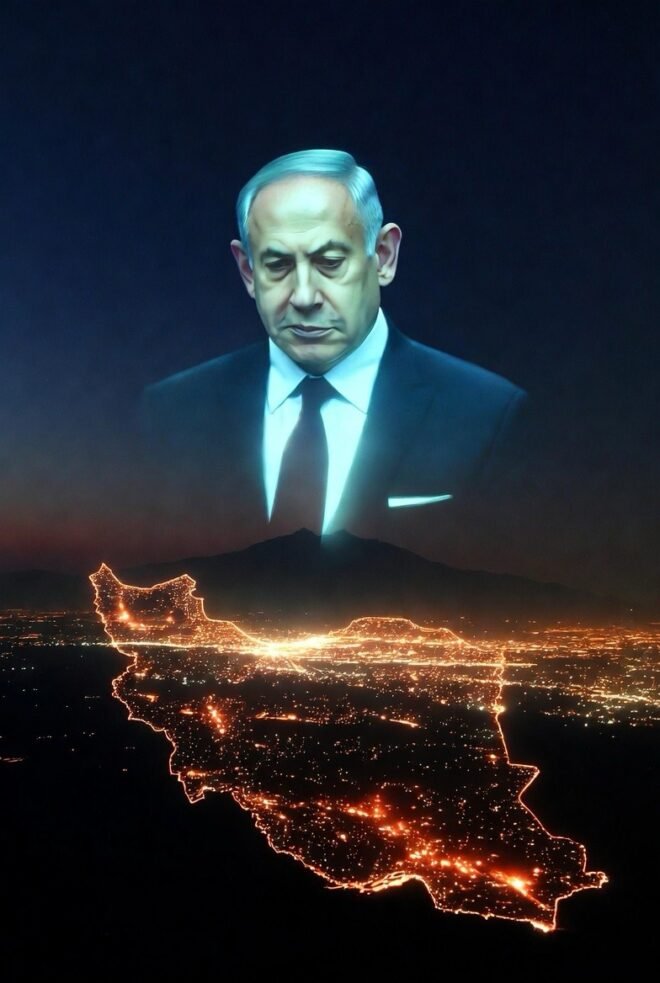
Benjamin Netanyahu, Israel’s longest-serving prime minister, has occupied a central position in Middle Eastern geopolitics for decades. His tenure has been marked by a consistently hawkish posture toward Iran, particularly concerning Tehran’s nuclear ambitions and its regional activities through proxy groups. Netanyahu’s persistent engagement with U.S. policymakers, public appeals to foreign legislatures, and the apparent coordination of covert operations that target Iran’s nuclear infrastructure have recurrently placed him at the centre of controversy regarding the appropriate boundaries of influence between close allies. This essay provides a comprehensive, structured, and measured examination of Netanyahu’s interference in U.S.-Iran nuclear negotiations. It undertakes a historical survey of his posture and interventions, catalogues specific episodes of interference, interrogates motivations and methods, weighs criticisms against legitimate contributions, analyses broader diplomatic and regional consequences – including implications for U.S.-Saudi relations – and synthesises the overall significance of these interventions for global non-proliferation efforts and regional stability.
This discussion is intent on balancing critical appraisal with recognition of genuine security concerns. It refrains from prescriptive recommendations and instead seeks to illuminate the complexities and trade-offs intrinsic to the interface between alliance advocacy and sovereign decision-making.
Historical Context: The Evolution of Netanyahu’s Iran Policy
Netanyahu’s concern about Iran’s nuclear program is rooted in a long-standing perception of existential threat. Since the 1990s, when Iran’s nuclear activities first gained wide international attention, Netanyahu has framed Tehran’s potential acquisition of nuclear weapons as a direct and unprecedented danger to the State of Israel. Over time, his rhetoric and strategic posture have coalesced into a consistent policy line: that preventing Iran from obtaining nuclear weapons is the utmost priority and justifies robust, sometimes unilateral, measures.
The early twenty-first century saw this stance hardened by several developments: Iran’s acceleration of uranium enrichment capabilities, documented clandestine facilities, and public declarations by Iranian officials hostile to Israel. In speaking to domestic Israeli audiences and to international interlocutors, Netanyahu often emphasised worst-case scenarios, asserting that even a marginal increase in Iran’s material capacity or reduction in detection times could spell an irreversible strategic disadvantage for Israel.
The negotiation and signature of the Joint Comprehensive Plan of Action (JCPOA) in 2015 constituted a seminal moment in the relationship between Netanyahu and U.S. administrations. The Obama administration framed the JCPOA as a diplomatic milestone that constrained Iran’s nuclear program through monitored limits and inspections. Netanyahu publicly and vocally opposed the agreement, arguing that its sunset clauses and perceived verification gaps would permit Iran to “race” back to a weapons capability after restrictions lapsed. His March 2015 address to the U.S. Congress – delivered at the invitation of congressional leaders and without consultation with the White House – symbolised a direct intervention into U.S. domestic political processes and cemented perceptions that he was willing to engage partisan American audiences to influence foreign policy outcomes.
Throughout subsequent administrations, the pattern persisted. Netanyahu was an outspoken critic of any re-engagement with Iran on terms he perceived as lenient. During the Trump administration, which adopted a “maximum pressure” policy culminating in withdrawal from the JCPOA and the re-imposition of sanctions, Netanyahu’s views found a receptive partner. At the same time, Netanyahu’s government was accused – by critics – of adopting measures that complicated diplomacy, including covert actions attributed by many analysts to Israeli intelligence and military services that targeted Iranian nuclear sites and scientists. These events deepened the perception that Israel was an active, at times unilateral, actor shaping conditions on the ground in ways that could disrupt U.S.-led diplomatic initiatives.
Specific Instances of Interference
Netanyahu’s interventions have taken multiple forms – public advocacy, private diplomacy with U.S. leaders, dissemination of intelligence assessments, legislative engagement in the United States, and covert operations that affect the strategic environment. Several episodes illustrate the diversity and impact of these interventions.
1. The 2015 U.S. Congressional Address
Netanyahu’s 2015 speech to a joint session of the U.S. Congress opposing the JCPOA remains a defining example of direct political intervention. The speech galvanised opponents of the agreement and contributed to a polarised congressional debate. From the Israeli perspective, the address communicated a clear message about the limits of acceptable concessions. From the U.S. executive branch’s perspective, it was an unprecedented circumvention of standard diplomatic norms. The episode highlighted a recurring tension: allied advocacy versus deference to the host nation’s sovereign policymaking.
2. Intelligence Disclosure and the Declassification Debate
Israeli officials have periodically shared intelligence assessments regarding Iran’s nuclear activities with U.S. counterparts and, in some instances, publicly. These disclosures have been characterised by proponents as vital to exposing Iranian obfuscation and by detractors as selective presentation of data intended to undermine negotiated settlements. The release of documents and purported nuclear archives by Israeli authorities in 2018, for example, was cited by some to justify U.S. policy reversals; others cautioned that selective disclosure risked mischaracterising Iran’s intentions and capacities.
3. Alleged Covert Operations Against Nuclear Facilities
Independent and media reporting over the years has linked Israeli actors to cyber and kinetic operations targeting Iranian nuclear facilities. The Stuxnet cyberattack (widely attributed to a U.S.-Israeli effort) and subsequent incidents – such as explosions and equipment sabotage at sites including Natanz – have been variously described as slowing Iran’s program but also as actions that elevated mistrust. While attribution often remains contested, the practical effect of such incidents – if, as many believe, Israeli-honed capabilities were employed – was to complicate the negotiating environment and to provide Iran with rhetorical ammunition that diplomatic overtures were accompanied by coercive measures.
4. Direct Lobbying of U.S. Leadership and Congressional Actors
Netanyahu’s meetings with U.S. presidents, high-level diplomats, and congressional delegations exemplify persistent and targeted lobbying. These exchanges often involved presenting Israeli intelligence, strategic assessments, and red-line demands. The influence of such lobbying has at times been profound, shaping U.S. administrations’ rhetorical posture and, in some periods, policy options. The relationship between Israeli advocacy and U.S. intelligence and diplomatic priorities reveals an asymmetry in which a smaller ally wields disproportionate reputational and persuasive influence within certain U.S. policy circles.
5. Public Messaging and International Diplomacy
Netanyahu has also utilised public diplomacy – media appearances, op-eds, and international speeches – to shape public opinion in the United States and elsewhere. By framing Iran as an imminent threat and emphasising zero-tolerance formulations such as the “no enrichment” demand, Israeli messaging has sought to constrain the Overton window of acceptable diplomatic compromises. This public pressure can harden positions on both sides, reducing the political space for negotiated settlements that include compromise.
Critical Assessment: Motivations, Methods, and Drawbacks
To evaluate Netanyahu’s interventions critically yet fairly, one must disentangle legitimate security imperatives from methods that may undermine diplomatic progress. Israel’s concerns about Iran are not mere rhetorical flourish. Iran’s regional activities – support for Hezbollah in Lebanon, backing of militias in Syria and Iraq, and sponsorship of militant groups in Gaza and elsewhere – create persistent security challenges for Israel. Iranian statements calling for the elimination of Israel, while debated in translation and context, have been interpreted by Israeli leadership as existential threats warranting maximum vigilance. Against this backdrop, Netanyahu’s insistence on strict constraints, intrusive verification, and enduring limitations on enrichment capability can be understood as an expression of a real national security calculus.
However, the methods employed – public appeals to legislatures in allied countries, alignment with particular political factions within those nations, and covert actions that materially alter the facts on the ground – invite substantive critique. First, public and partisan interventions risk eroding the normative principle that allies should refrain from actively shaping another country’s domestic political debates in ways that compromise that country’s policy autonomy. Netanyahu’s congressional address in 2015 and subsequent efforts that engaged partisan U.S. audiences created lasting fissures in perceptions of the U.S.-Israel relationship. These fissures complicate the maintenance of bipartisan consensus in the United States, which historically has been a strategic asset for Israel.
Second, the pursuit of maximalist goals – such as demanding the outright dismantlement of Iran’s nuclear infrastructure rather than negotiated limitations – can be counterproductive. Diplomatic negotiation, by definition, involves concession and risk management. By publicly advocating for outcomes that Iran is highly unlikely to accept absent regime change, such intervention may embolden intransigent elements in Tehran, who can use uncompromising demands as rationale for hardline stances. This in turn reduces the negotiating space available to U.S. diplomats and increases the probability of stalemate or escalation.
Third, covert operations that target nuclear facilities, while potentially effective in setting back technical progress, can have unintended diplomatic consequences. They may provoke retaliatory measures, increase domestic political support in Iran for hardline institutions such as the Islamic Revolutionary Guard Corps (IRGC), and delegitimise diplomatic options by fostering an atmosphere of mutual suspicion. Even when such operations achieve short-term tactical success, they can reduce the long-term prospects for a verifiable and sustainable settlement by undermining trust.
Fourth, lobbying that disproportionately privileges an ally’s perspective can distort the policy calculus of a sovereign state, especially when that lobbying aligns with partisan political agendas or domestic calculations of the allied leader. The interplay of Israeli domestic politics – where security threats are politically salient and coalition dynamics have repeatedly incentivised hardline postures – with U.S. domestic polarisation has at times resulted in an asymmetrical influence that challenges the primacy of U.S. national interest in the decision-making calculus.
Defences and Positive Contributions: Legitimate Advocacy and Value-Added Intelligence
A balanced assessment must also acknowledge the substantive contributions that Netanyahu and Israeli intelligence have made to the broader international effort to constrain Iran’s nuclear ambitions. Israel’s intelligence services have extensive operational experience and close technical and human-intelligence capabilities in the region. Information provided by Israeli sources has, at times, assisted in revealing aspects of Iran’s past activities and has contributed to international scrutiny. The disclosure of archives and documentary evidence, when presented transparently and corroborated, has the potential to strengthen non-proliferation enforcement by identifying discrepancies between declared and actual activities.
In addition, Netanyahu’s critiques have served as a political and analytical counterweight to diplomatic complacency. His insistence on addressing missile delivery systems, regional proxies, and sunset clauses forced negotiators and policymakers to grapple with broader dimensions of the Iranian challenge beyond centrifuges and stockpiles. The JCPOA’s critics – including Netanyahu – drew attention to aspects of the deal that required stronger monitoring mechanisms and consideration of ballistic missile programs and regional destabilising activity. Such scrutiny can produce salutary effects if it leads to more robust verification, integrated regional approaches, and attention to related security domains.
Moreover, from a realist perspective, it is neither anomalous nor illegitimate for a close ally to exert pressure on a leading power to consider its core security interests. Alliances are not merely conduits for unquestioning deference; they are instruments through which states seek to marshal support for shared or overlapping threats. Israel’s advocacy, in this light, is an exertion of agency aimed at securing protections and shaping policy in ways that reflect an ally’s perceived survival imperatives.
Broader Impacts on Negotiations and Regional Dynamics
Netanyahu’s interventions reverberate beyond bilateral U.S.-Israel and U.S.-Iran interactions. They have implications for the regional security environment, intra-allied cohesion, and the international non-proliferation regime.
1. Effects on Negotiating Dynamics
By imposing stringent red lines and mobilising public opinion in allied capitals, Netanyahu has contributed to a negotiation environment in which compromise is more politically costly for all parties. When one party in a negotiation perceives that external actors are using media campaigns or covert measures to undermine its bargaining position, the prospects for reaching a durable deal diminish. The interplay between coercive actions (e.g., strikes or sabotage) and diplomatic overtures creates a paradox: coercion may compel concessions in the short term but can harden positions and reduce trust necessary for long-term compliance and verification.
2. Regional Escalation and Proxy Warfare
Actions that target Iran’s nuclear infrastructure can stimulate asymmetric retaliation by Tehran through proxies. Hezbollah’s arsenal in Lebanon, Houthi missile and drone activity in the Red Sea and Yemen, and militia operations in Iraq and Syria can be interpreted as part of a calibrated Iranian response to military pressure. Such responses can increase the risk of miscalculation and collateral escalation that extends well beyond the original dispute over nuclear material. The proliferation of proxy conflict increases the human cost and the regional economic disruption that accompanies intensified hostilities.
3. U.S. Domestic Political Polarisation
Netanyahu’s interventions have intersected with U.S. domestic political polarisation in ways that complicate durable, bipartisan foreign policy. When a foreign leader is perceived as aligning with one domestic political faction, long-term consensus in the partner country can be undermined. This risks reducing the durability of foreign policy choices and invites frequent reversals tied to electoral cycles. The volatility this introduces can hamper the implementation and continuity of complex, verification-dependent agreements.
4. Impacts on the International Non-proliferation Norm
While Israel’s security concerns are acute, its interventions have implications for the credibility of the international non-proliferation framework. If powerful states or their allies are seen to apply asymmetric standards – pressing for absolute dismantlement in one case while permitting or assisting allied states’ access to similar technologies under safeguards – scrutiny of perceived double standards can erode the normative basis of non-proliferation. This dynamic complicates efforts to craft consistent, equitable regimes that limit nuclear proliferation without appearing to privilege certain actors.
Implications for U.S.-Saudi Relations
The interface between Netanyahu’s stance and U.S.-Saudi relations is instructive in revealing how divergent ally interests can complicate a single state’s regional policy. Saudi Arabia shares apprehension over Iran’s regional ambitions and has supported punitive measures to deter Tehran’s proxy activities. Simultaneously, Riyadh also prioritises regional stability, economic continuity (particularly safe energy flows), and risk minimisation. As such, Saudi policymakers often favour calibrated diplomacy and de-escalation to prevent the type of conflict that would imperil the kingdom’s territory and economic lifelines.
Netanyahu’s emphasis on aggressive measures and maximal demands, particularly those framed as absolute prevention of any enrichment capability, can conflict with Saudi preferences. Riyadh’s leadership has historically engaged in discreet diplomacy and regional confidence-building measures to manage Iranian tensions, while also hedging by deepening security ties with Washington. If U.S. policy tilts toward confrontation in ways perceived as disproportionately influenced by Israeli lobbying, Saudi calculations may change. Riyadh could feel compelled to seek alternative partnerships, diversify its security arrangements, or accelerate its own nuclear ambitions as a hedging strategy – complicating non-proliferation efforts in the Gulf.
Conversely, Netanyahu’s interventions have sometimes aligned with Saudi objectives when both allies agree on the perceived immediacy of the Iranian threat. In contexts where Israel’s adamance reinforces pressure on Tehran to modify behaviour, Saudi and Israeli interests can converge, producing coordinated messaging and intelligence sharing that support U.S. policy aims. That said, the fundamental tension remains: Israel’s security calculus is immediate and existential; Saudi Arabia’s is broader and oriented toward regional risk management. These divergent orientations necessitate careful U.S. diplomacy to balance allied demands and prevent policy incoherence.
Balancing Critique and Fairness: An Integrative Evaluation
A comprehensive evaluation must integrate the legitimate basis for Israel’s security stance with clear-eyed critique of methods and consequences. Netanyahu’s interventions are not reducible to petty interference. They emerge from a strategic culture in which existential threat assessments dominate policy priorities. Nonetheless, the persistent use of public partisan appeals in allied domestic politics, the pursuit of uncompromising maximalist demands, and the application of covert operations that materially alter negotiation dynamics have demonstrable costs.
These costs manifest in multiple ways: by constraining U.S. diplomatic agility, by elevating the risk of military escalation, by empowering hardliners within Iran, and by complicating relationships with other regional allies whose strategic priorities differ. The interplay of these effects can produce a strategic environment less conducive to long-term, verifiable restrictions on nuclear development and more conducive to episodic crisis management. In short, while Netanyahu’s interventions may produce tactical gains and visibility for Israeli priorities, they risk undermining the structural conditions necessary for enduring non-proliferation outcomes.
At the same time, dismissing Netanyahu’s contributions as purely obstructive ignores the material value of Israeli intelligence, the political role of allied pressure in strengthening verification, and the legitimacy of Israel’s security concerns. A balanced appraisal acknowledges that Israeli critique has often assisted in identifying lacunae in negotiated texts, and that pressure from allies can incentivise negotiators to tighten inspection regimes and address ballistic delivery mechanisms and regional destabilisation – issues that transcend the purely nuclear and speak to broader security architecture.
Conclusion
Benjamin Netanyahu’s interventions in U.S.-Iran nuclear negotiations illuminate a fundamental tension that characterises alliance politics: the legitimate right of a state to advocate vigorously for its core security interests, and the parallel imperative for sovereign decision-making and coherent multilateral diplomacy. Netanyahu’s record demonstrates both the utility and the peril of persistent allied advocacy. His efforts have at times produced beneficial scrutiny, intelligence contributions, and political leverage that exposed weaknesses in negotiated compromises. Simultaneously, his public interventions, maximalist demands, and actions that shape the strategic environment beyond diplomatic channels have contributed to polarisation, trust deficits, and episodic escalation.
Assessing Netanyahu’s influence requires situating his actions within the broader matrix of regional rivalries, domestic political constraints, alliance asymmetries, and the technical complexities of nuclear verification. The consequences of his interference are neither unmitigatedly destructive nor uniformly constructive; they are ambivalent – producing short-term tactical gains alongside medium- and long-term strategic risks. A clear-eyed understanding of this ambivalence is essential for scholars, policymakers, and the public as they parse the implications of alliance-driven advocacy on complex arms control diplomacy.