In the cold light of early morning on February 28, 2026, the world was jolted awake by reports of a sudden and consequential escalation in the Middle East. According to statements issued by the governments involved, the United States and Israel launched coordinated strikes on key locations within Iran. President Donald Trump described these operations as “major combat operations” intended to neutralise perceived existential threats emanating from the Iranian regime. Israeli spokespeople declared that the assaults were aimed at high-ranking figures and strategic facilities, including, by some accounts, elements closely linked to the office of Iran’s Supreme Leader. Explosions were reported in Tehran and in other urban centres, and within hours the region saw retaliatory missile firings directed toward Israeli territory and neighbouring Gulf states. The strikes – referred to in some official channels as Operation Epic Fury – immediately generated a chorus of international condemnation, with critics questioning both their legality under the United Nations Charter and their prudence as foreign policy. Protests and vigils were organised across capitals around the globe. Diplomatic channels, already frayed by years of competition and mistrust, were strained further. As policymakers and pundits debated immediate tactical objectives and foreseeable strategic consequences, deeper moral and philosophical questions resurfaced, questions that have reverberated through human cultures since antiquity: What is the human cost of such violence? How much suffering will be borne by civilians who had no vote in the decisions that brought bombs to their doorsteps? How long will the instability sparked by these strikes reverberate through regional and global systems of trade, migration, and security? What new cycles of resentment and terror might be sown by the very acts designed to neutralise threats?
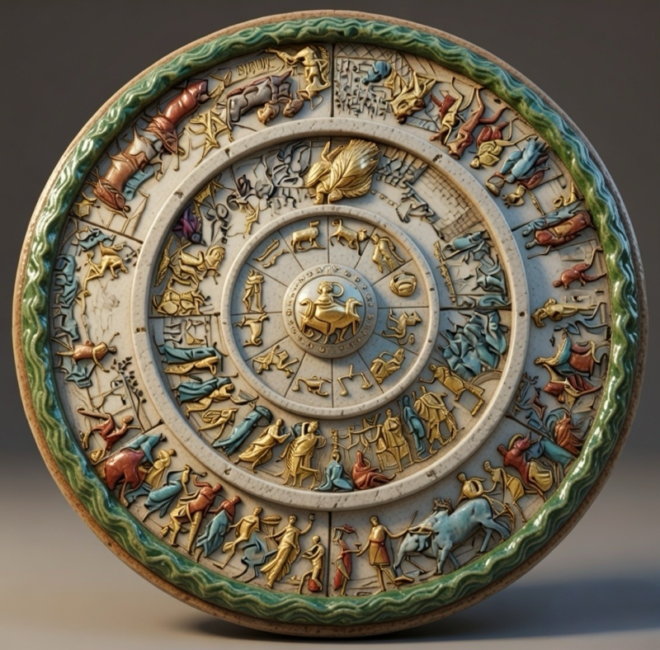
These questions are neither novel nor unique to our era. They are the same questions that echo through the halls of the epic tradition, embodied most poignantly in the central object of one of antiquity’s most famous extended ekphrases: the Shield of Achilles. Forged by the divine smith Hephaestus at the behest of Achilles’ mother, Thetis, the shield described in Book 18 of Homer’s Iliad is not merely a piece of martial equipment. It is a microcosm of human existence, an artful condensation of war and peace, creation and destruction, law and anarchy. The shield’s scenes – two walled cities, one embroiled in siege and bloodshed, the other humming with civic life and festivity – serve as a meditation on the costs and benefits of human choices, on what is lost when arms are chosen over discourse, and on what might be preserved when peace is cultivated.
This essay returns to the Shield of Achilles not as an exercise in classical philology but as a moral mirror in which contemporaneous international events may be examined. The shield’s ancient voice – preserved in line after line of Homeric verse – speaks with dismay and wisdom across millennia to modern policymakers, generals, and ordinary citizens alike. In a moment in which powerful states can project lethal force across thousands of kilometres with unprecedented speed and impunity, the visual and ethical program of Hephaestus’ craftsmanship retains a sobering relevance. The comparison is not meant to trivialise modern complexity or to suggest a simple equivalence between archaic heroism and contemporary geopolitics; rather, it is meant to draw attention to enduring human truths: that the devastation of war is immediate and intimate, while the benefits of peace are cumulative and sustaining; that violence may achieve objectives in the short term, but it exacts long-term moral and material tolls from which societies struggle to recover.
Historical and Literary Context
To appreciate the Shield of Achilles fully is to appreciate its position inside the larger tapestry of The Iliad, itself a work that compresses the human and divine into a narrative of concentrated wrath, sorrow, and reflection. Traditionally dated to the eighth century BCE but representing oral traditions that extend into the Mycenaean past, Homer’s Iliad narrates a sliver of what the Greeks would call the Trojan War. It is a poem about heroes and their decisions, about glory and mortality, and about the complicated interplay between individual desire and communal fate. Achilles is the poem’s pivot: a hero of phenomenal prowess whose pride and grief drive the action and whose withdrawal from battle precipitates catastrophic costs for his comrades. It is in Book 18, when Achilles learns of Patroclus’ death and resolves to return to combat, that Thetis commissions new armour for her son and Hephaestus – lame, brilliant, and paradoxically humane – laboriously fashions a shield that maps the world.
Homer’s description of the shield is an act of ekphrasis: an extended verbal representation of a work of visual art. Ekphrasis functions at several levels in ancient poetry. It halts narrative momentum to invite contemplation; it showcases the poet’s descriptive powers; and it places moral and aesthetic reflection into the hands – literally – of a central character. In the case of Achilles’ shield, Homer orchestrates a panorama that compresses civic life, agricultural economy, religious practice, and celestial order into concentric bands of imagery. The shield’s outermost rim mirrors the Ocean river that circled the Greeks’ conceptual world; within that bound, scenes of the cosmos – sun, moon, and constellations – preside over images of human striving and divine oversight. The image of two cities, alternating with pastoral, judicial, and festive scenes, enacts a dialectic between war and peace. That Hephaestus is the artisan here is not incidental: he is the god who labours for the gods, who makes objects that mediate human-divine relations, and in this case he makes an object that forces its bearer – and its beholder – to reckon with life’s full repertoire of possibilities.
Classical scholarship has long read the shield as an instance of Homeric reflexivity. It is a story within a story, an image that comments upon the poem itself. The Iliad, although often paradoxically celebratory of martial excellence, is also saturated with grief and ambivalence about the human costs of war. The shield’s peaceful city, with its hedges of law and ritual, stands as counterpoint to bloodshed in the fields and the glory of single combat. From an anthropological perspective, the shield’s mezcla of scenes corroborates the complexity of archaic Greek life – where warfare and agriculture, ritual and judgment, art and craft, coexist in an uneasy but persistent balance. From a modern vantage, the shield can be read as a plea to remember that war is not an end in itself but a rupture in a larger fabric of social life. It is this plea that resonates when we contemplate contemporary military actions undertaken under the banner of pre-emption or counter-proliferation: the short-term logic of eliminating a threat is always embedded within long-term networks of human dependency and moral obligation.
War and Peace: Dual Cities and Moral Contrast
The most arresting part of Hephaestus’ depiction is the twofold presentation of urban life – one city gripped by calamity and siege, the other alive with ritual, commerce, and dispute resolution. The first city registers the extreme costs of communal breakdown: armies arrayed against its walls, bodies of the slain dragged away, parents wailing on ramparts, and ambushers lying in wait by streams to prey on unsuspecting herdsmen. The prose – Homer’s hexametric lines rendered here in their descriptive intensity – captures the immediacy of violence and the disintegration it produces: social bonds sundered, futures foreclosed, ordinary rhythms of life destroyed.
The second city, in contrast, breathes. There one sees wedding processions, dance and music, marketplaces where disputes are judged openly, and elders engaging in deliberation under the stone seats of a town square. Justice is negotiated, not meted out by vengeance; social contracts are renewed through ritual rather than sealed by ephemeral martial triumph. The contrast is not merely one of activities but of temporal horizons: the besieged town lives moment to moment, sustained by fear and reaction; the thriving city looks to continuity, to the reproduction of institutions that allow children to grow and skills to be passed down.
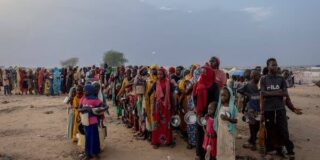
Homer’s juxtaposition performs a moral operation. In a culture that prized arete – excellence in particular spheres – the Iliad nevertheless interrogates the price paid for heroic renown achieved through slaughter. Achilles, who will don the shield, is implicated here: the shield shows him what he has lost and what his pursuits will never restore. What does this mean for contemporary conflict? Applied to the events unfolding in 2026, the shield’s cities are stark metaphors. The strikes described by governments as surgical and limited have the potential to produce precisely the scene of desolation: civilian casualties, attacks on infrastructure, the displacement of populations, and the unravelling of public order. A modern metropolis, linked by supply chains and public services, might not resemble Bronze Age Troy in structure, but the social effects – denied medical care, interrupted education, destroyed livelihoods – are functionally analogous. If an attack speeds the demise of a perceived threat, it may also convert a functioning society into the site of the shield’s first city, thereby incubating further cycles of retaliation, radicalisation, and human misery.
The image is also instructive for understanding modern rhetoric. Political leaders sometimes frame military action in terms of decisive judgements or unavoidable necessities, appealing to honour or security to justify force. Homer exposes the limitations of such rhetoric by raising a countervailing image: that the pursuit of glory – however culturally sanctioned – must be weighed against the practical goods of social life. Ancient Greeks might have valorised a kleos that transcended death, but Homer’s shield argues that the goods of food, law, and festivity – modest, everyday benefits – comprise the substance of a life worth preserving.
Beyond the Cities: Agriculture, Labor, and the Texture of Peace
The shield’s narrative extends beyond dichotomous urban scenes to a series of pastoral and agricultural vignettes: ploughs turning fields, reapers harvesting grain under the supervision of a king, vats full of grapes, and gatherings of dancers and musicians. These images, taken together, compose an argument for the constitutive importance of productive labour and communal joy. Agriculture on the shield is not merely background scenery; it is the infrastructure that makes civic life possible. The linkage between peace and productivity is explicit: fields must be tended, harvests shared, and surplus managed in order for societies to sustain themselves and to free up time for art and deliberation.
This emphasis is relevant to contemporary analysis because modern warfare – especially high-intensity or prolonged operations – often damages the very economic base upon which recovery depends. Bombed irrigation systems, contaminated water supplies, and destroyed marketplaces impede the ability of a population to feed itself and to care for the vulnerable. The agricultural scenes of the shield, then, are not aesthetic embellishments but moral injunctions: to defend and nurture the means by which life perpetuates itself.
The pastoral set pieces also enlist a sense of temporality and ecology. Seasonal cycles govern planting and harvest; they reward patience and collaboration. War, by contrast, is often episodic, impatient, and extractive. The shield thereby suggests another criterion for policy judgment: does an action safeguard or imperil the long-term ecological and economic systems that sustain human communities? If the answer is the latter, the immediate tactical gains must be subjected to strict moral scrutiny.
Dynamism and Artistry: The Living Shield
One of the most remarkable aspects of Homer’s portrayal is Hephaestus’ ability to make the shield liveable in language. The metal sings and moves; its scenes are not static but alive with sound, movement, and temporal depth. Homer’s ekphrasis does what all good art does: it invites empathy. The listener or reader cannot merely catalogue the images; they feel the ploughman’s exertion, the dancers’ breath, the cry of the mother who mourns her son. This vivacity complicates the shield’s role as an instrument of war. The shield’s purpose is protective, but its content is supremely life-affirming. Therein lies a quiet, insistent irony: an object designed to defend the body of a fighter offers a vision of life the fighter will likely never enjoy.
This formal quality has consequences for how we think about the function of cultural artefacts in times of conflict. Art, narrative, and ritual do not sit outside politics; they form the scaffolding for moral imagination. In modern terms, journalism, documentary film, literature, and social media operate as contemporary ekphrases that record and interpret events for a broad public. The way conflict is depicted shapes public sentiment; images of suffering drive humanitarian responses, while sanitized portrayals of surgical interventions can mute moral alarm. The ancient shield reminds us that representation shapes reality: the more fully we perceive the texture of everyday life that is threatened by violence, the sharper our moral lens becomes.
Benefits of Peace: Social, Moral, and Existential Gains
If the shield is a meditation on loss, it is equally a celebration of peace. Its peaceful city, its harvest scenes, and its dances constitute a portrait of goods that war either degrades or extinguishes. These goods can be categorized to highlight their policy and moral relevance.
Social cohesion and justice: The peaceful city resolves disputes through deliberation and compensatory justice rather than reciprocal vengeance. This establishes trust and mutual expectation – what social scientists term social capital. Societies with high social capital enjoy elastic economies, resilient institutions, and greater capacity to weather shocks. Conversely, war erodes social capital through displacement, mistrust, and trauma. The shield suggests that the cultivation of law and adjudicative processes is a primary function of any polity that seeks sustainable security.
Creativity and cultural continuity: The shield’s images of dancing, music, and craft demonstrate that cultural production is not a superfluity but a core human good. Peace permits the intergenerational transmission of knowledge, artistic innovation, and scientific inquiry. The modern corollary is plain: societies free of pervasive violence allocate resources to education, research, and cultural flourishing – conditions that in turn support economic development and stable governance.
Moral clarity and human dignity: Homer implicitly critiques the instrumentalisation of human beings as means to strategic ends. In the old heroic code, the pursuit of glory could justify tremendous suffering. The shield’s celebration of ordinary life reorients moral attention toward human dignity – the normative principle that persons are not merely nodes in strategic calculations but bearers of intrinsic worth. Contemporary ethics and international law converge upon this idea through instruments like the Geneva Conventions and human-rights treaties. The shield’s moral is consistent with the modern insistence that policy decisions must account for human cost in more than merely utilitarian terms.
Existential fulfilment: Finally, the shield invites reflection on the kinds of lives that are truly fulfilling. Philosophers from Aristotle to modern existentialists have argued that human flourishing depends upon participation in meaningful work, loving relationships, and civic engagement. The shield’s images are scenes of flourishing, not merely survival. That is the point: policy oriented toward merely neutralising threats fails to acknowledge the positive project of building conditions in which people can lead creative, purposeful lives.
Taken together, these benefits make peace a strategic and moral imperative. They also call into question declarations that violence alone can secure a better future. Short-term tactical victories – if indeed they can be achieved in the contemporary context – must be weighed against the durable goods that are lost when societies are converted into battlefields.
Irony and Tragedy in Achilles’ Fate
Perhaps the most piercing aspect of the shield is the tragic irony it harbours. The shield is made for Achilles, for a man fated to die young – and it depicts the very goods that he will not experience. Achilles, whose name is usually synonymous with martial excellence, receives an object whose moral message counsels restraint and appreciation of the ordinary. His choice to return to battle and to seek vengeance for Patroclus is not magisterially heroic when measured against the shield’s portrait of human goods; it is, in a sense, a surrender to an ethos of immediacy and hubris.
This tragedy has contemporary resonances. Soldiers and civilians alike pay the costs of leaders’ decisions. The moral culpability of those who command action that results in widespread suffering is not eroded by claims of necessity or inevitability. The shield is an ancient admonition that policy-making detached from a nuanced account of human consequence is not merely mistaken but tragic. The history of modern interventions – where tactical gains have been undercut by long-term instability and human suffering – supplies repeated confirmation.
Relevance to Contemporary Conflicts and Policy Alternatives
Returning to the immediate present, the military operation described as having begun on February 28, 2026, must be situated within these moral categories. If a state chooses to employ force on the premise that it will preclude future threats, it must confront uncertainties: the possibility of civilian casualties, the risk of retaliation and escalation, the strain placed on international law and multilateral institutions, and the longer-term potential for radicalisation that creates more, not fewer, security problems. The Shield of Achilles counsels prudence by reminding us that the achievement of security must be measured not merely by the elimination of an immediate military target but by the sustenance of conditions in which people can live.
What are the alternatives? The shield does not provide a technical recipe for diplomacy, but it does point toward paths congruent with its images. First, sustained multilateral engagement – through institutions like the United Nations, the International Atomic Energy Agency, and regional organisations – can create space for verification, confidence-building, and incremental de-escalation. Second, negotiated settlements that incorporate incentives for compliance and safeguard mechanisms for enforcement reduce the appeal of unilateral military options. Third, robust humanitarian protections and reconstruction planning can mitigate the collateral damage that often fuels subsequent cycles of violence. Fourth, investment in civil society and economic development addresses root causes that extremist actors exploit. These approaches are not politically simple or quick: they require patience, compromise, and the willingness to tolerate ambiguity. Yet they embody precisely the long-term horizon that the shield represents.
Legal and ethical frameworks must accompany strategy. The principles of proportionality and necessity in just-war theory and international humanitarian law provide moral constraints on the use of force. In a moment of swift military action, adherence to these principles should be a public benchmark against which governments are judged. Excessive secrecy or hasty declarations of success should not substitute for transparent accounting of civilian harm and an articulated plan for stabilisation.
Conclusion
The Shield of Achilles endures because it asks questions that remain urgent whenever humans contemplate the use of force. Its imagery makes moral abstractions tangible: the laughter at a wedding, the deliberation of elders, the patience of the ploughman, the constancy of the stars – all juxtaposed against the fever of siege and slaughter. In the face of contemporary crises, where strategic arguments for pre-emption and coercion clash with the lived reality of millions of people, this ancient artefact offers a simple but profound counsel: consider the long arc of human goods before choosing an action that may irrevocably sever them.
If the strikes of February 28, 2026, and whatever strategic calculus produced them teach us anything, it is the salience of proportional judgment and the necessity of imagining the full consequences of our choices. War can be fast; peace must be built. The shield’s lesson is not pacifist simplism; it does not deny that armed defence and the protection of innocents sometimes require force. Rather, it insists that force be the last, not the first, instrument of policy, and that any recourse to arms be embedded in a broader moral project that prizes human flourishing and institutional resilience.
As a public community – whether organised as nation-states, civil societies, or global organisations – we would do well to read the shield as both artefact and admonition. Let our policies reflect not only an immediate calculus of threats and advantages but a commitment to the agrarian fields, marketplaces, and dances the shield preserves in bronze. In doing so, we honour a wisdom that, though ancient, illuminates the perilous choices of our time: the choice between the ephemera of triumph and the durable goods of a world in which ordinary life may continue.