
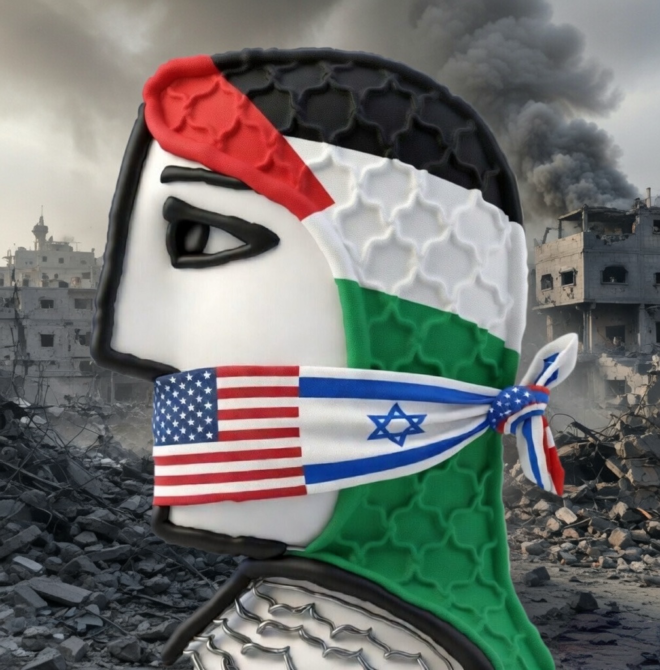
Abstract
This article examines the intersection of Palestinian human rights advocacy and the contemporary erosion of international legal accountability mechanisms, with particular attention to the period 2021–2026. It traces the historical arc from the post-World War II Nuremberg and Tokyo tribunals through the establishment of the International Criminal Court (ICC) in 2002, situating Palestinian civil society organisations within this broader architecture of international justice. Drawing on documentation produced by organisations including Al-Haq, Al Mezan, the Palestinian Centre for Human Rights, and Addameer, the article analyses how extraterritorial sanctions imposed by the United States – principally under Executive Order 14203 (2025) – have functioned to curtail advocacy, disrupt evidentiary processes, and produce a chilling effect on global human rights defenders. The article further surveys the ICC’s ongoing investigation into the Situation in the State of Palestine alongside comparative cases from Afghanistan, Ukraine, Sudan, and the Philippines to contextualise the systemic pressures confronting international criminal justice. It concludes that the targeted suppression of Palestinian rights organisations represents not merely a bilateral political dispute but a structural threat to the post-war multilateral order, and that renewed state commitment to international legal norms is essential to uphold the foundational promise of accountability.
Keywords: Palestinian human rights; International Criminal Court; international humanitarian law; civil society; United States sanctions; accountability; international justice
I. INTRODUCTION
In the aftermath of World War II’s unprecedented atrocities, global leaders made a solemn collective commitment to prevent their recurrence through the construction of durable legal frameworks premised on the protection of human dignity. The Nuremberg Trials, commencing on 20 November 1945, represented a watershed moment in this endeavour: for the first time, senior state officials were prosecuted before an international tribunal for crimes against peace, war crimes, and crimes against humanity. (1) The Tokyo Trials of 1946–1948 extended this model to the Asia-Pacific theatre. (2) Taken together, these ad hoc proceedings established the foundational principle that no individual – regardless of rank or nationality – is immune from international legal accountability.
Nearly eight decades later, the international justice architecture constructed in that post-war moment confronts a period of acute stress. The present article situates this crisis at the intersection of two developments: the ongoing struggle for Palestinian human rights under prolonged occupation, and the increasingly assertive use of extraterritorial coercive measures by powerful states – most notably the United States – to insulate allies from legal scrutiny. Through an analysis of these converging pressures, this article argues that the targeted suppression of Palestinian civil society organisations represents a structural challenge to the post-war multilateral order that extends well beyond the specific case of Palestine. The article proceeds in five parts: Part II surveys the historical evolution of international criminal justice from Nuremberg to the ICC; Part III examines Palestinian human rights organisations and their role within international legal processes; Part IV analyses US sanctions targeting these organisations and ICC personnel; Part V contextualises the Palestine investigation within the ICC’s broader docket; and Part VI offers concluding reflections on the implications for the international legal order.
II. THE HISTORICAL ARCHITECTURE OF INTERNATIONAL CRIMINAL JUSTICE
A. From Nuremberg to the Rome Statute
The Nuremberg Charter, signed in August 1945, achieved a significant legal innovation by codifying, for the first time, a definition of crimes against humanity – encompassing murder, extermination, enslavement, deportation, and persecution committed as part of a widespread or systematic attack against a civilian population. (3) The International Military Tribunal applied these norms to twenty-two senior Nazi officials, convicting nineteen. The principle of command responsibility, holding superiors accountable for the acts of subordinates where awareness and a failure to prevent can be established, emerged as a central doctrinal contribution of the proceedings. (4)
The Tokyo Tribunal, formally the International Military Tribunal for the Far East, similarly prosecuted twenty-eight Japanese officials for aggressive war and associated atrocities, sentencing seven to death. Both tribunals were subsequently criticised for reflecting a form of “victors’ justice” – proceeding, as they did, without scrutiny of Allied conduct. (5) Yet these criticisms should not obscure their constitutive role: the United Nations General Assembly affirmed the Nuremberg Principles in 1946, the Genocide Convention was adopted in 1948, and the four Geneva Conventions followed in 1949, together establishing the normative architecture of modern international humanitarian law. (6)
Cold War geopolitical competition effectively froze progress toward a permanent international criminal court for four decades. It was the genocides in the former Yugoslavia and Rwanda in the early 1990s that reinvigorated institutional momentum. The UN Security Council established the International Criminal Tribunal for the Former Yugoslavia (ICTY) in 1993 and the International Criminal Tribunal for Rwanda (ICTR) in 1994. (7) Together, these ad hoc bodies prosecuted 161 and 93 individuals respectively, refining concepts of joint criminal enterprise, command responsibility, and, notably in the ICTR context, the classification of rape as an instrument of genocide. (8) Their jurisprudence provided the doctrinal foundation for the Rome Statute, negotiated by 160 states in 1998 and entering into force on 1 July 2002, establishing the ICC as the first permanent institution mandated to prosecute genocide, war crimes, crimes against humanity, and the crime of aggression. (9)
B. The ICC’s Structural Challenges
By 2026, the ICC counted 124 states parties to the Rome Statute. (10) It maintains twelve active investigations across four continents, reflecting both the breadth of its mandate and the ambition of its founding vision. Yet the Court operates under conditions of persistent structural constraint. Three of the five permanent members of the UN Security Council – the United States, Russia, and China – remain outside the Rome Statute system, limiting the Court’s effective reach in cases implicating their interests or those of their allies. Resource constraints have contributed to an average trial length exceeding five years, inviting criticism of procedural inefficiency. (11)
Accusations of geographic bias – particularly a perception that the Court has disproportionately focused on African situations – have contributed to withdrawal pressures, though several African states have maintained membership. (12) More recently, the use of economic sanctions by the United States against ICC personnel has introduced a novel and destabilising threat to the Court’s institutional integrity. These developments do not merely impede individual cases; they risk establishing a precedent in which powerful states may obstruct international justice mechanisms with relative impunity, thereby undermining the universalist premises on which the post-war order was founded.
III. PALESTINIAN CIVIL SOCIETY AND INTERNATIONAL LEGAL PROCESSES
A. The Landscape of Palestinian Human Rights Documentation
Palestinian civil society organisations have occupied a critical role in documenting and reporting violations of international humanitarian law in the Occupied Palestinian Territory (OPT), operating under conditions of acute and persistent insecurity. Four organisations in particular have made systematic contributions to international accountability mechanisms and merit specific attention.
Al-Haq, founded in Ramallah in 1979, is among the oldest human rights organisations in the Arab world. It has pioneered the field-based documentation of violations in the West Bank and Gaza, including arbitrary detention, forced displacement, settlement-related environmental harm, and the demolition of civilian structures. (13) Recipient of the French Republic’s Human Rights Prize and recognised by the UN Human Rights Council, Al-Haq has submitted evidence to UN treaty bodies, special procedures, and, following Palestine’s accession to the Rome Statute, to the ICC’s Office of the Prosecutor. (14)
The Al Mezan Center for Human Rights, established in Gaza City in 1999, specialises in the documentation of laws-of-war violations during armed conflict, employing forensic methodology and witness testimony to produce detailed accounts of civilian casualties, infrastructure destruction, and allegations of the use of prohibited weapons. Operating within a territory subject to a prolonged blockade, Al Mezan has documented, inter alia, over 20,000 Palestinian deaths in the escalations commencing October 2023, providing evidentiary material to international bodies including the ICC. (15)
The Palestinian Centre for Human Rights (PCHR), based in Gaza since 1995, provides direct legal assistance to victims of violations including extrajudicial killings and torture, representing families before Israeli judicial and quasi-judicial bodies. PCHR has filed hundreds of complaints with Israeli authorities; a significant proportion have remained unresolved, raising well-documented concerns regarding systemic impunity. (16) Addameer Prisoner Support and Human Rights Association, founded in 1991 and focused on the rights of Palestinian political detainees, has documented the detention of over 10,000 Palestinians annually, many held under administrative detention orders that permit incarceration without charge or trial and without meaningful judicial review. (17)
B. The Context of Targeted Suppression
These organisations operate under severe operational constraints. In October 2021, the Israeli government designated six prominent Palestinian civil society organisations – including Al-Haq and Addameer – as “terrorist organisations” under Israeli domestic law. (18) This designation was widely rejected by the international community, including the European Union, which characterised the available evidence as insufficiently substantiated. (19) The designations nonetheless produced tangible operational disruption, affecting donor relationships and the ability to conduct advocacy internationally.
The period 2023–2024 saw the physical destruction of multiple organisational offices in Gaza through aerial bombardment, resulting in the deaths of staff members and their families. These losses represent not only human tragedies but the irreversible destruction of institutional knowledge, archival records, and ongoing documentation work. Despite this, the organisations have maintained operations, continuing to amplify victim testimony and to provide evidentiary submissions to international accountability mechanisms.
IV. UNITED STATES SANCTIONS AND THE EROSION OF INTERNATIONAL ACCOUNTABILITY
A. Executive Order 14203 and its Application
The most significant recent development in the suppression of Palestinian human rights advocacy has been the systematic application of economic sanctions by the United States government under Executive Order 14203, issued in February 2025. (20) The Order, which targets individuals and entities deemed to have engaged in conduct threatening the national security or foreign policy of the United States in connection with the ICC’s investigations, has been applied in a manner that directly implicates Palestinian civil society.
Addameer was subjected to sanctions in June 2025; Al-Haq, Al Mezan, and PCHR followed in September 2025. (21) The measures, announced by Secretary of State Marco Rubio, characterised the organisations’ evidentiary submissions to the ICC – including documentation related to the Court’s investigation into the Situation in the State of Palestine – as constituting “illegitimate targeting” of Israel. The practical consequences include the freezing of assets, the prohibition of financial transactions with US persons, and the closure of banking relationships, isolating the targeted organisations from international donors and partners. (22)
B. Sanctions Targeting ICC Personnel
The scope of EO 14203 has extended beyond Palestinian civil society to encompass the ICC itself. Sanctions have been imposed on the Prosecutor, Karim Khan, on deputy prosecutors, and on judges, following the Court’s issuance in November 2024 of arrest warrants for Israeli Prime Minister Benjamin Netanyahu and former Defence Minister Yoav Gallant on charges of war crimes – including the use of starvation as a method of warfare – and crimes against humanity. (23) UN Special Rapporteur Francesca Albanese similarly faced sanctions following the publication of reports documenting alleged complicity by technology firms in Israeli military operations. (24)
The UN General Assembly condemned these measures in August 2025 as incompatible with the rule of law and the principle of judicial independence. (25) More than eighty civil society organisations, including Human Rights Watch and Amnesty International, characterised the sanctions as creating a chilling effect on human rights advocacy globally. (26) UN High Commissioner for Human Rights Volker Türk urged their immediate withdrawal, warning that such measures pose systemic threats to civic space. Revelations of Israeli intelligence operations targeting the ICC since at least 2015 – including surveillance of Court staff and alleged intimidation – have further complicated proceedings and raised questions about the Court’s institutional security. (27)
C. Systemic Implications
The sanctions regime examined above must be understood not merely as a bilateral instrument of foreign policy but as a structural intervention in the architecture of international justice. By subjecting organisations that submit evidence to an international judicial body to economic punishment, and by threatening ICC personnel with personal financial consequences for the performance of their judicial functions, the United States has introduced a mechanism capable of deterring accountability across a wide range of situations. Seventy-nine states formally objected to these measures in December 2025, arguing that their effect was to generate systemic impunity. (28)
The broader pattern of US retrenchment from multilateral institutions compounds this concern. Concurrent reductions in US contributions to UN bodies, withdrawal from the Human Rights Council, and the threat to condition UN membership or funding on deference to US positions regarding Palestine or the ICC collectively suggest a coherent strategic posture in which the international legal order is instrumentalised in service of bilateral alliance management rather than treated as a normative framework binding on all actors. (29)
V. THE ICC’S PALESTINE INVESTIGATION IN COMPARATIVE PERSPECTIVE
A. The Situation in the State of Palestine
The ICC formally opened its investigation into the Situation in the State of Palestine on 3 March 2021, covering alleged crimes committed on Palestinian territory – Gaza, the West Bank, and East Jerusalem – from 13 June 2014 onwards, and extending to events following 7 October 2023. (30) Palestine’s accession to the Rome Statute in January 2015 provided the jurisdictional basis for the investigation, a question on which the Pre-Trial Chamber provided an authoritative ruling in February 2021, affirming the Court’s territorial jurisdiction over the OPT as defined under relevant UN resolutions. (31)
The principal milestones of the investigation include: the issuance in November 2024 of arrest warrants for Prime Minister Netanyahu and Minister Gallant on charges encompassing the war crime of using starvation as a method of warfare, attacks against civilians, and crimes against humanity including murder and persecution; and a warrant for Hamas commander Mohammed Deif addressing hostage-taking and sexual violence as a means of warfare, subsequently withdrawn following confirmation of his death in July 2024. (32) In December 2025, the Appeals Chamber rejected Israel’s challenges to jurisdiction and admissibility under Articles 18 and 19 of the Rome Statute, affirming the investigation’s legal foundation. (33)
The investigation has been supported by referrals from multiple state parties, including South Africa, Bangladesh, Bolivia, Comoros, and Djibouti in November 2023, and Chile and Mexico in January 2024 – an expression of multilateral support reflecting the investigation’s significance in the broader global South. (34) The parallel proceedings before the International Court of Justice in the genocide case initiated by South Africa in December 2023, with Israel’s defence submissions extended to January 2026, constitute a complementary avenue of international legal scrutiny that further underscores the exceptional degree of international legal attention directed at the situation. (35)
B. Comparative Cases and the Systemic Picture
Situating the Palestine investigation within the ICC’s broader docket illuminates both the Court’s normative scope and the differential pressures it confronts across situations. The Afghanistan investigation, opened in 2020, yielded arrest warrants in January 2025 for Taliban Supreme Leader Haibatullah Akhundzada and Supreme Court head Abdul Hakim Haqqani on charges of gender-based persecution, addressing systematic restrictions on women’s access to education, movement, and public life since the Taliban’s return to power. (36) The Ukraine investigation, initiated following Russia’s full-scale invasion in February 2022, produced warrants for President Vladimir Putin and Commissioner for Children’s Rights Maria Lvova-Belova on charges relating to the unlawful deportation of Ukrainian children. (37)
The Darfur situation, referred by the Security Council in 2005 and long characterised by non-cooperation, recorded significant progress in October 2025 with the conviction of Ali Kushayb on twenty-seven counts of war crimes and crimes against humanity, followed by a twenty-year sentence in December 2025 – an outcome that demonstrates the capacity of the ICC to achieve results even in protracted, politically charged situations. (38)
The Philippines case, examining alleged crimes against humanity in the context of President Rodrigo Duterte’s “war on drugs,” proceeded to a confirmation of charges hearing in February 2026 following a determination regarding Duterte’s fitness to participate in proceedings. (39)
In Mali, Al Hassan Ag Abdoul Aziz’s 2024 conviction for crimes committed in Timbuktu advanced to the reparations phase in 2025. (40) Libya accepted an extension of the Court’s jurisdiction through to 2027 in May 2025, reflecting continuing engagement despite the complexity of that situation. (41)
Across its active docket of twelve investigations, the Court has issued over sixty warrants and secured multiple convictions. These outcomes attest to the Court’s capacity for consequential action but also underscore the persistent gap between warrant issuance and custody – a gap that is materially widened when powerful states decline to cooperate or actively obstruct proceedings.
VI. CONCLUSION: RECOMMITTING TO INTERNATIONAL LEGAL NORMS
The analysis advanced in this article demonstrates that the suppression of Palestinian human rights advocacy is not an isolated bilateral phenomenon but a manifestation of broader structural pressures threatening the integrity of the international justice system constructed after 1945.
The targeting of Al-Haq, Al Mezan, PCHR, and Addameer through economic sanctions not only disrupts critical documentation and legal assistance work in the OPT but signals to human rights defenders globally that engagement with international judicial mechanisms may carry severe professional and institutional consequences.
The ICC confronts a paradox. The scope of its investigations – spanning Afghanistan, Ukraine, Sudan, Palestine, and beyond – reflects an expansive interpretation of its mandate and an aspiration toward genuine universalism. Yet the institutional capacity to fulfil this mandate is increasingly constrained by the reluctance of powerful states to submit themselves or their allies to scrutiny, by resource limitations, and by the active deployment of coercive economic instruments against the Court’s personnel and cooperating civil society organisations. The result is a system that risks being simultaneously over-ambitious in aspiration and under-capacitated in practice.
Three courses of action are indicated by this analysis. First, states parties to the Rome Statute should take coordinated measures to protect the ICC from extraterritorial interference, including through legislative responses to sanctions directed at the Court’s personnel and cooperating organisations.
The December 2025 declaration of seventy-nine states against the US sanctions regime represents a meaningful beginning but requires translation into durable institutional protection.
Second, international donors and partner institutions should work to insulate Palestinian civil society organisations from the operational consequences of targeted sanctions, including through alternative banking channels and the development of resilient funding architectures.
Third, the broader project of a dedicated crimes against humanity convention – under discussion in UN General Assembly forums as of early 2026 – should be advanced as a mechanism to strengthen the normative framework and to affirm the continuing relevance of the post-war commitment to accountability.
The Palestinian case is, in an important sense, a test of the international legal order’s capacity for principled consistency. The Nuremberg Trials established that the rule of law, applied impartially and without regard to political expediency, is the only durable foundation for international peace and security. Whether that principle can survive the contemporary confluence of geopolitical pressure, institutional erosion, and targeted suppression of accountability advocates will depend, ultimately, on the political will of states to defend the system they constructed. The evidence of 2025–2026 suggests that this will cannot be taken for granted; it must be actively and urgently renewed.
Notes
1 Agreement for the Prosecution and Punishment of the Major War Criminals of the European Axis (London Charter) (1945) 82 UNTS 279.
2 Charter of the International Military Tribunal for the Far East (1946), Special Proclamation by the Supreme Commander for the Allied Powers.
3 London Charter (n 1) art 6(c).
4 Telford Taylor, The Anatomy of the Nuremberg Trials (Little, Brown 1992) 38–55.
5 Richard Minear, Victors’ Justice: The Tokyo War Crimes Trial (Princeton University Press 1971).
6 UNGA Res 95(I) (11 December 1946); Convention on the Prevention and Punishment of the Crime of Genocide (adopted 9 December 1948, entered into force 12 January 1951) 78 UNTS 277; Geneva Conventions I–IV (1949).
7 SC Res 808 (22 February 1993); SC Res 955 (8 November 1994).
8 Prosecutor v Akayesu (Judgment) ICTR-96-4-T (2 September 1998).
9 Rome Statute of the International Criminal Court (adopted 17 July 1998, entered into force 1 July 2002) 2187 UNTS 90.
10 ICC, Assembly of States Parties, Official Records (2026).
11 Open Society Justice Initiative, Putting Complementarity into Practice (OSJI 2022) 14.
12 African Union, Decision on the International Criminal Court Doc EX.CL/639(XVIII) (January 2011).
13 Al-Haq, Annual Report 2024 (Ramallah 2025).
14 ibid; Human Rights Council, Report of the Special Rapporteur on the Situation of Human Rights in the Palestinian Territories Occupied since 1967, UN Doc A/HRC/49/87 (2022).
15 Al Mezan Center for Human Rights, Gaza in Numbers: Escalation Report 2023–2024 (Gaza 2025).
16 Palestinian Centre for Human Rights, Monthly Report on the Situation of Human Rights in the Occupied Palestinian Territory (various issues, 2024–2025).
17 Addameer Prisoner Support and Human Rights Association, Statistics on Palestinian Prisoners (2025).
18 Israeli Ministry of Defence, Designation of Palestinian Civil Society Organisations (22 October 2021).
19 European Union External Action Service, Statement on the Designation of Palestinian Civil Society Organisations (25 October 2021).
20 Exec Order No 14203, “Imposing Sanctions on the International Criminal Court” (6 February 2025) 90 Fed Reg 9369.
21 US Department of State, Press Statement by Secretary of State Marco Rubio on Sanctions Against Palestinian NGOs (September 2025).
22 International Federation for Human Rights, Impact Assessment: US Sanctions on Palestinian Human Rights Organisations (Paris 2025).
23 ICC, Warrant of Arrest for Benjamin Netanyahu and Yoav Gallant, ICC-01/18-309 (21 November 2024).
24 Human Rights Council, Report of the Special Rapporteur on the Situation of Human Rights in the Palestinian Territories Occupied since 1967, UN Doc A/HRC/56/CRP.4 (2025).
25 UNGA Res 79/315 (August 2025).
26 Joint Statement of 80+ Civil Society Organisations on US Sanctions Targeting the ICC and Human Rights Defenders (September 2025).
27 Amos Harel and others, “Revealed: Israeli Intelligence Targeted ICC Officials Since 2015” Haaretz (Tel Aviv, 2025).
28 Declaration of 79 States Parties on the Integrity of the International Criminal Court (December 2025).
29 Crisis Group, Global Watchlist 2026 (Brussels 2026) 12–18.
30 ICC Office of the Prosecutor, Statement on the Opening of the Investigation into the Situation in the State of Palestine (3 March 2021).
31 Situation in the State of Palestine, Decision on the “Prosecution’s Request Pursuant to Article 19(3)” ICC-01/18-143 (5 February 2021).
32 ICC (n 23); ICC, Warrant of Arrest for Mohammed Deif, ICC-01/18-310 (21 November 2024); ICC, Withdrawal of Warrant for Mohammed Deif (September 2024).
33 Situation in the State of Palestine, Appeals Chamber Judgment on Jurisdiction and Admissibility, ICC-01/18 (December 2025).
34 ICC, Referrals by States Parties regarding the Situation in the State of Palestine, ICC-01/18 (2023–2024).
35 Application of the Convention on the Prevention and Punishment of the Crime of Genocide in the Gaza Strip (South Africa v Israel) ICJ Proceedings (2023–2026).
36 ICC, Warrants of Arrest in the Situation in the Islamic Republic of Afghanistan, ICC-02/17 (January 2025).
37 ICC, Warrant of Arrest for Vladimir Vladimirovich Putin and Maria Lvova-Belova, ICC-01/22-2 (17 March 2023).
38 Prosecutor v Ali Muhammad Ali Abd-Al-Rahman (“Ali Kushayb”), Trial Chamber IX Judgment (October 2025); Sentencing Decision (December 2025), ICC-02/05-01/20.
39 Situation in the Republic of the Philippines, Confirmation of Charges Hearing (February 2026), ICC-01/21.
40 Prosecutor v Al Hassan Ag Abdoul Aziz Ag Mohamed Ag Mahmoud, Reparations Phase (2025), ICC-01/12-01/18.
41 Situation in Libya, Extension of Jurisdiction, ICC-01/11 (May 2025).


The narrow presentations of international conflicts and legal measures present before the ICC and the UN demonstrates their efforts to apply the international rule of law evenly. The disproportionate power exercised by some member states threatens to destabilise the entire system. Criticisms of the victors’ justice 80 years ago now blend into a victors’ unaccountability. As one of the primary architects of the international rules based order, the United States behaviour toward Palestine in supporting and facilitating Israel’s genocide and threats against this who speak out against tyranny, speaks to a hollowness in the commitments of UN member states to the genuine mechanisms world peace. Is that salvageable without another cataclysm?
The Zionist propaganda machine has spent the last 78 years dehumanising Palestinians. We are seeing the fruits of this Zionism labour in what is happening today. There’s a lived streamed genocide happening in Gaza right now, and many countries, including Australia are in the process of criminalising calling this genocide out for what it really is – GENOCIDE!!
This academic article provides a sobering and well-documented analysis of how **U.S. extraterritorial sanctions**—especially via **Executive Order 14203** (signed February 2025)—are actively undermining the post-WWII international justice architecture, with Palestinian human rights defenders bearing the brunt.
Key timeline it highlights:
– Roots in Nuremberg/Tokyo ? ICC’s 2002 creation as a promise of universal accountability.
– Palestine’s situation: ICC probe ongoing since 2021 (formal investigation 2021), with Palestinian orgs like **Al-Haq**, **Al Mezan**, **PCHR**, and **Addameer** supplying crucial evidence/documentation on alleged crimes.
– Turning point: EO 14203 (revived/expanded Trump-era policy) targets anyone “assisting” ICC actions against US/allies (incl. Israel), declaring ICC efforts an “unusual and extraordinary threat.”
– September 2025 escalation: US designates **Al-Haq**, **Al Mezan**, and **PCHR** under EO 14203 for “directly engaging” in ICC efforts re: Israeli nationals. (Addameer also hit earlier/later waves.)
Effects documented widely (UN experts, HRW, Amnesty, Coalition for the ICC, etc.):
– **Asset freezes** + US jurisdiction blocks ? crippled banking, funding, operations.
– **Chilling effect** on evidence collection, victim representation, global advocacy.
– Broader comparisons: Similar pressures seen in Afghanistan, Philippines ICC probes; Ukraine/Sudan cases show selective enforcement.
The article’s core argument resonates strongly: This isn’t just bilateral US-Israel politics. Sanctioning civil society groups that feed evidence into the ICC represents a **structural assault** on multilateralism and the principle that no one is above the law. When the US weaponizes sanctions to shield allies from scrutiny while the ICC pursues parallel cases (e.g., Sudan, Ukraine), it erodes the very system built after 1945 to prevent impunity.
In 2026, with the Palestine investigation still grinding forward amid Gaza’s catastrophe, this pattern signals danger: If major powers can kneecap documentation and advocacy groups without consequence, international criminal justice becomes optional for the powerful.
Renewed state commitment to Rome Statute norms isn’t optional—it’s urgent. States that value rule of law should:
– Reject/ignore EO 14203 extraterritorial reach (EU Blocking Statute activation urged repeatedly).
– Increase support/funding for sanctioned orgs via non-US channels.
– Publicly back ICC independence.
Silencing Al-Haq, Al Mezan, PCHR & co. doesn’t erase evidence—it exposes the fragility of the system we claim to defend.
Essential reading for anyone tracking accountability, double standards in intl law, or the shrinking space for human rights defenders.
How quaint — the Palestinian case has been promoted to “final exam” for the international legal order, as if the Nuremberg lesson that impartial law, not political convenience, is the only durable foundation for peace were merely a footnote we could choose to ignore. The real plot twist of 2025–2026 isn’t that law looks imperfect; it’s that the institutions and states built to uphold it are behaving like tired proctors—easily bullied, quick to look away, and allergic to accountability. If the rule of law is to mean anything beyond nostalgia in a museum of idealism, it needs active renewal, not polite lectures: political will must be mustered, advocates protected, and hypocrisy exposed for what it is. So let’s not pretend this is a theoretical exercise — sharpen your pencils, the grade is being written in real time.
the Palestinian case has been promoted to “final exam” for the international legal order, as if the Nuremberg lesson that impartial law, not political convenience, is the only durable foundation for peace were merely a footnote we could choose to ignore. The real plot twist of 2025–2026 isn’t that law looks imperfect; it’s that the institutions and states built to uphold it are behaving like tired proctors—easily bullied, quick to look away, and allergic to accountability. If the rule of law is to mean anything beyond nostalgia in a museum of idealism, it needs active renewal, not polite lectures: political will must be mustered, advocates protected, and hypocrisy exposed for what it is. So let’s not pretend this is a theoretical exercise — sharpen your pencils, the grade is being written in real time.
The greatest crime that Zionist Israel has committed is to convince the majority of the world that the Palestinians are illegitimate people. Zionism should for evermore hang its head in shame for that crime.
The examines the intersection of Palestinian human-rights advocacy and the contemporary erosion of international legal accountability (2021–2026), tracing a historical arc from the post?war Nuremberg and Tokyo tribunals to the 2002 establishment of the ICC. Drawing on documentation from Al?Haq, Al Mezan, the Palestinian Centre for Human Rights and Addameer, it demonstrates how extraterritorial US sanctions—principally Executive Order 14203 (2025)—have curtailed advocacy, disrupted evidentiary processes, and produced a chilling effect on global human?rights defenders. Situating the ICC’s investigation into the Situation in the State of Palestine alongside comparative cases (Afghanistan, Ukraine, Sudan, Philippines), the article argues that targeted suppression of Palestinian rights organisations constitutes not a bilateral quarrel but a structural threat to the post?war multilateral order; it concludes with a call for renewed state commitment to international legal norms and impartial accountability to uphold the foundational promise of justice.
How many dead Palestinians does it take to make a genocide? How many war crimes does the United States have to commit before the world calls out those crimes? When does the United States finally get the recognition it deserves as the number one military aggressor on planet Earth.
Nuremberg established that law applies to everyone or it means nothing. The world is currently failing that test.
Zionism built itself on the back of Europeans excluding Jews from the political and cultural landscape of Europe, culminating in the Holocaust and the establishment of the state of Israel. Nobody seriously believes that Israel shouldn’t exist as a safe space for Jewish people. The problem arises when Jews try to expand their safe space at the expense of their Arab neighbours, this is the same kind of othering that lead to the establishment of Israel in the first place. Israeli’s need to learn from their own history.
Israel is committing genocide in Gaza, that’s the harsh reality. The harsh reality Zionism is trying to deny.
The Palestinian people are people without human rights or human dignity, all driven by Zionism.
God have mercy on the Palestinian people, as no one else does.
To quote from your poem “Where Have All the Palestinians Gone”
“Where have all the Palestinians gone, long time passing?
Where have all the Palestinians gone, long time ago?
Where have all the Palestinians gone?
Torn from their villages, every one.
When will they ever learn?
When will we ever learn?”
Are we allowed to mention that Zionist Israel is committing genocide in Palestine?