
I write this essay as a Jew. I say that not to perform identity, nor to signal tribal allegiance, but because it matters – deeply and painfully – to the argument I am about to make. The history between my people and the institution of the papacy is long, complicated, and at times harrowing. Pogroms were preached from pulpits. Inquisitions bore the Church’s seal. And in the darkest chapter of all – the industrialised murder of six million Jews and millions of others deemed racially or ideologically unfit – the Bishop of Rome fell largely silent, when a prophetic roar was what the age demanded. That silence has never been fully forgotten, nor should it be. Memory is a moral obligation.
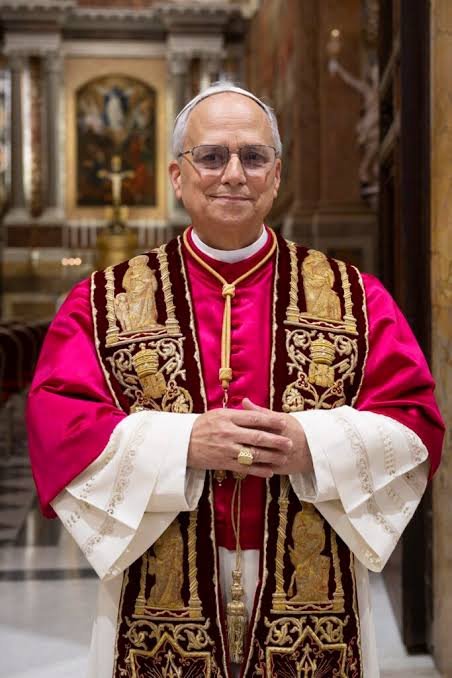
And yet here I am, a Jew, writing in defence – in admiration, even – of a Catholic pope. Not out of naivety. Not out of some sentimental ecumenical gesture. But because Pope Leo XIV, born Robert Francis Prevost in Chicago and elected to the Chair of Saint Peter on 8 May 2025, has done something genuinely remarkable: in an era of escalating coercive power, of superpowers wielding military might as diplomatic vocabulary, he has planted himself in the tradition of the prophets and refused to move. That tradition, I want to argue, belongs as much to Isaiah and Amos as it does to Augustine and Aquinas. When a leader speaks truth to power – when he says to the mightiest military force in human history, “No, I will not be your chaplain” – that act is holy, wherever it originates.
This essay is both an analytical and a personal reckoning. It reads Leo XIV’s emergence against the shadow of the Pius popes, measures his response to American pressure against the moral failures of the 1930s and 1940s, and argues that what we are witnessing in the Vatican today is nothing less than the rehabilitation of moral authority as a category of global politics. In a world glutted with force and starved of conscience, Pope Leo XIV offers something scarce and therefore precious: leadership that derives its power not from armies or sanctions, but from fidelity to truth. As a Jew who has studied what happens when moral authority is absent or suppressed, I find in this American pope a beacon I did not expect, and one I am not ashamed to acknowledge.
THE LONG SHADOW OF SILENCE
To understand what Leo XIV represents, one must first sit with what came before – not as an exercise in blame, but as an act of moral archaeology. The pontificates of Pius XI (1922–1939) and Pius XII (1939–1958) coincided with the most catastrophic collapse of civilisational order in recorded history. Under their stewardship, the institutional Church navigated the rise of fascism, the machinery of genocide, and the aftermath of total war. Their record is not simply a record of cowardice; it is a record of institutional logic triumphing over prophetic obligation – and that distinction matters.
Pius XI was not without courage of a kind. His 1937 encyclical Mit brennender Sorge – “With Burning Sorrow” – was smuggled into Germany in defiance of the Nazi state and read aloud from Catholic pulpits, critiquing the regime’s pagan nationalism and racial ideology. It was an act of institutional daring. And yet four years earlier, the same pope had signed the Reichskonkordat with Hitler’s government, a concordat that critics argued lent the Third Reich a veneer of international legitimacy precisely when its character was becoming unmistakable. The logic was institutional self-preservation: safeguard Catholic schools, protect Catholic clergy, maintain access to Catholic faithful. The logic was not unreasonable. The logic was, nonetheless, catastrophically inadequate.
Pius XII presents an even more complex and contested picture. The Vatican archives, opened incrementally in recent decades, have revealed extensive private diplomacy – covert aid networks, diplomatic protests delivered through back channels, sheltering of Jewish refugees within Church properties. Pius XII was not, as the most polemical accounts suggest, a simple collaborator. But the terrible truth is that none of this private activity was accompanied by the one thing the moment demanded: a clear, public, thunderous condemnation. His 1942 Christmas radio address referred obliquely to “hundreds of thousands” condemned to death “for no reason other than their nationality or race” – without naming the Jews, without naming the Nazis, without the word “murder.” Historians debate his motives endlessly: fear of reprisals against Catholics, doubt about the intelligence reaching him, the Vatican’s centuries-old diplomatic tradition of studied neutrality. What is not debated is the result. The prophetic voice was missing. And in its absence, silence functioned as a kind of permission.
For my people, this silence is not merely a historical data point. It is inscribed in memory as a wound. The Shoah – the Holocaust – did not occur in a moral vacuum. It unfolded in a continent saturated with Christian civilisation, in countries where the Church commanded the deepest loyalties of the population. A pope who spoke with unambiguous moral authority – who said, as John Paul II would say decades later in, We Remember: A Reflection on the Shoah (1998), that antisemitism is a “sin against God and against humanity” – might not have stopped the machinery of death. But he might have complicated it. He might have saved more lives. He might, at minimum, have preserved the moral credibility of an institution that claimed to be the conscience of the world. That credibility was damaged, perhaps irreparably for some. I carry that knowledge with me as I write what follows.
AN AMERICAN POPE, AN AUGUSTINIAN SOUL
The election of Robert Francis Prevost as the 267th Bishop of Rome was, by any measure, a historical rupture. The first American-born pope – the first from the United States, that superpower whose shadow falls across every corner of the planet – carried with it an obvious symbolic charge. Would this pope be, in some meaningful sense, America’s pope? Would the nation that had elected him (through the world’s most improbable electorate, the College of Cardinals) find in him a chaplain for its global ambitions?
Leo XIV’s biography argues otherwise. Born in Chicago on 14 September 1955, he entered the Augustinian order and spent more than two decades as a missionary in Peru – not as a colonial administrator of souls, but as a pastor embedded in the struggles of the poor and the marginalised. Peru is not Washington. The preferential option for the poor, that great emphasis of Latin American liberation theology and modern Catholic social doctrine, is not an abstraction when you have lived and ministered among people for whom poverty is not a policy problem but a daily condition of existence. His dual U.S.-Peruvian citizenship is not a biographical footnote; it is a theological statement. It means he carries within himself the perspective of both the superpower and those upon whom superpower logic is most directly visited.
His Augustinian formation deepens this. Saint Augustine’s City of God – written in the rubble of a collapsing Roman Empire – distinguishes with relentless clarity between two orders: the earthly city, organised around self-interest, dominance, and the love of self even to the contempt of God; and the heavenly city, organised around justice, peace, and the love of God even to the contempt of self. Augustine was not a pacifist; he developed the Christian just war tradition. But he was unsparing in his insistence that earthly power divorced from justice is not authority – it is, in his unforgettable phrase, merely “robbery on a large scale.” Leo XIV, steeped in this tradition, brings to the papacy not a political programme but a theological anthropology: the human person, every human person, bears a dignity that no state, no military, no geopolitical doctrine can legitimately override.
This is the intellectual and spiritual inheritance that Leo XIV carries into what may be the most consequential pontificate of the 21st century. It is also – and this is the point I wish to press – a profoundly Jewish inheritance. When Augustine insists on the inalienable dignity of the person, he is drawing on a tradition that runs from Genesis through the Psalms through the prophetic literature that shaped his own reading of scripture. The prophets – Isaiah, Jeremiah, Amos, Micah – were not political commentators. They were theologians of power, insisting that rulers are accountable to a standard that transcends their own might. “What does the Lord require of you,” asks Micah, “but to do justice, to love mercy, and to walk humbly with your God?” That question has no denominational copyright. It is the question Leo XIV appears to be asking of the world’s most powerful nation.
THE STATE OF THE WORLD AND A REBUKE OF FORCE
On 9 January 2026, Pope Leo XIV delivered his inaugural address to the ambassadors accredited to the Holy See – the traditional “State of the World” speech that allows a new pontiff to announce, in the diplomatic register, the moral coordinates of his pontificate. It was, by any measure, a remarkable document.
Leo warned, in language at once measured and urgent, of a dangerous transformation in the grammar of international relations. A diplomacy oriented toward dialogue, seeking consensus through patient multilateral engagement, was being supplanted, he argued, by a diplomacy of force: the logic, those regimes which command the largest armies and the deepest sanctions need not persuade, because they can compel. He decried what he called a spreading “zeal for war,” the erosion of the post-1945 architecture of international norms that had, however imperfectly, constrained the appetites of great powers. He called for the renewed protection of migrants and the vulnerable, for genuine religious freedom, for the protection of the unborn child alongside support for mothers – the full spectrum of the consistent ethic of life that runs from Leo XIII’s Rerum Novarum of 1891 through Paul VI’s Populorum Progressio to Francis’s Fratelli Tutti.
The address named no nation. It did not need to. The context was unmistakable. The Trump administration’s emerging “Donroe Doctrine” – a muscular reinterpretation of the Monroe Doctrine asserting expansive American primacy in the Western Hemisphere through military and economic leverage – had recently included the dramatic capture of Venezuelan President Nicolás Maduro and the open assertion of U.S. authority over regional affairs. Leo XIV’s address was not anti-American in any simple sense; it was anti-imperial in a sense that would apply equally to any power – Russian, Chinese, or American – that substituted force for diplomacy as its primary mode of engagement with the world. That it applied with particular sharpness to American policy in early 2026 reflects the configuration of power, not any partiality on the pope’s part.
What Leo XIV was doing, in the long view, was restoring the prophetic function of the papacy – the function that was so conspicuously absent under the Pius popes. The prophetic voice does not align itself with the powerful because the powerful are powerful. It speaks the claims of justice and human dignity into the space of political calculation and refuses to vacate that space simply because the powerful find the voice inconvenient. This is what Isaiah did in the courts of Jerusalem’s kings. This is what Amos did when he denounced those who “sell the righteous for silver, and the needy for a pair of sandals.” This is what Leo XIV did on 9 January 2026.
THE PENTAGON’S BITTER LECTURE AND THE RESPONSE THAT HISTORY WILL REMEMBER
The response from Washington was swift, and unprecedented in the history of U.S.-Holy See relations. Shortly after the January address, Under Secretary of Defense for Policy Elbridge Colby – himself a Catholic and a close ally of Catholic convert Vice President JD Vance – summoned Cardinal Christophe Pierre, the Vatican’s apostolic nuncio to the United States, to the Pentagon for what Vatican officials described, in reported briefings, as a “bitter lecture.”
The substance of that meeting, as reported by The Free Press, is worth dwelling upon. Senior U.S. officials informed Cardinal Pierre that the United States possesses the military capacity to do “whatever it wants” in the world. They told him that Pope Leo XIV – the first American-born pontiff – “better take its side.” And, in a flourish of historical menace, one official invoked the Avignon Papacy: the 14th-century episode in which French kings exerted military and political control over the papacy, physically relocating it from Rome to Avignon and systematically compromising its independence. The reference was presumably intended as a warning. What it actually revealed was an intuitive acknowledgement of what makes the papacy consequential: the fact that its authority is genuinely independent of military and economic power.
Let us be clear about what this episode represents. A military official of the world’s dominant superpower summoned the senior Vatican diplomat on American soil and told him, in essence, that the pope should be politically aligned with the United States or face consequences. The Avignon reference was not a historical observation; it was a threat. It said: we have the power to make you irrelevant, to subordinate your institution to our purposes, as French kings once did. The summons of a papal nuncio to the Pentagon for such a conversation is, to the best of available knowledge, without precedent in the modern history of the U.S.-Holy See relationship.
Pope Leo XIV’s response has been one of quiet, resolute, and morally clear defiance – precisely the response that was so devastatingly absent in the 1930s and 1940s. The Vatican shelved plans for a papal visit to the United States during the nation’s 250th anniversary celebrations in 2026. Leo continued to speak publicly on behalf of migrants facing what he described as “inhuman” treatment, to call for de-escalation in conflicts involving Iran, and to insist on the dignity of every human person against the logic of imperial power. He has not issued ultimatums. He has not mobilised armies. He has simply refused to be silent and refused to offer the moral endorsement that the most powerful military on earth – in calling on him – implicitly acknowledged it needed.
There is something almost Old Testament in the symmetry of this moment. Power reaches out to conscience seeking legitimation. Conscience declines to provide it. Power fumes. Conscience holds its ground. What the Pentagon’s outreach reveals, despite itself, is that raw military capacity is insufficient – that there is a domain of legitimacy, of moral authority, that cannot be manufactured by threat or by force, and that the Catholic Church, for all its own profound failings and scandals, still occupies a peculiar and irreplaceable position in that domain. The United States, in summoning Cardinal Pierre to be lectured about the reach of American power, inadvertently demonstrated the limits of that power. You do not summon a moral voice to berate it unless you want that voice to bless you. And you do not want that blessing unless you know, somewhere, that military capacity alone is not enough.
A JEW CONTEMPLATING A POPE: ON MORAL AUTHORITY ACROSS BOUNDARIES
I return, in this penultimate section, to the place from which I began: my own Jewishness, and what it means to write in admiration of a pope. I do so without any wish to paper over the history, and without any naive confidence that the institutional Church has fully reckoned with all that history demands. The formal process of Catholic-Jewish dialogue initiated by Nostra Aetate at the Second Vatican Council in 1965 was a genuine turning point. John Paul II’s visit to the Great Synagogue of Rome in 1986, his prayer at Yad Vashem, his placement of a note in the Western Wall: these were acts of genuine moral significance. Benedict XVI and Francis each continued this engagement. But dialogue is a process, not a destination, and the work is not finished.
What I am arguing is something more specific and, I think, more honest than a general claim of Catholic-Jewish reconciliation. I am arguing that Pope Leo XIV’s specific actions – his January 2026 address, his response to Pentagon pressure, his insistence on the dignity of migrants and the poor, his refusal to bend to the logic of force – represent a form of moral leadership that deserves recognition and support from anyone, of any tradition, who believes that conscience must be defended against coercive power. The grounds for that recognition are not sentimental. They are principled.
The tradition of speaking truth to power – of insisting that the mighty are accountable to a standard that exceeds their might – is not the property of any single religion. It runs from Sinai through the Sermon on the Mount through the Quran’s insistence on divine justice, through the Stoic philosophers and the African ubuntu tradition and the indigenous traditions of resistance that my own writing has intended to illuminate. When Leo XIV refuses to yield to the Pentagon’s demand for alignment, he is acting within a moral tradition that is genuinely universal, even as it is expressed through a particular theological vocabulary. As a Jew, I claim the right to recognise that act for what it is: prophetic. I claim that right because the prophets were, first, my people’s prophets, and because I know something about what the world looks like when prophetic voices are absent or suppressed.
There is also a specifically political dimension to Leo XIV’s significance for the American public, including American Jews. In a society where faith is increasingly instrumentalised – where Christianity is deployed as the ideological support structure for a particular kind of nationalist politics – Leo XIV offers a different model. His Catholicism is not a tribal marker or a culture war weapon. It is a theology of the human person that insists on the dignity of the migrant, the unborn, the prisoner, the poor person, the person on the other side of the border. That insistence is not politically convenient for either side of the American culture war, which is precisely what makes it genuinely moral rather than merely rhetorical. An American Jew looking at this pope sees something rare: a religious leader who has not sold his authority to the highest political bidder.
THE RENAISSANCE OF MORAL AUTHORITY
What Pope Leo XIV represents, in the widest lens, is the possibility of moral authority as a genuine category of global politics. Not a soft supplement to hard power, not a rhetorical gloss on the interests of the powerful, but an independent force that commands its own form of respect and exerts its own form of pressure. This possibility has been under sustained attack in the political culture of the early 21st century from multiple directions. The cynical view – that all claims to moral authority are merely disguised power – has gained ground in both academic theory and popular discourse. Leo XIV’s pontificate offers, in practice if not in theory, a refutation of that cynicism.
The Avignon comparison, intended by Pentagon officials as intimidation, inadvertently provides Leo’s clearest vindication. The Avignon Papacy (1309–1376) is remembered as one of the most dismal episodes in the history of the Church precisely because it demonstrated what happens when the papacy becomes the instrument of earthly power: it loses the one thing that makes it consequential. The popes of Avignon were well-housed, politically connected, and institutionally secure. They were also, in the moral estimation of the tradition they claimed to represent, diminished. The recovery of papal independence – the return to Rome, the assertion of spiritual autonomy against temporal control – is remembered as a restoration, not a rupture. The American officials who invoked Avignon as a threat may have inadvertently reminded Leo XIV, and the watching world, of exactly what he must not become.
Looking forward, Leo XIV’s pontificate promises to deepen the Church’s engagement with a world in desperate need of non-coercive moral witness. His background in the Augustinian tradition, his years in Peru, his experience of bridging cultures and perspectives, all equip him for a moment that demands precisely those capacities. His willingness to absorb the anger of the world’s most powerful military and continue speaking suggests a moral courage that is neither naïve nor suicidal – it is strategic, sustained, and grounded in a clear-eyed understanding of what the Church is and what it must remain.
For those of us – Jewish, Christian, Muslim, secular, and everything else – who believe that the logic of force must be answered by something other than greater force, Leo XIV’s example is not merely admirable, it is instructive. Moral authority must be practised, not merely proclaimed. It must be demonstrated under pressure, not only asserted in safety. It must be willing to absorb cost – the cancelled visit, the hostile summons, the diplomatic chill – rather than purchasing comfort through silence or accommodation. This is precisely what the Pius popes failed to do at the defining moment of the 20th century. It is precisely what Leo XIV is doing at what may prove to be a defining moment of the twenty-first century.
I began this essay as a Jew acknowledging an unexpected admiration. I end it with something that feels less like admiration and more like gratitude. Not gratitude to an institution, which remains, like all human institutions, imperfect and accountable. But gratitude to a person – a man who was born in Chicago, formed in Augustine’s school, tested in Peru’s poverty, and who now sits in Rome and says to the most powerful military the world has ever produced: my authority does not come from you, and I will not exercise it on your behalf. In a world where so many voices are purchasable, this one has declined the transaction. That is not nothing. For a Jew who knows what silence cost, it is everything.

Your last sentence sums up this post well: “In a world where so many voices are purchasable, this one has declined the transaction. That is not nothing. For a Jew who knows what silence cost, it is everything.”
Pope Leo’s voice isn’t for sale. That Bakchos is indeed a rare commodity.
Nelson Mandela said, “Fools multiply when men are silent.”
Pope Leo XIV is no fool and his own order draws its inspiration from a man born in Northern Africa in what is today known as Algeria. He stood up to heretics, evidenced by his writing. Leo appears prepared to do the same 1800 years later.