
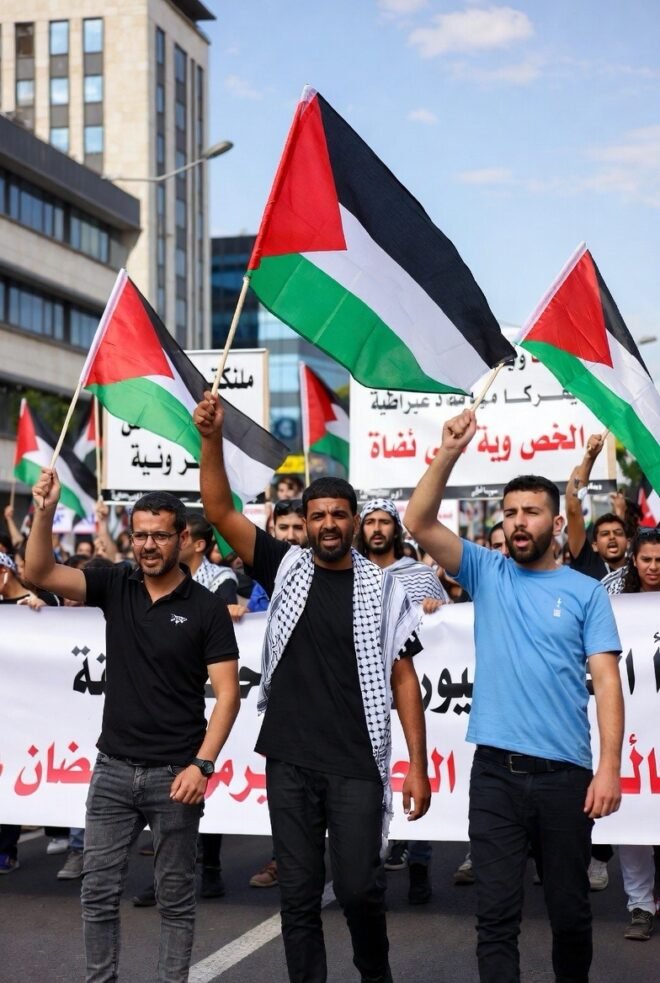
The Israeli-Palestinian conflict is one of the longest-running and most morally charged disputes in modern history. For decades Palestinians have lived under occupation, experienced displacement, survived blockades and military operations, and faced chronic economic and humanitarian distress. International human rights organisations, UN agencies, and independent observers have repeatedly documented patterns of rights violations, collective punishment, and conditions that many describe as contrary to international law. Yet despite this catalogue of suffering, Palestinians do not consistently receive the breadth or depth of international sympathy and political support one might expect for a population in prolonged distress.
This asymmetry – the paradox wherein a widely recognised victim group struggles to secure sustained, decisive international backing – raises painful questions about how the world assigns moral weight to suffering, how historical conduct shapes contemporary empathy, and how geopolitical realities trump moral clarity. Framing the dilemma in ethical terms, the Trolley Problem offers a useful metaphor: the international community repeatedly faces choices where intervening to alleviate Palestinian suffering would risk destabilising favoured alliances or upsetting strategic balances. The hesitance to “pull the lever” on behalf of Palestinians is not merely a failure of compassion; it is the outcome of complex histories, strategic calculations, media framings, psychological biases, and internal Palestinian dynamics.
This essay examines that paradox in depth. It aims to be rigorous but readable, to acknowledge Palestinian victimhood without eliding difficult truths, and to propose avenues through which sympathy might be recalibrated toward more consistent and principled action.
1. The Ethical Parable: The Trolley Problem and International Politics
The Trolley Problem poses a stark moral choice: do you divert a runaway trolley to kill one person instead of five? Applied to international politics, the thought experiment captures the cost-benefit calculations states make when addressing crises. Decisions are rarely moral abstractions divorced from interests. States weigh alliances, domestic politics, economic ties, and security concerns. Human lives are therefore not treated as morally interchangeable in practice; they are mediated by perceived political returns, alliance networks, and the risk of escalation.
In this analogy, Palestinians are often cast in the role of those on the track whose lives can be “sacrificed” for the perceived “greater good” – whether that means maintaining strategic partnerships, preserving regional stability, or avoiding domestic political costs. The “bystander” that could pull the lever is the international community: governments, multilateral institutions, influential media, and civil society actors who could move the needle through policy, public pressure, or humanitarian intervention. Why, then, does reluctance endure?
2. Historical Baggage: How Past Choices Reduce Present Sympathy
History imprints itself upon moral imagination. When a population is associated across time with violent acts, political fragmentation, or shifting loyalties, prospective allies grow wary. For Palestinians, certain historical episodes have complicated regional and international willingness to mobilise sympathy in a straightforward way.
• Revolutionary and militant campaigns. During the second half of the twentieth century, various Palestinian factions engaged in armed struggle, sometimes targeting civilian populations and sometimes clashing with host states or rival factions. These actions complicated relations with neighbouring Arab regimes, some of which feared internal instability or copycat insurgencies. Host-country anxieties and regional rivalries meant that support for Palestinian political goals was often tempered by concern for domestic security and the perceived reliability of Palestinian actors.
• Diaspora politics and collateral consequences. Palestinian refugee communities have at times become politically charged constituencies in countries of refuge. In Jordan, Lebanon, and Kuwait, political choices by Palestinian factions produced tensions with host populations and governments. These episodes contributed to narratives in which Palestinian political agency was seen as destabilising rather than solely victimised, shaping regional elites’ appetites for public advocacy or open support.
• Institutional growth and dependency. International mechanisms created explicitly for the Palestinian refugee problem – notably the UN Relief and Works Agency (UNRWA) – have been criticised on various grounds: for creating long-term dependence, for operational challenges, and for political dilemmas arising from servicing a population that remains stateless rather than integrating. Criticism of such institutions sometimes morphs into scepticism about the Palestinians’ capacity or willingness to seek durable solutions, which in turn dilutes political urgency.
It is important to stress that historical actions by some Palestinian actors do not negate the suffering of millions under occupation and blockade. Yet these historical episodes have a durable political effect: they make potential supporters more cautious, reluctant to invest political capital or to destabilize relationships with states that are seen as strategic partners.
3. Geopolitical Calculus: Power, Interests, and the Price of Realpolitik
Even when moral clarity appears straightforward, geopolitics often reorders priorities. Sympathy does not equal support when support entails strategic risk.
• The centrality of alliances. Israel’s strategic alliances, particularly with the United States and other Western states, are a core reason Palestinian concerns struggle to translate into decisive action. Israel is often seen as a reliable military, intelligence, and technological partner; its regional posture aligns with the policies of states seeking to contain perceived threats, such as extremist non-state actors or regional rivals. For many Western policymakers, maintaining a secure relationship with Israel is judged to serve broader foreign policy objectives.
• Regional alignment and regime security. Arab states’ policies toward the Palestinian question are shaped by their own calculations of regime survival, threat perception, and economic priorities. In recent decades, some governments have prioritised normalisation, economic reform, and rivalry with Iran over vocal advocacy for Palestinian national goals. Where Arab states once foregrounded the Palestinian cause as central to their legitimacy, today many balance rhetorical solidarity with pragmatic restraint.
• The asymmetric leverage. Palestinians, lacking a sovereign state and conventional military power, possess limited leverage on the international stage. They are vulnerable to blockades, restrictions on movement, and economic coercion. Such asymmetry makes it easier for powerful states to deprioritise their cause or to constrain action at international bodies where veto-holding states can block resolutions.
These geopolitical realities mean that, even for states where public sympathy for the Palestinian plight exists, the calculus of support is often negative: the perceived benefits of intervening on behalf of Palestinians do not outweigh the strategic costs.
4. Media Framing: Narratives, Biases, and Public Perception
Public sympathy is mediated by how events are reported and framed. Mass media, in its choices of stories, images, and language, shapes which lives seem most urgent and which grievances are foregrounded.
• Asymmetrical coverage. Analyses of major Western news outlets have often highlighted asymmetries in language and framing. Terms like “terrorists” or “rocket attacks” may be used to describe Palestinian armed actions, while Israeli military responses may be framed as “retaliation” or “defence.” Visual framing – images of civilian casualties on one side and damage to property on the other – affects empathetic response. Journalistic norms that emphasise immediate security concerns will tend to centre narratives that align with state actors that have stronger media relations and clearer public relations capacity.
• The boundary between criticism and delegitimisation. Coverage that questions Israel’s policies risks being labelled biased or antisemitic by some actors, creating chilling effects in mainstream media and on political platforms. Conversely, critical reporting about Palestinian factions is sometimes amplified without full contextualisation of root causes, reinforcing a portrayal of Palestinians primarily as perpetrators rather than victims.
• Alternative media ecosystems. Digital and social media have democratised storytelling and allowed Palestinian voices to be heard directly. Yet these platforms also polarise and create echo chambers; images and narratives are weaponised and sometimes distorted, diminishing the deliberative space for nuanced public empathy.
Media bias is not monolithic. Within and across outlets there is diversity: investigative reporting has exposed serious abuses by both Israeli forces and Palestinian actors. Still, in the aggregate, the relative strength of media relations, state-friendly narratives, and political pressure can skew public perceptions and reduce the political impetus for consistent support.
5. Internal Divisions: Leadership, Governance, and Accountability
An enduring obstacle to sustained international support is the fragmentation of Palestinian political leadership and institutions.
• The Hamas–Fatah split. Since the mid-2000s, Palestinian politics have been divided between the Palestinian Authority (PA) in the West Bank and Hamas in Gaza. This internal schism undermines coherent diplomatic representation, complicates policy negotiation, and creates competing claims to legitimacy. International actors find it more challenging to engage with a divided polity, and some states refuse to engage with groups they classify as terrorist organisations, limiting avenues for reconciliation and unified advocacy.
• Governance and accountability. Weak governance structures and allegations of corruption or mismanagement within Palestinian bodies feed narratives that international support would be misused. For donors and foreign publics, concerns over accountability reduce appetite for large-scale financial assistance, even for humanitarian purposes.
• Radicalisation and tactics. The use of violence by some Palestinian armed groups, including attacks against civilians, diminishes international sympathy. Even when such acts are framed as resistance against occupation, targeting civilians is widely condemned and undermines political support. Conversely, heavy-handed responses by state actors that cause mass civilian harm are often framed as counterterrorism – a framing which, for many, mitigates outrage.
It bears repeating: internal fragmentation does not justify collective punishment or human rights violations against the broader civilian population. Yet political disunity and governance failures make it harder for external actors to mobilise sustained, principled support that would not be subjected to domestic scrutiny or political backlash.
6. Psychological Dynamics: In-Group Bias, Demonisation, and Moral Distance
Beyond institutions and strategy lies the human psychology that informs public attitudes.
• In-group favouritism. Individuals and societies tend to empathise more readily with groups perceived as similar or allied. For Western publics that identify culturally or politically with Israel, Palestinian suffering may register with less immediacy. This phenomenon is reinforced by diaspora communities, political lobbying, and cultural affinity.
• Dehumanisation and moral disengagement. Long-standing conflicts can lead to narratives that dehumanise the Other. Political rhetoric, education, and media can subtly or overtly cast victims as complicit, radical, or inherently violent. Such dehumanisation erodes the moral imperative to act.
• Crisis fatigue and numbing. Repeated cycles of violence can create empathetic exhaustion. Observers may respond to the twentieth or thirtieth round of conflict with diminished moral outrage, treating each new catastrophe as one more episode in a protracted drama rather than as a unique humanitarian emergency.
These psychological mechanics do not absolve policymakers of responsibility, but they help explain why mass publics and their representatives might not consistently push for decisive humanitarian or political remedies.
7. Legal and Normative Constraints: International Law, Sovereignty, and Selective Enforcement
International law provides frameworks for protecting civilians, ensuring rights in occupied territories, and adjudicating violations. Yet enforcement is often selective.
• Vetoes and institutional paralysis. At the UN Security Council, veto powers can stymie protective measures or referrals. Political alignments often determine whether bodies like the International Criminal Court (ICC) can meaningfully investigate alleged breaches, and even then, enforcement mechanisms are limited.
• Sovereignty and non-intervention. States are often reluctant to intervene in conflicts framed as internal or bilateral disputes, fearing precedents for intervention in their own affairs. This principle constrains multilateral action in favour of diplomatic statements or humanitarian assistance that fall short of political pressure to change policies.
• The problem of naming. Labelling acts as “occupation,” “siege,” or “collective punishment” has legal consequences. States may avoid unequivocal terminology to preserve diplomatic flexibility, thereby reducing the pressure that clear legal condemnation might otherwise exert.
The gap between normative commitments and political will allows egregious conditions to persist even in the presence of clear legal frameworks that call for redress.
8. The Role of Civil Society and Transnational Solidarity
Where state action is absent or insufficient, civil society, grassroots movements, and transnational activism have historically been sources of solidarity for marginalised populations.
• Mobilising moral pressure. Pro-Palestinian movements have raised awareness, organized boycotts, and pushed institutions to divest from practices seen as complicit in occupation. These tactics have produced pockets of concrete change: municipal resolutions, academic boycotts, and policy shifts in some corporations.
• Pushback and counter-mobilisation. Civil society gains often provoke strong counter-mobilisation from pro-Israel advocacy groups and from governments concerned about perceived biases. Legal restrictions on protest, labelling of movements as antisemitic, and political vilification can blunt civil society effectiveness.
• The limits of activism. Even vigorous activism struggles to change state-level strategic calculations. While public opinion can influence foreign policy, entrenched strategic interests and elite networks often limit the extent to which grassroots movements translate into decisive diplomatic shifts.
9. Reframing the Conversation: Toward a More Consistent Sympathy
If the paradox is to be addressed, both normative and practical steps are required. Sympathy must be translated into policies that are principled, strategic in the narrow sense of long-term stability, and attentive to accountability on all sides.
• Prioritise principled humanitarianism. International actors can strengthen mechanisms for delivering impartial humanitarian aid while insisting on transparency, monitoring, and protection of aid workers and civilians. This reduces the risk that aid becomes politicized or diverted, and it affirms a baseline of moral responsibility.
• Encourage Palestinian political reconciliation. External actors should use diplomatic channels to incentivise efforts toward institutional unity and democratic renewal. A coherent Palestinian political interlocutor would make diplomacy more effective and make international support less politically fraught.
• Rebalance discourse in media and education. Media outlets and educational institutions can cultivate more contextualised reporting that foregrounds root causes, the asymmetry of power, and the human cost of policies. This requires editorial courage and an openness to voices from the ground.
• Depoliticise core human rights mechanisms. Strengthening the independence and capacity of international legal instruments–the ICC, UN fact-finding missions, and independent monitoring bodies–can help ensure that violations are investigated regardless of political convenience.
• Sustainable political engagement. Rather than episodic outrage, the international community should embrace long-term strategies that link humanitarian relief, economic development, and political negotiation. Ending impunity for abuses on all sides and supporting institution-building in Palestinian communities will build a foundation for durable peace and justice.
10. Conclusion: Sympathy as a Practice, Not a Sentiment
The paradox of sympathy for Palestinians cannot be reduced to a single cause. It is the product of historical grievances, geopolitical interests, media frames, internal political divisions, psychological dynamics, and institutional shortfalls. Recognizing Palestinian victimhood is a start; translating that recognition into consistent, principled, and practical support is the far more difficult work.
If the Trolley Problem captures the ethical tension – who will be saved when choices impose costs? Its lesson is also an invitation to rethink decision-making frameworks. Moral choices in international affairs need not be reduced to binary trade-offs. They can be reimagined as investments in long-term justice and stability: treating human dignity as a non-negotiable baseline and refusing to let short-term strategic convenience negate human rights.
Ultimately, cultivating sustained sympathy requires changes in political incentives, a more honest media ecology, accountable Palestinian governance, and courageous leadership willing to place universal human rights above facile strategic calculations. Only by aligning moral rhetoric with political action can the international community hope to bridge the paradox and make sympathy for Palestinian suffering more than a rhetorical posture, making it instead a consistent feature of global practice.
Acknowledgments: This post aims to synthesise complex debates and is intended to provoke reflection rather than to settle contested historical details. Many credible sources – human rights organisations, academic studies, and journalistic investigations – have documented aspects discussed here. Readers are encouraged to consult primary reports and a range of perspectives to deepen their understanding.



This statement should form the basis of all international human rights treaties:
“Moral choices in international affairs need not be reduced to binary trade-offs. They can be reimagined as investments in long-term justice and stability: treating human dignity as a non-negotiable baseline and refusing to let short-term strategic convenience negate human rights.”
I steal has murdered my entire family, yet somehow, Israel is the victim, somehow Israel is always the victim.
I’m sorry, Mahmoud. What we currently see happening in such a short space of time in Australia, the inequality of attitudes and imbalanced rights is taking us down a very dangerous path. The APS direction will have broad impacts on policy and society. What’s going on with the Crisafulli Government in Queensland is another example of overreach. Most concerningly, the warnings of this blog by Bakchos 15 years ago are rapidly being realised.