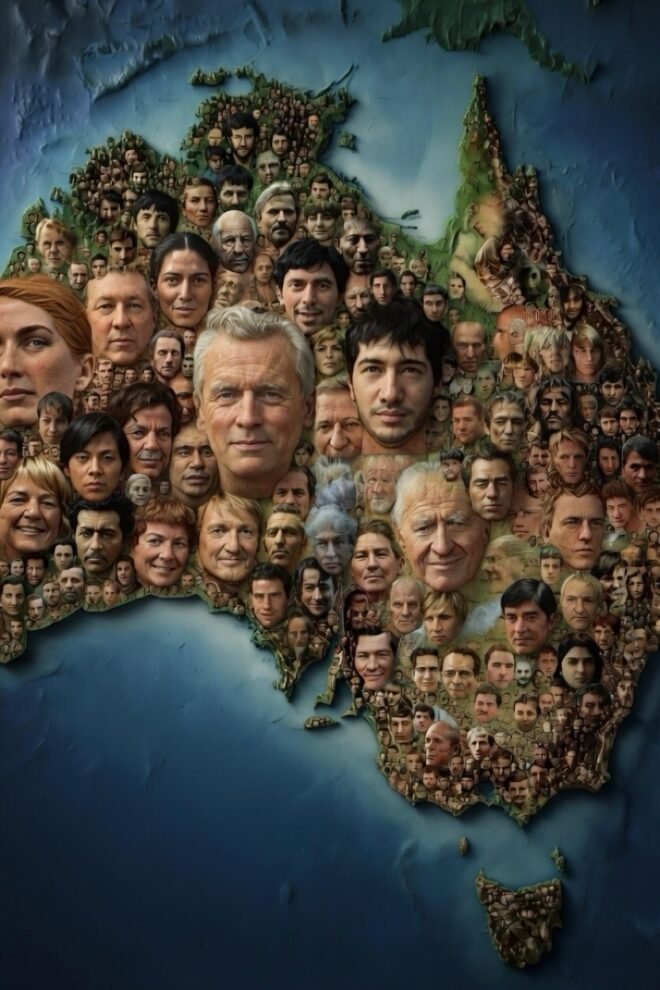
Australia’s character has been remade. What was for generations presented and interpreted through a narrow Anglo-Christian lens is no longer an accurate portrait of who we are. The country that once imagined itself as homogeneous now unmistakably embodies plurality: more than thirty percent of Australians were born overseas, and almost every postcode records linguistic, religious and cultural diversity. This transformation is not an abstract demographic graph; it is visible in our suburbs, experienced in our schools, tasted in our food, heard in our languages, and lived within families and workplaces across the nation. Yet, while the empirical reality of multicultural Australia is evident to anyone who pays attention, political discourse and institutional practices too often lag behind. Too frequently, politicians and opinion leaders exploit nostalgia for a past that never represented the full story of this place, and they treat difference as a wedge rather than a resource. It is time to acknowledge the facts and to act accordingly: to build a shared national identity that celebrates diversity, insists upon equality, and restores integrity to our public life.
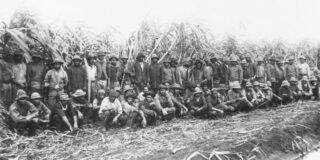
From a historical vantage point, it is understandable how Australia’s early national story coalesced around particular symbols, cultures and institutions. The founding myths and everyday governance of the nation were shaped by British legal traditions, Christian customs and immigration policies that privileged certain populations. These influences left an indelible imprint on civic practices and cultural expectations. But that history is only part of the broader Australian story. We must remember – and honour – Indigenous sovereignty and culture that predate colonisation by tens of thousands of years. We must also recognise that waves of migration from the Asia Pacific, the Middle East, Africa and Europe have continually reconstituted our social and economic life. The consequence is not a dilution of any single identity but a richer, more complex national tapestry.
Demography tells one side of this story plainly. With more than three in ten Australians born overseas and a substantial proportion of the population being second or third generation migrants, the everyday reality is one of hybrid identities. Children of migrant families navigate languages and traditions at home while learning to read and write Australian civic life at school. Elders who came from distant shores bring skills, ambition and cultural practices that knit into the fabric of local communities. Indigenous peoples sustain languages, connection to Country, and knowledge systems that have endured despite colonial disruption. Our economy benefits from the ingenuity and labour of immigrants and returning Australians; our cuisine, arts and intellectual life have been transformed by cross-cultural fertilisation. This is not a peripheral story: it is central to contemporary Australia.
Yet despite these facts, the political and media conversation continues – all too often – to be dominated by actors who exploit identity for short-term gain. They deploy “us versus them” narratives, stoke fear of difference, and present pluralism as a problem rather than an asset. These tactics have consequences. They foster alienation, normalize exclusionary rhetoric, and make it harder to design inclusive public policy. They distract from substantive debates about the economy, education, climate, and public health by reducing political contestation to culture wars. This is a recipe for political cynicism and social fragmentation, and it is anathema to any democratic project that seeks the flourishing of all citizens.
What, then, should genuine leadership look like in a nation marked by such diversity? True leadership would be defined neither by pandering to reactionary anxieties nor by retreat into bland platitudes. Instead, it would entail the courage to speak truthfully about where we are and to propose concrete institutions and policies that secure a common good. Public leaders must resist the temptation to weaponise race, religion, or identity, and they must be prepared to hold vested interests to account – those same vested interests that too often capture policy outcomes for private advantage. Leadership must be forward-looking. It must be inclusive. It must be dedicated to removing exclusionary structures and to building shared institutions capable of sustaining a plural democracy.
One of the most corrosive phenomena in contemporary politics is the outsized influence of special interests – lobbyists, corporate donors, and wealthy individuals – on public decision-making. When policy is shaped by the financial leverage of a few rather than the democratic mandate of the many, trust frays and democracy is diminished. Remedying this requires structural reforms that restore balance to the political economy of influence. We must adopt rigorous transparency measures so that the public can see who is attempting to influence legislation and policy. We should enact meaningful limits on donations and close loopholes that allow undue influence through third-party advertising and opaque funding vehicles. Where appropriate, we should pursue publicly funded election campaigns that reduce candidates’ reliance on private largesse. Measures such as a comprehensive lobbying register, cooling-off periods for ministers and senior public servants who move into industry, and mandatory disclosure of all political donations above a modest threshold should be part of a larger package designed to cleanse politics of corrosive patronage and to ensure that the public interest, not private profit, predominates.
Equally urgent is the need to de-escalate identity as a political weapon. Race and religion are deeply personal and communal matters; they must not be reduced to political instruments used to delegitimise, marginalise or exclude. This does not mean that questions of race, culture or faith should be suppressed from public debate – far from it. Robust discussion about multicultural policy, religious freedoms, and social cohesion is necessary and healthy. But public discourse must be anchored in evidence, respect, and an appreciation of pluralism. We should outlaw and punish deliberate dog-whistling, coded language, and campaigns that aim to incite prejudice or fear. Electoral commissions and regulatory bodies must be empowered to adjudicate complaints about discriminatory political advertising and rhetoric. At the same time, safeguards must be in place to protect legitimate freedoms of expression and religious practice; the goal is to prevent hate and incitement while preserving a vibrant public sphere.
To move from critique to constructive nation-building, we must articulate a new sense of Australian nationalism – one that embraces plurality rather than shunning it. Nationalism need not be exclusionary. It can, and should, be a civic nationalism: a shared commitment to a set of values and institutions that bind citizens together regardless of origin. Imagine a nationalism built on fairness, mateship in its broadest sense, a commitment to innovation and enterprise, and a profound respect for the land – the Country – that sustains us. Such a civic nationalism would celebrate Indigenous heritage, acknowledge the contributions of migrants, and provide common reference points for what it means to be Australian in the twenty-first century.
Education must be central to this project. Schools and universities are not merely sites for skills acquisition; they are primary arenas where civic identity is formed. A national curriculum that weaves together Indigenous knowledge, migrant experiences, and contemporary Australian narratives would help young Australians develop a nuanced and empathetic understanding of their country and its peoples. History lessons should not be sanitised; they should present the full complexity of our past, including the injustices endured by Indigenous Australians and the contributions of diverse migrant communities. Languages education should be expanded, recognising that multilingualism is an asset in an interconnected world. Civic education should promote critical thinking, media literacy and an understanding of democratic institutions so that citizens are equipped to participate thoughtfully in public life.
Beyond formal education, community programs and public institutions must be resourced to foster intercultural exchange and mutual understanding. Public libraries, community centres, and sporting clubs offer accessible platforms for social integration and civic participation. Investment in settlement services, targeted employment programs for new arrivals, recognition and accreditation of overseas qualifications, and support for small business start-ups in migrant communities are practical steps that enhance economic inclusion and social cohesion. Cultural funding should celebrate and support festivals, arts and media that reflect Australia’s diversity, while public ceremonies and national commemorations should be more inclusive in the stories they tell and the people they represent.
Reconciliation with Indigenous Australians must remain a foundational pillar of any new national identity. This is not merely symbolic; it demands concrete progress – on health, education, economic opportunity, land rights, and constitutional recognition. The Uluru Statement from the Heart and similar initiatives reflect deep aspirations for voice, treaty and truth. A nation earnest about unity must listen to, and act on, Indigenous voices. This includes supporting pathways to genuine self-determination and ensuring Indigenous perspectives are central to decisions that affect their communities and Country.
Structural reforms to strengthen democracy are part of the same continuum. Electoral reform can promote fairer representation and reduce incentives for divisive campaigning. Measures such as preferential voting and independent redistricting can help prevent gerrymandering and ensure that elected bodies reflect the electorate more faithfully. Strengthening independent institutions – auditors, anti-corruption commissions, electoral commissions and public broadcasters – helps maintain a healthy public sphere where facts matter and where scrutiny of power is routine. Freedom of the press, underpinned by high standards of journalistic integrity and supported by independent public media, is essential to an informed citizenry. A vibrant civil society – trade unions, faith organisations, community groups and non-profits – also plays a vital role in holding elites accountable and in representing diverse interests.
Leadership matters. We need public figures who lead with conviction and moral clarity – people prepared to make unpopular decisions when required by justice or common good, and capable of building coalitions across difference. Such leadership is rare in any era, but we must demand it. Leaders must be judged not merely by rhetorical flourishes but by a record of service to all constituents, by a willingness to endure criticism in order to pursue long-term public goods, and by a commitment to ethical conduct in both word and deed. Selecting and holding such leaders to account is the responsibility of citizens. Voting with conscience, participating in civic life, supporting independent media, and engaging in constructive community activism are practical ways for ordinary Australians to shape leadership selection and behaviour.
Civic responsibility is reciprocal: leaders and institutions must earn the trust of citizens, and citizens must participate. We should foster a culture of active citizenship that values public debate, community volunteering, jury service, and local governance. Young people should be encouraged to engage in civics early, through structured programs that combine classroom learning with local civic projects. Citizenship should be more than a legal status; it should imply participation, contribution and mutual responsibility.
Economically, an inclusive nationalism recognises that social cohesion and shared prosperity are interdependent. Policies aimed at reducing inequality, ensuring decent wages and working conditions, and expanding access to affordable housing and healthcare create the conditions in which multiculturalism can flourish. Investment in regions outside major cities can counter the centrifugal forces that drive cultural resentment and economic marginalisation. Infrastructure spending, skills development and targeted industry policy can connect local communities to national opportunity. Migrant integration policies should be oriented toward not just assimilation or preservation of heritage but toward enabling full participation in economic and civic life.
While policy prescriptions are necessary, culture change is equally important. Australia’s public conversation must pivot from an anxiety-driven framing of difference to one of mutual curiosity and respect. This requires civic leadership across sectors – religious leaders, business executives, educators, media figures and community organisers – to model inclusive behaviour and language. Corporations and civic institutions have responsibilities too: they must implement diversity and inclusion practices, ensure equitable hiring and promotion, and avoid complicity in practices that marginalise or discriminate.
At the level of law and policy, a strong anti-discrimination framework must be vigorously enforced. Laws to protect citizens from hate speech, discrimination in employment, housing or services, and incitement to violence are essential to maintaining a civic space in which pluralism can flourish. Simultaneously, the enforcement of such laws must be balanced with robust safeguards for freedom of expression and conscience so that legitimate debate on issues of identity and public policy is not chilled.
A final dimension of national renewal concerns storytelling and symbols. National narratives are powerful: they shape how people see themselves and others. We need public narratives that honestly confront the past, celebrate the present, and imagine an inclusive future. Cultural institutions – museums, libraries, galleries and media – should be encouraged and funded to tell complex stories that reflect the multiplicity of Australian experience. National symbols and public holidays might be reconsidered and reinterpreted in ways that invite broad participation rather than exclusion. Public rituals can be reframed to include acknowledgements of Country, celebration of immigrant contributions, and recognition of shared sacrifice and achievement.
None of this is quick or easy. Transforming politics, culture and institutions is a generational endeavour. Yet the urgency is real. The alternative to embracing a civic, inclusive nationalism is continued fragmentation: the slow erosion of trust in public institutions, the hardening of ethnic and religious divisions, and the political normalisation of exclusionary tactics. Those outcomes are inimical to the prosperity and security we all seek.
Change begins with citizens making deliberate choices. Begin by voting with purpose – by supporting candidates who demonstrate commitment to inclusive policies and integrity in public life. Engage locally: support community organisations that foster cross-cultural interaction; attend public events that celebrate diversity; volunteer with programs that assist new arrivals. Demand transparency from political actors, insist upon independent oversight of public institutions, and use civic tools – petitions, town halls, social media responsibly – to amplify voices that demand reform. Businesses and philanthropic organisations should invest in educational and cultural programs that advance integration and understanding. The media must resist sensationalist framing that privileges division and instead strive for nuanced reporting that illuminates rather than inflames.
Leadership must follow. Our political class should be urged to enact campaign finance reform, strengthen anti-corruption mechanisms, and empower institutions that protect the public interest. They must commit to an educational agenda that includes Indigenous perspectives and multicultural narratives and commit resources to community infrastructure that fosters inclusion. They must also model, in word and action, the values they claim to uphold: fairness, respect and service to all Australians.
In sum, the real face of Australia is already diverse, vibrant and dynamic. The proposition that we can or should return to some imagined homogeneous past is neither realistic nor desirable. The choice before us is whether to embrace an inclusive civic nationalism that recognises diversity as a strength and rebuilds trust in democratic institutions – or to allow politics of division and the undue influence of private interests to define our future. Let us choose the former. Let us craft institutions and narratives that ensure every Australian – Indigenous and non-Indigenous, born here or recently arrived – sees themselves as an equal member of the national project. Let us insist on leaders who put the public interest above private sway and who have the courage to shape a shared future. Let us invest in education, in community, and in laws that protect dignity and ensure opportunity.
This is a call to action: not a partisan demand, but a civic invitation. We can and must build a united Australia – one that honours its past, embraces its present diversity, and equips future generations to live together in mutual respect and common purpose. Together, as citizens, voters, neighbours and fellow Australians, we can press for reforms that restore integrity to politics, foster inclusive identity, and cultivate leadership that is worthy of our nation. The work will be hard, but the prize is worth it: an Australia stronger, fairer and more united than we have yet been.