
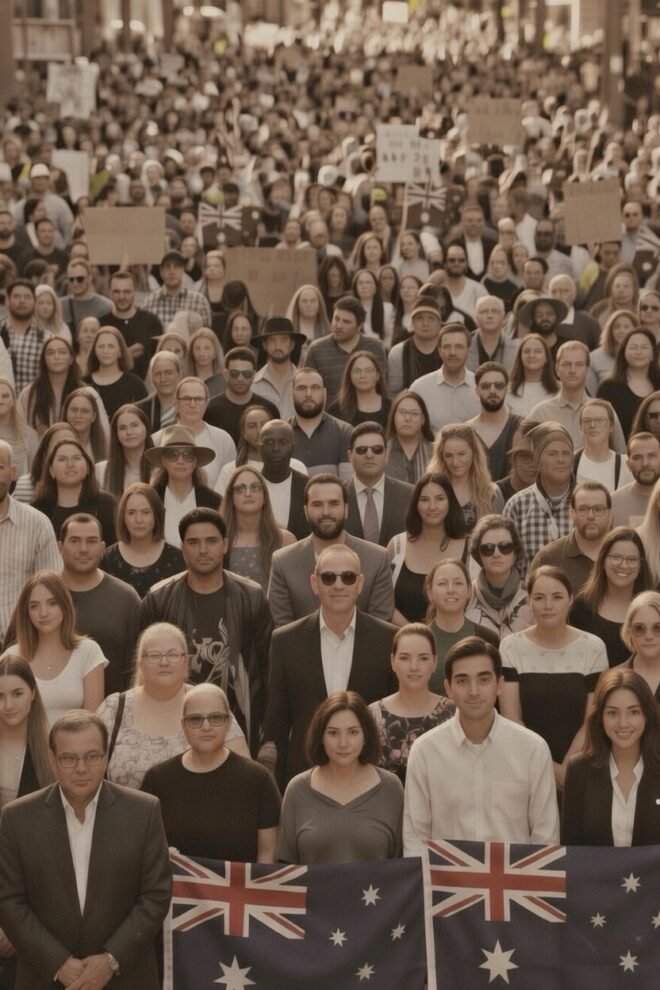
Australia presents a compelling laboratory for studying the tensions and possibilities of modern multiculturalism. High rates of migration, large urban concentrations of varied ancestries, and a national narrative that has moved from exclusion to inclusion make the country both a success story and a site of unresolved conflict. The question “Does Australia have a racism problem?” is not rhetorical; it is empirical, ethical, and political. Data from national surveys, reports from human rights and Indigenous bodies, and the lived experiences of people across the country in 2025–2026 converge on a sober conclusion: racism in Australia is measurable, consequential, and unevenly distributed. That conclusion coexists with countervailing realities – broadly positive public support for multiculturalism, high social trust in many communities, and successful outcomes for much of the migrant population. The challenge is one of nuance: acknowledging tangible harms without characterising the nation as wholly defined by them.
Historical context matters. Indigenous dispossession, the architecture of the White Australia policy, and decades of assimilationist thinking did not vanish with legislative reform. They left legacies that continue to shape institutions, social relations, and life chances. At the same time, post-war migration and post-1970s policy shifts created a plural society with new dynamics of integration, differentiation, and adaptation. The result is a nation where racism exists alongside significant levels of social cohesion and intercultural exchange, producing a complex, sometimes contradictory picture.
Historical Context and the Evolution of Australian Multiculturalism
A clear account of contemporary racial dynamics in Australia starts with the long history of its First Peoples and the disruption wrought by colonisation. Aboriginal and Torres Strait Islander societies existed across the continent for at least 60,000 years before British colonisation in 1788. European settlement initiated dispossession, frontier conflict, and policies that sought to assimilate or eliminate Indigenous cultures. The removal of Indigenous children from their families – the Stolen Generations – and the denial of basic civil and political rights until late in the twentieth century are central to understanding current disparities.
In a different register, the Immigration Restriction Act 1901 enshrined the White Australia policy, seeking to guarantee a “white” nation and restrict non-European migration. That policy framed national identity around Anglo-Celtic norms and influenced public institutions and attitudes for decades. Post-World War II economic imperatives, labour shortages, and geopolitical changes prompted a gradual opening. Large-scale European migration in the 1950s and 1960s, the formal dismantling of racially explicit entry barriers, the Racial Discrimination Act of 1975, and the subsequent official embrace of multiculturalism marked a decisive transformation of policy.
The late twentieth and early twenty-first centuries saw further change. Skilled migration schemes, humanitarian arrivals, and family reunion programs diversified the country’s composition. By the 2020s, more than 30% of the Australian population had been born overseas and another sizeable share had at least one parent born abroad; major cities became among the most ethnically diverse in the world. These demographic shifts coexisted with durable inequalities, creating a social landscape in which integration and exclusion could co-occur.
Empirical Evidence: Self-Reported Racism and Discrimination
Quantitative data offer the clearest entry point to measuring contemporary racism. Repeated national surveys and administrative records reveal patterns that are robust across measurement methods and time.
The 2024 Australian Reconciliation Barometer, reported in 2025, documented sharp increases in self-reported racism experienced by Aboriginal and Torres Strait Islander people. More than half – 54% – of Indigenous respondents reported experiencing racism in the six months prior to the survey, a rise from 39% a decade earlier. Younger Indigenous cohorts reported particularly high levels of exposure. The forms of discrimination ranged from verbal abuse and social media harassment to refusals of service, housing discrimination, and physical violence. These findings are significant not only for their magnitude but for their persistence across contexts and jurisdictions.
Parallel evidence from the Scanlon Foundation’s Mapping Social Cohesion 2025 report, which surveyed more than 8,000 adults, extended the picture to migrant communities. While 16% of all Australian adults reported discrimination based on skin colour, ethnic origin, or religion in the previous year, the rate among those born in Asia or Africa approached 40%. Within these groups, many respondents reported feeling excluded, threatened, or unfairly treated in employment. Broader measures of mistreatment – encompassing verbal or physical threats and workplace discrimination – revealed steep disparities by birthplace and visibility.
Other sources corroborated these trends. The Australian Human Rights Commission and community-run incident registers documented spikes in antisemitic and Islamophobic incidents in the period following major international conflicts, while anti-Asian sentiment, elevated during the COVID-19 pandemic, persisted in subtler forms. Local academic studies focusing on marginalised communities found high prevalence of racist experiences, alongside widespread under-reporting due to fears of not being believed, repercussion, or bureaucratic disinterest.
Self-reported measures are imperfect, blending subjective perception with objective experience. Yet the convergence across independent surveys, administrative complaint data, and in-depth qualitative studies indicates that increases in experienced racism for certain groups reflect real change rather than heightened sensitivity alone. Trends over a decade point to entrenched and, in some cases, worsening patterns rather than transitory spikes.
Indigenous Australians: The Deepest and Most Structural Dimension
The racialised disadvantage afflicting Aboriginal and Torres Strait Islander peoples constitutes the most profound long-term inequality in the Australian context. Statistical compilations and longitudinal studies reveal gaps in health, education, incarceration, and life expectancy that remain substantial.
The Closing the Gap framework, periodically updated and analysed by the Productivity Commission, showed in 2025 that only a minority of targets were on pace. Life expectancy gaps continued at around eight years, although variations across regions existed. Rates of imprisonment for Indigenous adults were many times higher than for non-Indigenous Australians, and the number of Indigenous children in out-of-home care remained alarming. Suicide rates, particularly among Indigenous youth, were a persistent concern. Early childhood developmental vulnerabilities and preventable health conditions also featured prominently among disparities.
Racism is implicated in a set of causal pathways linking social exclusion to poor outcomes. Research consistently connects repeated experiences of interpersonal discrimination to mental health deterioration, chronic stress, reduced educational participation, and barriers to employment. Studies associated with the Lowitja Institute and the Closing the Gap agenda quantified the contribution of discriminatory experiences to health and development gaps. Simultaneously, deeper structural legacies – dispossession, institutional practices that fail to respect or incorporate Indigenous perspectives, and uneven access to services in remote communities – compounded these harms.
However, analyses that parse causal pathways caution against monocausal explanations. Intergenerational trauma, geographic isolation, underfunded services, and policy failures interact with racism to produce complex disadvantage. The policy and programmatic landscape varied by state and territory, producing localised differences in outcomes. Where community-controlled services and Indigenous-led initiatives operated with sustained resources and decision-making authority, improvements in key indicators sometimes followed. These variations underscored the heterogeneity of Indigenous experiences and the importance of context in assessing causes and effects.
The 2023 referendum on an Indigenous Voice to Parliament – and its rejection – intensified public debate about recognition, constitutional reform, and racial justice. Interpretations of the result split along ideological lines. For some, it signalled a reluctance among significant parts of the population to accept special recognition or redress; for others, it reflected contestation over particulars of constitutional architecture, political communication, and trust. The referendum episode amplified discussions about historical memory, apology, and structural reform without resolving the deeper sociological questions underlying Indigenous disadvantage.
Migrant Communities: Variations by Origin and Visibility
Not all migrant experiences in Australia are equivalent. Since the large-scale post-war migration waves, successive cohorts have displayed diverse trajectories shaped by human capital, timing, and social reception.
Second-generation migrants from East and South Asia often recorded strong educational outcomes, with high rates of university completion and professional entry. Skilled migration programs introduced in recent decades produced cohorts whose economic contributions were readily measurable in labour force participation and entrepreneurship. These groups frequently displayed rapid integration on key socioeconomic markers.
Conversely, migrants from regions such as Africa and parts of the Middle East encountered different barriers. Data from national surveys and local studies documented higher experiences of discrimination among African- and Middle Eastern-born individuals, alongside higher levels of unemployment and under-employment relative to qualification levels. Research pointed to employer bias linked to names, accents, and cultural markers; to stereotyping in media narratives; and to the complicated legacies of refugee trauma affecting family stability and school outcomes.
Youth from certain communities were overrepresented in local offending statistics in some urban areas, but cross-disciplinary research generally attributed these patterns to socioeconomic disadvantage, family disruption, exposure to intergenerational trauma, and limited opportunity structures rather than racialised criminality per se. Community leaders and researchers both highlighted the role of social marginalisation and inadequate youth services in producing concentrations of disadvantage.
Hate crimes and vilification incidents added another painful dimension. Law enforcement, civil society, and academic reporting during 2024–2026 documented increases in racially or religiously motivated offences affecting Jewish, Muslim, Asian, and Indian communities, among others. Debates emerged around categorisation, measurement, and framing: similar acts sometimes received unequal labels depending on perpetrator background – a phenomenon noted by community advocates and media watchdogs. Legislative responses at the federal level during this period introduced new offences and frameworks, provoking debate about the balance between civil liberties protections and enhanced protection for targeted groups.
Public Attitudes, Media, and Political Dynamics
Public opinion surveys revealed a complex mix of attitudes. By mid-decade, a majority of Australians acknowledged racism as a significant problem: around two-thirds described it as either a “fairly big” or “very big” issue. This rise in concern intersected with global and domestic triggers – conflict in the Middle East, economic stress, housing affordability pressures, and contentious political campaigns – which intensified anxieties and sometimes sharpened exclusionary rhetoric.
At the same time, sizeable segments of the population continued to endorse the broad benefits of immigration and multiculturalism. Scanlon Foundation data showed that large majorities viewed multiculturalism positively and acknowledged immigrants’ economic contributions. These apparently contradictory views reflected layered attitudes: acceptance of diversity at a general level coupled with unease about specific groups, cultural change, and perceived competition for services.
Media coverage and social media played ambiguous roles. High-profile incidents of racism generated widespread condemnation but also polarised discussion. Social platforms amplified both victim testimonies and inflammatory rhetoric, sometimes blurring lines between factual reporting and sensationalism. Commentators across the spectrum produced narratives that either foregrounded systemic racism as the root of all disparities or minimised racism by attributing inequalities to culture, individual choice, or policy failures unconnected to race. Both extremes influenced public dialogue, establishing competing interpretive frames that complicated public understanding.
Political responses varied. Parties and leaders sometimes invoked migration and social cohesion as electoral issues, and anti-immigration rallies in 2025 attracted significant attention and participation. Contemporary debates over migration levels— with a notable minority expressing concerns about immigration being “too high” – illustrated how economic and social anxieties could be channelled into nationalist or protectionist sentiments. These dynamics were layered atop long-standing debates about national identity, civic obligations, and the meaning of multiculturalism in a rapidly changing society.
The Strengths of Australian Multiculturalism
It is important to situate the problems within their broader context. Australia’s record on integration and social cohesion has strengths that distinguish it from many other plural societies. Indicators of neighbourly trust and mutual assistance remain relatively high; intermarriage rates and the economic integration of much of the migrant population suggest durable social bridges.
Scanlon Foundation measures signalled widespread agreement – across a range of demographic groups – that multiculturalism has had positive effects, particularly in economic and cultural domains. Employment patterns for many migrant cohorts showed rapid assimilation into skilled occupations, and second-generation outcomes often exceeded those of the native-born population in educational attainment. Urban residential patterns in many Australian cities showed less severe segregation than in many European counterparts, and civic institutions generally displayed resilience in absorbing demographic change.
Comparative perspectives highlight that Australia shares more in common with Canada – another settler society with strong immigration histories – than with European countries that have encountered deeper patterns of parallel communities and prolonged integration challenges. Factors such as the points-based skilled migration system, broad English-language diffusion, and geographic isolation from certain global pressures have played roles in producing relatively smooth integration outcomes for many.
Policy Landscape and Debates
The policy environment surrounding racism and multiculturalism in Australia is multi-layered, involving federal, state, and local frameworks, as well as non-governmental and community-based actors. Legislative milestones and institutional mechanisms have evolved alongside societal change.
Anti-discrimination statutes, including the Racial Discrimination Act, remain foundational to legal responses. Law enforcement, judicial processes, and human rights bodies mediate complaints, although reporting rates and enforcement outcomes vary. The establishment of more systematic data collection efforts – including national incident databases in some jurisdictions – reflected a growing interest in measurement and accountability, though debates about scope, data quality, and privacy persisted.
Public policy debates ranged from fiscal assessments of migration to questions of cultural recognition and symbolic inclusion. Arguments over the appropriate modalities of Indigenous recognition, the role of constitutional reform, and the design of targeted social programs surfaced repeatedly. Some analysts emphasised the need for evidence-based evaluation of program effectiveness and cautioned against simplistic attributions of disparities to single causes. Others foregrounded the distinctive harms of racism and called for recognition of structural factors contributing to exclusion.
Scholarly and community commentary pointed to areas of policy opacity. The uneven application of vilification laws, variations in policing approaches across jurisdictions, and inconsistent support for community-controlled Indigenous services were recurrent themes. At the same time, successful initiatives in particular locales – where sustained funding, local leadership, and culturally attuned service delivery aligned – provided counter-examples and indicated that disparity trajectories were not immutable.
Discussion in the public sphere routinely wrestled with questions of balance: how to reconcile a proud rhetoric of multiculturalism with uncomfortable statistics about discrimination; how to interpret increases in reported racism alongside stable or improving indicators of social cohesion; and how to frame responsibility for remedy – whether as an individual behavioural problem, an institutional governance issue, or a historical legacy requiring specific forms of redress.
Conclusion: A Complex Reality
The empirical record and lived experiences of recent years make clear that Australia faces a racism problem that is real, measurable, and consequential. Indigenous Australians report disproportionately high levels of racialised harm, reflected in health, incarceration, and educational disparities that are enduring and often deep. Visible minority migrants, particularly those from Africa, the Middle East, and parts of Asia, report discrimination in employment, social inclusion, and public interactions at rates higher than the general population. Hate incidents and vilification episodes increased in certain periods, often correlating with global events and domestic political shifts.
Yet the country’s broader social fabric displays resilience. Public endorsement of multiculturalism remains widespread, many migrant groups achieve strong socio-economic outcomes, and indicators of neighbourhood trust and mutual assistance remain robust. Comparative perspectives suggest Australia continues to outperform many peers in integration metrics, even while it contends with persistent problems.
The nation’s experience can be characterised less as an either/or judgement about whether racism exists and more as a set of intersecting realities. Racism is both an interpersonal phenomenon – manifest in slurs, exclusion, and threats – and a structural one, entangled with histories of dispossession and policy choices that have differential impacts across communities. Measurement challenges, contested narratives, and the politicisation of incidents complicate public responses and understanding.
The debate over racism in Australia, therefore, tends to polarise between explanations that emphasise systemic racial hierarchies and those that stress alternative causes such as culture, socioeconomic status, or individual behaviour. Neither frame alone fully captures the empirical complexity. The data show that both interpersonal discrimination and historical, institutional processes contribute to unequal outcomes; the relative weight of each varies by group, region, and indicator.
In public discourse, episodes of overt racism – whether against Indigenous Australians, Muslim communities, Jewish citizens, or visible minorities from Africa and Asia – frequently provoke strong reactions and invite broader reflection on national values. Simultaneously, long-term trends in education, entrepreneurship, and neighbourly trust signal durable capacities for inclusion and adaptation.
Taken together, the evidence suggests a layered conclusion: racism is a substantive problem in Australia, particularly for Indigenous peoples and certain visible minority groups, but it exists within a society that also demonstrates considerable strengths in integration and social cohesion. Understanding this duality is crucial to any sober national conversation. The empirical record invites continued attention to measurement, careful analysis of causal pathways, and an openness to diverse interpretive frames that recognise both the presence of prejudice and the complexity of social outcomes in a plural society.