
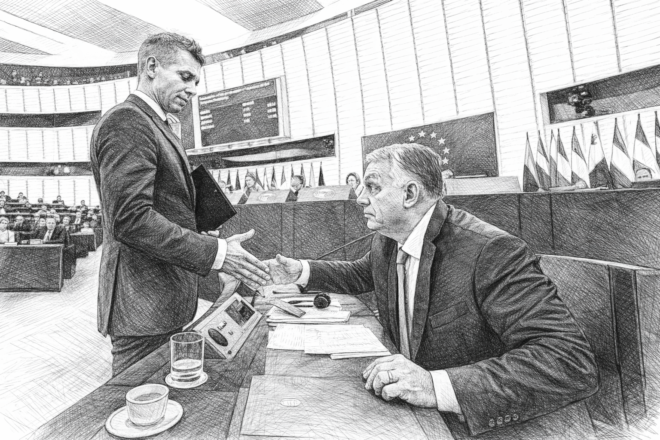
There’s a test used by metallurgists to determine the breaking point of a material. Employing a specimen marked with notches and controlling for other variables including environmental temperature, the izod impact test releases a weighted lever from a height to let it swing through an arc and strike the object. The energy required to break the specimen is determined by the height achieved on the upswing after the lever has broken the object. Elections pose a similar test for human character, the striking blow that may cause a leader or party to snap under duress.
Politicians rise and fall by the media they generate – or to which they are subject. Rightly or wrongly, they must perform at a level that satisfies the majority of their electorate, if not the country. Electoral contests, the seasonal performance review for members of parliament and senators, focus on recent advances in social support and economic stability to plausible, if not guaranteed promises for the future. Dig under the banners of propaganda and stars on the horizon, and you will find more about the character of the individual.
The outcome of the Hungarian election over the weekend speaks volumes of the character of both leading political parties and their leaders. Victor Orbán, the country’s leader for 16 years, led Fidesz, the Hungarian Civil Alliance, a right-wing party with nationalistic policies that developed an antagonism to immigration in the mid-2010s in response to large numbers of foreigners entering the country. Whilst their position eased due to a labour shortage and population decline, Orbán’s government was openly hostile to multiculturalism and racial diversity. Underpinning the intent to maintain a racially distinct population, Orbán’s administration has provided significant monetary incentives to women and couples to have children, an incentive that aligns well with the party’s Catholic ties.
Péter Magyar broke away from Fidesz joining a relatively new party formed in 2020, Tisza, named for a river that flows through Hungary and Central Europe and with which positivity and hope are associated. Still to the right but more centrist, Magyar has campaigned on an anti-corruption platform. In an example that demonstrates the importance of accountability in government, Magyar exposed the cover-up and pardon by President Katalin Novák and Minister of Justice Judit Varga, of an orphanage director who coerced children to retract claims of paedophilia. Varga and Magyar had been married until just prior to the revelations, divorcing in March 2023. The pardon was highly controversial in the conservative Catholic nation, resulting in protests and accusations that Fidesz was failing to uphold traditional values. Magyar followed on with his anti-corruption stance, publishing a recording of another scandal in which Varga admitted to being aware of government fraud via the alteration of documents and which drew into question the independence of the judiciary.
Perhaps crucially, Magyar took the nation’s temperature in March 2025 with an online poll of opinions regarding potential policy positions. Assuming that all those who responded were eligible to vote in the Hungarian elections, just under 12% of the population responded. The questions were couched in a manner that favoured a positive response, closed yes/no responses being the only options. Several addressed cost of living pressures: pensioner subsidies, increased funding for public health care, reduced costs of medicines, tax initiatives. Social policy options covered increased spending on education, health care and rural development, higher tax for the wealthy, lower taxation on healthy foods. Lastly a series of questions addressed questions of leadership covering a maximum term for the Prime Minister, transfer of powers to local governments and limitations on the income of elected parliamentarians. Answers were decidedly positive for each initiative. The only exception was a modest preference for Ukraine to join the European Union. From this, Magyar was able build a sound platform from which to campaign.
Tisza and Magyar campaigned relentlessly over the past year, visiting towns and making their way into regions that had been forgotten by Fidesz since its own landslide victory in 2010. Tisza did the very thing that has worked for many others campaigning for office – he went directly to the people. Making himself available to the people, he called out the government’s cronyism and high salaries. Spooked by Tisza’s growing popularity, Orbán was forced onto the campaign trail as well, but it seems that it was all too little far too late. By late evening on 12 April 2026, it was apparent that Tisza had not only won the election, but would hold a constitutional majority that would allow Magyar’s government to make sweeping reforms without needing to negotiate with a cross bench.
No-one is entirely sure what Magyar will do. He has expressed strict limitations on immigration, an intent to manage corruption by joining the European Public Prosecutor’s Office and a desire to make the judiciary independent. Importantly in the nation’s tight economy, he has expressed the intent to recover €17 billion held by the European Commission due to the refusal of Orbán’s government to comply with EU immigration law. And whilst a Magyar administration may not favour immigration, it’s less rigid stance on Ukraine makes renewed consideration of a new 28th member state a genuine possibility.
Whatever the achievements of the Orbán Government, it’s weakness lay in its corruption. The swinging pendulum that struck came from within Fidesz’s party, one who defected to stand separate and hold his colleagues to account. Magyar’s challenge now is to reform the judiciary and address the lack of transparency and accountability in Hungarian leadership. Forged in the same furnace as Orbán, Magyar has the opportunity to lead with greater integrity. Time will tell if he will do so and if he can achieve the gains for the Hungarian people he was espoused.
And whilst Orbán was forced to concede, he did so with grace, without recourse to legal challenge or sedition as some had feared. It speaks more highly of the man than perhaps one would expect. Hungary is the stronger for a spirited campaign and open election which has maintained two key political parties. Orbán is adamant that Fidesz will regroup and return for the next election. Hungarian leadership can only be strengthened by a reflective opposition that accepts defeat in order to reflect and regroup. Fresh from the izod test, the party is cast back into the forge, to review its failings and come back stronger. This is the best of politics – the genuine acceptance of the electorate decision and subsequent learning that fosters a better party, better policies, better leadership. In a world where the electoral results of the past few years have drawn concerns of insurrection and violence, Hungary provides a spark of hope for how we can respect the electoral process and build a better future.


I don’t know how many populist politicians are sitting on the wall, but maybe they’re beginning to fall. Orbán You will not be missed.
Goodbye Victor Orbán, you won’t be missed.
Orban has fallen, but in Australia Angus Taylor is still pushing the stale old MAGA tropes. Angus Taylor is making Australia look like the arse end of the world. Angus crawl back under whatever rock you crawled out from.
A few others have expressed the same hope. Hopefully this is the beginning of the end for the political strongmen.
Victor Orbán‘s political demise will have a significant negative impact on Putin’s ability to influence EU policy, especially its policy regarding Ukraine.
That could indeed be the case, Professor. And whilst I appreciate that Fidesz and Orbán led a very right-wing, pro-Russian government, the calm transition to a new leader and party puts the events of some other nations to shame. There was some expectation of conflict, but that did not eventuate and that is a very good thing.