
Introduction
Australia has long prided itself on a national identity built around multiculturalism and the ideal of a “fair go.” Yet beneath this self-image, persistent and often contradictory responses to racism raise difficult questions about the distribution of political attention, resources, and moral urgency across different communities. Recent years have intensified these debates. A devastating terror attack at Bondi Beach during a Hanukkah celebration, a dramatic rise in reported antisemitic incidents, and consequential government measures have prompted praise from some quarters and accusations of favouritism from others. At the same time, Indigenous Australians continue to endure entrenched, structural racism – manifest in health disparities, over-representation in the criminal justice system, and recurrent deaths in custody – that appears to attract less concentrated and immediate policy action.
This essay examines the perception – and reality – of a hierarchy of racism in Australian anti-racism policies. It interrogates why antisemitism has prompted discrete, well-funded, and rapidly implemented responses while anti-Indigenous racism is frequently addressed through diffuse, long-term frameworks that many see as under-resourced. Drawing on recent policy developments, historical trajectories, and comparative examples, it explores the drivers of disparity: event-driven reactivity, international diplomatic considerations, lobbying capacity, and the persistence of colonial structures. The analysis concludes by proposing steps toward a more equitable, integrated approach to combating all forms of racism in Australia.
Historical Contexts: Differing Origins, Shared Harms
To understand contemporary policy differences, it is necessary to trace the distinct historical origins of antisemitism and Indigenous racism in Australia. Jewish presence in Australia dates back to the First Fleet and subsequent waves of migration. Over time, Jewish communities have established strong institutions and communal networks, concentrated largely in metropolitan Sydney and Melbourne. Antisemitism in Australia has historically fluctuated, often influenced by overseas events and ideologies. Periodic spikes have been followed by policy attention tailored to the immediate threat.
By contrast, racism against Aboriginal and Torres Strait Islander peoples is woven into the colonial foundations of the Australian state. Dispossession of land, the forced removal of children (the Stolen Generations), and decades of exclusionary policies have created multigenerational trauma and systemic disadvantage. The statistical manifestations of this injustice are stark: persistent life-expectancy gaps, dramatically higher incarceration rates, and disproportionate rates of poor health and socioeconomic outcomes. These are not episodic events but enduring structural conditions.
Legal instruments like the Racial Discrimination Act 1975 (RDA) assert formal protections against racial discrimination for all Australians. Judicial and administrative responses have applied to both antisemitic and anti-Indigenous conduct. However, the character of the harms – episodic, externally influenced attacks versus embedded, systemic exclusion – shapes public perception and policy responses. Antisemitism often appears as an acute spike that cries out for immediate remedy; Indigenous racism is perceived as chronic, complex, and politically fraught, demanding long-term structural reforms that are harder to deliver and politically less rewarding.
Event-Driven Reactions: The Bondi Beach Attack and Its Aftermath
Tragic, high-profile incidents tend to galvanise public attention and concentrate political capital. The attack at Bondi Beach during a Hanukkah celebration – one of the deadliest recent acts of terrorism on Australian soil – ignited national shock and led to an unmistakable surge in governmental activity. Symbolic acts of condolence, expedited security funding, special policing operations, and a legislative push to criminalise certain forms of organised hate were among the swift responses. The government’s invitation to a visiting foreign leader as a gesture of solidarity, and subsequent high-level diplomatic engagement, further underscored the concentrated focus on the Jewish community’s safety and dignity.
Such fast-moving responses are not inherently unjust. When a community faces an immediate and severe threat, a vigorous response is appropriate and necessary. But the speed, specificity, and scale of resources directed at antisemitism after episodic violence contrast sharply with the much slower, more fragmented attention to Indigenous deaths in custody, systemic health inequities, and intergenerational poverty. These chronic grievances, though comparably grave in their human cost, rarely spur equivalent emergency-style policy mobilisation. The divergence creates the perception that some forms of racism prompt decisive action while others are normalised or tolerated as part of the structural landscape.
Diplomacy, Symbolism, and the Politics of Visibility: The Herzog Invitation
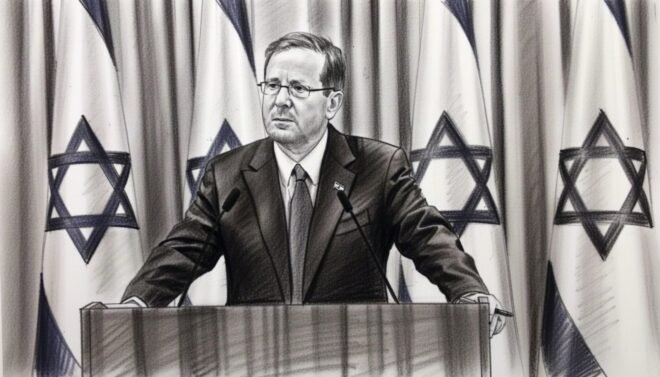
High-level diplomatic gestures carry symbolic weight. Inviting a foreign head of state to signal solidarity with a victimised minority is a powerful act, yet such gestures are inherently political and can generate controversy – especially when the invited figure is associated with contested policies or alleged human-rights violations in their home country. The decision to extend a state-level welcome to Israel’s president was interpreted by many as a necessary show of support for a grieving community; by others it was read as tacit prioritisation of one set of victims over another and a failure to acknowledge broader human-rights concerns.
The backlash from Muslim and progressive communities underlines how diplomatic choices can intensify perceptions of partiality. Those communities argued that the invitation overlooked the suffering of Palestinians and failed to account for statements and policies that some international bodies found reprehensible. At the same time, Indigenous leaders noted the absence of comparable high-level symbolic acts addressing their centuries-long plight – there was no equivalent summit, envoy, or public apology that matched the scale and visibility of the gestures offered to the Jewish community in the wake of the attack.
Symbolic acts matter because they shape narratives and signal governmental priorities. When symbolic solidarity is extended rapidly and publicly to one community, while similar symbolic recognition for other communities remains limited or delayed, the disparity feeds public perceptions of a hierarchy of regard.
Policy Frameworks: Specificity Versus Integration
The nature of anti-racism policy in Australia varies between specificity and integration. Antisemitism has been the subject of targeted strategies, including dedicated envoys, education taskforces, security funding packages, and legislative reforms designed to address hate crimes and organised hate groups. These instruments are tailored, clearly defined, and often accompanied by measurable commitments and visible funding.
In contrast, policies aimed at Indigenous disadvantage are frequently embedded within broader social and economic strategies – Closing the Gap, the National Anti-Racism Framework, health and education initiatives – without standalone mechanisms solely focused on anti-Indigenous racism. While the holistic approach reflects an understanding that Indigenous disadvantage is multidimensional, it also means specific hate-driven harms can be subsumed under larger budgets and diffuse policy responsibilities. The lack of a dedicated envoy or high-profile, concentrated program specifically addressing Indigenous racism contributes to a sense of comparative neglect.
Both approaches have strengths and weaknesses. Targeted antisemitism measures can be responsive and effective at addressing acute threats, but if too narrowly pursued they may be criticised for compartmentalising racism rather than addressing its systemic roots. Integrated Indigenous policy frameworks recognise the need for structural reform but can struggle to command the same political attention or rapid resource mobilisation when discrete crises demand action.
Community Mobilisation and Political Dynamics
Community resources – organisational capacity, transnational networks, and political alliances – shape how effectively grievances are translated into policy. Jewish communal organisations in Australia have well-established institutions capable of rapid advocacy and international outreach. They can mobilise legal expertise, fundraising, and diplomatic ties that amplify their concerns at home and abroad. Indigenous organisations, while resilient and deeply grounded in community leadership, often operate under chronic funding constraints and must contend with the complex politics of sovereignty, treaty, and recognition that complicate straightforward policy responses.
Political dynamics also influence outcomes. Antisemitism can attract bipartisan support because it is framed as a security and human-rights issue with direct ties to international relations; consequently, political leaders may see immediate reputational benefits in taking decisive action. Indigenous policy reforms often require confronting uncomfortable historical truths, redistributing resources, and challenging institutional structures – undertakings that can be politically costly and thus slower to adopt. The failure of high-profile initiatives, such as the 2023 referendum on a constitutional Voice, demonstrates the difficulty of achieving consensus on measures perceived as challenging the status quo.
Similarities, Differences and the Perception of Hierarchy
Both antisemitism and Indigenous racism are violations of human dignity and contraventions of Australia’s obligations under international anti-racism instruments. Nonetheless, their manifestations and political responses diverge in meaningful ways. Antisemitism frequently spikes in relation to international conflicts and is thus episodically visible; Indigenous racism is endemic, less dramatic in isolated incidents but cumulatively devastating. Where antisemitism is addressed with discrete, emergency-style resources and high-visibility measures, Indigenous racism is largely the subject of long-term, structural policies that require patience and sustained investment.
These differences give rise to the perception of a hierarchy of racism – an implicit ranking in which some forms of racialised harm attract prompt, decisive attention while others are relegated to piecemeal, incremental remedies. Funding allocations illustrate this point: emergency security funding for Jewish institutions and designated antisemitism programs have, at times, appeared more concentrated than the line-itemed sums for Indigenous-specific hate prevention measures embedded within larger social-policy budgets. The discrepancy fuels the argument that not all communities are treated with equal urgency and respect.
Intersections and the Need for Integrated Approaches
Racism in Australia does not exist as discrete silos. Antisemitism, Islamophobia, anti-Indigenous prejudice, and other forms of racialised hostility intersect in practice and in policy. For example, spikes in international conflict can drive simultaneous surges in antisemitic and Islamophobic incidents, while public discourse about settler colonialism and sovereignty informs Indigenous struggles and resonates with global debates about occupation, resistance, and self-determination. When public policy treats these as separate issues, opportunities to build solidarity and coordinated prevention strategies are missed.
A more integrated approach does not mean flattening distinct harms into a single category. It does require acknowledging shared mechanisms – social exclusion, scapegoating, securitisation of communities – and building institutional capacities that can respond to both episodic crises and chronic structural injustices. Education, research, data collection, coordinated law enforcement responses that respect human rights, and community-led prevention programs are all components of such an integrated strategy.
Challenges and Risks: Free Speech, Overreach, and Political Resistance
Efforts to strengthen protections against hate and organised hate require careful calibration to preserve democratic freedoms. Legislative proposals aimed at criminalising hate groups and strengthening penalties for incitement can be effective tools, but they also prompt concerns about overreach, undue restrictions on legitimate expression, and politicised enforcement. These risks are amplified when policy-making is rushed in the aftermath of traumatic events.
Conversely, inaction or incrementalism invites its own harms. Resistance to Indigenous reforms often takes the form of cultural or political backlash rooted in misunderstandings about the aims of recognition or treaty. Navigating the line between robust protections and overbroad prohibition, while simultaneously pursuing structural reform for Indigenous Australians, demands political courage and careful legal drafting – neither of which is guaranteed in a contentious political environment.
Case Studies and Illustrative Examples
Concrete examples help to clarify the contrast in responses. A high-profile arson attack on a synagogue prompted rapid security grants and visible law enforcement operations. Comparable episodes of violence or neglect affecting Indigenous communities – such as deaths in custody or the impacts of contested resource projects on remote communities – have generated inquiries, reports, and policy recommendations, but often without the same immediacy in funding or enforcement. University campuses provide another illustrative arena: taskforces to address antisemitic incidents have been established with targeted mandates, while efforts to address anti-Indigenous racism are embedded within broader strategies aimed at cultural safety and inclusion, sometimes making outcomes harder to measure and attribute.
Towards Equity: Policy Recommendations
A sustainable path forward requires measures that address both the episodic nature of some forms of racism and the structural reality of others. The following recommendations aim to balance targeted intervention with systemic reform:
• Adopt a unified national strategy that explicitly acknowledges multiple forms of racism while allocating resources for both crisis response and long-term structural change. This strategy should be co-designed with representatives from Jewish, Indigenous, Muslim, and other racially or ethnically minoritised communities.
• Establish dedicated, permanent mechanisms to address anti-Indigenous racism, analogous in visibility and resourcing to targeted antisemitism initiatives. Such mechanisms could include an Indigenous anti-racism envoy, a structured national fund for community-led safety and healing programs, and guaranteed seats for Indigenous representatives in oversight bodies.
• Strengthen data collection and transparency by creating a national hate incidents database that disaggregates by type of racism, geography, and outcome. Reliable data is essential for evidence-based policy and for monitoring resource allocation.
• Expand anti-racism education across curricula, ensuring historical truths about colonisation, the Stolen Generations, and the experiences of Jewish, Muslim, and other communities are represented. Invest in community-led educational initiatives that build cross-cultural understanding and solidarity.
• Safeguard free expression while criminalising organised violent or incitement-based hate. Legislative reform should be narrowly tailored, guided by human-rights principles, and accompanied by independent oversight to prevent misuse.
• Invest in community resilience and mental-health services tailored to communities most affected by racism, including crisis support for survivors of violent attacks and long-term healing programs for Indigenous communities experiencing intergenerational trauma.
• Promote intercommunity dialogues and joint initiatives to build coalitions across Jewish, Indigenous, Muslim, and other communities. Shared projects – civic education, joint commemorations, and collaborative service delivery – can build trust and counter narratives that pit communities against one another.
Conclusion
Perceptions of preferential treatment in Australian anti-racism policy arise from observable contrasts in how the state and society respond to acute, visible acts of hate compared with the long-standing, systemic injustices endured by Indigenous Australians. These contrasts are not simply the product of malice or indifference; they reflect structural differences in the nature of the harms, the political costs of remedial action, and the relative capacities of communities to mobilise resources and visibility. Nonetheless, the result – a hierarchy of attention and resources – undermines the nation’s professed commitment to equality and cohesion.
Australia’s challenge is to develop anti-racism policies that are both agile in responding to immediate threats and steadfast in dismantling systemic injustice. That requires political will, informed public debate, and a commitment to co-designing solutions with affected communities. Equitable anti-racism is not achieved by pitting one community’s suffering against another’s; it is advanced by recognising intersecting harms and ensuring that the “fair go” promised to all Australians is matched by policy, resources, and moral conviction. Only by committing to integrated, well-resourced, and community-led responses can Australia begin to dismantle hierarchies of racism and live more fully up to its multicultural ideals.