
Introduction: A Family Tree’s Revelation
It started innocently enough – with a school project. I was helping my youngest daughter assemble her family tree, piecing together names, dates, and faded photographs like a puzzle from the past. As the branches extended across the page, a profound truth emerged, stark and undeniable: both Australia and the United States, the twin pillars of my family’s history, are unequivocally settler nations. Nations built not on ancient, unbroken lineages tied to the soil, but on waves of arrival, displacement and reinvention.
On my mother’s side, the story is one of survival amid catastrophe. She arrived in Australia as a child alongside her own mother, both as post-World War II refugees escaping the ruins of Europe. My grandfather, her father, perished in the war – a void in the tree that speaks volumes about loss and forced migration. My father’s lineage, by contrast, delves deeper into Australian soil, tracing back through generations with infusions from convicts and early settlers. “Such is life,” as the infamous bushranger Ned Kelly once quipped, encapsulating the gritty, opportunistic ethos of those early arrivals. My wife Susan, born in New York, represents a more recent chapter. Her family tree clings to American ground for just a couple of generations before splintering off to Europe, echoing the immigrant dreams that fuelled the U.S.
Yet, as we mapped these paths, the epiphany crystallised; arrival dates are irrelevant to belonging. Whether your ancestors walked this land 65,000 years ago as First Nations peoples, docked with the First Fleet in 1788, or stepped off a plane yesterday clutching fresh citizenship papers, you are as Australian, or American, as anyone. Full stop. Those boasting convict ancestry? Commendable history, but it confers no superior claim over a newcomer from Africa who became a citizen yesterday. This truth dismantles the toxic narratives peddled by white supremacists in both nations, who demand that non-white, non-Christians “leave” to preserve a “traditional” purity that never existed.
This essay delves deeper into this realisation, with a particular focus on the absurdity – the sheer stupidity – of certain psycho-patriotic white Australians who claim to “reclaim” their heritage from what they perceive as vast hordes of immigrants. Groups like Reclaim Australia embody this delusion, framing multiculturalism as an invasion while ignoring their own settler roots. Drawing on historical facts, we’ll expose the hypocrisy, substantiate claims with balanced perspectives, and advocate for an inclusive future. In doing so, we’ll compare Australia to the U.S., highlighting shared settler myths that fuel division. To fully unpack this, we’ll explore the ancient Indigenous histories, colonial foundations, the rise of modern white nationalist movements, broader supremacist ideologies and parallels across the Pacific. By expanding on each layer, we reveal how these claims are not just misguided but fundamentally irrational, rooted in a selective amnesia that ignores the very essence of settler societies.
The Ancient Custodians: First Nations History Before European Arrival
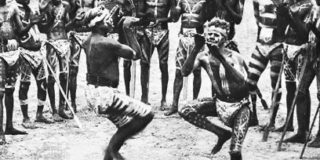
To understand the folly of “reclaiming” Australia, we must start at the beginning – not 1788, but tens of thousands of years prior. Aboriginal and Torres Strait Islander peoples have inhabited the Australian continent for at least 65,000 years, with some evidence suggesting up to 80,000. This predates modern human migrations out of Africa and makes Indigenous Australians among the world’s oldest continuous cultures. Before European contact, the land was home to over 250 distinct language groups, each with sophisticated systems of kinship, law, spirituality, and land management.
These societies were not primitive, as colonial narratives often portrayed. They practiced sustainable hunting and gathering, using fire-stick farming to shape landscapes, promote biodiversity and prevent wildfires – a technique now recognised in modern ecology. Trade networks spanned the continent, exchanging tools, ochre and stories. Spiritual life centred on the Dreaming, a timeless narrative linking people, land and ancestors. Population estimates before settlement vary from 318,000 to over 3 million, reflecting a thriving, diverse existence.
European arrival shattered this world. In 1788, the First Fleet brought convicts, soldiers and free settlers, initiating dispossession, violence and disease that decimated Indigenous populations. Yet, white nationalists like those in Reclaim Australia conveniently erase this history, claiming Australia as a “white” heritage site. Their stupidity lies in ignoring that the land they “reclaim” was never theirs to begin with – it was stolen from First Nations peoples who had stewarded it for millennia.
Expanding on this, consider the depth of Indigenous knowledge systems. Oral traditions passed down through generations preserved astronomical observations, medicinal practices and environmental wisdom that modern science is only beginning to appreciate. Indigenous astronomy mapped the stars for navigation and seasonal calendars long before European telescopes. Medicinal plants used by Aboriginal healers have informed contemporary pharmaceuticals. Land management practices, like controlled burns, mitigated bushfires and enhanced soil fertility, demonstrating a harmonious relationship with the environment that contrasts sharply with the exploitative colonial approach.
The arrival of Europeans introduced concepts of ownership and enclosure alien to Indigenous worldviews, where land was not a commodity but a living entity intertwined with identity. Frontier wars, massacres and forced removals followed, with estimates of Indigenous deaths in the hundreds of thousands. Policies like the Stolen Generations, where children were removed from families to assimilate into white society, further eroded cultural continuity. Yet, despite this, Indigenous cultures persist, resilient and vital, challenging any notion of a “white” heritage as the foundational one. Psycho-patriots who ignore this are not reclaiming heritage; they’re perpetuating a myth of supremacy that denies the true custodians’ enduring presence.
Colonial Foundations: Convicts, Settlers, and the White Australia Myth
Australia’s European chapter began as a penal colony, not a noble homeland. The First Fleet’s 1,400 souls – mostly convicts transported for petty crimes – arrived to relieve Britain’s overflowing prisons. By 1868, over 162,000 convicts had been shipped, forming the backbone of early society. Free settlers followed, drawn by land grants and opportunity, but this was no pure “white” utopia. Early arrivals included Irish Catholics, Jews and even non-Europeans like Chinese gold rush miners.
The White Australia Policy, enacted in 1901, formalised racial exclusion, restricting non-European immigration to preserve a “British” character. This policy, rooted in fears of “Asian hordes,” deported thousands post-WWII, including Asians who had aided Australia during the war. Yet, it underscores the irony: even “white” heritage https://www.theguardian.com/culture/2024/mar/31/no-longer-useful-the-dark-history-of-australias-post-war-asian-deportationswas selectively British, excluding other Europeans until necessity demanded otherwise.
Post-WWII, Australia pivoted. Facing labour shortages and defence needs – “populate or perish” – the government launched a massive immigration drive. From 1945 to 1965, two million arrived, initially from Britain and Europe, then broadening to include displaced persons from war-torn nations. The International Refugee Organisation sponsored 182,159 refugees by 1954. By the 1970s, the White Australia Policy crumbled, ushering in multiculturalism with arrivals from Asia, the Middle East, and Africa.
This history exposes the stupidity of psycho-patriotic claims. White Australians tracing to convicts or settlers aren’t “native” – they’re descendants of invaders and immigrants. Reclaiming “heritage” from “hordes” ignores that their forebears were the original hordes displacing Indigenous peoples.
To elaborate, the convict system itself was a melting pot of social classes and ethnicities. Many convicts were Irish political prisoners, adding a layer of resistance to British authority. The gold rushes of the 1850s brought Chinese miners, who faced discrimination, but contributed to economic booms. European settlers from Germany, Italy, and Scandinavia diversified the population further. The White Australia Policy, while exclusionary, was pragmatic rather than ideological at times, bending for economic needs like pearling industries employing Japanese divers.
The dismantling of this policy in the 1960s and 1970s, under leaders like Harold Holt and Gough Whitlam, marked a shift toward inclusivity. Multiculturalism became official policy in 1973, recognising that diversity strengthened the nation. Today, over 30% of Australians are born overseas, with vibrant communities from every continent enriching cuisine, arts, and innovation. Psycho-patriots decrying “hordes” fail to see that immigration has always been Australia’s lifeblood, from convicts to refugees. Their claims are stupid because they romanticise a selective past while fearing the very dynamism that built the country.
The Rise of Psycho-Patriotic White Nationalism: Reclaim Australia and Its Delusions
Enter Reclaim Australia, a far-right movement founded in 2015 amid fears of Islamic extremism. Rallying under slogans like “Reclaim our country,” they positioned themselves as “concerned mums and dads “fighting sharia law, burqas, and halal certification.” Organisers insisted they weren’t racist, just patriotic, focusing on “extremism” rather than race. Yet, their rallies attracted neo-Nazis and splinter groups, including the United Patriots Front and True Blue Crew, who embrace overt white supremacy.
Reclaim’s narrative: Australia has been “lost” to multiculturalism and Muslim “hordes,” eroding white Christian heritage. They demand a return to “traditional” values, echoing global far-right tropes of “white genocide.” One rally speaker claimed communists invented “racism” to undermine whites. From their perspective, immigration threatens cultural purity, justifying exclusion.
But this is where the stupidity peaks. What “heritage” are they reclaiming? Convict roots? British imperialism that subjugated Indigenous peoples? Post-WWII refugees like my mother? Reclaim’s anti-Islam focus masks broader xenophobia, but their claims crumble under scrutiny. Australia was never “traditionally white Christian” – it was Indigenous, then a mix of convicts, settlers and later, diverse migrants.
Critics abound. Media outlets labelled Reclaim a “Trojan horse for extremists,” noting neo-Nazi infiltration. Academics trace its roots to rising right-wing extremism, sharing narratives with global white supremacists. Anti-racist counter-protests outnumbered them, highlighting public rejection. Even balanced views acknowledge their concerns about integration, but condemn the Islamophobia as “racist not racism.”
Reclaim denies racism, claiming to protect Australian values from radical Islam. Shermon Burgess, who ultimately left for form the United Patriots Front, emphasised “no racist intent,” focusing on patriotism. Yet, this rings hollow when rallies feature swastikas and anti-Semitic chants. Their evolution into more extreme groups like the National Socialist Network, plotting “white revolution,” reveals the core. Ironically, Shermon converted to Islam in 2023after exiting the UPF having faced mockery by other members.
The stupidity of ignoring 65,000 years of Indigenous heritage while “reclaiming” a 236-year-old settler one is hard to fathom. Psycho-patriots like these romanticise a white monoculture that never was, blind to their own immigrant origins.
Delving deeper, Reclaim Australia’s formation coincided with global events like the Charlie Hebdo attacks, amplifying Islamophobic sentiments. Their rallies, held in major cities, drew hundreds but were met with thousands in opposition, underscoring societal rejection. Splinter groups escalated tactics, from street brawls to online harassment, yet their influence waned as legal actions and public backlash mounted. The movement’s delusion lies in its binary worldview: us versus them, where “us” is an imagined white collective, and “them” is any deviation. This ignores the hybridity of Australian identity – barbecues blending Indigenous bush tucker with migrant flavours, festivals merging Diwali lights with Christmas trees. Reclaiming such a fluid heritage from “hordes” is absurd; it’s like claiming ownership of a river that flows from multiple sources.
Moreover, the psychological underpinnings of this patriotism reveal insecurity. Psycho-patriots often stem from socioeconomic disenfranchisement, channelling frustration into scapegoating. Economic inequality, job losses in traditional industries, and rapid urbanisation fuel resentment, misdirected at immigrants rather than systemic issues. Their stupidity manifests in rejecting evidence: studies show immigrants boost economies, filling labour gaps and innovating. Instead, they cling to myths, perpetuating cycles of hate that harm the very society they purport to save.
Broader White Supremacist Views in Australia: Heritage and Immigration
White supremacy in Australia isn’t limited to Reclaim. Far-right groups espouse authoritarianism, anti-democracy and exclusionary nationalism. They view immigration as a threat to “white culture,” advocating ethno-states. Groups like the Base and National Action promote “white genocide” myths, fearing replacement by non-whites.
Their heritage claims Australia as a “warden of civilisation,” a superior white legacy against “inferior” others. Yet, history shows persistent extremism, from 1930s fascist groups to modern neo-Nazis. Immigration views: Discriminatory regimes to halt “hordes.” This perspective ignores Indigenous precedence and settler hypocrisy. As analyses note, white supremacists sidestep 65,000 years of Aboriginal history. Their “civilisation” built on dispossession, with colourism and racism persisting. Even in recent years, groups radicalise via conspirituality, blending anti-vax with white supremacy.
The far-right views are stupid because “heritage” is fluid, not fixed – Australia’s strength is its diversity. Supremacists often invoke “Australian values” like mateship and a fair go, but these originated in convict solidarity and Indigenous communalism, not white exclusivity. Mateship, forged in penal hardships, transcended race as diverse groups laboured together. A fair go evolved through union movements including migrant workers.
Immigration debates reveal further irony. Supremacists decry “hordes” while benefiting from migrant labour in agriculture, healthcare and tech. Australia’s points-based system favours skilled immigrants, contributing billions to GDP. Yet, fears of cultural dilution persist, ignoring how waves of arrivals – from Greeks and Italians post-WWII to Vietnamese boat people – integrated and enriched society.
Psycho-patriotic stupidity peaks in denying climate migration’s future. As global warming displaces millions, Australia, a settler nation, must embrace more “hordes” or face isolation. Rejecting this reality isolates them from progress, clinging to a heritage that’s as invented as it is exclusionary.
Expanding on supremacist ideologies, they draw from eugenics and colonial pseudoscience, classifying races hierarchically. Early anthropologists ranked Indigenous peoples as “primitive,” justifying dispossession. Modern iterations use “cultural incompatibility” as code for racism, targeting Muslims or Africans. Yet, successful integrations abound: Lebanese Australians in politics, Sudanese in sports, proving diversity’s viability.
The movement’s online presence amplifies delusions, with echo chambers reinforcing biases. Algorithms feed confirmation, turning mild concerns into radicalism. Countering this requires education: schools teaching comprehensive history, media exposing fallacies, communities fostering dialogue. Only then can the stupidity of reclaiming a non-existent purity be dismantled.
Parallels in the United States: Shared Settler Myths
The US mirrors Australia: Indigenous lands colonised by Europeans, from Mayflower Pilgrims to waves of immigrants. Native Americans inhabited the continent for 15,000+ years before 1492. Settlement brought genocide, slavery, and exclusionary policies like the Chinese Exclusion Act. White supremacists there echo Reclaim: “Preserve white heritage” against “hordes.” Yet, as commentators note, “white heritage” is illusory – Europeans warred among themselves. Groups demand non-whites leave, ignoring their own immigrant roots.
Both nations’ far-right share tactics, including framing multiculturalism as invasion and romanticising a pure past. In Australia, it’s Reclaim; in the U.S., it’s Proud Boys or January 6 rioters. Stupidly, they forget that settler status makes all but those who are Indigenous “immigrants.”
Parallels extend to policy, with US quotas mirroring White Australia, restricting non-Europeans until reforms in 1965. Today, border walls echo offshore detention, both fuelled by fearmongering. Yet, America’s melting pot ideal, though imperfect, contrasts Australia’s multiculturalism, both challenging supremacist purity.
The US Trail of Tears is akin to the Australian frontier wars, both erasing native claims. Supremacists in both ignore this, claiming manifest destiny or terra nullius as justification. Stupidity lies in hypocrisy: celebrating pilgrim arrivals while decrying modern ones.
Economic myths that immigrants “steal jobs,” are confounded by data that shows they actually create them. Cultural enrichment – from tacos to curry – belies dilution fears. Psycho-patriots’ delusion ignores hybrid identities: Australian-Americans blending barbecues with Thanksgiving.
Future challenges like automation and inequality will test these myths. Embracing diversity fosters resilience, exclusion breeds stagnation. Parallels underscore a shared truth: settler nations thrive on inclusion, not reclamation.
Conclusion: Toward an Inclusive Mosaic
My daughter’s family tree taught us that belonging transcends arrival. White supremacists’ claims to “reclaim” from “vast hordes” are not just wrong, they are stupid, ahistorical delusions. Australia’s heritage is Indigenous first, settler second, multicultural always. Psycho-patriots must confront this or remain relics of division.
We should celebrate pluralism. Teach unvarnished history, foster dialogue, build societies where all belong. As waves of arrivals continue, our strength lies in unity, not purity. What stories does your family tree tell? Share them – perhaps in reclaiming our shared humanity, we truly honour the land. The everyday manifestations of multiculturalism surround us. Australian neighbourhoods pulse with global influences: Vietnamese pho shops next to Italian cafes, African drum circles in parks alongside cricket matches. Schools teach multiple languages, workplaces innovate through diverse perspectives. This mosaic isn’t a threat – it’s the evolution of heritage.
Psycho-patriots’ stupidity ignores global interconnectedness. In a world of climate crises and pandemics, isolationism fails. Australia’s alliances rely on multicultural ties; excluding “hordes” weakens them. True patriotism embraces all contributors, from ancient custodians to newest citizens. Education is key: Curricula integrating Indigenous histories with migrant stories foster empathy. Community programs bridging divides reduce fear. Policy must prioritise equity, addressing inequalities fuelling resentment.
Ultimately, reclaiming heritage means honouring its fullness – diverse, dynamic, inclusive. By rejecting supremacist delusions, we build a future where every branch on the family tree flourishes.