Introduction
In contemporary Australian political discourse, few issues are as foundational – and as contested – as the scope and protection of free speech. Recent public statements made by New South Wales Premier Chris Minns, asserting that Australia neither has nor should seek the same expansive free-speech protections as the United States, have provoked intense debate. Reported remarks framing differences in free-speech regimes as a deliberate trade-off in favour of social cohesion and multicultural harmony present a conception of speech as a privilege to be managed by the state rather than a democratic freedom to be protected. Critics contend that such a position, when translated into policy, risks accelerating an erosion of civil liberties and inviting patterns of governmental overreach that have historically precipitated democratic backsliding.
This essay offers a systematic, formal critique of that stance. It argues that reducing the space for free expression on the grounds of preserving multicultural cohesion is both legally and philosophically problematic, and it sets out the empirical dangers such an approach has presented historically. The paper proceeds in seven parts. First, it examines the legal and constitutional implications of privileging state-ordered harmony over robust political communication. Second, it situates the debate in philosophical terms and reviews historical precedents that illustrate the “slippery slope” from speech regulation to authoritarian consolidation. Third, it assesses the societal impacts of speech restrictions on multiculturalism, civic trust, and social resilience. Fourth, it considers concrete examples from the tenure of the Minns administration that critics cite as illustrative of opportunistic overreach. Fifth, it offers comparative international perspectives to draw lessons from other jurisdictions. Sixth, it surveys public and expert reactions to the approach in question. Finally, the essay outlines the long-term consequences of normalising such restrictions and makes a case for resisting their institutionalisation.
Throughout, the argument rests on the premise that democratic legitimacy rests on a system in which citizens can contest ideas, mobilise politically, and scrutinise those who govern. Curtailing that capacity in the name of enforced harmony substitutes paternalistic management for democratic agency, with consequences that extend well beyond the immediate regulation of particular slogans or demonstrations.
Part I: Legal and Constitutional Considerations
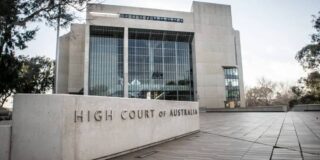
Australia’s constitutional architecture does not encapsulate a freestanding, textual Bill of Rights akin to the United States’ First Amendment. Nevertheless, decades of jurisprudence from the High Court have recognised an implied freedom of political communication, deriving from the Constitution’s representative framework – most directly Sections 7 and 24, which concern the election of Parliament. That judicially derived protection has become a meaningful check on legislative intrusions into political speech: restrictions must be appropriately adapted to serve a legitimate end and must not so burden communication as to be disproportionate to that aim.
Against this legal backdrop, a political posture that openly treats Australia’s comparatively limited formal speech protections as a deliberate advantage – one that can be traded for “holding together a multicultural community” – raises immediate constitutional concerns. When government actors claim as normative that Australia should have weaker speech safeguards than other liberal democracies, they implicitly endorse a conception of rights as contingent privileges subject to the discretion of the state. This undermines the normative thrust of the implied freedom: democratic governance presumes citizens must be able to engage in public debate about matters of public interest, including the actions of executive authorities themselves.
Practically, laws that broadly restrict protest, criminalise certain slogans, or empower police to impose long-term dispersal orders are vulnerable to the proportionality critique central to the High Court’s doctrine. The test embedded in that jurisprudence requires that any burden on political communication be justified by a legitimate object, be reasonably appropriate and adapted to achieve that object, and not be more restrictive than necessary. Measures that are framed in sweeping terms, lacking precise definitions of the prohibited conduct and granting law enforcement expansive discretionary powers, perform poorly when assessed against these criteria: they are open to arbitrary application, risk overreach, and have the potential to chill legitimate political discourse.
Moreover, there are institutional implications for the separation of powers. When elected officials celebrate the absence of a robust constitutional guarantee of free speech and act to expand executive control over expression – especially through rapid legislative processes that bypass thorough parliamentary scrutiny – they erode the checks and balances that sustain constitutional democracy. The judiciary is the ultimate arbiter of rights disputes, but constant political pressure to limit speech, coupled with attempts to normalise curtailments, can incrementally shift the political culture toward greater acceptance of executive authority and reduced tolerance for judicial interventions.
Finally, there is a distributive justice aspect often overlooked in doctrinal debates: the speech restrictions most easily enforced and most likely to be effective are those that disproportionately affect marginalised and less powerful groups. Protests and public demonstrations have historically been mechanisms through which Indigenous peoples, migrant communities, and other disadvantaged groups draw attention to grievances and mobilise for change. When laws are designed or applied in ways that delegitimise certain forms of expression – particularly those associated with political dissent or international solidarity movements – the result is selective suppression that entrenches existing inequalities rather than resolving the social frictions the laws ostensibly target.
Part II: Philosophical Foundations and Historical Precedents
From a philosophical standpoint, the defence of extensive free expression rests on several pillars. John Stuart Mill’s classical liberal argument in On Liberty remains central: open discourse is essential both for the discovery of truth and for the cultivation of individual autonomy. Offence alone does not constitute the sort of direct harm that justifies the compulsion of thought; only when expression presents a real and proximate danger of causing substantive harm may it be curtailed. Modern jurisprudence and political theory have refined this position, but the underlying principle endures: where the boundary between offensive speech and incitement to violence is set too low, the result is indeterminate enforcement and the muzzling of contestation that democracies require.
The history of the twentieth and twenty-first centuries offers multiple cautionary tales. In the aftermath of crises, governments have frequently sought emergency powers or expanded censorship measures under the rubric of restoring order – measures that, in many cases, outlasted their ostensible rationale and became instruments for consolidating power. The pattern is recognisable: immediate restriction on speech framed as a necessary, temporary response to a threat; the formalisation of broader powers under emergency or public-safety pretences; and, ultimately, the institutionalisation of those powers as routine tools of governance.
Historical examples are illustrative. In interwar Germany, emergency instruments invoked to address genuine security concerns were transformed into the legal architecture that underpinned totalitarian control. In the Soviet Union, censorship apparatuses suppressed dissent and controlled narratives in ways that had profound societal consequences, from shaping historical memory to stultifying intellectual and artistic creativity. Contemporary cases in multiple countries demonstrate the same dynamic in less extreme but still alarming ways: laws targeting “extremism” or “hate speech” have been used to silence legitimate political opposition and to reshape media ecosystems.
These precedents suggest that the justification of speech restrictions in the name of “harmony” is especially precarious in plural societies. The notion that a state can police contentious expression to produce concord ignores the reality that suppression often generates latent resentments, strengthens in-group narratives, and pushes dissent into less transparent, potentially more volatile channels. Moreover, by delegating the definition of unacceptable expression to political authorities – whose incentives favour stability, incumbency, and minimising public scrutiny – the state risks converting normative plurality into enforced conformity.
Philosophically, then, the trade-off proposed by those who privilege harmony over open expression is both morally and practically suspect. It replaces democratic deliberation with managerial decisions about acceptable public discourse, and in doing so it robs citizens of the opportunity to contest the very definitions that shape public life. The invocation of multicultural vulnerability as the justification for this trade-off is particularly ironic: multiculturalism as a lived practice has historically advanced through contestation, negotiation, and the messy give-and-take of public discussion – not through the policing of speech.
Part III: Societal Impacts – How Censorship Undermines Multiculturalism
At first glance, the proposition that curbing inflammatory or divisive speech will protect multicultural harmony may appear plausible. Yet empirical and sociological evidence caution that such measures frequently have the opposite effect. When public debate is narrowed by law or by an anticipatory fear of sanction, resentment and grievance do not dissipate; they are displaced into private spheres, underground movements, or identity-protective silos. This dynamic tends to intensify the very fragmentation lawgivers hope to prevent.
One important mechanism is the chilling effect: the phenomenon whereby individuals self-censor to avoid legal or social penalties. In societies where hate-speech laws are loosely framed or unevenly applied, journalists, activists, academics, and ordinary citizens may avoid discussing contentious topics altogether, depriving the polity of the corrective function that open contestation provides. The result is not respectful silence but enforced silence – a brittle peace that masks continuing conflict.
Minority communities often bear the brunt of such dynamics. Public protest and vocal advocacy have long been tools for marginalised groups to secure recognition and redress. If the state is empowered to designate certain kinds of expression as unacceptable in broad and subjective terms, then the instruments of civic empowerment are weakened. Moreover, when enforcement appears selective – targeting particular groups or movements while leaving other forms of provocative rhetoric unchallenged – the perceived legitimacy of the law erodes, exacerbating social divisions.
There are also psychological and cultural consequences. Societies that normalise censorship tend to cultivate conformity and risk aversion. Artistic innovation, critical scholarship, and robust journalism all suffer when the boundaries of permissible inquiry are narrowed. This impoverishes public culture and civic resilience, diminishing the capacity of institutions and citizens to adapt to crises through open debate and deliberation.
Finally, the economic argument against heavy-handed speech regulation is significant. Creative industries, universities, and the knowledge economy thrive on the free exchange of ideas. Legal and social constraints that stifle controversy can deter investment in intellectual capital, reduce the attractiveness of a jurisdiction for global talent, and ultimately undermine long-term prosperity.
Part IV: Case Studies and Practical Concerns
Critics of the approach articulated by Premier Minns point to several concrete policy decisions and public responses as evidence of an alarming trajectory. These incidents, whether accurately characterised in all particulars or not, are illustrative of the political calculus at play when free-speech concerns are subordinated to immediate order-maintenance.
One pattern observed is the rapid enactment of measures in the wake of security incidents – legislation intended to limit protests or to criminalise particular slogans with minimal parliamentary debate or definitional clarity. Such urgency creates risks of poorly drafted laws, ambiguous enforcement standards, and the absence of meaningful safeguards against abuse. The conflation of extremist violence with routine political protest can lead to sweeping tools that are disproportionately applied to non-violent activists and civil-society actors.
Another concern is the use of broad terms – “hate,” “disharmony,” “vilification” – without precise legal thresholds. When these concepts are applied administratively rather than adjudicatively, or when they empower law enforcement with wide discretionary authority, they invite arbitrary decision-making and selective enforcement. A legal regime that permits the indefinite extension of protest bans or the designation of entire categories of expression as impermissible without transparent review mechanisms is a recipe for unequal outcomes.
There are also political incentives that merit scrutiny. Leaders may be tempted to capitalise on public fear after a tragedy to consolidate authority and shore up political standing. Fast-tracking restrictive measures can be politically expedient, especially if the costs of long-term civil liberty erosion are diffuse and the short-term appearance of decisive action yields immediate political credit. The danger lies not only in the policies themselves but in the precedent they set: once broad surveillance and enforcement capacities are normalised, reversing them becomes politically costly.
Part V: Comparative Perspectives
A comparative lens helps to illuminate the stakes. Democracies vary widely in how they balance the protection of speech with the prevention of harm. The United States, with its First Amendment jurisprudence, sets a high bar for restrictions on expression, protecting offensive and unpopular speech to a degree uncommon elsewhere. This approach rests on a robust commitment to marketplace-of-ideas principles and a wary view of governmental power to suppress dissent. Other liberal democracies – Canada, the United Kingdom, Germany – adopt different calibrations, balancing protections against the prevention of hate or incitement. Within these variations, however, strong safeguards usually accompany any curtailments: precise statutory definitions, judicial oversight, and narrow tailoring of prohibitions.
Authoritarian regimes, by contrast, routinely employ speech restrictions as a means of political control. They justify censorship with references to public order, morality, or national unity, but the policies function primarily to stifle opposition and to monopolise public narratives. The international record suggests that once speech restrictions are embedded in law and practise without adequate safeguards and oversight, they are difficult to contain to their original scope.
Comparative experience also shows the perils of gradualism. Democracies that introduce incremental speech restrictions in response to specific events often find those restrictions expanded and normalised, yielding a cumulative effect that erodes civil liberties. The lesson is not that all regulation is illegitimate – liberal democracies legitimately regulate certain forms of expression that cause direct harm – but that the institutional design of such regulation must be cautious, transparent, and subject to meaningful checks.
Part VI: Public and Expert Response
Public reaction to moves that are perceived as constraining speech is predictably impassioned. For many citizens, free expression is not merely a legal doctrine but a democratic faith: the conviction that citizens must be able to speak truth to power, to criticise, to protest, and to assemble. When political leaders appear to diminish that capacity, civil society organisations, legal scholars, journalists, and grassroots movements mobilise in protest. Calls for constitutional reform – such as proposals for an explicit bill of rights or for statutory safeguards that harden protections for political communication – often gain traction in such climates.
Expert opinion tends to focus on the legal vulnerabilities of overbroad measures and on the long-term democratic risks. Constitutional scholars emphasise the necessity of precise statutory language, judicial review, and sunset clauses for emergency powers. Human-rights advocates underscore the importance of protecting the rights of the most vulnerable, who often rely on public expression as their chief tool for redress. Commentators from across the political spectrum warn of the reputational and institutional costs of appearing to trample civil liberties in the name of expedience.
Part VII: Long-Term Consequences and the Case for Resistance
If the trajectory critics identify continues unchallenged, the long-term consequences are grave. Institutional norms that protect civil liberties are not self-sustaining; they require consistent reinforcement through law, culture, and political practice. The normalisation of executive discretion over expression weakens democratic accountability: when dissent is stigmatised or penalised, the feedback mechanisms that correct policy errors atrophy. Voter apathy may increase, as citizens lose faith in their capacity to influence the public agenda. Social fragmentation may deepen as groups retreat from intercommunal dialogue into insular networks. Economically, the stifling of intellectual plurality damages innovation and stunts cultural dynamism.
There is also an intergenerational risk. If successive cohorts grow up accustomed to constrained public debate, the civic memory of free expression’s importance fades. Restoring robust democratic norms after a period of erosion is far more difficult than preserving them in the first place.
These consequences collectively argue for a principled resistance to the institutionalisation of broad speech restrictions. Resistance need not be nihilistic or absolutist; it can be pragmatic and constitutional. Practical proposals include:
• Instituting clear statutory definitions and narrow criteria for any speech-related prohibitions, with a strict requirement that restrictions be proportionate to demonstrable harms.
• Embedding robust judicial review and independent oversight mechanisms, including sunset clauses on emergency measures and mandatory parliamentary scrutiny.
• Ensuring that enforcement powers are applied even-handedly, with transparent accountability mechanisms for law-enforcement decisions.
• Investing in civic education and forums for mediated public discourse that build social resilience and capacity for disagreement without recourse to coercion.
• Pursuing legislative or constitutional protections for political communication, whether through an explicit bill of rights or an enhanced statutory framework that cements the implied freedoms recognised by courts.
Conclusion
The debate over the boundaries of free speech in a multicultural society is legitimate and complex. Societies must address the harms that arise when expression incites violence, targets vulnerable groups, or undermines public safety. Yet the instinct to solve these challenges primarily through expansive state regulation of speech is fraught with peril. Historical experience and philosophical reflection converge on a central lesson: liberty curtailed in the name of harmony often undermines the very conditions necessary for durable cohesion.
The posture articulated by Premier Chris Minns – framing limited speech protections as an intentional trade-off to preserve multicultural harmony – invites legitimate criticism. When operationalised in law through broad restrictions, vague definitions, and sweeping enforcement powers, such an approach risks entrenching executive authority, chilling legitimate dissent, and weakening the institutional checks that sustain democratic life. The remedy is not to place the power to define acceptable discourse in the hands of political actors who benefit from reduced scrutiny; rather, it is to strengthen the legal and cultural protections that enable contested ideas to be aired, assessed, and either adopted or rejected within the crucible of public debate.
Australia’s democratic tradition rests on the capacity of its citizens to speak, to assemble, and to contest the terms of public life. Those capacities are particularly vital in a plural society, where negotiated understanding emerges from engagement rather than from enforced silence. If the present moment signals a retreat from those norms, it is imperative that citizens, civil-society organisations, and legal institutions resist the institutionalisation of speech curbs that are neither necessary nor suitably constrained. The alternative is not a safer, more harmonious polity, but one in which power accrues to those who would govern without the corrective voice of a robust and free public. For the health of democracy, for the resilience of multiculturalism, and for the preservation of individual dignity, that path must be refused.