In a world of division, where one person looks or speaks differently can be sufficient reason to make them Other, the voices of marginalised calling for recognition and justice are heard from many corners. And whilst deafness to another’s plight is common, the deaf themselves are often overlooked by society. My cousin is profoundly deaf, a result of exposure to chickenpox in utero long before there was ever a vaccine. He is in every way otherwise intelligent and capable, but he has spent a life marginalised in work and community. With a father who was also profoundly deafened as a result of an explosion during war, what stood out was the distinct difference in how they interacted and coped with communicating with others.
Whilst my cousin was sent to a boarding school for the deaf for his education and learned to lip read, my uncle had grown in a hearing world and had to learn to read much later in life. One spoke at a normal volume, the other frequently shouted. My uncle’s speech was clear, my cousin’s was less well understood. I remember their home as a curious mix of hearing and non-hearing people, where efforts were made to face each other when speaking, diction mattered and speech was a little slower to allow my uncle in particular to read what you were saying.
Deafness is isolating as an adult-onset disorder. It takes your conversation as people talk over or around you, forgetting that the deaf person may not follow them. Loss of hearing is also associated with acceleration in the decline of memory in older people. People who lose their hearing as adults often see it as a disability; those who are born deaf may not. Regardless of how the individual person identifies and relates to their lack of hearing, there is no argument that people who are deaf face bias on a daily basis.
This week marks International Week of the Deaf and 23 September 2026 marks the International Day of Sign Languages. This year marks 20 years since the UN Convention on the Rights of Persons with Disabilities. It is also the 75th anniversary of the World Federation of the Deaf and the theme for this year’s events and the WFDeaf conference in Rome this week is Declaring Deaf People’s Human Rights.
There are around 300 different sign languages around the world, with more possibly yet to be recognised. Unique to the community, standardisation can be challenge in some parts of the world where singing may be specific to a particular school. Auslan is the Australian deaf language, but as with any other language and there is evolution in specific communities. In Far North Queensland there are dialects of Indigenous Sign Language that may incorporate hand signs used among Indigenous people with hearing as well as aspects of Auslan.
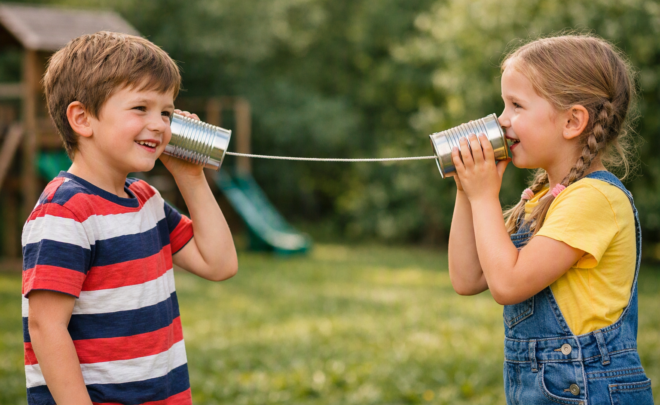
For adults who have lost their hearing, hand gestures become as important in communication as the spoken word. Trying to find ways to get a message across can challenge the hearing and the deaf person. Communication becomes a multi-modal activity – heading speech with reduced hearing acuity, lip-reading, hand gestures.
Discrimination against deaf people is called audism and includes difficulty finding work, job insecurity, linguistic discrimination and lack of autonomy. Audism assumes that hearing people are superior to those without hearing. People who can hear have no limitations on communication and education and are safer than those who are deaf. Deaf women have a heightened risk of domestic abuse due to isolation from support services.
Ninety percent of people born deaf are the offspring of hearing parents. Acceptance of a deaf child by parents comes with the necessity to learn alternative ways to communicate, find specialist educators, to advocate for equal access. It may seem logical to look to a cochlear implant to resolve what seems a disability to a hearing person. Yet not all congenitally deaf people want to have a cochlear implant. Among medical professionals, deafness is viewed as a disorder that requires treatment, whilst for many deafness is part of their identity. There is in fact some degree of tension among the deaf community about hearing implants, grounded in ethics, cultural connections with other deaf people, independence and experiences of medical bias.
The rights of the deaf community in Australia are covered under the Disability Discrimination Act. It covers those have either a temporary or permanent loss of hearing, whether partial or profound, use hearing devices or require an interpreter of animal assistance. The inability to accommodate a deaf student or arrange an interpreter for interview are examples of discrimination under the Act, as is harassment via jokes and mimicry.
Ultimately, the choice of people without hearing to remain so is less a choice to be disabled and more one about how they identify. They value their community, their language group, their connections as much as any other cultural group. That should not mean that they should be discriminated against. Rather, it is up to the rest of society to acknowledge and adapt to the alternative ways of interacting with those who are hearing impaired, whether congenital or acquired, by choice or by accident. There’s a full and enlightening language to facilitate communication that can broaden our circle and help us understand more about each other.
– – –
© Watershedd, September 2026