
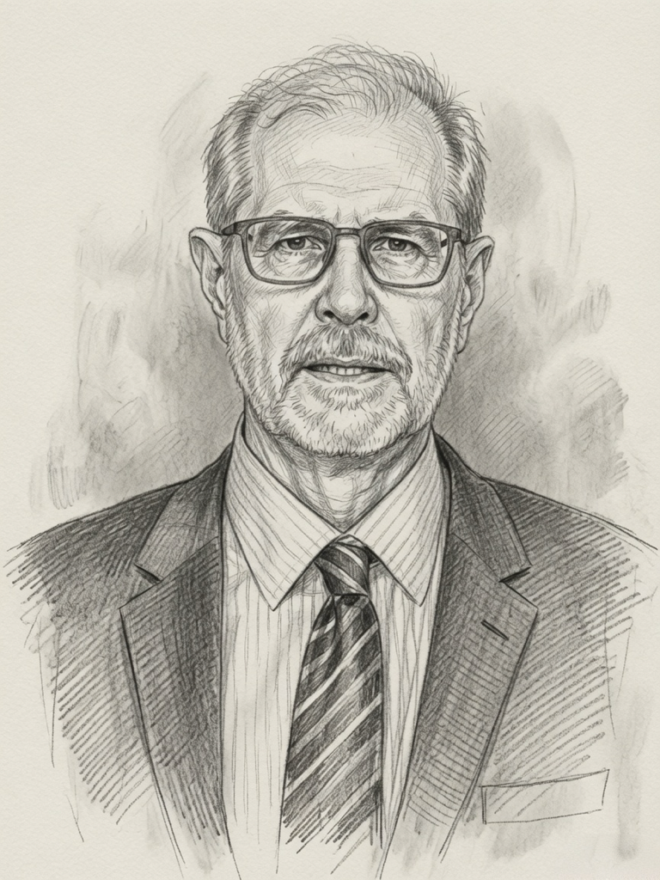
Jon White has been appointed a judge of the Supreme Court of the Australian Capital Territory. In the ordinary course of events, such an appointment would pass without comment from this platform. Judges are appointed. The machinery of justice turns. We are expected to extend goodwill and assume competence. But there are moments when silence becomes complicity, and this is one of them.
Jon White was the Director of Public Prosecutions for the ACT when I was prosecuted on sixteen charges – charges I can describe without equivocation as racially motivated, politically driven, and built upon a fabricated document. I was acquitted on all sixteen counts. The result was not close. It was not a matter of the jury splitting the difference or finding some middle ground between the prosecution’s case and the truth. It was 16-0. A complete and total vindication.
In the years since that acquittal, there has been zero accountability from the ACT Director of Public Prosecutions for the decision to run that case. There has been a serial lack of accountability from the Australian Federal Police for the decision to charge me in the first place. And now the man who presided over the DPP during the prosecution that came within a whisker of sending an innocent Aboriginal man to prison for eight years has been elevated to the highest court in the Territory.
This essay is not written in anger, though anger would be entirely justified. It is written because someone must write it, because the platform Blak and Black has spent sixteen years documenting precisely this kind of institutional failure, and because the people of the ACT deserve to understand what the appointment of Jon White to the Supreme Court actually means in the context of the history I am about to describe.
The Prosecution and What Drove It
Before my trial began, my barrister received a call from the prosecutor. According to my barrister’s account of that conversation, the message was remarkable for its candour. It was not a matter of whether I would lose, but when. And when I lost – the prosecutor’s assumption, not mine – the DPP would insist that I take down Blak and Black, this website, this platform, because it was embarrassing the Australian Labor Party.
That single communication tells us everything we need to know about the true purpose of my prosecution. A prosecution is supposed to be a neutral instrument of justice. It is supposed to proceed from the evidence, follow the law, and serve the public interest. It is not supposed to be a mechanism for silencing political inconvenience. Yet that is precisely what my prosecution was.
Why was Blak and Black embarrassing the Labor Party? Because this platform contained, among other things, a copy of a public interest disclosure – a formal document reporting significant corruption by the Australian Labor Party in the ACT, in New South Wales, and subsequently in Victoria. It also contained detailed documentation of the ongoing racial harassment of an Indigenous family by a public servant named Angel Marina, harassment that was driven by his irrational hostility toward his previous line manager, who had been the Indigenous Commissioner for ACT Revenue.
If the decision to prosecute me was made on the direction of, or in furtherance of the interests of, the ALP, then it was not a neutral decision. It was not made in the interests of justice. It was a political decision – a decision to use the criminal law as a weapon against a journalist and advocate whose work was exposing corruption and racism at the heart of the ACT’s governing party. That is an affront to Australia’s rule of law. It is an affront to the entire concept of justice. And nobody has been held accountable for it.
The Forgery at the Heart of the Case
The centrepiece of the prosecution against me was an affidavit. It was alleged that I had provided this affidavit to an earlier hearing in the ACT Civil and Administrative Tribunal. The problem – and it is not a small problem – is that the affidavit was never provided to the Tribunal.
More significantly still: the affidavit that was being legitimately prepared on my behalf had been prepared by a solicitor, reviewed by a second solicitor, and settled by a barrister. Three experienced legal professionals. The document that formed the basis of my prosecution was so shoddy, so unprofessionally prepared, so riddled with errors of form and substance, that it would have embarrassed a first-year law student. It was manifestly not the work of three professional legal practitioners. It bore none of the hallmarks of a document that had passed through the hands of experienced lawyers. It was, in the assessment of my legal team and on its face, a document that appeared to be a forgery.
Both the Australian Federal Police and the DPP were informed before my trial that the document they were relying upon was a forgery. They refused to countenance that possibility. They refused to investigate it. They proceeded regardless, because doing so suited an agenda – an agenda being driven by the Australian Labor Party, who wanted to discredit and bury the public interest disclosure that sat at the centre of everything.
The prosecution also attempted, during the trial itself, to tender into evidence the minutes of a meeting that did not happen. They were unsuccessful. They also attempted to tender a document purportedly written by the Indigenous Commissioner for ACT Revenue. They were unsuccessful in getting that document admitted either, because it could be demonstrated that it contained so many errors and inconsistencies that it could not have been written by the person whose name appeared in the signature block. No consequences have followed from those attempts. No consequences have followed from the broader conduct of the prosecution.
The Withheld Evidence and What It Would Have Proven
There is another dimension to this story that goes to the integrity of the prosecution itself, and to the DPP’s conduct of the trial. During my trial, the DPP withheld material that was exculpatory – material that, had my legal team possessed it, would have been instrumental in exposing the lies being told under oath in the courtroom.
The document in question was an email from a Ms Meredith Whitten to Tu Pham. In that email, Ms Whitten recommended that the complaints of racism made by the Indigenous Commissioner for ACT Revenue against Angel Marina should be investigated.
This document was critical for a specific and devastating reason. In 2003, Mrs Tu Pham made a statement to the Public Service Commission. In that statement, she said that the first time the Indigenous Commissioner for ACT Revenue had complained about Angel Marina’s racism was shortly after his appointment as Commissioner for Revenue. She reiterated this account verbatim under oath in an ACT Magistrates Court matter in 2006.
Then came 2017, and my trial. Under oath once again, Mrs Pham said something quite different. She now said that she must have made a mistake in 2003. She said there had been no complaints of racism made against Angel Marina. She said her memory of events that had occurred in 2002 was better in 2017 than it had been in 2003. One might be forgiven for finding that proposition somewhat extraordinary.
The email from Ms Whitten to Tu Pham gave the lie to that evidence directly. If there had been no complaints of racism against Angel Marina – as Mrs Pham would now have the court believe – what exactly was Ms Whitten recommending that the department investigate? The document’s meaning was unambiguous. Its implications for the credibility of Mrs Pham’s evidence were severe.
But because it was withheld, and because it only came into my legal team’s possession through the courageous action of an honest AFP officer who handed it to us toward the end of the trial, we missed the opportunity to cross-examine Ms Whitten, Mrs Pham, and Angel Marina on its contents. The window had closed. The witnesses had given their evidence. The damage – to truth, and to the course of my trial – had been done.
The Human Cost
I want to be precise about what the two years between being charged and standing trial cost me, because precision matters here and vagueness would allow the comfortable to remain comfortable.
My barrister advised me before the trial commenced that in the event I lost, I was probably facing an eight-year custodial sentence. I would also be forced to take down Blak and Black. Eight years of my life and the silencing of this platform – that was what was on the table while I waited, charged with crimes I had not committed, for a trial I could not be certain of winning even though I was innocent. There is no guarantee in litigation. Innocence is not a shield. I knew that better than most.
The mental and physical toll of that period was immense. I now carry permanent health consequences from what was done to me during those years. The anxiety, the strain, the weight of potential imprisonment, the threat to my family, my work, my voice – these are not abstractions. They are conditions I live with.
My defence cost five hundred thousand dollars. That is five hundred thousand dollars I was required to spend to defend myself against charges that were racially motivated, politically driven, and founded on a document that everybody involved – including, it must be said, the ALP – must have known was a forgery. The absence of any reckoning with that cost continues to this day. Nobody has offered restitution. Nobody, in any official capacity, has acknowledged the severity of what was done.
Accountability and Its Absence
The pattern that emerges from this account is not one of isolated error or honest misjudgement. It is a pattern of institutional failure compounded by institutional protection. The AFP charged me on a forged document. The DPP prosecuted me in pursuit of political objectives. Evidence was withheld. False testimony was given. Documents of questionable provenance were tendered. And when it was over – when sixteen charges had collapsed and an innocent man walked free – nobody faced consequences.
This matters profoundly in the context of Jon White’s appointment to the Supreme Court. The DPP, during his tenure as Director, prosecuted a case that should never have been brought. It prosecuted that case after being told the central document was a forgery. It withheld exculpatory material. And it communicated, through its prosecutor, that the real goal of the prosecution was not justice but the silencing of a platform that was embarrassing the Australian Labor Party.
The ACT Attorney-General who made the recommendation for Jon White’s appointment is part of the same ACT Labor Government whose political interests were served by my prosecution. The circularity of that arrangement is not subtle. The people who presided over a politically motivated prosecution of an Aboriginal man are now in a position to elevate the Director of the DPP who ran it to the highest court in the Territory. And they have done so without any prior reckoning with what occurred.
The rule of law is not merely a procedural concept. It is a substantive commitment – a commitment that the law applies equally, that prosecutorial power is not wielded for political purposes, that the machinery of criminal justice is not turned against individuals because they have the temerity to document corruption and name it in public. When that commitment is violated, and when those violations are followed not by accountability but by promotion, the damage to the rule of law is deep and lasting.
Institution and Individual: A Necessary Distinction
There is a distinction that fairness requires me to draw, and that intellectual honesty compels me to observe clearly. The failures I have described in this essay are, first and foremost, institutional failures. They are failures of the ACT DPP as an office, failures of the AFP as an organisation, and failures of the ACT Government as the political authority that ultimately shaped the conditions in which both operated. Institutions make decisions through processes, hierarchies, and cultures that are rarely reducible to the will of a single individual. The prosecution that was brought against me was the product of such a process.
It would be neither accurate nor fair to attribute every dimension of that institutional failure directly and personally to Jon White. A Director of Public Prosecutions does not personally conduct every prosecution that runs under his or her watch. Prosecutorial decisions are made by officers at various levels; cases are run by individual prosecutors; the conduct of a trial is shaped by the lawyers in the room, not solely by the person at the head of the organisation. These are structural realities, and they matter.
What Jon White was responsible for, as Director, was the culture, the governance, and the oversight of the office he led. A Director who sets clear standards of prosecutorial integrity – who insists that exculpatory material be disclosed, that political considerations play no role in charging decisions, and that cases founded on questionable documents be rigorously examined before proceeding – creates conditions in which the failures I have described are less likely to occur. Whether that leadership was provided during the period in question is a matter for examination, not assertion. It is precisely the absence of any such examination, any inquiry, any process of review, that makes Jon White’s appointment so troubling.
My concern is not that Jon White is personally corrupt, personally malicious, or personally responsible for every decision taken by every prosecutor in the ACT DPP. My concern is that the institution he led produced a prosecution that had no legitimate foundation, that was conducted in a manner that raises serious questions about disclosure and candour, and that was described – before it even commenced – as a vehicle for political silencing rather than the pursuit of justice. And my concern is that none of this has ever been examined. The appointment proceeds as though it did not happen.
The Legal Threshold and Why It Matters
Readers of this essay who are legally trained will understand that the conduct I have described does not automatically constitute malicious prosecution in the legal sense. That tort carries a high bar – and rightly so. The common law has long recognised that prosecutors must be free to make difficult decisions, to run cases whose outcome is uncertain, and to exercise judgment in conditions of incomplete information. A system in which every acquittal exposed a prosecutor to civil liability would be a system in which no prosecutor would ever bring a difficult case. That would not serve justice either.
For malicious prosecution to be established at law, several demanding elements must be proven: that the prosecution was initiated by the defendant; that it was concluded in favour of the plaintiff; that it was brought without reasonable and probable cause; and that it was animated by malice – meaning a purpose other than the proper administration of justice. Each element requires evidence, and the threshold for each is significant. Absence of reasonable and probable cause is not easily inferred from an acquittal alone; juries acquit for many reasons. And malice, in the legal sense, is notoriously difficult to establish when institutional actors can point to an arguable case, however thin.
I am not an expert and I make no claim to have established these elements to a legal standard. What I can say – and what I do say, on the basis of my own experience and the record I have described – is that the facts of my prosecution present a pattern of conduct that any fair-minded inquiry would regard as demanding explanation. The pre-trial communication about silencing this platform. The use of a document that multiple parties knew to be a forgery. The withholding of exculpatory material. The attempted tender of minutes from a meeting that did not occur, and of a document that could not have been written by the person who supposedly authored it. These are not the hallmarks of a prosecution brought in good faith on the available evidence.
The high legal bar for malicious prosecution exists to protect the integrity of prosecutorial decision-making. But it was never intended to serve as a shield behind which institutional misconduct can shelter indefinitely without scrutiny. The bar defines a legal cause of action. It does not define the limits of legitimate public inquiry. It does not mean that patterns of conduct falling short of that legal threshold need not be examined. And it certainly does not mean that the person who led the office during which these events unfolded is therefore suitable – without examination, without inquiry, without acknowledgement – to be elevated to the highest court in the Territory.
Jon White’s Record As Director: An Acknowledgement
Fairness also requires that I acknowledge the following. Jon White served as Director of Public Prosecutions for the ACT for a substantial period. He was reappointed to that role, which is itself a form of official endorsement. By the measures typically applied to such appointments – the smooth administration of a significant public office, the management of a professional workforce, and the maintenance of a prosecutorial service that handles an enormous volume of ordinary criminal work – his tenure will have had dimensions that this essay has not discussed, and does not propose to evaluate.
I am not in a position to assess the full breadth of his record. I have not seen every decision his office made, every policy it developed, or every case in which its conduct was exemplary. There will have been many. Criminal prosecution offices do vital work, most of it unremarked and uncontested – prosecuting violence, protecting victims, upholding the law in ways that serve the community without attracting public attention. I have no basis for suggesting that the entirety of the DPP’s work under Jon White’s leadership was compromised, and I do not suggest it.
What I have a basis for – a direct, personal, documented basis – is the assessment of how his office conducted itself in the prosecution brought against me. In that matter, the record is what it is: sixteen charges, sixteen acquittals, a forged document, withheld exculpatory evidence, a pre-trial communication revealing political objectives, and a zero-accountability aftermath that stretches to this day. Those facts sit alongside whatever else Jon White’s record contains. They do not disappear because other parts of that record may be less troubling. Suitability for judicial office is not established by averaging the good against the bad. It requires consideration of the whole.
The question this appointment raises is not whether Jon White did good work in other cases. I am prepared to accept, as a reasonable inference, that he sometimes did. The question is whether the failures that attended his office’s prosecution of me – and the complete absence of any reckoning with those failures – are consistent with the standards we expect of a Supreme Court judge. On that question, I have a view. It is a view grounded in my own experience, not in speculation. And it is a view I am entitled, as a citizen and as the publisher of a platform that has spent sixteen years demanding institutional accountability, to express.
Why This Platform Exists
Blak and Black was established in 2010. It was established precisely because the kind of thing I have described in this essay happens – because institutions protect themselves, because power insulates itself, because the people most likely to be targeted by the misuse of prosecutorial authority are those with the least institutional protection and the most to say.
The attempt to use my intended conviction as a means to force this platform offline was not incidental to the prosecution. It was, on the account given by the prosecutor before the trial started, central to its purpose. They wanted Blak and Black gone. They wanted the public interest disclosure gone with it. They wanted the documented evidence of racism against an Indigenous Commissioner for ACT Revenue gone. They wanted the voices that were naming corruption and demanding accountability gone.
They did not succeed. The trial failed. The charges failed. The platform remains. But the fact that they tried – the fact that the criminal law was used in this way, with this purpose, to this end – is something that must remain on the public record. Not because I wish to relitigate the past, but because the past has not been resolved. No one has been held accountable. And now the Director of the DPP under whose watch this prosecution ran is to sit on the Territory’s Supreme Court.
It is not my place to tell the ACT Attorney-General what to do. It is my place, as the publisher of Blak and Black, to tell the truth. The truth is that Jon White’s appointment to the Supreme Court of the ACT proceeds in circumstances that have never been examined, investigated, or resolved. The truth is that the prosecution over which he presided as Director was, on the evidence of the prosecutor’s own communications before the trial began, a politically motivated prosecution designed to serve the interests of the Australian Labor Party rather than the interests of justice. The truth is that sixteen charges collapsed because they should never have been brought. These are not matters of opinion. They are matters of record. And the record deserves to be read before new appointments are made and old failures are allowed to disappear quietly into the institutional memory of a government that has never acknowledged what it did.
Conclusion: The Unanswered Questions
Australia speaks often and confidently about the rule of law. It speaks about judicial independence, prosecutorial integrity, and the principle that no one – no government, no party, no interest – stands above the law. These are not empty words, or they should not be. But words require deeds to give them substance, and the deeds that followed my acquittal on sixteen charges have been conspicuously absent.
The questions that remain unanswered are not complicated. Who authorised the use of a document that multiple parties knew to be a forgery? Who made the decision to proceed with the prosecution after being told the document was forged? Who decided that exculpatory material would be withheld? Who communicated to the prosecutor that the real purpose of achieving a conviction was to silence Blak and Black? And who, in the ALP, gave the direction – or created the conditions – under which an Aboriginal man could be prosecuted on fabricated charges for the political convenience of a governing party?
These questions have not been answered. They have not been asked in any official forum. The UN Human Rights Committee submission that documents this matter in full detail remains before that body, because the domestic mechanisms that should have provided accountability have conspicuously failed to do so.
I have tried in this essay to be precise about what I allege and what I do not; to distinguish between institutional failure and personal culpability; to acknowledge the limits of my knowledge as well as its depths; and to recognise that the legal threshold for malicious prosecution is high and that I make no claim to have met it. What I do claim, and what I maintain, is that the pattern of conduct in my prosecution raises questions of the most serious kind about the integrity of the office Jon White led – questions that have never been answered, and that his elevation to the Supreme Court without any prior reckoning makes more urgent, not less.
Jon White is, in my view – and I state plainly that this is my view, formed on the basis of my direct experience with the ACT DPP under his directorship – not a suitable person to serve as a judge of the Supreme Court of the ACT. That conclusion is reached not through personal animus, not through ignorance of the broader record, and not through any claim that the legal elements of malicious prosecution have been established. It is reached because an institution he led prosecuted an innocent man on a forged document for political purposes, withheld exculpatory evidence, and has never been held to account – and because no appointment to any court should proceed as though that history does not exist.
The ACT Attorney-General will make of that view what she will. But she should make it in full knowledge of the history set out in these pages. And the people of the ACT, who are now to be subject to the jurisdiction of a Supreme Court on which Jon White will sit, should make of it what they will too.
Accountability deferred is not accountability avoided. It is accountability that waits.
– – –
Bakchos is the founder of Blak and Black, an Australian media and advocacy platform established in 2010. Bakchos writes from the intersecting perspectives of Wiradjuri heritage, Jewish identity, and humanism.
© Bakchos, June 2026



The prosecution of Bakchos by the ACTDPP can only be described as an assault on Australia’s rule of law, it was a prosecution that brought Australia’s justice system into disrepute. The document in question was given to the AFP by Peter Garrisson the ACT Solicitor General who so far has avoided accountability for his actions.
The fact that no one in the ACT Solicitor General’s Office, the Australian Federal Police or the ACTDPP have been held legally accountable for what was done to Bakchos should send shivers down the spine of every Australian.
Kelly the amount of corruption and racism that has gone on in the matters around Bakchos and his family is absolutely mind-boggling. It’s something you expect to see in Putin‘s Russia not in contemporary Australia.
My prosecution was driven by racial animus, the proof, the AFP and the ACT DPP knowingly prosecuted me on false evidence given to them by Peter Garrisson, the ACT Solicitor General.
Bakchos I followed your prosecution intensely and the only reasonable conclusion I can draw is that your prosecution was malicious, racially motivated and driven by the ALP to silence a vocal critic. What happened to the $130 million that went to the Marrickville branch of the ALP still remains to be answered.
The all important question that remains to be answered is how did Jon White’s DPP managed to prosecute an Indigenous man over a fraudulent affidavit, when the affidavit never existed, and the one that was used was clearly a forgery, created within the ACT government, the very body that made the complaint in the first place. Talk about hypocrisy and corruption on steroids.
Wouldn’t it be grand Faceless to have “friends in the AFP” who render you Teflon coated, so no matter what crime you commit, or what racism you engage in, you know you can do it with absolute impunity, because your “friends in the AFP” will always be there to have your back.
I was flipping in Canberra when these events were unfolding.. I was good friends with Bakchos having worked with him elsewhere. It was clear to everyone who was looking in from the sidelines that this was politically driven by the ACT Treasurer Ted Quinlan on behalf of his crony Angel Marina. Quinlan should not have politicised these matters, if he didn’t, they probably would’ve gone in a different direction. There needs to be real accountability for everybody involved, including Quinlan and Garrisson. .
The prosecution of Bakchos was racism on steroids.
The ACT Attorney-General who made the recommendation for Jon White’s appointment is part of the same ACT Labor government whose political interests were served by my prosecution. The circularity of that arrangement is not subtle. The people who presided over a politically motivated prosecution of an Aboriginal man are now in a position to elevate the Director of the DPP who ran it to the highest court in the Territory. And they have done so without any prior reckoning with what occurred.
Jon White has just been appointed a judge of the ACT Supreme Court. Jon White was the Director of Public Prosecutions when Bakchos was prosecuted on sixteen charges — charges built on what his legal team assessed as a forged document, charges the AFP and DPP were warned about before the trial started, charges that collapsed completely. Sixteen charges. Sixteen acquittals.
The most troubling thing about the prosecution of Bakchos is not the fit-up, although that is entirely disturbing. It is not that it was facilitated by a complicit ACT Government, tribunal, police and DPP. It is that no one, not a soul, has been held accountable. The perceived lack of review, combined with the career progression of senior & key individuals leaves one to consider that the ACT has no genuine interest in upholding the rule of law. Those functionaries of whom The Faceless Freedom Fighter speaks were not solely low level public servants – they were and are executives vested with responsibility. With responsibility should come accountability. So whilst they may follow processes, the buck as they say, needs to stop somewhere.
Thank you for this — you have put your finger on precisely the point that matters most. The prosecution itself, as distressing as it was, ultimately ended in a 16-0 acquittal. The law, at that moment, worked. What has not worked — what has never worked — is the reckoning that should have followed.
You are right that these were not low-level functionaries acting alone. They were executives. People with authority, institutional standing, and the public trust that comes with both. The absence of accountability is not an oversight or a bureaucratic lag. It is a choice — one made repeatedly, at multiple levels, by people who understood exactly what they were doing.
The rule of law is not merely procedural. It does not consist in following processes while insulating those who abuse them from consequence. As the Hebrew prophetic tradition understood long before Montesquieu — and as Marcus Aurelius grasped from the other side of power — justice without accountability is theatre. It pacifies without correcting. It performs legitimacy while entrenching impunity.
The ACT Government has had ample opportunity to demonstrate that it takes institutional integrity seriously. Its silence on accountability speaks more plainly than any official statement could.
Mark is a good friend, I know him well, what Jon White and his team at the ACTDPP did to my friend Mark to shield a white supremacist from accountability, and to protect some corrupt Labor Party politicians leaves me totally cold.
You’re 100% correct. Margaret all of this has its genesis in the outrageously racist letter Angel Marina wrote to Howard Ronaldson on 9 May 2002 that letter could only have been written by somebody who holds white supremacy views, and the fact that the ACT government the AFP and the ACTDPP have gone to such lengths to protect him from accountability suggest that they too hold similar white supremacy views.
You are absolutely correct Lady Margaret, everything that the Australian Federal Police and the ACTDPP was to shield a white supremacist (Angel Marina) from legal accountability for his alleged crimes.
Paulo you and Margaret are one hundred percent correct, Angel Marina’s “friends in the AFP” closed ranks to protect their white supremacist crony. The DPP followed suit.
People please remember, if they can do this to one person, they can do it to anyone.
Yes Mirko that’s the point that is missed by most people – if they can do it to me – they can do it to you!
Mirko that’s the point, we’ve been trying to make all along. If they can get away with doing this to Bakchos and his family, they can get away with doing it to anyone. People need to put *Indigenous* aside for one minute, and just look at this as the system attacking an Australian citizen, because the Australian citizen tried to hold the system to account, and that is a problem, a genuine and very dangerous problem.
White is a racist white cunt.
I’m a psychologist. I’ve been involved with Blak and Black since its inception. I’ve known Bakchos since we were both 18.. I’m personally shocked and disgusted that the prosecution of Bakchos was allowed to progress despite everybody knowing that the document that it was predicated on was a forgery, and that forgery was handed to the AFP by none other than the ACT Solicitor General Peter Garrisson. Why hasn’t Garrisson been held to account for damage his manipulation of the legal system caused?
Jon White’s DPP treated Bakchos like he was subhuman. Absolutely disgusting.
The way the ACT DPP progressed the prosecution of Bakchos showed clear signs of racial bias. There is clear signs of interference by the ACT Solicitor General who had a long and provable history of animus against Bakchos and other Indigenous residents of the ACT.
The 16 charges were the Solicitor General’s idea, I believe. Peter Garrisson the Solicitor General pushed for the prosecution. I also believe that there was possible collusion between Garrisson, Pham and Marina on issues like the audit and the complaints of racism. Garrisson should have been charged when the prosecution failed!
Agreed! Jon White is not suitable to be a judge in the ACT or anywhere else.
Jon White if by chance you see this comment, read the attached post by Bakchos and reflect on whether your office ran a professional prosecution of Bakchos which your office lost 16-0, or was it simply racially motivated revenge by the ACT solicitor general, which I believe it was.
https://blakandblack.com/2026/07/01/the-rule-of-law-on-trial-fullers-eight-principles-and-the-australian-state/?unapproved=16435&moderation-hash=666a6c1c289b63301ae8212e25902dfa#comment-16435
I think Jon White should be asked to explain why Bakchos was charged for forging a letter that was clearly written by Angel Marina. Howard Ronaldson confirmed that he received that letter whilst he was Chief Executive of ACT Treasury. It’s got his original signature at the top of it. Why did Jon White’s office charge Bakchos rather than Angel Marina?
A lot of people are fairly disgusted with what Jon White’s DPP did to you. It’s causing a degree of discomfort within CMTEDD .
Thanks for letting me know, Linda.
The more I read about the way the ACTDPP treated Bakchos, the more uneasy I became about structural racism in the DPP. The responsibility for the racism, even if he’s not racist himself, sits with John White, as the actual director of the department of public prosecutions..
The thing is Fr Alfonso, the ACT is all window dressing, all show, no substance. Jon Stanhope is a fake human rights crusader. He put his political survival above his alleged commitment to human rights.
Mark is a good friend, he showed unbelievable kindness to my disabled son, a kindness he was under no obligation whatsoever to give. I’m disgusted with the racism he has been subjected to. The ACTDPP and the Australian Federal Police have obvious and severe structural racism problems which need to be dealt with. Under no circumstances should Mark have been treated the way he has been treated by racist and corrupt Australian institutions. I have spoken with Mark at length about the ACT Solicitor General Mr Peter Garrisson. Mark believes that Mr Garrisson manipulated the legal process in the ACT to pursue a racist vendetta against him. This is something that needs serious investigation, given the role Mr Garrison holds.
Thank you for your support, Gertie. The ACT legal system is totally broken. It’s been corrupted by a quarter century of unbroken ALP government. In my view, the ALP have stacked the judiciary and senior appointments within the bureaucracy, with ALP cronies. There is no justice to be had in the ACT if the institution you’re seeking justice from is the ALP itself. Multiple people have given statements that they heard Mr Angel Marina brag that he was supported by Ted Quinlan, who was then the ACT Treasurer and Minister for Police. The AFP refused to investigate Mr Marina‘s assault and comments. If they had investigated them at the time, there would’ve been CCTV footage showing what Mr Marina did and said.
The ACT legal system has been corrupted by the ALP to the extent that it no longer operates as an independent legal system committed to upholding the rule of law.
It should concern the rest of Australia what the ALP has done in the ACT. Leave a single part in the government for long enough, and will totally stack the judiciary and the public service with its cronies, which entrenches it’s policy position for decades after it loses power..
Faceless I was on the sidelines of some of these issues, Jon White’s DPP behaved in a disgustingly racist manner. Unbelievable that they prosecuted an innocent Indigenous man on forged documents to protect a white supremacist. What does that tell you about the attitudes of both Jon White and the office he managed?
Racism drove the prosecution of Bakchos. White supremacists having the back of other white supremacists is why Angel Marina has avoided accountability for his actions.
I’m sick of these racist white cunts putting the boot into blackfullas whenever they get the chance. Racism is the root cause of these issues, racism put Bakchos on trial. That fat cunt who calls himself the Solicitor General is the one who should be in prison.
Jon White should be disgusted with himself, the office he headed prosecuted an innocent Aboriginal man to satisfy a white supremacist. Talk about unAustralian. That is the most unAustralian thing I’ve ever seen.
Tell me Jon White how do you justify the attacks on Bakchos by your office, while Angel Marina’s racism and corruption goes unpunished? Now let’s talk about the ACT Solicitor General using a false document to have your office prosecute Bakchos, no accountability for that short, fat, racist fuck.
Yet despite all this the ACT government still made Jon White a judge. This surely explains the high indigenous incarceration rates in the ACT..
The ACT is a hardcore racist jurisdiction. Jon White is both a product of that jurisdiction, and now a Supreme Court judge in that jurisdiction.
Under absolutely no circumstances should someone implicated in, or even remotely associated with racism be elevated to the bench. This includes Jon White.
There is no room for even a wiff of racism on the bench.
This man should not be a sitting Supreme Court judge. There is more than a whiff of racism about him.
Agree Margaret, Jon White should not be a sitting judge on the ACT Supreme Court, he oversaw a racially motivated and fraudulent prosecution of me, based on documents given to the Australian Federal Police by the ACT Solicitor General, who for over two decades, has been carrying out a politically driven payback intimidation campaign of an Indigenous family, at the direction of the Australian Labor Party.
Bakchos your prosecution was clearly racially and politically motivated, the people in charge of the departments and organisations that led the charge against you should be held accountable. The buck stops with those in charge. The DPP‘s decision to prosecute you has to land the feet of Jon White and he should not be a judge if he’s racist, and his decisions scream “I’m a racist.”
Jon White is a racist cunt.
No arguments about this, from me, Andy!
I’ll second that cuz.
How can a man who when he ran the Department of public prosecutions in the ACT and allowed an innocent man to be forced to stand trial on a forged affidavit, that everyone knew was forged, because everyone was told prior to the trial, how can such a man be elevated to a judge in the Supreme Court? The Supreme Court cannot have judges who are racist or perhaps in Mr White’s case prepared to accept racism and turn the blind eye to it. It’s totally unacceptable and he is not suitable to be a judge in any court in this land.
It’s hard to even imagine how someone must feel when they’ve being prosecuted on a forged document, on fake charges. They know that the police and the DPP know that the document they’re prosecuting the person with is a forgery, but they go ahead with it, and the person facing prosecution could potentially be facing eight years in jail. I can only imagine how that person would feel..
My grandparents survived the Holocaust, what Jon White allowed to happen to Bakchos is what the Nazis did to the Jews. My grandparents knew Bakchos’ mother who was also a Holocaust survivor. Image how Bakchos must have felt when he was sitting in a courtroom facing a clearly biased judge, answering trumped up charges, built on a forged affidavit, given to the Australian Federal Police by the ACT Solicitor General, all to aid a white supremacist who had clearly shown racial animus to Bakchos and his family.
Thanks for your comment Aaron, appreciated. My prosecution served two purposes, both of which failed. The first was to silence a vocal critic of the ACT Australian Labor Party Government. The second was to continue to help Angel Marina to avoid accountability for his disgusting written racist outburst dated 9 May, 2002.
Hello Aaron, I’ve been friends with Bakchos since we were both 18. I watched the damage these malicious charges did to him. He’s not the same person as he was before these malicious and racially motivated charges. Someone has to be held accountable for what was done to him.
That is correct, FFF, the racist prosecution of Bakchos took a significant toll on him. You cannot go through that and come out unchanged. He has very good reason to want accountability.
That’s right Watershedd, the pursuit of me and my extended family was and remains political and racial. The ALP has a lot of explaining to do.
What Jon White did to Bakchos is disgusting beyond belief.
Jon White should be investigated and prosecuted over what happened to Bakchos.
Why was Bakchos charged over a letter that was clearly written by Angel Marina. Are Angel Marina’s “friends in the AFP “ shielding him? Did Angel Marina’s “friends in the AFP” arrange for the bogus charges against Bakchos, based on a forged document, given to them by Peter Garrisson?
Jon White needs to explain how the DPP he was in charge of managed to prosecute an innocent Indigenous man, using a false document, supplied by the ACT Solicitor General.
What Mr White’s office did to my friend Mark leaves me cold and disgusted, how a man such as Mr White can be elevated to the bench is beyond my ability to comprehend.
Everyone knows and everyone has known for decades that this prosecution, to the point of what’s probably persecution, was initiated and driven by Ted Quinlan and his then chief of staff Jeff house. Ted Quinlan, and everyone in Canberra knows he was a crony of Angel Marina through sports ACT, where they both had a profile. Just because you’re the treasurer doesn’t mean that you should be above the law. In fact, it means you should be more accountable to law than someone who hasn’t got that authority. This needs to be investigated and if appropriate evidence is found to support these allegations, there needs to be a prosecution, actually there probably needs to be more than one prosecution. Let’s see if the AFP has integrity, or not.
Sean I just sent you an email, if you don’t receive it, could you please contact me through the contact page on the website? I’m interested in talking to you about the information you just provided.
I will contact you in the next few days. A heads up, I know that constable Nick Maguire did not handover the statement from Martin D’Este, I saw Martin’s copy, it was favourable to Mullins‘ position, and seriously called into question Angel Marina’s motivations, and set out the motivations of Tu Pham and others to lie. What needs to concern you, Is this, how many other statements did Nick Maguire collect and not handover? From reading the material on your site, I understand there was a statement from Howard Ronaldson, which Nick Maguire also seem to have neglected to hand over.
Thanks Sean. Do you by any chance have a copy of the statement Martin D’Este made to Constable Nick Maguire. If you do, that would be useful in helping to establish the level of racism and corruption in the Australian Federal Police.
So it’s okay to prosecute an innocent Indigenous man, simply because white people in the ACT just-us system are white supremacists and think themselves superior to Indigenous people, maybe they don’t even think of Indigenous people, as people.
You should know who I am when you read my email address which I would appreciate if you kept confidential. When these issues first started in late 2002. No one was aware of that disgusting letter Angel Marina wrote in May 2002. Both Tu Pham and Meredith Whitten kept a lid on it. It’s doubtful if it was shown to Mike Harris when he was appointed chief executive.
.
Everyone knows Angel Marina is a narcissist and he thinks he’s the man, the problem for Mr. Marina is, no one else has the same “think”.
.
Mr. Marina decided in his own mind that Mullins had to go, and Mr Marina was going to do everything in his power to make sure that Mullins went, because Mr Marina in his own mind can never be wrong, and that is the root problem in all of this Mr. Marina in his own mind can never be wrong, and because he had a minor celebrity in the ACT, he was able to use that on many different occasions to exert his will over others.
Thanks John, yes I remember who you are. The reality is Angel Marina is a nobody. He was only able to do what he did because others like Meredith Whitten and Ted Quinlan empowered him. We must not forget his “friends in the AFP”! These issues have gotten so out of hand because of the racism of Constable now AFP Commander Rowena Penfold and her sidekick AFP Constable Nick Maguire. People need to remember that if nasty and relatively low level public servants like Angel Marina, Meredith Whitten and Tu Pham, can get away with destroying my family, they can do it to your family too.
John, it’s taken years to piece the puzzle together. Meredith Whitten’s part in this is in no way small and some of it clicked into place recently in this post https://blakandblack.com/2026/08/07/be-alert-be-alarmed-how-justice-fails-in-the-australian-capital-territory/ . Whatever the reason, no-one seems to have had the strength to stand up to Marina. He was protected by ministers, evidenced by Katie Gallagher’s comments conveyed via Mike Harris and enabled by public servants and corporate employees at EY to wreak havoc on possibly the most vulnerable person in the Treasury, all because he was Indigenous. Harris bent to political interference. He is not blameless. He would have had a copy of Marina’s racist tirade of 9 May 2002 in the PID submitted to Stanhope in June 2003 as it was the first annexure, and Harris responded on behalf of the Chief Minister on 4 July 2003. That PID disappeared, like so many other documents. It is the very document that took Bakchos to ACAT, precipitating the charges that saw him having to defend himself against the AFP fit-up in the ACT Supreme Court in 2017. Marina is everything you say, but the damage has been enabled by those who failed to use exercise their authority to ensure all employees were afforded a safe workplace. The entire scenario is a lesson in why the legislative and administrative branches of government should never overlap.
Watershedd on the evidence that’s available to us, and there might be other evidence that we simply don’t have, because the AFP and all the DPP have simply not handed it over. We have no way of knowing, and my trust level in the ACTDPP is less than zero, and my trust level in the AFP is something below that. What Angel Marina got away with, he probably wouldn’t have gotten away with, but for the help of Meredith Whitten, and whoever put together the so-called sting in the government solicitors office. I think that if we could see the legal advice that Doug Jarvis gave to Meredith Whitten about the constructive dismissal, and failure to investigate the racism issues, we would know a lot more about what went on and who was driving it. Ultimately it doesn’t matter who was driving it, it would never have started if it wasn’t for Angel Marina, and however this ultimately plays out, it has to include the prosecution of Angel Marina, or I don’t see how the issues can be put to bed in what our side would consider to be a satisfactory manner.
Neither the Australian Federal Police nor the ACTDPP showed any real interest in properly investigating these matters, a decision was clearly made to favour Angel Marina over the Indigenous man, that favouritism extended to giving Mr Marina immunity from prosecution for the crimes that he allegedly committed against Mullins and his family, that is racism in the extreme.
Angel Marina is a narcissist and a bully. Whitten and Pham were too gutless to stand up to him. Easier to destroy the life of an Indigenous man than stand up to a white supremacist bully.
Jen you are right about Angel Marina being a narcissist and a bully.
The level of racism you have experienced is almost unbelievable. Unfortunately it’s very believable. Australia is notoriously known as a racist country in many parts of the world, and it’s a well deserved warning to many non white people who might might be thinking about travelling there. Good luck with your fight for justice.
Thanks Samantha. The reality is that if it was not for the racism in Ernst & Young‘s legal department in Sydney, and human resources section in Canberra, Angel Marina would not have been able to progress his campaign of racial hatred, and none of what followed would’ve happened.
What Jon White allowed to happen to Bakchos is disgraceful.
I left this comment as a reply to a reader under another one of my posts, but it equally belongs here:
.
The rule of law is a cornerstone that democracy. The ACTDPP and the ACT Supreme Court totally disregarded the rule of law when they knowingly prosecuted me on a forged document, that was given to them, at least on the material I have at hand, by the ACT Solicitor General Peter Garrisson. ACT Supreme Court judge Mossop, totally ignored my barristers pre-trial application to have the affidavit struck out. That’s the affidavit I was charged on because it could not possibly have been produced on the date that it had on its face. Judge Mossop refused that application, and smiled to the jury every time my barrister put anything related to it being a forged document to the jury. I ultimately won 16-0, despite the absolute disregard for every aspect of Australia’s rule of law shown by every layer of the ACT just-us system. I still had confidence that had I lost. I would’ve ultimately been successful in the High Court as I have no doubt that the High Court has the integrity that the ACT just-us system has failed to show, and that they would have upheld the rule of law.
It’s abundantly clear to everyone that Mullins was fitted up by Angel Marina, but the ACT government and the Australian Federal Police refused to act. Why do they refuse to act? Because they are racist, and it would expose Ernst & Young to civil action by Mullins or his wife.
The more I read about this situation the more uncomfortable I become with the racism, and the racism is obvious. The racism is in everyone’s face and everyone refuses to address it. It’s clear as crystal that Angel Marina is a white supremacist. Everyone let him get away with it, now it’s too difficult to deal with the consequences of not disciplining Mr Marina, so again the victim is the Indigenous man not the white supremacist.
A group of white men forming a lynching party, if only metaphorically, doesn’t surprise me at all.
Ramses my friend you’ve found the site. You’re absolutely correct in your analogy, that a posse of white men, metaphorically lynched an Indigenous man using the sinews of a broken legal system as the noose.
A posse of white men out to lynch a black man, somethings never change.
Kofi nothing ever really changes. The ACT is the most racist jurisdiction in Australia.
Kori it was absolutely a posse of white men and women with a token Vietnamese thrown it to give it a multicultural flavour. Beware white men in business suits, with a superior air about them.
Angel Marina is typical of a bully. He goes around and causes trouble for people. He attacks people. He engages in a racially motivated vendetta against his line manager. Then he claims to be the victim. This is standard play for a bully..
Kofi, the only difference between the ACT and American states in the deep South in the 1930s, is that the lynching in the ACT is done by white men in charge of the so justice system, not white men in hoods, hiding their identity, when you control the justice system, you don’t need to hide your identity when you’re being racist, because there’s no one to hold you to account.
Kofi the racism that the ACT Government and the Australian Federal Police have engaged in to try and destroy Bakchos is almost beyond imagination.
Polina white people have been doing that to black people for centuries.
The all white posse charged me with 16 counts of trying to influence a public official in the course of their duties. Ironically, the all white posse used a false document to charge me on. The all white posse knew it was a forgery, despite this, Jon White’s DPP forced me into a $500K two week trial. I won 16-0. None of the all white posse have been held to account. That’s called racism!!
Thank you for sharing your story Mr Bakchos. I’m part of an organisation that exposes white racism against black people. Your case has peaked my interest.
It’s clear as day to me. This matter is about a group of white people who wanted to rid themselves of a black man because they thought the black man had gotten too big for his boots. So they used a broken and corrupt legal system to destroy him and his family. This cannot be allowed to stand.
A number of interesting discussions going on under this post. What I would like to ask Mr White, how is it possible that an Indigenous man is charged and prosecuted by Mr White’s DPP using a fraudulent document, and nobody has been held to account for it, despite Mark beating the charges 16-0. It is my understanding that everyone in the DPP involved in this matter was white. The judge was white. The prosecutor was white. The prosecutor’s is instructing solicitor was white and of course the investigating AFP officer was white. All these white people seem to have conspired to charge an Indigenous man using a fake document because it was convenient, and because a white politician wanted to silence the Indigenous man, if any of this is incorrect please advise me.
Lady Margaret I can assure you that we’re watching this case. It remains unacceptable to us that a posse of white men, can attack and destroy an Indigenous man, to protect a white supremacist and a white politician. Mr Bakchos has been metaphorically lynched by a white posse using a broken legal system as the noose.
Ramses, if you are interested, there’s a more detailed chronology in this post https://blakandblack.com/2020/07/31/justice4mullins-a-black-life-that-matters/
.
In addition, there are a series of vignettes on Youtube, linked on this page, https://blakandblack.com/videos/
Thank you Watershedd, I’m currently making my through this blog. I wish I could say I’m surprised about the treatment the white posse has dealt out to Bakchos, but the real reality is. white people or at least somewhat people, have never had any respect for their darker skinned brothers and sisters.
The University of London and Ernst and Young were also complicit in helping Miss Angel Marina carry out her attacks on Mr Bakchos and his family. None of this could have happened without their assistance.
You are correct, Olikoye, but one distinction must be made – Angel Marina is a man, not a woman. There are others around the world of another gender, but the Mr Angel Marina with whom these matters originate should not be confused with anyone else.
Olikoye, Angel Marina is actually a male not a female. I’ll I agree the man is a sook. He’s still a male sook not a female sook..
Hi Ramses, what might not be apparent is that the white man at the centre of the racially motivated attacks on me and my family has been given an immunity from prosecution, which shields from any form of legal accountability for his actions. Why was the immunity granted? White men protecting other white men from legal accountability for their racist actions.
Why was this Angel Marina given immunity from prosecution, and why? Immunity from accountability for attack a coloured man and his family. Unbelievable racism. Was it Jon White who gave this Angel Marina his immunity from prosecution.
Hello Ramses I believe that Peter Garrisson the current ACT Solicitor General organised an immunity from prosecution for Angel Marina. The DPP would have had to agree to the immunity. Jon White was the Director of Public Prosecutions, was he the one who signed off on it? I can’t confirm that.
I’ve been reading the comments on this post as they have been going up. It’s clear as daylight that this Angel Marina person is a hard-core white supremacist, and what was done to Bakchos and his family was clearly some kind of racially motivated vendetta. What’s worse, it appears that this vendetta was, if not, sanctioned, was at least indirectly supported by the ACT government. Only really arrogant, or really stupid people would’ve let this situation go on for so long, and go so far.
I’m embarrassed that a UK academic institution was involved in such an outrageous case of racial hatred and racial verification. It’s clear what has gone on here. A racist, uneducated public servant saw his only prospect for promotion was to undermine everyone around him, by whatever means he could.
Hi David none of what has happened could’ve happened if it wasn’t for the University of London providing Angel Marina with the material he wasn’t entitled to seek, have or use, but because he was asking for material on an Indigenous Australian the white people at the UoL didn’t think twice about handing it over without checking his bona fides. This is itself racism.
The saga around Mr Bakchos is very disturbing, made more disturbing by the number of white men who sided with the white supremacist Angel Marina (who is apparently a male) but acts like a female. The fit up and prosecution of Mr Bakchos by Jon Whites DPP is concerning, concerning because Australia claims to be a democracy operating under the rule of law, Jon White’s DPP suggests otherwise.
Hakeem the only reason that the matters concerning Bakchos have gone on for so long and have become so nasty is because the ACT Treasurer Ted Quinlan stuck his nose in where it was not meant to be, and he stuck it in solely to protect Angel Marina, who is his crony.
I was a colleague of Mullins in ACT Treasury when all of the events described in this blog were happening. The two commissioners before Mullins, Graham Dowell and Wayne Perry both complained about Marina‘s conduct. They both complained to Tu Pham, Pham for own reasons refused to deal with Angel Marina’s aggression. I witnessed Marina bullying Martin D’Este numerous times in the ACT Treasury office building, during work hours. The one I remember most and I gave a statement about this to constable Nick Maguire who to the best of my knowledge did not hand over to Mullins’ lawyers. The statement recounted what Marina said in the elevator to D’Este “we are going to get your little boong mate Marky. I’m friends with constable Rowena Penfold, Marky is finished” in the same encounter Angel Marina also invoked the name of the Treasurer Ted Quinlan as one of his buddies. I understand that Mr. D’Este also provided a statement to constable Nick Maguire, which I also understand Constable Nick Maguire failed to handover to lawyers representing Mullins. I also understand that a constable Omara got a statement from Howard Ronaldson stating that he received Marina’s 9 May letter whilst he was still chief executive of treasury. This is another statement that the AFP failed to handover, this is despite Constable Maguire signing an affidavit stating that he had handed over all of the material the AFP had collected. I believe that this is a serious crime, signing such a document knowing full well that you hadn’t handed over all of the material. How many times and in how many ways, can you say, this was a racially motivated fit up by the Australian Federal Police and the ACT Government ?
Glen are you willing to give me a formal statement? If so, please let the administrators of this site know, and I’ll authorise them to share my contact details with you.
Thanks for the information Glen, none of this is new to me, but your corroboration is welcome. This has gone way too far, and gone on for way too long. Genuine accountability is called for.
The women I know, not the least my mother who raised several sons as well as daughters, would not tolerate behaviour akin to Marina. He’s been known to state “I’m a man!”, but man or woman, no-one who demonstrates such aggression and bullying can be considered to have matured. The behaviour is that of a petulant child who has found that adults would rather acquiesce than address his behaviour through discipline and structure. He needs to be held accountable for his aggression and the harm that has followed. And those who failed in their duty to exercise that discipline must be exposed. Had they done their jobs, over two decades of harm would never have happened and this website would not have had to be built. We are going nowhere until these matters are wholly exposed and the racism addressed.
Many years ago Bakchos said to me that over the course of his life Angel Marina was the biggest sook he had ever met. He whinges about everything, that’s because he has nothing of real value to offer. Anyone who resorts to racism in an effort to advance themselves is one of life’s true losers.
I did say that to you Bill, and I stand by all of those comments.
This Angel Marina really does sound like one of life’s losers.
This is the first time I have encountered this blog. If even a portion of what is described in this post and associated post is correct. What happened to that Indigenous family is beyond disgusting.
James I’ve followed these matters for a number of years now. Someone else I work with has followed them even longer, and their mother has known Bakchos since they are in their teens. I have no doubt that everything that’s presented on this blog is accurate, and properly reflects what transpired over a number of years, and it highlights apart from the racism, the dangers of having a paranoid narcissist in your workforce.
I simply don’t understand how Jon White could possibly have been made a judge after his office prosecuted an innocent Indigenous man using a forged document in order to protect a white supremacist.
The thing is Russell, the Australian Federal Police and the ACTDPP are Australia’s version of the KKK.
The thing is Russell the ACT just-us system is totally without honour or integrity, the proof is the way the entire system closed ranks to protect Angel Marina who is a well-known and white supremacist. When people close ranks to protect the white supremacist the only conclusion you can draw is that they’re either sympathetic to the white supremacist ideals or they are white supremacist themselves.
What has gone on here is disgusting. So much effort to shield a white supremacist from accountability.
Jon White is presenting as a racist whitefella who is comfortable fitting up an Indigenous man to protect a white supremacist.
They made this man a judge. Unbelievable!
It’s a joke. The prosecution of me was about derailing my application to the human rights commission. The main beneficiary of my prosecution, if it was successful, would have been Angel Marina who is a white supremacist.
You see Amanda, Australia is a very racist country, a country in which Individuals people are treated as noncitizens, with that in mind, none of this is particularly surprising.
Jon White’s DPP was told directly that the document they were relying on prosecute me was a forgery and forgery seems to have been created somewhere in the ACT government and hand it to the AFP by the ACT solicitor general Mr. Garrisson. Mr Garrisson has a lot of skin in the game and one would have to question his impartiality. The whole prosecution from start to finish was racially motivated and politically driven to silence an an Indigenous critic of the ACT Labor government and that FFF is serious racism.
As I remember the white plus one Vietnamese public servants who gave evidence against you were;
.
Tu Pham former Deputy Chief Executive ACT Treasury and former Auditor General
Mike Harris former Chief Executive ACT Treasury and Chief Minister’s Department current ACT Auditor General
Sue Hall Director Corporate Services CMTEDD
Meredith Whitten former Director Corporate Services and Executive Director, Disability ACT
Angel Marina former Manager Rates and Land Taxes
Robert Lewis Senior Officer Grade C
I also note that despite the jury not believing them, none have been charged with anything. So far only the Indigenous man has been charged. The AFP lost to an Indigenous man 16-0. They must hate that.
As I remember the white plus one Vietnamese public servants who gave evidence against you were;
.
Tu Pham former Deputy Chief Executive ACT Treasury and former Auditor General
Mike Harris former Chief Executive ACT Treasury and Chief Minister’s Department current ACT Auditor General
Sue Hall Director Corporate Services CMTEDD
Meredith Whitten former Director Corporate Services and Executive Director, Disability ACT
Angel Marina former Manager Rates and Land Taxes
Robert Lewis Senior Officer Grade C
I also note that despite the jury not believing them, none have been charged with anything. So far only the Indigenous man has been charged. The AFP lost to an Indigenous man 16-0. They must hate that.
I just stumbled upon this site and this post, I’ve not heard of either the site or the person this post is about before. I’m absolutely disgusted about what has gone on. I used to think of Australia is being a friendly democratic country. Clearly it’s infested with racist, not only that, the racists seem to be given Carte blanche by the police to carry out their racist agendas, I’m absolutely disgusted.
Jon White’s appointment shows all the hallmarks of a political appointment for services rendered to the ACT Labor Government.
The ACT is full of racist fucks, and Jon White is amongst the worst of them.
Bakchos is Jewish, Jon White prosecuted him on a fraudulent document, that makes Jon White antisemitic.
I agree Maya, Jon White’s action have more than a hint of antisemitism about them.
More concerning is the statement by the presiding judge in Bakchos’ 2017 Supreme Court trial. Bakchos stated that he would not have made a declaration on a bible as he is Jewish. Mossop discounted that fact as of little consequence. To anyone of any faith, how you swear is important. Some will not swear on any tome or deity but prefer to make an affirmation. It was a remarkable lack of cultural sensitivity from Justice Mossop to try to gloss over such a fact.
As my barrister said at the time, and as I’ve said many times since, on multiple social media platforms, and elsewhere, Justice Mossop wasn’t interested in giving me a fair trial, he was simply trying to make sure that he didn’t get appealed. That is not justice! Mossop also knew that I was Jewish because I stated that, and he directed the jury to disregard that, as it wasn’t relevant. It was relevant because it was raised in the context that I wouldn’t have sworn an affidavit on a Christian Bible, I wouldn’t have made an affirmation. It’s not simply a lack of cultural sensitivity on Mossop’s part. It’s outright bigotry, and let’s not forget, which ever way you cut this, the genesis of the whole thing rests with a white supremacist. Whether the white supremacist didn’t like Indigenous people, or he didn’t like Jewish people, is beside the point they probably go hand-in-hand, if you don’t like one of those groups and you’re a white supremacist you probably don’t like the other, and that’s really where all the problems stem from, along with the fact that Ted Quinlan politicised this, it should not have been politicised. That is something that will ultimately need to be dealt with.
Bakchos where did the affidavit you were charged and prosecuted on come from?
Hi Maya, the affidavit I was charged on mysteriously appeared in the hands of the ACT Solicitor General one day, who handed it on to the AFP to have me charged on. Prior to being served a copy by the AFP I hadn’t seen that affidavit before despite requesting numerous times. The AFP failed to produce an original that I can have properly forensically analysed, not only that I was charged in April 2015 in January 2016 the AFP was still looking for a copy of that affidavit from my lawyers talk about charging someone and then trying to work out what they were charged with that is either racism or antisemitism or more likely both by the AFP by the ACTDPP and by the ACT solicitor general.
So what you’re saying is; there are antisemitic judges on the ACT Supreme Court. That’s something that needs addressing by the appropriate levers of state in Israel.
What you just described is classic antisemitism. Where ever antisemitism raises its ugly head, it has to be called out, and dealt with, through the appropriate legal channels.
Bakchos should never have had to defend himself against those clearly racially motivated and politically driven charges.
Explain to me like I’m 10, how can a prosecution service run a racially charged, politically motivated prosecution against an innocent Indigenous man and not be accountable for the outcome.
G’Day Barak, I’m the person who was prosecuted by Jon White’s DPP. I can confirm that it was all about race and political interference by a Labor Party minister. That is definitely not justice.
Batak, Bakchos was prosecuted on a forged document, we don’t know who forged it, what we do now is that it was very poorly done and doesn’t reflect the work of what through qualified and experienced lawyers would produce. A psychiatrist to assist the document was of the view that whoever created it was functionally illiterate, it’s unlikely that all three legal practitioners who are involved in drafting it would be functionally illiterate. We have a few names, of who among the likely candidates would be that malicious, as well as being functionally illiterate, we can’t prove it ,so I’m not going to put the name here.
I have seen and experienced racism many times over the course of my life. Generally it’s white people being racist against coloured people. Occasionally it’s Arab people being racist against coloured people, which ever way it goes, the target of the racism is always coloured people. What has gone on here is no different to the other racism I’ve experienced during my life.
My prosecution was racially motivated and politically driven. To date there has been zero accountability for what was done. Twenty-five years of unbroken Labor Government in the ACT has undermined the independence of the entire legal system.
I can vouch for what my friend Bakchos said.
Barak the racism was the main driver behind Bakchos’ prosecution by the Jon White lead ACT DPP. The initial attack which goes back to 2004 was all about shielding a white supremacist from accountability.
Barak in my personal experience, having been involved with blak and black for almost 16 years, I can say with complete confidence that the ACT is almost certainly the most racist jurisdiction in Australia and Canberra is the most racist city in Australia.
Jon White’s DPP has so far failed to explain why they prosecuted an innocent Indigenous man, using a forged document, all to protect a well connected white supremacist.
Jon White clearly ran a racist prosecution service in the ACT.
Hakeem I live in the ACT, and I can assure you that after 25 years of unbroken Labor government, the ACT has became the equivalent of America’s Deep South. In other words, the ACT is racism on steroids.
Hakeem, Margaret who was my initial prosecutor in Jon White’s DPP was told multiple times in the lead up to my trial, by my legal team, that the affidavit they were prosecuting me on was a forgery, and we wanted to know exactly who the person in the ACT government was who had handed that affidavit to the AFP and the DPP,? the documents we had at hand suggested it was either Sue Hall or Peter Garrisson, but regardless of who did it, it was a fake, and they were prosecuting me on a fake. Margaret totally ignored that advice. My legal team made a pre-trial application to Justice Mossop to have that affidavit knocked out, because it couldn’t possibly be genuine. Mossop both refused our application and declined to give his reasons until after my trial concluded, make of that what you will.
Thank you for your response, Paulo, the organisation I work for is taking a close look at what is going on in the ACT. There is no room for racism anywhere. Australia is after a seat on the UNSC. It shouldn’t be rewarded with a seat if its capital is infected that much with racism.
Why hasn’t the person in the ACT government who handed the forged documents over to the Australian Federal Police who then conducted a fake investigation, and gave the outcome of that fake investigation to the DPP to use to prosecuted an innocent Indigenous man. Why has no one been charged? It reeks of racism to me.
I saw what happened to Bakchos when he was waiting for his trial after he was charged, that two years almost destroyed him, and those around him. People talk about empathy, think about it. How would you like to be charged on a fake document that there’s no guarantee you’ll be able to prove was a fake, and your legal advice is that you’ll be looking at eight years in prison if you were convicted, how would you feel knowing that you’re innocent, but not not being sure that you can prove it, and the whole reasons behind the charges were racism and politics. How would you feel?
I was fitted up by someone in the ACT Government, everyone in my prosecution knew this and continued to progress my prosecution and as if everything was kosher, when it wasn’t. No one in the ACT Government has been held to account. This is racism on steroids.
Jon White read the attached post. What your office did to Bakchos was to again tie him to a fence and piss on him, and for exactly the same reason it was done to him when he was in first class! Because your office does not like Indigenous people, in fact, your office is highly discriminatory towards Indigenous people, and in any jurisdiction that is supposedly ruled by law, that is an outrage, and you sir, are an outrage.
.
https://blakandblack.com/2026/10/11/tied-to-the-fence-terra-nullius-mixed-ancestry-and-silence/
You’re wasting your time Paulo, do you seriously think that Jon White gives a fuck about the niceties of the rule of law after his office prosecuted me using forged documents? The ACT simply runs a just-us, not a, justice system.
Strange that it’s only the Indigenous man who has been through the legal system because of the actions of Tu Pham and Angel Marina. What about all of the non-Indigenous people who have broken the law, are they immune from prosecution. An immunity given to them, by themselves.
Most of what went on was about shielding Tu Pham from criminal charges because of how she treated Mullins. I’ll be doing a post in the next few weeks about this. I’ve found a public interest disclosure about to farm that was submission by Mullins to Glen Gaskell, I have the email read receipt plus there was cc to Maureen at the ombudsman’s office and the AFP have an electronic copy of that public interest disclosure because they seized the computer. It was emailed on, and copied all of the emails, so there can be no question about the authenticity of that public interest disclosure, and it needs to be dealt with.
Still nothing done about Jon White’s malicious prosecution of an innocent Jewish man. Unsurprising in a racist colony like Australia.
Susan I can assure that absolutely nothing has been done by either the Australian Federal Police or the ACT Bar Association about Jon White’s malicious prosecution of me. This all comes down to entrenched racism which permeates the entire ACT legal apparatus.
Thank you for your reply Bakchos. I’m personally concerned about what Jon White did to you using a forged document.
Susan, Jon White’s appointment to the bench of the ACT Supreme Court shows in starting detail just how racist and corrupt the ACT Labor Government really is.
I’ve been watching these issues now for over a month, and the only conclusion I can draw is that the white people in charge of ACT Policing and the ACTDPP are racist, and they see no problems with prosecuting an innocent black man to cover up the crimes of a white man and an Asian woman.
Olikoye the entire group is watching how this plays out. A group of white people ganging up on an Indigenous man to protect a white supremacist.
Hakeem I’ll be posting proof in the next few days to show that Tu Pham orchestrated the entire thing.