
Introduction
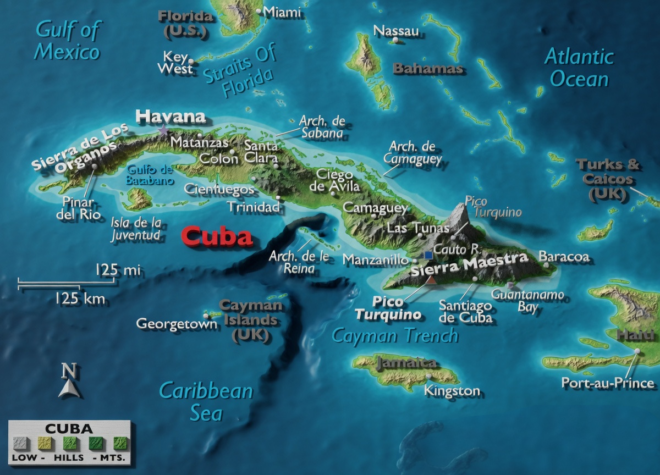
The events of March 16, 2026 – President Donald Trump’s Oval Office declaration that he believed he would have “the honour of taking Cuba,” a nationwide Cuban blackout that interrupted state television programming, and a parallel public statement by Cuban deputy prime minister and trade minister Oscar Pérez-Oliva Fraga signalling openness to large-scale investment by U.S. companies and members of the Cuban diaspora – converged into a concentrated moment that illuminates the complex, historically rooted, and high-stakes dynamics of U.S.-Cuba relations today. Those developments occurred amid an intensified U.S. pressure campaign that effectively halted Venezuelan oil shipments to Cuba following U.S. intervention in Venezuela earlier in 2026, and against a backdrop of chronic economic mismanagement, infrastructure decay, and declining living standards on the island. This essay synthesises contemporaneous reporting from major verified outlets and official statements to provide a structured, evidence-based analysis of the causes, consequences, and possible trajectories arising from this conjuncture. It aims to separate documented facts from interpretation, outline the historical and legal frameworks that shape policy options, and examine humanitarian, geopolitical, and economic implications.
Historical and Legal Context
Understanding the current crisis requires situating it within the long arc of U.S.-Cuba relations and the domestic legal instruments that govern American policy toward Havana. Since the 1959 Cuban Revolution, the bilateral relationship has been characterised by sustained U.S. hostility designed to isolate and pressure the Cuban government. The comprehensive U.S. trade embargo, initiated in 1962 and strengthened over ensuing decades, was codified in part through the 1996 Helms-Burton Act. Helms-Burton not only tied the lifting of most sanctions to specific political conditions in Cuba, including democratic reforms and compensation for expropriated property, but also expanded the extraterritorial reach of U.S. sanctions by exposing foreign firms to secondary liability in some cases. Successive administrations have varied in their application of these tools, with policy shaped by strategic assessments, domestic politics, and the balance of interests among Cuban-Americans, national security officials, and commercial actors.
The Obama administration marked a major shift toward engagement, announcing normalisation in December 2014 and pursuing steps – embassy reopenings, eased travel and remittance restrictions, and limited commercial channels – that aimed to increase people-to-people contact and support private-sector growth. The Trump administration in its first term (2017–2021) reversed much of that opening, reimposing travel restrictions and broadening lists of restricted Cuban entities. Cuba’s designation as a state sponsor of terrorism in 2021 (subsequently reversed under President Biden in 2025) and subsequent toggling between administrations illustrate how legal designations and executive action can rapidly alter the policy environment. Upon his return to the presidency in January 2025, President Trump reinstated hardline measures, compounding constraints already in place.
This legal and institutional backdrop matters because it sets the boundaries within which diplomacy, commerce, and humanitarian channels operate. U.S. sanctions policymakers often emphasise humanitarian exemptions and channels for remittances, yet the practical implementation of sanctions, the presence of “restricted lists,” and the spectre of secondary sanctions on third-country suppliers or financial intermediaries frequently have chilling effects that limit commerce beyond the formally enumerated prohibitions. That dynamic is central to understanding the immediate crisis in early 2026: even when humanitarian waivers exist on paper, the risk calculus of third-party firms and states can reduce or eliminate practical supply lines.
The Oil Shock: Venezuela, Intervention, and the De Facto Cutoff
The island’s recent energy crisis cannot be divorced from the sudden collapse of Venezuelan oil shipments following U.S. intervention in Venezuela in January 2026. For decades, Venezuela – under Hugo Chávez and later Nicolás Maduro – provided Cuba with subsidised oil that, at peak, represented a sizeable share of Cuba’s petroleum imports and was essential for running thermoelectric plants, hospital generators, water pumps, and transportation. The removal of Maduro in January 2026 and the subsequent U.S. campaign to block Venezuelan shipments to Cuba – including presidential directives authorising tariffs or other measures against countries that supply oil to the island – produced a swift and severe shock.
Reporting from multiple outlets documents that U.S. Coast Guard operations intercepted a number of tankers, and that other countries and firms, fearing secondary sanctions or legal exposure, curtailed shipments to Cuba. While the U.S. administration framed its measures as targeted economic pressure designed to pry concessions from the Cuban government and disentangle Havana from Venezuelan support networks, observers and Cuban authorities described the result as functioning de facto as an oil blockade. Legal scholars debate the precise categorisation – blockade in the narrow military sense versus broad sanctions and interdiction – but for ordinary Cubans the practical consequence was the same: fuel scarcity that crippled a fragile electricity grid.
Infrastructure Fragility and the Nationwide Blackout
Cuba’s electric system entered 2026 in precarious condition. Much of the thermoelectric generation infrastructure dates from the Soviet era, and underinvestment, parts shortages, and inadequate maintenance had long eroded efficiency and reliability. The island had already been experiencing prolonged rolling blackouts since 2024, with frequent outages lasting many hours a day in some regions. The abrupt interruption of Venezuelan fuel supply accelerated deterioration: plants could not run at capacity, reserve fuel supplies dwindled, and maintenance that required parts or outside technical assistance was deferred.
On March 16, 2026, Unión Eléctrica, Cuba’s national grid operator, reported a complete shutdown of the national grid – the third major island-wide blackout in four months. Hospitals postponed operations; intensive care units and neonatal services shifted to limited generator power or ran with reduced capacity; water pumping stations failed in many municipalities, disrupting potable water distribution; perishable food stocks spoiled in refrigeration units; public transportation and logistics stalled; and state media, including the evening Mesa Redonda program, experienced disruptions during a moment of major policy announcements. The blackout was officially attributed to critically low fuel reserves; no immediate systemic technical failure, such as a cyberattack or specific infrastructure collapse, was publicly identified.
Humanitarian Consequences
The blackout was not an isolated inconvenience but a humanitarian flashpoint. Rolling power outages, and especially a nationwide grid collapse, have cascading impacts across health, food security, sanitation, and public order. UN agencies and humanitarian organisations, as reported in contemporaneous coverage, warned of acute risks for vulnerable groups – infants, elderly patients, those requiring ongoing dialysis, and people dependent on refrigerated pharmaceuticals. Food distribution chains, which in Cuba combine rationed state provisions, market purchases, and informal channels, were disrupted when refrigeration failed and transport systems halted; inflation and currency distortions had already squeezed household purchasing power. Independent reporting documented localised protests, including “cacerolazos” and at least one instance of a Communist Party office being set on fire in central Cuba – indicators of social stress and rising frustration though not necessarily signs of imminent regime collapse.
Cuban officials, unsurprisingly, placed the blame squarely on external pressure, characterising U.S. measures as an “economic blockade” that deprived Cuba of essential fuel and thus catalysed severe hardship. U.S. officials countered that the policy seeks to pressure Havana’s leadership to adopt reforms, and they emphasised that humanitarian exemptions exist for food, medicine, and other aid. Outside analysts and economists – drawing on years of study of Cuba’s economy – point out that structural factors predate the immediate crisis: central planning constraints, currency dualities, state dominance of productive sectors (especially by military-controlled conglomerates like GAESA), limited foreign direct investment historically, and endemic underinvestment in infrastructure combined to create a system with low resilience to external shocks.
Taken together, the evidence indicates both that sanctions and interdictions significantly amplified the emergency in early 2026 and that long-standing domestic policy weaknesses limited Cuba’s ability to adapt. Humanitarian access and transparent monitoring are critical in such circumstances; yet the disputed political environment and the potential for sanctions to chill third-party assistance complicate the delivery of aid.
President Trump’s “Taking Cuba” Remarks: Rhetoric, Implications, and Interpretations
President Trump’s March 16 statements – saying he believed he would have “the honour of taking Cuba” and that he could “do anything I want with it” because the country was “very weakened” – elicited sharp reactions domestically and internationally. The phrase “taking Cuba” is rhetorically loaded: critics denounced it as reminiscent of imperial or interventionist language and a dangerous escalation of hostile posture; supporters characterised it as hyperbolic deal-maker talk consistent with President Trump’s public style and as part of a pressure strategy intended to maximise leverage in negotiations.
Parsing the statement requires distinguishing between rhetoric and credible intent. Public reporting suggests several constraints on the possibility of overt military intervention. First, there was no contemporaneous reporting indicating imminent orders for U.S. military action against Cuba; the administration’s prior pattern – in Venezuela and elsewhere – has favoured economic coercion and targeted operations over direct regime change by force. Second, the geopolitical and legal costs of a U.S. military invasion of Cuba would be enormous: such an operation would provoke widespread international condemnation, risk regional instability, and challenge domestic legal and political norms. Third, the administration had, in early 2026, framed its leverage in terms of economic pressure following the Venezuelan intervention; in that context, the “taking Cuba” comment can plausibly be read as signalling confidence in leverage grounded in Cuba’s acute vulnerabilities rather than a literal declaration of military intent.
Nevertheless, rhetoric matters. Declarations that appear to threaten takeover – especially by a powerful neighbour of a small state – can harden domestic resistance, provide nationalist narratives the Cuban government can exploit, and deter third-party actors from engaging commercially for fear of political backlash or association with a perceived foreign takeover. Moreover, such statements risk narrowing diplomatic space: if the adversary believes the speaker’s maximalist rhetoric is sincere, they may become less willing to make concessions for fear of becoming complicit in regime displacement. In short, even absent immediacy of military plans, expansive rhetoric heightens uncertainty and can have deleterious policy effects.
Cuba’s Economic Opening: Desperation, Strategy, or Both?
Oscar Pérez-Oliva Fraga’s March 16 interview, where he indicated Cuba was open to “a fluid commercial relationship” with U.S. companies and members of the Cuban diaspora – including potential large-scale investments in infrastructure – constitutes a significant policy signal. Historically, Cuba’s flirtations with limited market reforms – most notably those of the 2010s under Raúl Castro and the incremental openings during the Obama years – expanded private activity in small-scale sectors (paladares, private rentals, small service enterprises) but left critical sectors under state or military control. Bureaucratic hurdles, taxation regimes, and the dominance of military conglomerates stymied deeper private-sector development.
The March 16 opening seems to stretch beyond those modest precedents by explicitly welcoming diaspora capital and signalling that ownership and scale might not be subject to traditional limits. Several interpretations are possible, and they are not mutually exclusive.
• Desperation hypothesis: Facing energy collapse, depleted reserves, and intensifying public anger, Havana may be offering more concessions as an emergency measure to attract inflows and technical capacity. If cash and fuel can be secured quickly through diaspora investment or foreign firms, immediate humanitarian pressures could ease. But desperation-driven openings risk being superficial if formal legal and administrative frameworks are not substantively altered, as past experiences show that ad hoc permissions do not substitute for predictability and rule-of-law commitments needed to mobilise sustained capital.
• Strategic liberalisation hypothesis: Havana may be attempting a controlled opening similar to the Chinese or Vietnamese models – allowing certain targeted private ownership and foreign investment while preserving one-party political control and shielding military interests. These models demonstrate that selective market-oriented reforms can improve living standards and state capacity without immediate political liberalisation. However, the analogy has limits: Cuba’s economic scale, geopolitical constraints (notably the U.S. embargo), and the entrenched role of military conglomerates create structural obstacles to a smooth Chinese-style transition.
• Signalling for negotiation hypothesis: The announcement may serve as a bargaining chip in talks with the U.S., intended to demonstrate willingness to offer economic concessions without ceding political control. In such a scenario, Havana could seek sanctions relief or selective easing in exchange for targeted reforms, including perhaps leadership changes or the release of political prisoners – some of which reporting indicates have already occurred as goodwill gestures.
Empirical constraints surround each interpretation. Time horizons matter: short-term investment flows will depend not only on legal permission but on the presence of functioning payment systems, reliable infrastructure, investor protections, and the ability to repatriate profits – areas where Cuba faces deep institutional weaknesses. Additionally, the Cuban state’s commitment to preserving state or military prerogatives will shape the depth and durability of any opening. If the state retains veto power over strategic sectors and if military conglomerates remain primary gatekeepers to licences and resources, then capital inflows may be limited to enclave projects with constrained spillovers to broader society.
Comparative Analysis: Sanctions, Governance, and Outcomes
The interplay of external pressure and internal governance is both complex and highly consequential. Sanctions and supply interdictions have demonstrably worsened immediate material conditions by constraining critical imports – fuel chief among them – while long-standing governance failures have undermined economic resilience. Academic and policy literature, as reflected in independent economic analyses, generally rejects monocausal explanations: neither sanctions alone nor domestic mismanagement solely can account for Cuba’s multifaceted crisis. Rather, the two interact synergistically. For example, the Cuban state’s centralised procurement systems and limited foreign-currency reserves made it hard to rapidly diversify energy imports when Venezuela’s shipments dried up. Conversely, decades-long dependence on external subsidies (first from the Soviet Union, later from Venezuela) created path dependencies that left the economy poorly diversified and overly exposed when those subsidies ceased.
Internationally, U.S. policy has eroded some of Cuba’s options for obtaining replacement supplies. Countries with the technical capacity to supply oil or parts – Mexico, parts of Europe, even regional traders – have in some instances curtailed shipments to avoid entanglement in U.S. secondary sanctions regimes or simply for fear of logistical and financial exposure. At the same time, Cuba maintains economic ties with non-Western partners, including China and Russia, yet those relationships have been insufficiently robust to offset the immediate energy shortfall in early 2026.
From a humanitarian-policy vantage, the central question is how to relieve civilian suffering while preserving policy leverage over a government the U.S. seeks to influence. Historical evidence suggests blanket sanctions often produce humanitarian spillovers and can entrench ruling elites by allowing them to monopolise scarce resources. Targeted measures and carefully calibrated exemptions can mitigate some harm, but the administrative and reputational frictions associated with sanctions can produce gaps between policy design and operational reality.
Geopolitical and Regional Repercussions
The Cuban crisis cannot be isolated from broader regional dynamics. The U.S. intervention in Venezuela that precipitated the oil cutoff reshaped power relations in the Caribbean and Latin America. Many regional governments view unilateral coercive measures with scepticism and worry about instability and migration flows. A significant deterioration in Cuba could produce large refugee movements, strain neighbouring countries, and galvanise anti-U.S. sentiment among left-leaning governments in the hemisphere. Conversely, a negotiated opening with substantial diaspora investment could provide a model for managed transition, but only if it is accompanied by credible mechanisms to safeguard human rights and ensure equitable distribution of benefits.
External powers – China, Russia, and the European Union – have strategic interests in Cuba and will calculate responses based on their own economic and geopolitical aims. China’s appetite for stable, commercially viable relationships might incline it to provide limited support, but Beijing’s caution about becoming a political patron is well documented. Russia, historically a political ally, may offer diplomatic or material assistance but lacks the economic scale to replace sanctions-induced shortfalls comprehensively. The EU’s historical support for engagement and human-rights advocacy places it in a potential mediating role, but European leverage is constrained by the dominant U.S. posture.
Possible Scenarios and Policy Pathways
Given the documented facts and plausible dynamics, several broad scenarios present themselves, each with distinct implications.
1) Negotiated Settlement and Managed Opening
In this scenario, negotiations between the U.S. and Cuba yield a package in which Havana agrees to verifiable reforms – greater economic liberalisation, clearer protections for private investment, release of political prisoners, and perhaps a leadership transition short of regime overthrow – and Washington provides staged sanctions relief and facilitation for diaspora investment. Key elements would include transparent monitoring mechanisms, phased conditionality (to build mutual confidence), and robust humanitarian safeguards. This path holds the greatest potential to alleviate human suffering while preserving U.S. leverage to press for rights protections. Its feasibility depends on the willingness of the Cuban leadership to accept credible constraints on military conglomerate dominance and on the U.S. administration’s capacity to craft say-so enforcement mechanisms acceptable to Congress and relevant constituencies.
2) Further Deterioration and Crisis
Absent a deal, prolonged blackouts and shortages could precipitate larger protests, deeper economic contraction, and accelerated emigration. Such a trajectory risks regional destabilisation and humanitarian emergencies beyond Cuba’s borders. International actors would face difficult choices about whether – and how – to intervene with relief, given sanctions-related constraints. The Cuban state could respond with repression, creating further rights abuses and complicating prospects for negotiated reform.
3) Incremental, Limited Opening under State Control
Cuba might permit selected diaspora and foreign investments in enclaves or specific infrastructure projects while preserving political control and shielding core economic sectors. This could provide temporary relief for some citizens but may entrench inequalities, empower vested elites, and produce limited systemic transformation. Over time, however, even limited economic liberalisation could generate social pressures for broader reform – though that outcome is neither automatic nor guaranteed.
Policy Recommendations for U.S. and International Actors
Based on the documented interplay of sanctions and domestic structural weaknesses, a pragmatic approach should prioritize humanitarian protections while retaining leverage for political change.
• Prioritise and operationalise humanitarian channels: The U.S. should ensure that exemptions for food, medicine, and critical fuel are not merely nominal but are accompanied by practical assurances for third-party suppliers, payment mechanisms, and unambiguous guidance to banks and firms to reduce chilling effects. International organisations should be empowered to monitor delivery and distribution, with protections against politicisation.
• Pursue conditional but verifiable engagement: Any relaxation of sanctions should be tied to measurable and verifiable benchmarks – release of political prisoners recognised by independent monitors, permitting independent labour and association rights, or clear steps to reduce military conglomerates’ monopolies over strategic sectors. Phased incentives reduce the risk of sudden capture by elites and provide reciprocal pathways for trust-building.
• Mobilise multilateral frameworks: Bilateral U.S.-Cuban deals will have greater legitimacy and durability if embedded in multilateral frameworks that include regional and European partners. Third-party guarantees and technical assistance (for grid repair, energy diversification, and financial system modernisation) can complement incentives while diffusing the perception of unilateral pressure.
• Support diaspora engagement with safeguards: Diaspora investment can be a powerful source of capital and know-how, but governance safeguards, anti-corruption measures, and transparent investment vehicles will be necessary to prevent capture and ensure social benefits. The U.S. should consult with diaspora groups, civil-society actors, and multilateral institutions in designing channels that protect both investors and Cuban communities.
• Maintain robust monitoring and independent media access: Transparent reporting on humanitarian indicators, investment flows, and rights conditions is essential for accountability. International observers, independent journalists, and civil-society organisations should be enabled to operate with fewer constraints.
Conclusion
The March 16, 2026 constellation of events – the Oval Office rhetoric about “taking Cuba,” the nationwide blackout, and Havana’s tentative invitation to U.S. companies and diaspora investors – laid bare the interlocking drivers of a crisis: coercive U.S. policy measures that have real material consequences; decades of Cuban economic centralisation and underinvestment that left the island vulnerable; and a regional geopolitical shock in Venezuela that severed a critical lifeline. Evidence from contemporaneous reporting underscores that no single actor bears exclusive responsibility. Sanctions and interdictions magnified suffering, yet Cuba’s governance choices have long impaired resilience.
The pathway forward will be shaped by whether diplomacy can exploit the narrow window of mutual interest where both sides perceive benefits to negotiation. For the U.S., the challenge is to wield leverage in ways that promote human welfare and credible political reforms without producing humanitarian catastrophe. For Cuba, the dilemma is whether to translate rhetorical openness into institutional reforms that enable sustainable investment and energy security while avoiding political marginalisation. The stakes are high: outcomes will affect not only the wellbeing of Cuban citizens but also regional stability, migration flows, and the credibility of U.S. policy instruments.
Ultimately, any durable solution requires pragmatic engagement calibrated by verifiable benchmarks, multilateral cooperation, and an unwavering focus on protecting human life. The events of March 16 were not merely a rhetorical or technical episode; they were a crystallisation of long-running structural problems and a test of whether policy actors can balance the demands of pressure and the imperatives of humanitarian responsibility. The world will watch closely as negotiations proceed, and independent, transparent monitoring will be essential for assessing whether the narrow window for amelioration opens into a sustainable pathway or slams shut into further deterioration.



Trump is a megalomaniac and a genuine danger to world peace. He’s also trying to turn America into a dictatorship.
I think that the Cubans might be safe for a while, Trump seems to be getting his arse kicked in Iran ?? at the moment. Lesson: draft dodgers can’t win wars?
Trump aka cadet Bonespurs despite what he might have convinced himself is not a strategic genius. He’s a fool. He’s losing to Iran. Cuba probably hasn’t got a lot to worry about in terms of invasion from the U.S. More investment from the Cuban diaspora would almost certainly be a good thing.
That’s the problem. Trump thinks he can take what he wants. He’s a bully, but we can all see his craven soul. Cuba may find unexpected supports yet.
Is it true that Trump plans on renaming Cuba Trumpstan and naming himself Grand Poobah?
Trump the useless cunt is doing everything in his power to start World War III. White men and their power trips, unfuckingbeleviable??
Trump is a typical white man with an attitude. Big attitude, low IQ, low imagination, no integrity. The Cuban mob need to hang in there.