
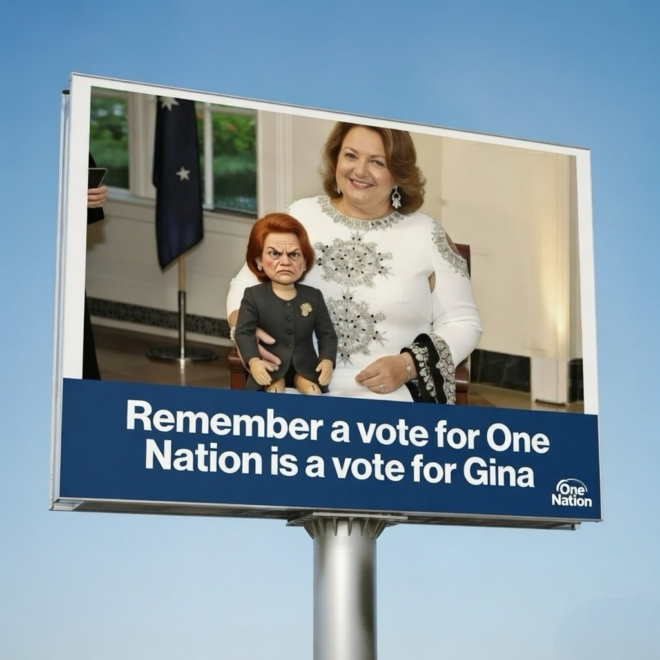
In March 2026, the Varieties of Democracy Institute at the University of Gothenburg released its annual Democracy Report – a document that contained, buried within its measured academic prose, a sentence that deserved far larger headlines than it received. The United States of America, it stated, had ceased to function as a liberal democracy. Not as a warning about a possible future. Not as a partisan provocation. As a description of the present. For Australians observing this development from the comfortable distance of the Southern Hemisphere, the temptation is to regard it as someone else’s catastrophe. That temptation should be resisted. Australia is not immune. And the forces currently reshaping American democracy are already operating within our own borders.
To grasp what the V-Dem Institute actually measured, one must first understand the distinction between a liberal democracy and a merely electoral one. The Electoral Democracy Index captures what the political theorist Robert Dahl called polyarchy: universal suffrage, free and fair competition for office, freedom of expression, a free press, and freedom of association. These are the minimum conditions under which a government can meaningfully claim to represent its people. But the Liberal Democracy Index – the more demanding standard – adds a second layer. It measures whether executive power is constrained by a legislature and an independent judiciary, whether the rule of law applies equally to all citizens, and whether civil liberties are genuinely protected from majority tyranny. A country can hold competitive elections and still fail this test if its courts are captured, its press intimidated, or its executive operates without meaningful restraint. That is precisely what happened to the United States in 2025.
The V-Dem report’s findings are staggering in their specificity. America’s Liberal Democracy Index score fell by twenty-four percent in a single year – the largest single-year decline ever recorded for an established democracy in the modern era. The United States dropped from twentieth to fifty-first globally in its LDI ranking, out of one hundred and seventy-nine countries assessed. Its score now sits at levels last recorded in 1965, before the full flowering of the civil-rights era. Legislative constraints on executive power lost one-third of their measured value in twelve months – the sharpest deterioration in over a century. Freedom of expression and media freedom fell to their lowest levels since the end of the Second World War. Civil liberties and equality before the law regressed to late-1960s territory. The report attributes this collapse explicitly to the ‘rapid and aggressive concentration of powers in the presidency’ under the second Trump administration, coupled with systematic efforts to silence journalists, academics, and political dissidents. The language is clinical, but the verdict is categorical: America has been demoted from the ranks of the world’s liberal democracies.
Critics of V-Dem’s methodology raise legitimate points. Its expert-coded indicators can reflect the ideological priors of the predominantly academic professionals who supply the underlying assessments. Other respected monitors – Freedom House, the Economist Intelligence Unit’s Democracy Index – have also recorded sustained American decline since 2016, but none has gone so far as V-Dem in removing the United States from the liberal-democracy category entirely. Even accounting for these methodological debates, the convergence of evidence is difficult to dismiss. Institutions that were expressly designed to restrain executive power have weakened at a pace unseen in any established democracy since 1945. America still conducts competitive elections – the 2024 contest was itself assessed by V-Dem as free and fair – but the liberal scaffolding that prevents elected leaders from governing as unchecked majorities has cracked in ways that cannot be attributed to measurement error alone.
This is not merely a partisan alarm. The genius of liberal democracy, as James Madison argued in Federalist No. 51, lies in its recognition that pure majoritarianism can devour itself. When one branch subsumes the others, when one personality eclipses the institutions designed to balance it, the system tilts toward what political scientists call competitive authoritarianism: elections continue, but the playing field tilts, dissent is chilled, and minorities lose meaningful legal protection. Hungary under Viktor Orbán followed a similar trajectory over a decade. Turkey under Recep Tayyip Erdogan moved faster. The United States achieved in a single year what took those leaders four to ten. The V-Dem report groups America with them not as rhetorical hyperbole but as data-driven categorical classification, applying the same empirical standards to Washington as to Budapest and Ankara.
Australia’s Position – and Its Vulnerabilities
Why should Australians care about this diagnosis? Because democratic backsliding is rarely sudden. It exploits genuine grievances, normalises strongman rhetoric, and erodes norms incrementally until the liberal component collapses while electoral rituals persist. Australia today sits where the United States sat before 2016: ranked twelfth globally on the Liberal Democracy Index, with a score firmly in the liberal-democracy camp alongside New Zealand and the Nordic countries. Our Westminster system diffuses power more effectively than America’s presidential model. Compulsory voting blunts the extreme turnout swings that allow fringe mobilisation to dominate low-participation elections. An independent public service, High Court, and federal structure provide additional ballast against executive overreach. These are genuine structural advantages that should not be dismissed.
Yet stability is not immunity. V-Dem’s successive annual reports have noted gradual declines in Australia’s egalitarian and participatory components – the dimensions that measure whether political power is distributed fairly across the population and whether ordinary citizens can meaningfully shape political outcomes. Public trust in institutions has eroded across a decade of prime ministerial instability, cost-of-living pressures, a housing affordability crisis that has locked a generation out of home ownership, and heated debates about immigration volumes and cultural change. These are the precise conditions under which populist movements flourish: not manufactured from thin air, but grown from the fertile soil of legitimate grievances that mainstream politics has repeatedly failed to address.
Enter Pauline Hanson and One Nation. Since re-entering federal politics in 2016, Hanson has steadily repositioned herself as the authentic voice of what she calls the ‘forgotten people’ – Australians who feel that major-party consensus on immigration, energy, and culture has delivered uneven benefits and dismissed their concerns as bigotry. One Nation’s recent polling has reached double digits nationally, and in some surveys has climbed above twenty percent. These are not trivial numbers. They reflect genuine and widespread discontent among working-class voters who experienced globalisation and rapid demographic change without any corresponding economic dividend, and who feel lectured to rather than listened to by the political class.
One Nation’s policy platform – economic nationalism, stricter border controls, opposition to net-zero targets, and scepticism of what Hanson terms the ‘globalist elite’ – contains positions that are not inherently anti-democratic. Many of these views are shared by millions of reasonable Australians who simply disagree with the policy consensus on immigration volumes, energy costs, or cultural change.
The danger lies not in the policy substance, but in the style of politics and in the explicit, enthusiastic admiration for the American model that has just produced the V-Dem downgrade. Hanson travelled to Donald Trump’s Mar-a-Lago resort in November 2025 to address the Conservative Political Action Conference. She praised Trump for having ‘turned this country around,’ described Australia’s Labor government as a ‘socialist nightmare,’ and drew explicit parallels between her own legal battles and Trump’s. She advocated deporting immigrants, ‘supercharging’ mining projects, and adopting a Make Trade Great Again agenda. Photographs with mining magnate Gina Rinehart underscored the fusion of anti-establishment rhetoric with major resource-industry interests. One Nation’s communications since the visit have leaned heavily into MAGA-style branding.
The Mechanism of Erosion
This enthusiasm is not casual or incidental. Hanson has long described Trump as a political kindred spirit. One Nation senators have echoed Republican talking points about election integrity, media bias, and judicial overreach. Should One Nation gain balance-of-power leverage in the Senate – a realistic prospect given current polling and potential Coalition fragmentation – the temptation to import Trumpian governance techniques would grow significantly. Consider the possibilities: demands to ‘drain the swamp’ of Canberra’s public service, sustained public attacks on the ABC as ‘fake news,’ sustained political pressure on the High Court over migration rulings, or executive-style policy by regulation that bypasses parliamentary scrutiny. None of these alone would end Australian democracy overnight. Cumulatively, however, they would erode precisely the liberal guardrails that V-Dem measures: judicial independence, press freedom, civil-service neutrality, and the equal protection of civil liberties.
History offers cautionary parallels closer to home than America. Hungary’s Fidesz began with populist promises to rebuild a country ravaged by the 2008 financial crisis. Within a decade, Viktor Orbán had packed the constitutional court, rewritten the constitution through simple parliamentary majority, captured public media, and redefined ‘the people’ to exclude political opponents. Poland’s Law and Justice party followed a similar playbook before its narrow defeat in 2023. In both cases, electoral democracy survived in formal terms; liberal democracy withered in substance.
Australia’s multicultural fabric, compulsory voting, and strong civil-society traditions make full replication of the Orbán model unlikely. But partial erosion – a normalisation of the idea that institutions exist to serve ‘real Australians’ rather than all citizens equally, that courts hostile to the government’s agenda are illegitimate, that critical media is treasonous – is entirely plausible.
One Nation’s rhetoric already moves in this direction. Its framing of opponents as un-Australian elites detached from the concerns of ordinary people is a classic populist move that, while not intrinsically authoritarian, creates the discursive conditions under which institutional delegitimisation becomes easier. When a political movement builds its identity around the idea that existing institutions serve corrupt insiders rather than ‘the people,’ it becomes correspondingly easier to justify weakening those institutions in the name of popular sovereignty. This is the mechanism by which liberal democracy is hollowed out: not through a single dramatic rupture, but through a slow ratcheting of norm violations, each individually justifiable, cumulatively transformative.
Addressing the Root Causes
Populism itself is not the villain. Healthy democracies channel populist energies through mainstream parties that address the root causes of discontent: stagnant wages, housing unaffordability, infrastructure strain from rapid population growth, and cultural anxiety about the pace of demographic change. Australia’s major parties have too often chosen to dismiss these concerns as expressions of ignorance or bigotry rather than engaging them seriously. Labor’s expansive migration settings in the post-COVID period, combined with weak enforcement optics and a cost-of-living crisis that bore down hardest on renters and low-income earners, created the political vacuum that One Nation has moved to fill. The Coalition’s internal divisions and its failure to articulate a coherent conservative vision beyond tax cuts and culture-war performance have left genuinely conservative voters searching for alternatives. When mainstream politics fails to deliver, voters turn to disruptors. That is democracy functioning. The crisis begins when the disruptors start dismantling the liberal mechanisms that make democracy sustainable over time.
The V-Dem report contextualises Australia’s situation within a broader and deeply troubling global pattern. The organisation characterises the current period as a ‘third wave of autocratization’ that began around 2006 and has now reached Western strongholds previously regarded as impregnable. Forty-four countries are currently autocratizing – moving in a consistent direction away from democratic norms. The proportion of humanity living under full liberal democratic systems has shrunk to roughly seven percent. Freedom of expression is the dimension under attack in the greatest number of countries worldwide. Australia is not leading this trend, but it is not insulated from it either. Debates over hate-speech legislation, proposed misinformation laws, and social-media regulation reveal an elite willingness to constrain speech in the name of protection – a tendency that, while differently motivated, can damage the same deliberative culture that liberal democracy requires.
The Path Forward
What, then, is the appropriate response? The first requirement is the rigorous defence of institutions without condescension toward those who distrust them. Australia’s High Court, Australian Electoral Commission, and public broadcasters are imperfect bodies, as all human institutions are, but they remain among the most trusted and professional in the world. Politicians of all parties must resist the temptation to politicise them, and must actively call out attacks on their independence regardless of which side benefits. Second, there must be substantive policy responses to the grievances that fuel populism. A genuinely skills-based migration system that prioritises integration capacity, a national housing strategy that actually builds homes at the scale required, and an energy policy that achieves emissions reductions without making power unaffordable for working families would drain a great deal of One Nation’s political fuel. Dismissing One Nation’s voters as irredeemably prejudiced is not only morally lazy – it is politically self-defeating, as Hillary Clinton’s ‘deplorables’ comment illustrated in 2016.
Critics of this argument will point to real and important differences between Australia and the United States. Our parliamentary system requires coalition-building; no single leader can concentrate power the way an American president can. Compulsory voting moderates extreme mobilisation. Our federal structure fragments authority across six states and two territories. These safeguards are genuine and meaningful. Yet V-Dem’s data on other parliamentary democracies should give us pause. The United Kingdom has recently been classified as shifting toward electoral rather than full liberal democracy. Italy continues to backslide. These are countries with strong institutional traditions, and their liberal components have nonetheless eroded as populist governments tested norms repeatedly and got away with it. Institutions alone do not guarantee liberal resilience when the underlying culture of democratic norms has been corroded by polarisation, media fragmentation, and declining interpersonal trust.
Australia’s own history carries its own warnings. The White Australia Policy was not dismantled by the market; it required sustained political courage. The 1975 constitutional crisis tested democratic norms to their limits and was resolved only by the resilience of electoral culture and the good faith of most participants. One Nation’s original 1998 surge was absorbed and moderated by mainstream politics engaging rather than simply condemning the concerns it represented. Each of these episodes demonstrates both Australia’s democratic resilience and the conditions under which that resilience must be actively maintained rather than passively assumed. The United States in 2015 also appeared impregnable. Within a decade, executive aggrandisement, judicial confrontation, and systematic media warfare had been normalised to a degree that the V-Dem Institute now records as a categorical regime change.
The lesson is not that Australia will become an autocracy tomorrow. It is that liberal democracy is, as the philosopher John Dewey might have said, not a machine that runs itself. It is a garden requiring constant and attentive tending. Neglect the soil of institutional trust, irrigate it with grievance instead of dialogue, and the weeds of illiberalism take root – slowly, then suddenly. Pauline Hanson’s political journey from 1996 pariah to 2026 power-broker illustrates democracy’s openness and, simultaneously, its vulnerability. Her supporters are not fascists. Most are ordinary Australians, frustrated by stagnant living standards and rapid social change, who feel that the political system has stopped listening to them. They deserve to be heard. What they do not deserve – and what no Australian, regardless of political colour, should accept – is a politics that, in the name of giving voice to the forgotten, begins to silence the institutions that protect everyone.
Australia stands at a democratic crossroads. The V-Dem verdict on the United States is not a distant curiosity. It is a mirror held up at a moment when our own populist currents are strengthening and our own institutional trust is eroding. The choice before us is clear. We can learn from America’s present – a country that still votes, but whose checks on power have been so weakened that it no longer qualifies as a liberal democracy by any rigorous international standard – or we can repeat its mistakes. Addressing the legitimate grievances that fuel One Nation’s rise, while firmly and repeatedly defending the independence of courts, the freedom of the press, and the neutrality of the civil service, is not a contradiction. It is the only path that preserves both democracy’s soul and its electoral form. The guardrails are not bureaucratic inconveniences. They are the difference between a system that serves all Australians and one that, over time, comes to serve only those whom the government of the day chooses to call ‘the people.’


“Why should Australians care about this diagnosis? Because democratic backsliding is rarely sudden. It exploits genuine grievances, normalises strongman rhetoric, and erodes norms incrementally until the liberal component collapses while electoral rituals persist. Australia today sits where the United States sat before 2016: ranked twelfth globally on the Liberal Democracy Index”
Australia you should be concerned, very concerned, about the antics of Pauline Hanson.
Here’s a punchy 200-word social media post distilled from that passage:
?? Australia, pay attention.
Democratic backsliding doesn’t happen overnight. It exploits real grievances, normalises strongman rhetoric, and erodes norms quietly — until democracy exists in form but not in substance. That’s what just happened to the United States, which has been downgraded from a liberal democracy for the first time.
Australia has genuine structural protections: compulsory voting, Westminster diffusion of power, an independent judiciary and public service. We rank 12th globally on the Liberal Democracy Index. These advantages are real.
But they are not immunity.
A decade of prime ministerial chaos, a housing crisis locking out a generation, cost-of-living pressure, and policy failures have created exactly the conditions in which populist movements take root. One Nation is now polling in double digits — in some surveys, above 20%.
And Pauline Hanson just travelled to Mar-a-Lago to praise Trump, compare her legal battles to his, and bring MAGA branding home to Australian politics.
The grievances driving One Nation’s rise are legitimate. The style of politics being imported is not.
What happens in America doesn’t stay in America.
Watch closely. Vote carefully.
#AustralianPolitics #Democracy #OneNation #MAGA #AusPol??????
Populist politics is just a polite term for the politics of hate. Populist politics is all about othering, populist politicians encourage people to hate one another. Pauline Hanson is the great hater, give her real power, and she will destroy Australia
Pauline Hanson is prepared to destroy Australia’s social cohesion to feather her own nest. That’s neither patriotism nor is it leadership.
Give Pauline Hanson and One Nation a big miss, her populist rhetoric and politics is poison. Don’t drink Pauline’s kool-aid.
The big risk with populism, is the breakdown of the separation of powers as we’re currently witnessing in the United States. Australia should be very wary of duplicating that situation even in error.
Hanson is a concern, but so are the incumbent government and opposition. That separation of powers was breached by a Howard in 2003 by allowing ASIO to detain and question people without charge. The ALP are pushing through revised powers in the Senate in July. Approval of the A-G only. Now court, no lawyer, no rights.
https://michaelwest.com.au/civil-liberties-senate-to-approve-extraordinary-asio-powers/
Pauline Hanson’s political journey from 1996 pariah to 2026 power-broker illustrates democracy’s openness and, simultaneously, its vulnerability. Her supporters are not fascists. Most are ordinary Australians, frustrated by stagnant living standards and rapid social change, who feel that the political system has stopped listening to them.
Learn from what happened to Russia and is now happening to the United States. Populist politics lead by a strong man or woman is a roadmap to losing your democracy.
Don’t trust Pauline Hanson, she’s not a patriot, she’s disingenuous, she’s in Gina’s pocket. Pauline Hanson, don’t risk her with your future.
Leopard’s don’t change their spots, Hanson seems incapable of changing her negative attitude to everyone and everything except herself and Gina, obviously.