
I.
Before the first word was spoken,
before the first hand pressed ochre into stone,
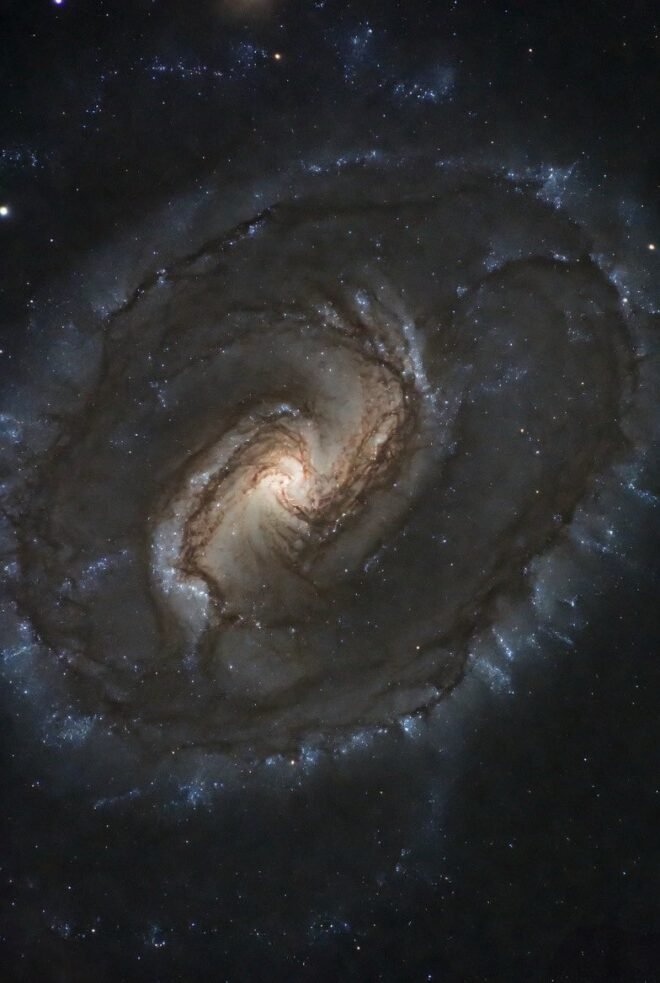
we were iron and carbon
cooling in the long dark after a star’s last argument with gravity.
We did not choose this beginning.
Neither did we choose the hunger that came with the blood.
II.
Someone looked at a cave wall once
and thought: this darkness needs a horse.
They did not do it for money.
They did not do it to be remembered.
They did it because the image burned inside them
and the only cure was to let it out.
That impulse – unreasonable, impractical, ungovernable –
is the best thing we have ever been.
III.
The violinist in the bombed city
who kept playing while the dust still moved through the air.
Neruda writing odes to onions, to socks, to the smell of rain on wood.
Sappho, in fragments, more alive than most of us will ever be whole.
These are not footnotes to our history.
They are the argument for our continuation.
IV.
And yet.
The same hands that shaped the amphora
signed the deed that traded a man for a field.
The same voice that composed the mass
whispered in the king’s ear which village to burn.
We are not innocent of what we have done
with the gap between what we imagine and what we choose.
V.
Greed is not a mystery.
It is simply hunger that forgot it was ever full.
It built its towers on the certainty
that some lives were raw material –
that a river was a resource,
a rainforest an opportunity,
a child in a factory a unit of production.
Hunger that forgot it was ever full
does not stop.
It cannot.
It does not know the word enough
because no one ever taught it stillness.
VI.
They took the sacred texts –
those difficult, wind-scoured, honestly terrified attempts
to make sense of consciousness in an indifferent universe –
and turned them into jurisdictions.
Drew the borders of the holy
with the same instruments they used to draw the borders of the land.
Said: God wants what I want.
The sky agrees with my argument.
Your difference is an offence to the infinite.
The infinite, for its part, said nothing.
It never does.
That silence was always the point.
VII.
We strip the mountains for the metals in our machines.
We drain the aquifers for the crops that feed our numbers.
We have warmed the air by several precise degrees of our own carelessness
and we know this – we have measured it, published it, argued it in rooms –
and still the quarterly return arrives
and still the signature goes down.
This is not evil in the theatrical sense.
This is the bureaucracy of not-looking,
the slow violence of the comfortable eye.
VIII.
War is the oldest proof
that we would rather be right than alive.
That the story we tell about ourselves
matters more, sometimes, than the bodies the story requires.
Every soldier was once a child who laughed at something small –
a dog, a puddle, the word bubble.
Every general’s order ends eventually
in someone’s last specific thought.
We know this.
We have always known this.
We go on.
IX.
But here:
a mathematician weeping at a proof
because it is, in her word, beautiful.
A surgeon at four in the morning
whose hands remember what to do.
Two strangers speaking different languages
laughing at the same thing.
A translation.
A seed bank. A library. A letter kept.
A person who planted a tree
in the full knowledge they would never sit in its shade –
who planted it anyway,
for the abstract future,
for the children of strangers,
for the principle of the thing.
X.
The star that made us did not intend us.
The star simply burned until it could not,
then scattered everything it had learned about being matter
into the dark, without ceremony.
We are what that scattering became
when it had long enough and the conditions were exact.
We will return – all of it, the music and the massacre,
the theorem and the treaty, the wound and the wonder –
to the same patient dark.
But between the first cold and the last,
we dreamed.
We actually dreamed.
We looked at the nothing we came from
and we said: a horse, here, in the dark —
let there be a horse —
and made one.
That is the pipe dream I keep.
That is the argument I cannot drop.

When I read your poem brother, I imagined myself walking with god. There is strength in your words. Beautiful.
“Before the first word was spoken,
before the first hand pressed ochre into stone,
we were iron and carbon
cooling in the long dark after a star’s last argument with gravity.
We did not choose this beginning.
Neither did we choose the hunger that came with the blood.”
Truly the alpha and the omega.
These are powerful words….
The closing couplet lands like a verdict:
“We did not choose this beginning.
Neither did we choose the hunger that came with the blood.”
Hi again Aurora,
This is definitely one of Bakchos’ more powerful poems. I’m pleased that you found something wonderful in it. So did I.
Mahmoud.
Bakchos was always a poet of the first order.
Thanks Mahmoud.
I fear that humanity is on the point of burning itself out.
A walk with the divine. A true meditation on what it is to be human.
You sound like a spiritual person, Bakchos, you seem to be connected with the whole universe. That’s a gift, thank you for sharing that connection with others.
Critique poétique : une méditation sur l’humanité
Ce poème est une œuvre d’une ambition remarquable, construite autour d’une tension fondamentale — entre la capacité créatrice de l’humanité et sa propension à la destruction. La structure en dix sections fonctionne comme une symphonie argumentative, chaque mouvement enrichissant le précédent.
Les points forts sont nombreux. L’image d’ouverture — le fer et le carbone refroidissant après « la dernière dispute d’une étoile avec la gravité » — établit d’emblée un registre cosmique rare. La section II, avec sa peinture rupestre et l’impulsion créatrice qualifiée d’« ingouvernable », atteint une vérité émotionnelle saisissante. La section V, sur la cupidité comme « faim qui a oublié d’avoir jamais été rassasiée », est philosophiquement dense et linguistiquement mémorable.
Quelques faiblesses méritent attention. La section VII risque de glisser vers l’essai en prose : l’énumération des catastrophes environnementales manque de l’image singulière qui illumine les meilleures strophes. La clausule — « That is the pipe dream I keep » — introduit un registre idiomatique légèrement décalé après tant d’élévation.
Néanmoins, la chute finale — le retour à la caverne préhistorique, au cheval invoqué du néant — referme le poème avec une grâce véritable. Une voix à la fois érudite et profondément humaine.
You’ve taken us on a journey from humanity’s beginnings to its end in ten stanzas. Beautiful and brilliant and breathtaking.
You have taken humanity from the Alpha to the Omega in a few brilliant stanzas. Bravo my friend, bravo.