
I. THE PERSONAL IS POLITICAL: AN INTRODUCTION FROM INSIDE THE OTHER
I was born in Australia. That sentence should not require elaboration, qualification, or defence. And yet for much of my life, it has required all three.
My mother was a Jewish refugee, a woman who had survived what Europe had done to her people and arrived in this country carrying the particular wariness of those who have learned, through catastrophe, not to trust official reassurances about civilisation. My father was an Indigenous man, born on Erambie mission in Cowra, central New South Wales, who identified strongly and without ambiguity as an Aboriginal person, whatever the percentages of blood that a colonial administrative system might have obsessed over. I am what you get when those two histories collide on one continent: a person who is, in the most literal and unremarkable sense, Australian, yet who has spent a lifetime being told, in one register or another, that Australia is not quite mine.
I was othered as a Jew. I was othered as an Abo. Sometimes I was othered for both at once, by people who did not recognise the irony that their two sets of contempt were contradicting each other’s premises. Whichever way it was cut – and it was cut regularly, in school yards and in pubs and in the ambient social atmosphere of what used to be called mainstream Australia – I was not considered part of the dominant culture. I was a guest, at best. A problem, at worst.
This essay is about what that dominant culture is now trying to do. Specifically, it is about the use of the phrase ‘Australian values’ by politicians of the Liberal Party tradition – most recently and most aggressively Angus Taylor – as a vehicle for a nostalgic project whose content, stripped of its polite language, is essentially this: to return Australia to a cultural and demographic configuration that no longer exists and arguably never existed in the form imagined. White. Anglo-Celtic. Christian. That is the tacit specification. Everyone else – Jewish, Aboriginal, South Sudanese, Vietnamese, Muslim, Hindu, secular – exists in this imaginary on sufferance, required to perform assimilation as the price of toleration.
The White Australia Policy was formally dismantled in stages across the 1960s and early 1970s, but policies do not simply disappear when they are legislated away. They migrate. They find new vocabularies. They take shelter in concepts like ‘cultural cohesion,’ ‘integration,’ and ‘shared values,’ concepts that sound neutral and civic until you examine precisely whose culture is doing the cohering, whose integration is demanded, and whose values are assumed to constitute the standard against which others are measured.
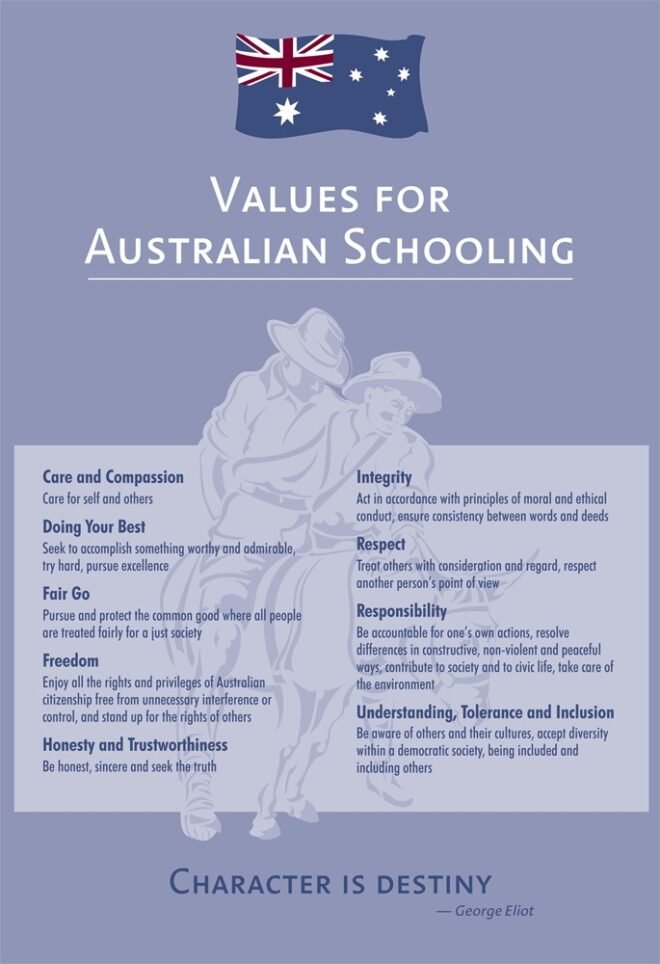
To demonstrate this migration, I want to examine two figures: one historical, one contemporary. One is John Simpson Kirkpatrick, the man with the donkey at Gallipoli, who has been converted by the national mythology industry into an emblem of the Australian character – brave, laconic, self-sacrificing, quintessentially ANZAC. The other is Gout Gout, eighteen years old, born in Ipswich, Queensland, of South Sudanese heritage, the fastest young sprinter Australia has ever produced. Between these two men – one dead for over a century, one just beginning his public life – runs a fault line that tells us everything about what ‘Australian values’ actually means in practice.
II. THE MAN WITH THE DONKEY: RETRIEVING SIMPSON FROM THE MYTH
John Simpson Kirkpatrick was born in 1892 in South Shields, County Durham, in the industrial north-east of England. He was a Geordie, a working-class product of the British coalfields and dockyards, and he arrived in Australia in 1910 not as a settler in any settled sense but as a ship-deserter – a man who had jumped a merchant vessel in Fremantle because he had had enough of the sea and decided to try his luck on land.
He was not, by the standards of his era or any era, a respectable figure. He cut cane in Queensland, shovelled coal in Newcastle, drifted between casual labouring jobs of the kind that left no mark on official records but wore deeply into the body. He was a man of the working poor – literate, intelligent, politically conscious in the way that workers often are when they have time to think between shifts and genuine grievance to think about.
When the war came, Simpson enlisted. He was assigned to the 3rd Field Ambulance, Australian Army Medical Corps, and landed at Gallipoli on 25 April 1915. Within days, he had acquired a donkey – accounts differ on exactly how – and had begun making repeated trips along the ravine known as Shrapnel Gully, carrying wounded soldiers down from the firing lines to the beach dressing stations. He did this continuously, under fire, for three and a half weeks, until he was killed on 19 May 1915 by machine-gun fire. He was twenty-two years old.
The legend that was constructed from these facts is well known. The man with the donkey. Mateship made incarnate. The ANZAC spirit in human form. His image appears on charitable organisation materials, in school textbooks, on commemorative merchandise. He is invoked every ANZAC Day by politicians who wish to attach themselves to something that resonates more deeply than policy platforms.
What those politicians do not quote – have never quoted, to my knowledge, in any official ANZAC Day address – is what Simpson actually wrote in letters home to his mother in South Shields. The words have been in the historical record for decades. They are not obscure. They are simply inconvenient.
“What they want in England is a good revolution and that will clear some of the millionaires and dukes out of it – and then with a Labour Government they will almost be able to make their own conditions.”
This is not the voice of a man who died for King and Empire. It is the voice of a man who had worked for three shillings a day and understood, with the clarity that such wages produce, that the social order was not a natural arrangement but a political one, maintained by force and habit and susceptible, in principle, to change. There is also credible historical evidence – examined by researchers including journalist and historian Peter Cochrane – linking Simpson to the Industrial Workers of the World, the IWW, the Wobblies, the most militantly internationalist and class-conscious labour movement of his era. The IWW did not believe in nations. It believed in workers.
And yet. This same man, with this same politics, ran a donkey up and down Shrapnel Gully for twenty-three days under constant fire. Not for abstractions. Not for the Crown. For the men beside him – the blokes who were bleeding and frightened and needed someone to come for them. Simpson’s radicalism and his mateship were not in contradiction. They were expressions of the same underlying conviction: that every human being has a claim on the solidarity of every other, that some lives are not worth less than others, that you put your body on the line for that principle.
When politicians invoke Simpson, they perform an act of ideological taxidermy. They preserve the exterior – the donkey, the courage, the self-sacrifice – and hollow out the interior, replacing his actual politics with a sentimentalised nationalism that Simpson himself would have regarded with suspicion. The mateship is retained. The solidarity is excised. The courage is celebrated. The cause is buried.
Why does this matter? Because the mythological Simpson – deracinated, stripped of politics, made safe for commemorative mugs – is then deployed as a standard of ‘Australian values’ against which others are measured. And who, in this usage, tends not to measure up? Not the Anglo-Celtic inheritors of the tradition. The measurement is always applied to those who come from elsewhere, who look different, who carry other histories. The myth is used as a gate, and the gate is kept by people who have decided, in advance, who belongs on which side of it.
III. GOUT GOUT AND THE UNACCEPTABLE AUSTRALIAN
On an otherwise non-eventual evening at the Australian Athletics Championships in 2026, an eighteen-year-old from Ipswich, Queensland, ran 200 metres in 19.67 seconds – wind-legal, officially ratified, the fastest the distance has ever been run by an Australian man, and a new under-20 world record. Gout Gout, born Guot Guot, became overnight the most exciting sprint prospect Australia had produced in a generation.
To contextualise the achievement: Usain Bolt, at the same age, had not run this fast. The athletics world took notice immediately. The conversation about Olympic medals, previously the province of cautious hope, became something more serious. Australia was watching a young man who might, in the fullness of time, be mentioned alongside the greatest sprinters in history.
And then a substantial corner of Australian social media did what it does. The monkey memes appeared. The questions about whether he was ‘really Australian’ – a question asked of a man born and raised in Queensland, educated in Queensland schools, competing under the Australian flag. The age-faking conspiracies: claims, circulated without evidence and contradicted by official documentation, that he was older than declared, a stock libel applied to Black African athletes for decades. The wind-assistance objections, raised about a legally certified performance that met all applicable standards.
None of these objections were made because people had done careful biomechanical analysis. They were made because Gout Gout is Black, has a South Sudanese name, and runs faster than the nation had been told a young Australian could run. The criticism was not about athletics. It was about belonging.
Gout Gout had spoken before his record run about the everyday experience of racial profiling – the side-eyes in shops, the assumptions that attach to his appearance and name in a city like Ipswich. This is not incidental background. It is the context in which his achievement occurred: a young man who has spent his life being regarded with suspicion now doing something extraordinary and finding that the suspicion does not lift, it merely changes its vocabulary.
The question, ‘Is he even Australian?’ is not a neutral question about administrative nationality. It is a question about cultural ownership – a claim that Australia, the real Australia, the Australia that matters, belongs to a particular configuration of people, and that others, however long they have lived here, however proudly they compete under the green and gold, are present on conditional terms. It is the White Australia Policy with the racial language filed off and replaced with ‘values,’ ‘integration,’ ‘our way of life.’
The comparison with Simpson is instructive precisely because of its asymmetry. Simpson was a British migrant who deserted his ship, held radical politics that were explicitly hostile to the existing social order, and was (on available evidence) affiliated with an organisation that rejected nationalism altogether.
None of this has ever been allowed to disqualify him from being Australia’s most celebrated figure of mateship and sacrifice. His foreignness, his radicalism, his Wobbly associations – all of it is quietly absorbed, or quietly ignored, by the national mythology.
Gout Gout, Australian-born, Australian-raised, Australian-competing, is asked to justify his presence. The difference between them is not political opinion or birthplace. The difference is skin colour and the geography of ancestral origin. That is the double standard that ‘Australian values’ discourse enables and protects.
IV. THE MIGRANT WHO RACISTS TRUST: A PARTICULAR IRONY
Over sixteen years of writing on this blog, Black and Black, I have documented a recurring phenomenon that deserves specific naming. Among those who have directed the most consistent racist abuse at Indigenous Australians – the ‘Abos,’ the contempt, the social media harassment – a notable number have not been the Anglo-Celtic Australians one might expect as the primary carriers of that tradition. Some of the most virulent anti-Indigenous racism I have observed has come from migrants.
Two cases from my own observation stand out: one a migrant from Europe, one a Vietnamese refugee who arrived in Australia seeking safety and found, in racist contempt for Indigenous people, a way of asserting their own claim to belonging. The logic, though rarely articulated, is legible: if you can demonstrate sufficient contempt for those at the bottom of the racial hierarchy, you purchase your place in the one above it. Anti-Blackness becomes the entry price for conditional whiteness.
What is striking about both cases is that neither individual has faced serious social consequences for their behaviour. Their racism – documented, specific, directed at Indigenous people – has been treated as either irrelevant or, in some quarters, quietly affirmed. They are migrants, yes, but they are not Black or brown. Their racism is towards Indigenous people. And so it does not, it seems, count.
This is not an accident of individual moral failure. It is a structural feature of how racial hierarchies operate. The target of racism in Australia has never been simply ‘the other.’ It has been a specific configuration of others, arranged in a specific order, with some categories of otherness more acceptable than others. Anti-Indigenous racism occupies a peculiarly protected position in this order, because it is the racism that most directly serves the foundational claim of the colonial project: that the land was available, that its prior inhabitants did not really count, that the settlement was legitimate.
When someone who is themselves marginalised – a migrant, a refugee – directs racism at Indigenous Australians, they are not simply expressing prejudice. They are performing an alignment with the colonial framework. They are, in effect, applying for a more secure place in the hierarchy by demonstrating they accept its terms. And the hierarchy rewards them for it, at least to the extent of looking away from their conduct.
This dynamic illuminates why the ‘Australian values’ project is not simply about cultural conservatism or demographic nostalgia. It is about maintaining a hierarchy whose foundational move is the erasure of Indigenous sovereignty. ‘Australian values’ – as deployed by Angus Taylor, by Peter Dutton in his various iterations, by the tabloid commentary class – is always implicitly founded on the prior proposition that the colonial settlement was legitimate, that the land was genuinely available, that what came after was a story of progress rather than dispossession. Any migrant who accepts that proposition, regardless of their own origins, is more welcome in the values conversation than any Indigenous person who questions it.
V. ANGUS TAYLOR AND THE RETURN TO WHERE WE NEVER WERE
Angus Taylor’s invocations of Australian values are notable for their combination of sincerity and strategic vagueness. He believes, one senses, in something – in a version of Australia that is orderly, coherent, and recognisable to people who grew up before the demographic transformations of the past four decades. Whether that Australia ever existed in the form he imagines is a question he does not engage, because nostalgia works best without historical scrutiny.
The Australia that Taylor’s rhetoric implicitly addresses is one that is White. Anglo-Celtic. Christian, or at least culturally inflected by Christianity in a way that feels natural and unremarkable. It is an Australia where the dominant culture does not need to identify itself as a culture, because it is the water and everything else is fish. The problem with this Australia – beyond its moral deficiencies, which are considerable – is that it does not describe the country that actually exists.
Australia in 2026 is a country where more than half the population was born overseas or has at least one parent born overseas. Where Buddhist temples, Hindu mandirs, and mosques are features of suburban landscapes across every major city. Where Indigenous languages are experiencing a partial revival, and where Indigenous Australians are increasingly insisting on recognition that goes beyond the token and the ceremonial. Where the fastest young sprinter the country has ever produced is a South Sudanese-Australian from Ipswich. Where Jewish Australians, like my mother’s family, have been part of the national fabric for generations, with a presence that predates Federation.
The ‘Australian values’ project in this context is not a description. It is a prescription – and a retrograde one. It says: this diversification has gone far enough. It says: the dominant culture has made sufficient concessions. It says: the standard against which belonging is measured remains what it always was, which is proximity to White Anglo-Celtic Christian normativity, and everyone else needs to work harder to demonstrate their alignment with that standard.
This is, in structure and in function, a continuation of the White Australia Policy by other means. The White Australia Policy did not simply restrict immigration. It was a statement about what Australia was, about who counted as Australian in the fullest sense. The ‘values’ discourse performs the same function without the overt racial language, because the overt racial language has become politically unavailable. The function is identical: to establish that some people are more fully Australian than others, and that the criterion of more-fully is proximity to a racial and cultural norm that is never explicitly named because naming it would expose the project.
VI. WHAT MATESHIP ACTUALLY REQUIRES
I want to return to Simpson, because I think there is something in his story that points toward what mateship – a word the right loves to invoke and consistently empties of content – actually requires.
Simpson did not ask the wounded men he carried whether they shared his politics. He did not demand that they demonstrate their alignment with his views on the Labour government before he put them on the donkey. He acted from a conviction that ran beneath political opinion: that the man who was bleeding in front of him had a claim on his assistance, simply by virtue of being human and needing help. The politics and the mateship were expressions of the same root conviction – that every person counts – but in the moment of action, the politics did not gate the mateship.
The Memphis sanitation workers who marched in 1968 carried signs that read I AM A MAN. The simplicity of that formulation is its power: before any qualification, before any demonstration of cultural alignment or values concordance, the claim being made is primary. I am a human being. I count. My life has worth independent of your assessment of my utility or my conformity.
Simpson, had he lived, would have understood that sign viscerally. His radicalism was precisely a radicalism on behalf of that claim – the insistence that the people who do the hardest work for the lowest wages are not less valuable, that the structure that assigns them that position is not natural or inevitable, but political and therefore changeable.
What does it mean to apply this to the present? It means that mateship – actual mateship, as opposed to the commemorative-mug version – requires the willingness to extend solidarity to people who do not look like you, whose names you cannot immediately place, whose cultural references differ from yours. It means that when a young man from Ipswich runs faster than any Australian has ever run, the mateship response is not ‘but is he really one of us?’ The mateship response is: he’s one of us. Full stop. And if you had any doubt, his times have settled the matter.
It means that when Indigenous Australians assert sovereignty, when Jewish Australians resist assimilation, when Vietnamese Australians insist on the full complexity of their identities without having to perform grateful invisibility, the mateship response is not ‘but what about our values?’ The mateship response is: your values are part of our values now, because you are part of us now, and ‘us’ was always bigger than the people who first claimed the word.
VII. ON BEING OTHERED IN THE COUNTRY OF YOUR BIRTH
I have been, by any ordinary measure, fortunate. I have a voice – this blog has been running for sixteen years, which in internet time is something close to geological. I have the education and the temperament and the access to articulate what has been done to me and to people like me. Most people who are othered do not have these things.
What the othering feels like, I can tell you from the inside: it feels like a constant low-level audit. You are always having to produce evidence of your legitimacy – not formally, not with papers (though that, too, for Indigenous people navigating bureaucratic systems), but socially, in every interaction where your presence is registered as requiring explanation. You walk into a room and someone’s expression says: how did you get in here? Not always. Not always with the same intensity. But enough. Consistently enough that you learn to carry the awareness with you, a second skin of vigilance.
My father carried it. An Indigenous man who identified strongly as Aboriginal despite the colonial system’s attempts to grade and classify and dilute him – he knew from early childhood what it meant to have his belonging disputed in the country of his ancestors. My mother carried it. A Jewish woman who had survived European Fascism and arrived in a country where, for a long time, being Jewish was something you were expected to manage carefully, to keep at a volume that did not disturb the neighbours.
Gout Gout carries it. You can hear it in the way he speaks about the racial profiling he encounters in ordinary life – the side-eyes, the assumptions – with the particular weary precision of someone who has had to process this experience many times and decided to speak about it plainly rather than pretend it is not happening.
What I want to say to the Angus Taylors of this country – to the whole apparatus of ‘Australian values’ rhetoric – is this: you are not describing Australia. You are imagining an Australia that would require the erasure of everything my parents were, everything I am, everything Gout Gout is, in order to exist. That Australia has never been the only Australia. It has sometimes been the loudest Australia, the most powerful Australia, the Australia that got to write the official accounts. But it was always sharing the continent with Indigenous Australians who were here before the concept of Australia existed, and with migrants of every origin who brought their histories and their languages and their food and their grief with them and made something that was genuinely new.
The Australia worth defending is not the one that needs to keep people like me at arm’s length in order to maintain its coherence. It is the one that is big enough and secure enough to include us without requiring us to disappear.
VIII. THE FLAG, THE DONKEY, AND THE RUNNING SHOES: A CONCLUSION
On every ANZAC Day, a politician stands up and invokes John Simpson Kirkpatrick. The story is told in its approved form: the donkey, the courage, the self-sacrifice, the Australian spirit. The letters home are not read. The IWW connection is not mentioned. The class consciousness, the revolutionary sympathy, the fundamental rejection of the social order that sent those young men to Gallipoli in the first place – none of it is permitted to complicate the legend.
This is not merely historical dishonesty, though it is that. It is a political act. By converting Simpson into a symbol of a particular, politically sanitised version of Australian identity, the mythology simultaneously establishes what Australian identity is supposed to look like: brave, self-sacrificing, male, and – crucially – white. The whiteness is never stated. It does not need to be stated. It is present in the image: the fair-skinned man, the uniform, the Gully, the Empire’s war. The mythology does not say ‘white.’ It says ‘Australian,’ and it means the same thing.
When Gout Gout runs a world-record time under the Australian flag, he is doing something that should, in any honest accounting of the national tradition, be celebrated as exactly what Australia is supposed to be about: talent, hard work, representing the country with excellence. And in the majority – let the record show this clearly – he is celebrated that way. Most Australians, most of the athletics community, most of the media coverage, has responded to him with the pride that his achievement warrants.
But the minority who questioned his legitimacy, who reached for the monkey memes and the age-conspiracy theories and the ‘not really Australian enough’ insinuations – they were not operating outside the Australian tradition. They were operating within one of its oldest streams: the stream that has always insisted on knowing who belongs, which has always reserved the right to check your credentials at the door, which has always been more comfortable with some kinds of Australian than others.
That stream is what ‘Australian values’ – as Angus Taylor uses the phrase, as the Liberal Party’s cultural-conservative wing deploys it – is trying to keep flowing. It is the stream that my father swam against all his life. It is the stream that greeted my mother with the particular warmth that Anglo-Celtic Australia has sometimes extended to Jewish migrants: useful, tolerated, but don’t forget where you are.
Simpson would not have been comfortable with that stream. The man who wanted a revolution to clear out the millionaires and the dukes, who carried wounded strangers down a gully because they were human beings and needed help, was operating from a different set of values entirely: the values of solidarity, of the intrinsic worth of every person, of the refusal to accept that any life counts less than any other.
Those are Australian values worth defending. Not the coded version. Not the nostalgic fiction. The actual thing, which is messy and various and includes Gout Gout’s 19.67 seconds and my father’s Erambie mission childhood and my mother’s refugee wariness and Simpson’s revolutionary sympathy and the Indigenous languages that are still being spoken on country across this continent – all of it, simultaneously, without hierarchy, without the demand that some of it disappear so that the rest can feel more comfortable.
Australia is not a racial category. It is a political project that is still being negotiated, and the negotiation is not finished, and the people who insist that it is – who want to close the definition, seal it, return it to a configuration that never existed in the purity they imagine – are not its defenders. They are its diminishers.
Gout Gout keeps running. The clock keeps measuring what is true. And the question of who is Australian enough is answered, every time he crosses the finish line, in the only language that matters: the language of what actually happened, here, now, in this country, which has always been more than any one version of itself has been willing to admit.



I have worked and lived among immigrants most of my life. Their values are family, friends, a peaceful and happy life, security. They are ambitious for their children and welcoming of guests. My Lebanese, Italian, Greek, Iraqi, Vietnamese, Indian, Afghani neighbours and more have fed me and looked out for me. That’s Australian values.
The hate directed at Gout Gout, an athlete at the top of his age group and field is nothing more than racism and envy by people who fail to understand that a excellence is not the sole purvey of the white man.
We could be so much more by embracing who we truly are – a nation of people from the corners of the world, walking on ancient lands with its traditional custodians. But someone else always has to be better, be more, be entitled. The problem is, the entitlement isn’t, and never was, that of the white man or immigrant.
Always has been, always will be.
Good afternoon Watershedd, I too wait with migrants and refugees, who are alomost without exception, decent hardworking people. It hurts every time I see poorly educated people like Pauline Hanson, or well educated opportunists like Angus Taylor attacking them to further their own political agendas. This is a poor reflection on Hanson and Taylor as people.
I also wrote about the hierarchy of whiteness not so long ago. What you discuss here is the same thing. The post was https://blakandblack.com/2026/02/11/terrorism-in-australia-the-racial-and-cultural-limits-of-response/
The hierarchy of whiteness is a real thing, and it can have devastating consequences for people. Australia really needs to grow up and take a long hard look at itself in the mirror.
The first and only ACT Commissioner for Revenue learned first hand about the hierarchy of whiteness. What Ted Quinlan instructed the Australian Federal Police to do for revenge still leaves me cold. I hope that Quinlan realises what he did to protect his precious Labor Party before he dies.
Because of the hierarchy of whiteness in the ACT Government and the Australian Federal Police the blak and black team has been forced to spend close to two decades chasing justice because of the racism of Ted Quinlan, Jon Stanhope, Peter Garrisson, Tu Pham, and the king racist himself Angel Marina, the fake football star.
The hierarchy of whiteness is a very apt description of what is going on in Australia. Hanson and Taylor need to be called out for driving the racism that’s currently plaguing Australia.
In Australia it’s all about skin colour, it always has been.
Australia is not a racial category. It is a political project that is still being negotiated, and the negotiation is not finished, and the people who insist that it is – who want to close the
definition, seal it, return it to a configuration that never existed in the purity they imagine – are not its defenders. They are its diminishers.