

A Poem of the Australian Massacres
Before the fence post, before the chain,
this country breathed in sixty thousand years of rain.
Each ridge had a name older than Rome,
each waterhole a word that threaded country into home.
At Slaughterhouse Creek the Mounted Police came down –
Major Nunn at the head, and the order to drown
the country in fear. The Gomeroi came open-handed. They always did.
The grass learned red that day. The creek learned what it hid.
Then Myall Creek. Hold there. Slow the page.
Twenty-eight souls – old men, women, a boy of an age
to still ride his grandmother’s hip. Tied with a single rope,
walked to the stockyard at dusk. No prayer. No hope.
Charley Kilmeister knew their names. He had eaten their fish.
He lit the fire that took them. He made the wish
the colony made: that the dead leave no trace,
no bone, no tooth, no witness, no face.
But a station hand named Anderson would not look away.
He rode to Sydney. He spoke. And for one strange day
the law remembered itself. Seven men hanged. One stone
laid for the dead. The squatters learned, and learned well:
bury the bodies deeper. Burn what the witnesses tell.
At Pinjarra, Stirling called it battle.
The Bindjareb called it dawn, and women, and cattle.
The Murray ran. The muskets said the rest.
A government report. A medal on a chest.
Coniston. Nineteen twenty-eight. The last one with a name.
Murray rode the desert – no inquiry, no blame.
Sixty. A hundred. The numbers blur like heat.
The Warlpiri dead. Filed. Restacked. Incomplete.
Waterloo Creek at dawn. Battle Mountain at noon.
Forrest River – the pastor wrote it down; they burned the page soon.
Skull Creek. Whiteman’s Creek. The frontier’s long ledger:
three hundred sites of killing – most without a witness, without a measure.
They told us: move on. The bones told us: stay.
You cannot build a nation on a muffled door –
the dead keep knocking. That is what the dead are for.
The children went north in trucks. The languages went too.
Ceremony locked in a drawer no key undid.
The stations kept the names of men who cleared the land.
The schoolbooks kept the silence with a steady hand.
But here is the thing the rifle could not reach:
a grandmother’s mouth, a word, a stretch of beach,
the Yolngu bark still singing what the archive lost,
the language nest at dawn – five children, any cost.
The Embassy still stands on the cold Canberra grass.
Fifty years of witness. The bureaucrats still pass.
The Native Title flag climbs the same old wind.
Aunty Isobel calls the nation. Some begin.
Every creek name carries something. Let it carry blood.
Every silence has a body under mud.
Not pity – reckoning. Not guilt – the open ground.
The dead want to be counted. Write the count down.
The massacres will not unmake. The bones remain.
But knowing is a root that breaks the hardest plain.
Clap sticks keep the beat the muskets tried to stop.
Country holds the dead. Country does not drop.
© Bakchos 2026 | Blak and Black est. 2010
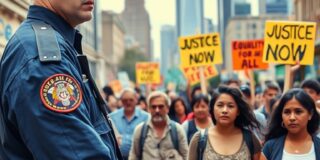

This is a strong, purposeful work of historical and protest poetry. “BLOOD AND SONGLINE” functions as both a litany of colonial frontier massacres and a defiant assertion of Indigenous survival and sovereignty. Written from an explicitly Blak perspective, it carries authentic moral and cultural authority. The poem moves with urgency, blending specific atrocity with deep-time connection to Country, and ends on a note of reckoning rather than despair. It is memorable, politically sharp, and emotionally resonant—exactly what advocacy poetry should be.
Wow Bakchos!
Vivid, visceral imagery and personification of Country?Lines like “The grass learned red that day. The creek learned what it hid” and “the dead keep knocking. That is what the dead are for” are genuinely powerful. The land itself becomes a witness and archive—rain, ridges, waterholes, songlines—contrasted against the short, brutal colonial ledger. This is some of the strongest writing in the piece, and some of the strongest writing I’ve seen on this subject.
Thanks Blak, many of us are feeling the pain of the hypocrisy of the bullshit Antisemitism Royal Commission.
Australia’s long forgotten and buried history is painful, but the stories need to be told.
A few of are sitting here crying after reading your poem. Deadly bro, Deadley
Fucking brilliant my Blak brother. Your refuses to stay only in grief. After cataloguing massacre, silence, and stolen children, it pivots to living culture: Yolngu bark, the language nest, the Tent Embassy, Native Title. The final stanzas reject both pity and guilt in favour of “reckoning” and “the open ground.” That refusal of easy sentiment is intellectually honest and artistically mature.
Well done my Kumpel “BLOOD AND SONGLINE” is a significant poem. It does what good political poetry must: it remembers what official history tried to bury, gives the dead their names and numbers, and insists that Country itself refuses to forget. The closing image—clap sticks keeping the beat the muskets tried to stop—is both defiant and hopeful.
I remember some magical evenings under the Temple of Poseidon with my bard who scuffed my favourite dancing shoes.
Hello Gertie, I use poetry as a vehicle for conveying otherwise unpalatable truths to the wider community. I don’t know if anyone actually reads my poetry, but I keep on living in hope.
Bakchos this one hits you right between the eyes. Deadly and powerful.
Powerful stuff my old friend. Powerful words.
Beautiful and evocative. It needs to be read by every Australian.
This is not a perfect lyric; it is a necessary one. In the Australian literary landscape, poems like this are acts of cultural maintenance as much as art. Bakchos has written a work that deserves to be read, taught, and spoken aloud. The bones remain. The poem makes sure we keep counting them.
Bakchos thus is a powerful, visceral and necessary poem. It punches you in the face, it hurts, that’s its purpose.
Where’s our royal commission?
So many massacres, so few Royal Commissions. Pity we’re not Zionists.