
Introduction
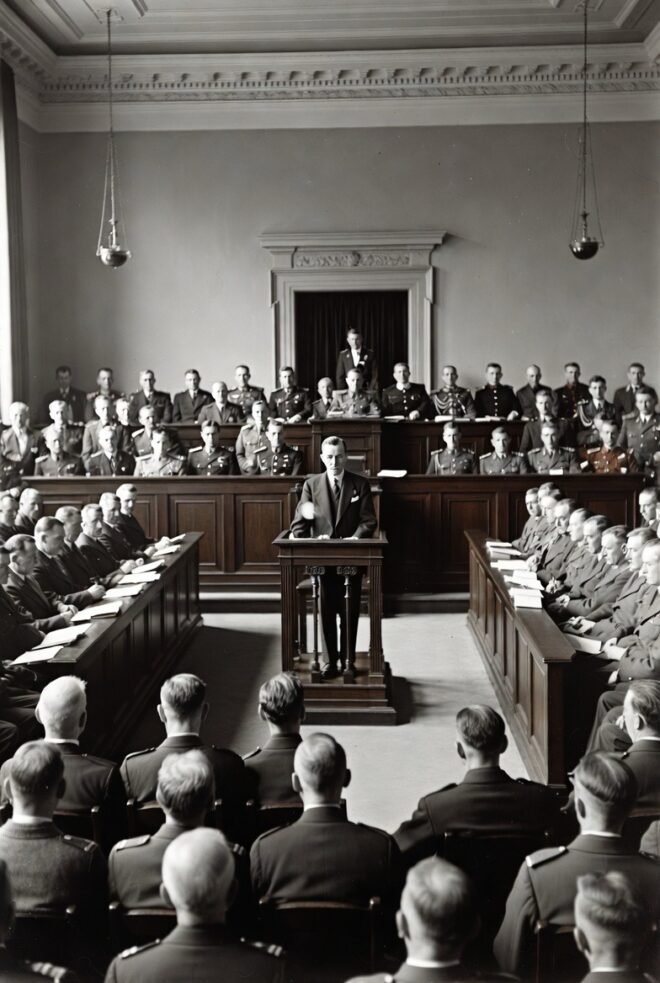
The Nuremberg Trials, held between 1945 and 1946 in the shattered aftermath of World War II, were more than a courtroom spectacle, they were humanity’s attempt to reckon with the unimaginable horrors of the Holocaust, aggressive warfare, and systematic atrocities committed by the Nazi regime. Twenty-four high-ranking Nazi officials, including Hermann Göring and Rudolf Hess, faced justice not just for their crimes but to establish precedents that would prevent such evils from recurring. The trials birthed foundational principles: individual accountability for war crimes, the rejection of “superior orders” as a defence, and the recognition of crimes against humanity as prosecutable offences. These lessons were etched into international law, inspiring the Universal Declaration of Human Rights and institutions like the International Criminal Court.
Yet, as we stand in November 2025, amid a resurgence of populist nationalism, these lessons feel increasingly forgotten – or worse, deliberately ignored. In an era where figures like Donald Trump and his Make America Great Again (MAGA) movement dominate headlines, where Nigel Farage’s Reform UK stokes anti-immigrant fervour in Britain, and where Pauline Hanson’s One Nation party in Australia surges on similar platforms, the parallels are unsettling. Add to this the shadowy influence of far-right networks like Australia’s National Socialist Network (NSN), a neo-Nazi group that openly embraces extremist ideologies, and it’s clear we’re witnessing a dilution of Nuremberg’s hard-won wisdom. This essay delves into six key lessons from Nuremberg that have faded from collective memory, exploring how they’ve been overlooked in contemporary politics. We’ll examine how MAGA’s cult-like loyalty, Farage’s opportunistic populism, Hanson’s anti-immigration rhetoric, and the NSN’s overt extremism reflect a dangerous amnesia. Drawing from historical analyses and recent events, this exploration underscores the urgency of remembrance in a world teetering on the edge of authoritarianism.
The NSN, in particular, warrants closer scrutiny in 2025. Formed from the merger of far-right groups like the Lads Society and Antipodean Resistance, the NSN has evolved into Australia’s most prominent neo-Nazi organisation. Under leaders like Thomas Sewell, it promotes white supremacist ideologies, antisemitism, and violent nationalism. Throughout 2025, the NSN has ramped up its activities, including high-profile protests, recruitment drives, and attempts to infiltrate mainstream politics. From marching on sacred Indigenous sites to leveraging anti-immigration rallies and even launching a new political party called White Australia, the NSN’s actions demonstrate how forgotten lessons from Nuremberg allow extremist groups to flourish unchecked. As Australia’s spy chief noted in a recent lecture, the NSN is the largest neo-Nazi group in the country, actively sowing social discord with state-sanctioned troll-like tactics and foreign influences from overseas extremist networks. This expansion of NSN activities highlights the broader theme: without vigilance, history’s shadows lengthen.
Lesson 1: Individual Accountability Overrides “Just Following Orders”
One of the most revolutionary outcomes of the Nuremberg Trials was the outright rejection of the “superior orders” defence. Defendants like Karl Dönitz and Alfred Jodl argued they were merely executing commands from higher-ups, but the tribunal ruled that moral choice remains paramount. This principle held that individuals, regardless of rank, bear responsibility for participating in atrocities. It pierced the veil of bureaucracy that allowed ordinary people to commit extraordinary evils, emphasising that complicity in crimes against humanity, be it through direct action or passive enablement, demands accountability.
In today’s landscape, this lesson is perilously forgotten. Consider the MAGA movement’s unwavering support for Donald Trump, even amid allegations of inciting the January 6, 2021, Capitol riot. Supporters often echo the “just following orders” mentality by framing their actions as loyalty to a leader who “tells it like it is.” Historians draw stark parallels: just as Nazi foot soldiers rationalised their roles in the regime’s machinery, MAGA adherents dismiss accountability for election interference or inflammatory rhetoric as mere obedience to Trump’s vision of “America First.” This mirrors the Nazi era’s cult of personality, where blind allegiance trumped ethical scrutiny. In 2025, with Trump’s influence still looming over Republican politics, this forgetfulness enables a cycle where followers absolve themselves of personal responsibility for divisive actions, such as spreading misinformation or participating in rallies that turn violent.
Across the Atlantic, Nigel Farage embodies this erosion through his populist manoeuvring. As leader of Reform UK, Farage has capitalised on Brexit-era divisions, often portraying himself as a maverick against the establishment. Yet, his rhetoric, labelling immigrants as threats and dismissing climate change, fuels a base that excuses divisive tactics as necessary “orders” from a charismatic figure. Critics warn that Farage’s style edges toward fascism, not through overt violence but by normalising opportunism that prioritises personal gain over societal harm. In 2025, with Reform UK’s rising poll numbers amid economic discontent, this forgetfulness allows followers to absolve themselves of the broader implications of their support, much like how mid-level Nazis claimed they were just advancing party goals without questioning the human cost.
In Australia, Pauline Hanson’s One Nation party exemplifies this trend. Hanson, infamous for her 1996 maiden speech warning that Australia was being “swamped by Asians,” has pivoted to broader anti-immigration stances, claiming mass migration erodes national identity. Her party’s surge in support post-2022 federal election, polling at record highs by mid-2025, stems from voters who view her policies as dutiful responses to perceived threats, ignoring the dehumanising undertones that echo Nuremberg’s warnings about complicity in exclusionary ideologies. Hanson’s followers often justify their backing by saying they’re “just supporting common sense,” sidestepping accountability for how such rhetoric marginalises minorities and fosters division.
Worse still is the National Socialist Network (NSN) in Australia, a neo-Nazi group that actively recruits and promotes white supremacist views. Formed from remnants of far-right organisations, the NSN engages in street activism and online propaganda, often justifying their actions as “defending” against multiculturalism, a direct parallel to Nazi subordinates who claimed they were “just following” ideological imperatives. In 2025, the NSN’s activities have intensified, providing a stark example of forgotten individual accountability. For instance, in September 2025, NSN members led a march on a sacred Indigenous site in Victoria, chanting nationalist slogans and desecrating the area in what was described as a worrying escalation of neo-Nazi aggression. This attack not only targeted cultural heritage but also symbolised a broader assault on multicultural Australia, with participants likely rationalising their involvement as obedience to group leaders like Thomas Sewell.
Further, leaked records from September 2025 revealed the NSN’s ties to overseas neo-Nazi groups, which are shaping Australia’s far-right scene through funding, training, and ideological guidance. Multicultural advocates have called for the NSN to be designated a terrorist organisation, highlighting how members evade personal responsibility by hiding behind collective “orders” from international networks. In another incident, NSN occupied the steps of Victoria’s parliament twice in September 2025, protesting against proposed laws that would curb their activities, framing their defiance as loyal service to a higher cause of white nationalism.
The group’s expansion into politics is particularly alarming: by November 2025, the NSN announced the formation of the White Australia Party, aiming to run candidates in the next federal election. This move represents an attempt to legitimise their extremist views through democratic channels, with members claiming they’re “just following” the path to political power as outlined by their leaders. On Australia Day in January 2025, 17 NSN members were arrested for alleged public order offences during a rally, where they performed Nazi salutes and distributed propaganda, actions that participants defended as group-mandated expressions of identity, not individual crimes.
Australian intelligence reports from November 2025 indicate that the NSN, as the largest neo-Nazi group in the country, is leveraging anti-immigration and cost-of-living rallies to recruit and amplify discord, often using state-sanctioned troll tactics online to spread hatred. This mirrors how Nazi bureaucrats followed orders to dehumanise groups, forgetting that personal accountability is the bulwark against such escalation. By allowing members to frame their involvement as mere obedience, society risks normalising extremism, much like the overlooked complicity that fuelled the Holocaust.
This lesson’s erosion manifests in inconsistent prosecutions: while elderly Nazi guards face trials decades later, modern enablers in populist movements often escape scrutiny. To revive it, societies must demand personal responsibility from leaders and followers alike, lest history repeat. The NSN’s 2025 activities underscore this urgency, without holding individuals accountable for marches, desecrations, and political infiltrations, extremist groups grow bolder.
Lesson 2: Fair Trials and Due Process Over Summary Justice
Chief U.S. Prosecutor Robert H. Jackson’s opening statement at Nuremberg emphasised that the trials were not vengeance, but a demonstration of justice: “That four great nations, flushed with victory and stung with injury, stay the hand of vengeance and voluntarily submit their captive enemies to the judgment of the law is one of the most significant tributes that Power has ever paid to Reason.” This rejected summary executions, insisting on evidence-based proceedings even for the guilty, to legitimise international law and avoid descending to the Nazis’ level.
Today, this principle is selectively applied, often forgotten in the heat of political expediency. The MAGA narrative exemplifies this: Trump’s repeated claims of “witch hunts” in his legal battles ironically underscore a disdain for due process when it suits him, while his supporters advocate for extrajudicial measures against opponents, like “locking her up” chants aimed at Hillary Clinton. Parallels to Nazi show trials are evident in how MAGA rhetoric frames judicial institutions as “deep state” enemies, eroding faith in fair proceedings, much like how the Nazis manipulated courts to consolidate power. In 2025, as legal cases against Trump drag on, this forgetfulness fosters a climate where summary judgments via social media mobs replace reasoned trials.
Nigel Farage’s career further illustrates this forgetfulness. In the UK, Farage has criticised the judiciary as “enemies of the people” when rulings thwart Brexit or immigration policies, echoing fascist disdain for independent institutions. His 2025 push for Reform UK includes calls to reform the legal system, often portraying it as biased against “ordinary” people, a tactic that risks undermining due process in favour of populist “justice.” As Reform UK gains traction amid migration debates, this approach encourages followers to dismiss fair trials as obstacles to their agenda.
Pauline Hanson takes this a step further in Australia. One Nation’s platform includes harsh critiques of the legal system for being “soft” on immigrants, advocating for expedited deportations without full hearings. Hanson’s speeches, warning of Australia’s “decline” due to migration, often imply that bureaucratic due process hinders national security, fostering a climate where summary judgments gain appeal. By mid-2025, with One Nation polling strongly in regional areas, this rhetoric has influenced policy debates, prioritising speed over fairness.
The NSN in Australia pushes this to extremes, with members facing charges for hate crimes, yet framing their prosecutions as “persecution” by a biased system. Their online manifestos call for vigilante actions, bypassing legal norms entirely, a direct affront to Nuremberg’s insistence on reasoned justice. In 2025, the NSN’s activities have highlighted this erosion vividly. For example, following their September march on an Indigenous sacred site, several members were investigated for vandalism and incitement, but NSN propaganda portrayed the legal response as an attack on free speech, demanding summary dismissals rather than fair trials. Similarly, during their occupations of Victoria’s parliament steps in September, leaders like Sewell rallied against proposed anti-extremism laws, arguing that such regulations represent “kangaroo courts” designed to silence them without due process.
The group’s arrests on Australia Day 2025, where 17 members were detained for Nazi salutes and disruptive behaviour, sparked NSN campaigns claiming the justice system is rigged against white Australians, echoing Nazi complaints about Weimar-era courts. As they launch the White Australia Party in November 2025, NSN rhetoric questions the legitimacy of electoral laws, suggesting that any barriers to their participation are unjust and should be overridden summarily. Intelligence reports from the same month reveal NSN’s use of online trolls to harass judges and lawyers involved in far-right cases, further undermining due process by promoting intimidation over legal recourse.
Sky News Australia, a conservative media outlet often likened to Fox News, amplifies these views. By 2025, its programming regularly questions the fairness of trials involving right-wing figures, promoting narratives that echo MAGA’s influence and erode trust in due process. This media ecosystem forgets that without due process, societies risk descending into the arbitrary rule Nuremberg condemned. The NSN’s 2025 escalations, from site desecrations to political party formation, show how forgotten fair trials allow extremists to portray themselves as victims, rallying support through claims of systemic bias.
Reviving this lesson requires defending judicial independence against populist assaults, ensuring that even controversial figures receive fair trials to uphold democratic integrity. In the face of NSN’s aggressive activities, Australia must reinforce due process to prevent vigilante justice from taking root.
Lesson 3: Ethical Obligations of Professionals to Resist State-Sanctioned Harm
The subsequent Nuremberg Doctors’ Trial (1946-1947) exposed how medical professionals under the Nazis abandoned their Hippocratic Oath, conducting horrific experiments on prisoners. This led to the Nuremberg Code, mandating informed consent and ethical research. Forgotten nuances include “psychological doubling” – where individuals compartmentalise to justify harm – and the use of euphemisms to sanitise atrocities.
In modern contexts, this lesson is overlooked when professionals prioritise loyalty over ethics. MAGA’s influence on public health during the COVID-19 pandemic saw some doctors and scientists echo Trump’s downplaying of the virus, using terms like “miracle cures” for unproven treatments, reminiscent of Nazi euphemisms. Even in 2025, as health debates continue, professionals aligned with MAGA often frame controversial policies as “innovative,” ignoring ethical red lines.
Nigel Farage’s anti-vax stances and dismissal of expert consensus on climate change encourage professionals to align with populist narratives, forgetting their duty to resist harmful policies. In 2025, environmental scientists facing Reform UK-backed deregulation pressures risk compartmentalising their concerns to maintain funding or influence.
Pauline Hanson’s attacks on public health measures and immigration policies pressure bureaucrats to implement restrictive measures, echoing the ethical lapses Nuremberg condemned. One Nation’s push for border closures in 2025 has led some officials to justify harsh detentions as “necessary precautions,” using euphemisms that mask human rights violations.
The NSN’s recruitment of disaffected professionals into extremist ideologies highlights how forgotten ethics allow radicalisation. In 2025, the group has targeted former military and law enforcement personnel, urging them to apply their skills to “defend” white Australia through vigilante actions. For instance, during their September 2025 attack on an Indigenous sacred site, NSN members, some with professional backgrounds, rationalised the desecration as a “cultural reclamation,” employing psychological doubling to separate their actions from ethical norms.
Leaked records from the same month show NSN’s overseas ties include training programs where professionals learn to use their expertise for propaganda, such as creating misleading health claims about immigration’s “dangers.” In parliament occupations, NSN deployed members with IT skills to disrupt online streams, framing it as “technical support” for the cause. The Australia Day arrests involved professionals who had joined NSN, defending their participation as ethical resistance against “multicultural decay.”
As NSN forms the White Australia Party in November 2025, it recruits policy experts to draft platforms that euphemistically promote racial purity as “national health,” echoing Nazi pseudoscience. Intelligence warns of NSN’s troll networks, where anonymous professionals spread disinformation, compartmentalising harm as online activism. This expansion underscores how professionals forgetting Nuremberg’s code enable extremism.
Sky News Australia’s promotion of controversial “experts” who question mainstream science furthers this erosion, influencing public discourse in MAGA-like fashion. To counter, professionals must resist, upholding ethics against populist pressures, especially as NSN’s activities grow.
Lesson 4: Vigilance Against Opportunism and Incipient Fascism
Psychiatric evaluations at Nuremberg revealed no “Nazi personality”, defendants were opportunists exploiting societal divisions for power. This lesson warns that fascism arises from ordinary flaws like ego and tribalism, amplified by complicity.
MAGA’s rise under Trump, with its nationalist rhetoric and “us vs. them” framing, parallels this: Trump’s opportunism in stoking racial divisions mirrors Nazi tactics. In 2025, MAGA opportunists exploit economic woes to push isolationism, ignoring fascist risks.
Farage’s Brexit campaign and Reform UK’s anti-EU stance exploit similar opportunism, with warnings of fascist leanings. His 2025 immigration focus capitalises on public fears, amplifying division for political gain.
Hanson’s One Nation thrives on anti-immigration opportunism, capitalising on economic anxieties to promote division. By November 2025, her party leverages cost-of-living crises to rally support, framing multiculturalism as the enemy.
The NSN represents overt incipient fascism, with neo-Nazi ideologies that society must vigilantly counter. In 2025, their opportunism is evident in leveraging mainstream protests: during September anti-immigration rallies, NSN provided leadership, turning events into platforms for Nazi chants and recruitment. Their march on an Indigenous site exploited cultural tensions, positioning themselves as defenders against “invasion.”
Overseas links allow NSN to import opportunistic strategies, such as online radicalisation campaigns that prey on disaffected youth. Parliament occupations were timed to coincide with legislative debates, opportunistically disrupting democracy. Australia Day actions in January 2025 saw NSN infiltrate patriotic events, turning them fascist with salutes and propaganda.
The November launch of White Australia Party is peak opportunism: NSN exploits electoral systems to mainstream extremism, running on platforms that divide society along racial lines. Intelligence reports note NSN’s use of state-sanctioned trolls to amplify opportunist narratives, sowing discord amid rallies.
Sky News amplifies these opportunistic voices, fostering a conservative echo chamber influenced by MAGA. Vigilance demands calling out such tactics, preventing fascism’s creep as seen in NSN’s bold 2025 moves.
Lesson 5: Incomplete Justice and the Hypocrisy of Victors
Nuremberg’s victors’ justice glossed over Allied shortcomings, like immigration quotas that aided the Holocaust. This teaches that true justice requires self-examination.
MAGA’s selective outrage, condemning, opponents while excusing Trump’s actions – embodies hypocrisy. In 2025, this double standard persists in legal defences, ignoring self-reflection.
Farage’s criticism of EU “hypocrisy” while ignoring UK’s own issues follows suit. Reform UK’s 2025 policies highlight migration flaws abroad but overlook domestic inequalities.
Hanson’s party accuses governments of favouring immigrants over citizens, yet overlooks Australia’s historical treatment of Indigenous peoples. This hypocrisy fuels her base without addressing root causes.
NSN’s white supremacist hypocrisy ignores Australia’s multicultural roots. In 2025, their Indigenous site attack hypocritically claims “Australian” heritage while erasing First Nations history. Overseas ties expose hypocrisy in decrying foreign influence while embracing it.
Parliament occupations protested “unjust” laws, yet NSN demands justice only for themselves. Australia Day arrests revealed hypocrisy in claiming victimhood while promoting violence. White Australia Party’s launch hypocritically uses democracy to undermine it, selective in justice demands.
Sky News’ biased reporting highlights others’ flaws while downplaying conservative ones. Overcoming this requires honest self-examination, especially as NSN’s activities expose far-right hypocrisies.
Lesson 6: Preservation of Historical Records to Prevent Erasure
Nuremberg’s documents and films were crucial, but some were suppressed during the Cold War. This lesson stresses preserving history to combat denial.
In 2025, MAGA’s revisionism of January 6 as a “peaceful protest” erases uncomfortable truths, distorting records for political gain.
Farage’s downplaying of Brexit’s negative impacts aids erasure, rewriting history to suit narratives.
Hanson’s narratives minimise immigration’s benefits, distorting history to fit anti-multicultural views.
NSN promotes Holocaust denial, directly challenging Nuremberg’s records. In 2025, their propaganda during Indigenous site marches erases Aboriginal history, claiming white supremacy as Australia’s “true” past. Online trolls spread revisionist content, denying NSN’s extremist ties.
Parliament occupations included destroying or defacing historical markers, symbolic of erasure. Australia Day events featured denial of colonial atrocities, reframing invasion as celebration. White Australia Party platforms revise history to justify racial policies, ignoring multicultural contributions.
Sky News’ selective coverage contributes to historical distortion. Preserving records – through education and documentation – is vital to counter NSN’s erasure efforts.
Conclusion
The Nuremberg Trials’ lessons, accountability, due process, ethical resistance, vigilance against fascism, self-reflection, and historical preservation – are not relics but vital safeguards. As MAGA, Farage, Hanson, the NSN, and outlets like Sky News Australia test these boundaries, we must revive them to prevent repetition. The NSN’s 2025 activities, from desecrations and protests to political launches, illustrate the cost of forgetting: empowered extremism. Education, robust institutions, and civic engagement are key. Let’s remember: forgetting history dooms us to relive it.