
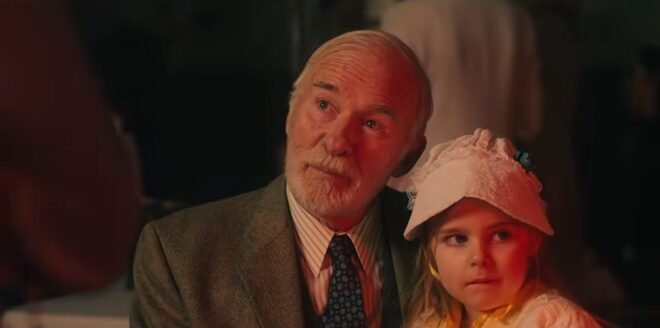
“What if this becomes a ghost story you’ll tell you wains one day? Hmm? A ghost story they’ll hardly believe?”
Granda Joe to Erin, discussing the Good Friday Agreement,
Derry Girls
Fear: A Personal Account
Northern Ireland, for such a small landmass and relatively small population, gets a fair amount of media coverage. Steeped in empire and torn by bigotry, the people of those six counties have found reason to argue for centuries. Since 1998, they have experienced life without the constant tit-for-tat recriminations and attacks that have marred generations and it must be said, they’ve worked hard for that fragile peace. With bombings and shootings within living memory of a vast proportion of the population, it would be easy to let things slide back into chaos. The fact is, the people of Northern Ireland don’t want British occupation again and they don’t want to go back to the conflict.
The ghastly attack on the man in Belfast two weeks ago resulting in riots brought back the horrors of a period many would prefer to leave behind. The subsequent massive turnout at the peace rally in support of migrants in the following days showed that the majority of the people of Northern Ireland remain committed to a lasting peace in which everyone, regardless of background can live safely.
I had the good fortune to experience something of Northern Ireland in the early 1990s whilst living there for a year, good fortune because it was one of the profoundly formative periods of my life. Working, weekends on a farm, travelling across the island to every corner my boots and pack could reach, I found myself forced to face things that we simply did not encounter in the isolated and comfortable Australia of the time. Living in the university district, I was befriended by some wonderful people, who ensured that I understood enough of the history and politics to keep myself out of trouble, whilst being frank enough to explain the division.
My introduction to “The Troubles” came on the second night, a bomb exploding around 2 o’clock in the morning. The tenement felt like it had lifted off its foundations, but my roommate, entirely non-plussed, told me it was just a bomb and to go back to sleep. The following morning, it was confirmed that a bomb had exploded at Stormont, the parliament of Northern Ireland. “Hmm. That must have been a big one – it’s a long way from here!” was my roommate’s comment. It was not the only bomb I heard explode and I quickly learned that life in Belfast was going to require acceptance of a very different perception of safety. My belongings were searched at shopping centres and airports, I would be questioned as to why I was out at 1:30 am when all businesses were closed, British troops in armoured vehicles would drive past me, looking down their sights and mouth “bang” as they passed. Sometimes, I’d walk past a fence separating properties to find a British soldier crouching and pointing his rifle at me. It did not take long before the intimidation gave way to insult and I would tell them how bad they were for the tourist trade. One or two looked a bit askance when they heard my Australian accent.
I spent time with extended family whilst living in Northern Ireland. From them, I learned some of my heritage, put the pieces of the family tree together. I came to understand why some people fought and what they had to deal with daily. We never travelled to the farm on the train in July, the marching season. The tensions between Loyalist and Republican travellers could flare quickly, especially if one or other was carrying or wearing an item that identified them as Catholic. For me personally, my accent was a kind of passport, giving me a freedom to talk with and walk into areas my extended family would not. Before leaving Belfast, I walked deep into the Shankill and the Falls to take photographs of the murals. I spoke with many people, who would tell me about the paintings. But before I did, I made sure I was not wearing anything that could prove problematic. And I always asked permission before photographing the murals and was rewarded with many a history lesson over a brief, but warm conversation.
Everyone knew when the Troubles had started and everyone knew where they could and could not set foot. I’d been to Free Derry, to the Glens, driven down the Falls at Christmas. I’d seen the massive mural of the virgin and child at Christmas, towering behind the joint Royal Ulster Constabulary – British Army barricade and was firmly told by my friends that I could not take a photograph. The irony of that scene at the time of year has never left me. It’s the one mural I wish I could have photographed, but was forbidden lest I wanted to gain the unwanted attention of the security. It is this, as much as the conflict that I think many people despised. The persistent intrusion on daily life, the constant looking over your shoulder, of never feeling entirely safe, of never being able to entirely relax, not just Catholics, not just Protestants – everyone.
Marriages between Protestants and Catholics were controversial. Challenging a generation of sectarian division, one young couple in my family found support among their peers, their school and college friends and finally their kin to marry. It wasn’t easy, it possibly wasn’t even entirely safe. But it was clear to me that my generation, the youth and young adults of the early 1990s, did not want to fight indefinitely. They understood that it was fear that drove division and they knew that regardless of religious or political affiliation, everyone just wanted to live freely and in safety. The senselessness of the killing was all too apparent.
The Aetiology of Fear
My experience in Northern Ireland taught me what it is like to live in fear of a threat that may or may not come, at a time you cannot predict. I spent the first two weeks fairly anxious. Friends had pointed out the roads I should stay away from – those leading to the Falls and the Shankill were among them. The wall between the Catholic Falls and the Protestant Shankill had been built to disrupt the frequent sectarian attacks on each community on the other in 1969.
After two weeks and determined to make the most of my first time away from Australia, I could see that most people ignored the troops and RUC unless they were “required” to interact, usually at some form of checkpoint. Belfasters are very direct communicators and at checkpoints, interactions were perfunctory ensuring that only the essential was ever discussed. You never said more than was needed, not even a greeting.
Fear has its origins in something of substance. In the case of Northern Ireland, that origin goes back centuries. Invaders have assaulted the island of Ireland for centuries, but the most recent and relevant to the formation of the Republic of Ireland and Northern Ireland was Oliver Cromwell. His vicious hatred of “popery” and marginalisation of the Catholics drove the majority of the population to extreme poverty and servitude. The approach of the British Whig Government to the famines of the mid nineteenth century, which can be characterised somewhere between inept and deliberately callous, caused the emigration and death of huge numbers of people creating a diaspora spanning across the world. Eric Bogle’s haunting “Leaving the Land”, sung by Mary Black, recounts the loss of property and later abandonment of family and friends in desperation:
Remember when I brought you here
Those long bright years ago
For all that time you’ve been my heart
And this land has been my soul
The long bright days are over now but still the heart beats on
But Jenny dear the soul is gone.
In Australia, we are seeing a similar appeal to a confected loss by conservative leaders and groups. In reality the only people who have lost land and rights in Australia are the Indigenous people at the moment of British settlement. We hear politicians demonising immigrants, but not all – only those of colour, never those who are white. It’s the belief of a narrow-minded minority, driven by the flawed logic of eugenics and unyielding Christian fundamentalist ideology that drives a fear among people, either struggling to make ends meet or entitled and thinking they deserve more, that feeds the fears. When nationalists demonstrate their racism by attacking Indigenous people, they do so out of fear, a fear they refuse to confront. When politicians demonise entire communities based upon the actions of a few, they do so to capitalise upon the fears of voters. Some believe their own statements, some do not. The transactional nature with which politicians conduct their business becomes clear in the divide between the rhetoric they speak versus the votes they cast. Pauline Hanson has been consistent in her outspoken opinions and marginalisation of immigrants for three decades, but has shown a more transactional nature by voicing opinions about industrial relations and abortion more recently. Hanson is playing both sides of the ledger, trading on fear, leveraging people’s biases and the bigotry and entitlement of small employers and religious zealots.
The Pathogenesis of Fear
Fear often falsely magnifies a risk to unmanageable proportions. The ultra-conservative Loyalist politician and evangelist preacher Ian Paisley staunchly opposed Catholicism, leading confrontations against civil rights marches. He was a key driver of sectarian division and his association with numerous Loyalist paramilitary groups including the Ulster Volunteer Force formed in 1965, has been the subject of significant suspicion. It is a lesser known fact that Paisley did in fact establish his own paramilitary group in 1981, the Third Force. Paisley drew upon fear, the same fear that drove Oliver Cromwell’s crusade against “popery” and Catholicism.
Australia’s conservative politicians fear a different enemy. Peter Dutton’s fear projected to African gangs. Pauline Hanson’s projects to Asians and Muslims. The tepid response of the incumbent Labour Government under Anthony Albanese has done nothing to counter the misconceptions around either, which to the benefit of nationalists, conveniently intersect.
The decisions of the Albanese Government in the wake of the War in Gaza foreseeably preference a minority whilst fostering the demonisation of others in the community. The attacks by NSW Police under the eye of Premier Chris Minns worsened the situation by marginalising Muslims whilst not treating non-Muslims in the same way. Subsequently, with the adoption of a highly controversial response to the Bondi Attack in December 2025, the Albanese Government has emboldened racists and gaslit the entire Australian population. Any criticism of the agencies, individuals or public servants involved in the review of those events is met with the threat of legal attack. The protests earlier this year against the visit by Israeli President Isaac Herzog was met with extreme force by NSW Police on the back of now confirmed unconstitutional legislation. Many people are still awaiting outcomes of prosecution, forced to face the risk of the loss of jobs, of income, of failed police checks. This is state control and it’s the very thing that drives division and fear.
Corporations that suppress whistleblowers drive fear. The recently exposed dealings at KPMG brought to light by a whistleblower, initially resulted in not support, but referral to human resources and subsequently intimidation. The parallels between what happened to this individual who made not one, but two disclosures, and that of the former Indigenous Commissioner for ACT Revenue, who made more than one disclosure, cannot be ignored. In the case of the latter, he was driven from his job by a racist employee, Angel Marina, fearful for his reputation and his job when investigated for corruption. An entitled individual who thought he was unaccountable and could get away with his failures, deliberate or not. Three women in the ACT Public Service, who brought bullying complaints against him, proved otherwise, but the details, whilst given to the court during Bakchos’ trial, were ruled by the judge to be inadmissible as evidence on which to cross examine Angel Marina. Those accounts would have provided substance to the defendant’s claim of bullying within ACT Treasury. Failures in accountability and the utter lack of transparency drive fear in employment, drive people to look for other jobs, build distrust between employees.
It is governments that foster division and fear between people. They have the authority and the mechanism by which to disarm racists and those who discriminate. The fear campaign driven by conservatives against the Voice Referendum is a clear example of government failure in countering negative sentiments. Albanese’s appallingly poor efforts in this regard, that of his party, left a veritable vacuum as the conservatives spewed lies and readily countered hatred. Is it any wonder that Pauline Hanson feels safe in calling for a monoculture? Speaking from fear and ignorance, she spews hatred at anyone with dark skin or who kneels to pray on a rug. This is the very language the whips up support among nationalists, it is the very thing the causes the marginalised to form solidarity with each other, it is the very thing that causes fear to spread.
The Therapy for Fear
Fear ends in one of two ways – introspection or annihilation. The events of World War II should make it clear which is the better for society. The risks of allowing the unchecked hatred of a Hanson, are not mere extrapolation, they are proved trajectories.
Governments do make mistakes, not always due to political reasons. But the errors driven by well-cashed or vocal minority groups, by corporations with vested interests, by ambitious and or clearly corrupt individuals, are avoidable. Education throughout all levels of schooling as well as public advocacy and engagement to counter misconceptions purported by conservatives, demanding that they put forward their proof, is needed. Breaking down fear can only be done when it is faced directly, its lies laid bare, its rhetoric exposed.
One of my favourite television shows of the past few years has been “Derry Girls”. The final episode closed with the end of the Troubles as 71.1% in Northern Ireland voted in favour of the Good Friday Agreement. When I left Northern Ireland, The Good Friday Agreement was a dream, but the initial discussions had started. I remember a few weeks after returning to Australia seeing Gerry Adams talking about the possibility of the Irish Republican Army (IRA) decommissioning. Two generations scarred by a conflict built on fear of the Other in their midst grasped a future where that fear had no hold. And it was all the more notable for Ian Paisley’s strident resistance.
I visited Northern Ireland ten years after the Agreement. Unless you have lived in an occupied territory riven by paramilitary conflict, I’m not sure you could truly comprehend the difference. The Europa Hotel no longer perpetually barricaded, the absence of British troops on the streets, pretty gardens and walls devoid of soldiers hiding with guns, people smiling and wearing colour rather than the drab greys and blacks against which my iridescent tights often made me an easy sight for the troops. The people of Belfast had overcome their fear and it showed.
Tracing memories of an earlier period, I took a black cab tour of the Falls and Shankill to see the murals once again. They had changed dramatically. Whilst a few sectarian images remained, the vast majority were more peaceful or supportive of others pursuing civil rights overseas. The cab driver was Protestant and we talked of my previous stay during the Troubles and the differences with ease.
Ending Fear, Embracing Unity
The people of Northern Ireland have learned the hard way what fear does. They understand marginalisation, bigotry, they see through lies. They have been asking who is responsible for the riots that followed the attack two weeks ago. More importantly, they are not buying into the racism. They have always been their own people, even the Loyalists who whilst readily admitting to being British, identify strongly with Northern Ireland. If there’s one thing that unifies the Republicans and the Loyalists, the Catholics and the Protestants, it’s that they all share the same origins, the same heartache, the same realisation of a peace many thought may never come.
The people of Northern Ireland will not give up their peace to oligarchs or ignorants because the majority understand their fear and they have addressed it. Australians would do well to learn from them, to hold fast to the ideals that drove the March for Humanity in 2025 which garnered support from people of all walks of life, of all cultures and backgrounds. We must denounce the divisive voices. We must hold our governments accountable when they fail us. We must face out fear. We are stronger and more united when we do.
– – –
© Watershedd, June 2026

No doubt most of the people of Northern Ireland are pleased that the Troubles are largely a thing of the past.
My family has long historical ties to Ireland. Ian Paisley, in my opinion, is largely responsible for the Troubles. He is a clear example of the trouble one bigoted person can cause.
My extended family are from Paisley’s district, Lady Margaret. They were the minority Catholics in the area and there was a significant distrust between Loyalists and Republicans. I would agree that he was a large part of the problem.
I was taken to a number of terrific out of the way places when there. One was left a less than subtle anonymous threat. I was never taken there again.
Beware travellers have been known to encounter Púca in out of the way places.
Hate is an irrational emotion, far too much hate in the world.
Fear is a dangerous thing in the hands of someone who intends to manipulate it for political gain.
The Troubles in Northern Ireland prove that the closer proximity groups that hate each other are, the greater the hatred and the greater the violence.