
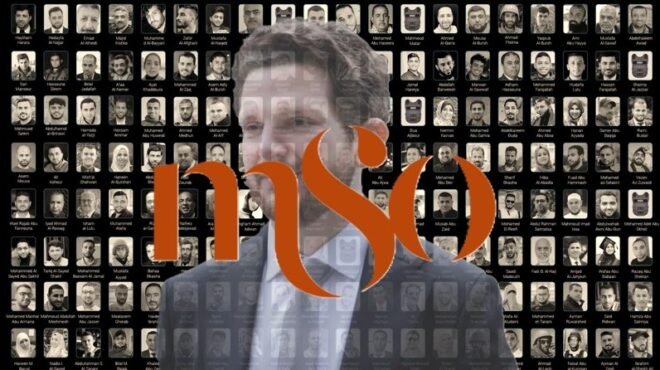
On 11 August 2024, concert pianist Jayson Gillham made a statement from the stage of the Iwaki Auditorium in Southbank, Melbourne, dedicating a late addition to the program of a piece called “Witness” by Connor D’Netto. The addition was made at the request of Gillham and was dedicated to the journalists of Gaza. The subsequent maelstrom of offence and tangled rights has dragged on almost two years until yesterday, when Justice Graeme Hill drew a line under the matter with his ruling in the Federal Court validating the decision of the Melbourne Symphony Orchestra (MSO) to cancel the remaining performance scheduled with Gillham. The ruling sets a precedent that will become a reference point for future legal matters and raises a series of questions regarding contractual responsibilities and expectations, the concept of the “stage” and protections – or lack thereof – of individuals expressing an opinion or solidarity with an issue that in and of itself is not (currently) illegal.
The Performance and the Fallout
Jayson Gillham is an internationally acclaimed Australian pianist. At the time of writing he has released eleven albums, has twice won the Limelight Magazine Artist of the Year, twice been nominated for an Australian Recording Industry Association (ARIA) Music Award and once for the Australian Independent Records (AIR) Awards. He has played with orchestras around the world, including with the Melbourne Symphony Orchestra on more than one occasion. Gillham was scheduled to perform two concerts on 11 and 15 August 2024. The published program included Beethoven Piano Sonata No.21 Waldstein, Ligeti Études: Book 1, Fauré Nocturne No.6, Chopin Études Op.10. At Gillham’s request, the MSO agreed to include a new composition commissioned by Gillham from Connor D’Netto called Witness for the concert on the 11 August. Prior to playing the piece, Gillham made a statement dedicating it to journalists in Gaza, highlighting that over 100 had been killed in 10 months and stating that many had been the subject of war crimes (by December 2025, reported figures for journalists killed in the conflict had climbed above 260). In addition, Gillham explained that the title of the piece when translated to Arabic, Shaheed, also means Martyr. The statement incensed some of the audience, with three complaints — one written, two verbal — received by the MSO immediately following the concert.
The following day, the MSO cancelled a subsequent concert scheduled for the 15 August, issuing a public statement that Gillham had made the comments without first consulting with them. The statement noted that the comments were “beyond the remit of [Gillham’s] contract” and apologising to those who had attended. The union representing performers, the Media, Entertainment and Arts Alliance, and other performers were incensed by the cancellation, arguing that Gillham was being censored. Recognising a public backlash, the MSO attempted to retract, but the event on the 15 August ultimately remained cancelled as the furore had, according to the MSO, raised safety concerns, but with the intent to reschedule the concert for a later date. Notably, the scale of that backlash dwarfed the original complaints: where only three people had complained about Gillham’s statement, the MSO reportedly received 487 complaints about the decision to cancel his subsequent scheduled performance.
Damage to the reputation of the MSO snowballed, with The Cat Empire pulling out of concerts later in the same month, numerous people publicly condemning the actions of the MSO, and the musicians of the MSO passing a vote of no confidence in the management of the Orchestra. Most concerningly the letter from the MSO musicians highlighted that the treatment of Gillham was a step too far for an ensemble that expressed “the culmination of years of unresolved concerns, ongoing mismanagement, and a consistent decline in workplace culture that has undermined the well-being of employees and the long-term success of the company.”
The Personal Becomes Legal
By mid-September 2024, it was lawyers at twenty-paces. Negotiations had failed, the MSO claiming Gillham’s demands were unreasonable. Conversely, Gillham argued that his statement reflected reputable sources and aligned with international law. He further accused the MSO of conflating the suppression of political expression with safety concerns. Marque Lawyers, acting for Gillham, made an application to the Federal Court claiming breach of the Fair Work Act 2009 (Cth) (FWA) against the MSO and associated respondents. The application sought an order for a public apology from each respondent, restitution for pecuniary losses and a pecuniary penalty from each respondent.
Gillham’s contract to perform was with Symphony Services Australia (SSA), through whom the MSO had sourced his services. The peculiarities of the contract under which Gillham was performing are complex, but he argues that the MSO provided no policies or procedures regarding their expectations of performers, although the governing contract with the SSA through whom the MSO had engaged Gillham, did mandate compliance with their policies; as such, he could not be held in breach. The claim asserted that under the FWA, SSA was an independent contractor. It further asserted that under the Equal Opportunity Act 2010 (Vic) (EOA) that in employing Gillham under a contract of services, they were an employer. The corollary was that Gillham, a contract worker, was an employee entitled to the protections of the EOA including freedom from discrimination based upon expressions of a political belief or activity.
Judgment
Justice Graeme Hill handed down his judgment on 10 July 2026 following a three-week hearing. It should be noted that after the hearing had concluded, but before retiring to consider his determination, Justice Hill recommended that the parties make a final attempt at settling the matters out of court. He noted that the issues raised would interrogate complex matters of law and he believed that there would be benefit to both parties if they could resolve the conflict without his ruling.
Ultimately, Justice Hill ruled overwhelmingly in favour of the MSO and their associated respondents. In a particularly notable finding, he held that the EOA is intended to operate independently of the FWA rather than being incorporated into its workplace-rights regime — meaning that even framed as an “employer” under the EOA, the MSO’s obligations there did not import into or strengthen Gillham’s FWA claim. Compounding this, the Court found Gillham was not an employee for FWA purposes but an independent contractor, and so fell outside the Act’s relevant protections altogether. Between the two findings, the foundation of Gillham’s application was struck out on two independent grounds.
The MSO accepted that the cancellation of the concert on 15 August was an “adverse action,” but did not concede that its subsequent actions were similarly so. Justice Hill agreed with the MSO, accepting that Gillham’s position as an independent contractor was not affected and that he was not the subject of discrimination.
On the third issue — whether Gillham was exercising a workplace right in expressing his support for the journalists — Justice Hill accepted that the MSO had a policy of remaining neutral on the Israel-Gaza conflict. He further found that there is a convention among classical musicians and their presenters against making remarks on sensitive political or social issues from the stage without first seeking approval. This point is of particular interest given the inclusion in the program of the études by the Hungarian composer György Ligeti, a Holocaust survivor. According to Nahed Elrayes, in attendance for the performance on 11 August, Gillham also spoke to Ligeti’s family, his loss, and the politics that influenced the piece. This concurs with Gillham’s assertion that he had planned how to introduce each of the pieces to the audience before the concert and that to introduce a piece was not unusual. Of further note, the Statement of Claim from Gillham notes email correspondence between his manager Elaine Armstrong and the MSO in which it was discussed that the pianist would be provided with a microphone to be used during the recital, implying a tacit acceptance by the organisers of the pianist’s explanation. Whilst a transcript of what was said by Gillham regarding Witness was released publicly by the musician, no such transcript has been similarly released regarding the Ligeti Études, and a comparison of the sentiments of each cannot therefore be made by those who were not present at the recital. It is worth noting, however, that the Ligeti introduction drew no recorded complaints — a point the MSO could reasonably invoke in support of its position that its concern was with audience reaction and reputational exposure rather than with the content of political remarks as such.
Finally, Justice Hill found that Gillham’s comments were not a “substantial and operative reason” for the MSO’s actions, and that the orchestra would have taken the same steps had Gillham made political remarks about Israel, or any other topic anticipated to impact its reputation.
Chillingly Biased – Consequences of a Precedent
The term “chilling effect,” coined in the mid-twentieth century, refers to the often indirect consequence of laws that curtail the exercise of legal rights through fear of subsequent litigation by an allegedly aggrieved party. The resultant self-censorship exerts a negative influence, inhibiting the expression of opinions and exercise of legitimate protest.
The effect of determining that a contractor is not an employee under the FWA can be expected to have an extensive reach across not only the arts, but all industries. The protections afforded by the EOA, now confirmed as isolated from the FWA in Victoria, has the potential to leave independent contractors open to discrimination from corporations with little recourse unless they wish to challenge this precedent. This is not simply a matter of keeping opinions to oneself; it is the weakening of protections for contractors in the workplace against all forms of discrimination.
The implications also apply to those on other stages. Actors of the Sydney Theatre Company (STC) wore keffiyeh following a performance of The Seagull in December 2023. At the time, Louise Adler — then chair of the Adelaide Writers’ Week and a prominent figure in Australian publishing — highlighted the attention given to the loss of donors to the Theatre as opposed to the right of the actors to express their opinions at the curtain call. Whilst the STC apologised for the unexpected display, it confirmed the right of the actors to express their political opinions on their own platforms — essentially, their own stage. This earlier controversy perhaps sets the baseline for workplace expectations of employees on Australian cultural stages.
Other stages to consider are those artists step onto voluntarily. The various writers’ festivals around the country have been the source of considerable angst in the past year as restrictive policies have been forced upon individuals and some events have simply been cancelled. The silencing of those who speak an opinion not sanctioned by organisers has imposed a quasi-censorship managed by event organisers intent upon avoiding reputational damage through a media maelstrom and loss of funding from donors. The ability of the arts to shine a spotlight on the less pleasant aspects of human nature is being dimmed on stages, in theatres, and on screens across the country.
Conclusion
Jayson Gillham’s loss against the MSO represents a significant precedent that will have extensive ramifications across the arts. Until successfully challenged, it is the law. Inevitably, the judgment will be used in other legal proceedings, and its definition and meaning will be expanded upon. It remains to be seen whether Gillham will be the one to challenge the judgment through appeal to the High Court of Australia.
– – –
© Watershedd, July 2026



I stand with Jayson Gillham.
Australia is now a satellite of Zionism.
The Zionisation of Australia’s arts and education continues.
These Zionist whingers have no idea what real bigotry looks like.