
On Tuesday night, alongside several million other households, I sat down and completed Australia’s 2026 Census. I expected the familiar bureaucratic rhythm of a form I have filled in every five years since I was old enough to be counted in my own right – questions about work, dwelling, ancestry, religion, the quiet accounting by which a nation takes stock of itself. What I did not expect was to come away from it faintly bewildered. Not because the form was difficult, but because of what it prioritised, and what – for a document that claims to build “the most comprehensive national dataset” available to policymakers – it left conspicuously untouched.
I want to be careful here, because the temptation in this kind of essay is to reach for the easiest villain. The easiest villain, for a certain kind of commentator, is the inclusion of new questions on gender identity and sexual orientation. That is not my argument, and I want to state plainly why, before making the argument I actually intend to make.
What the new questions actually are
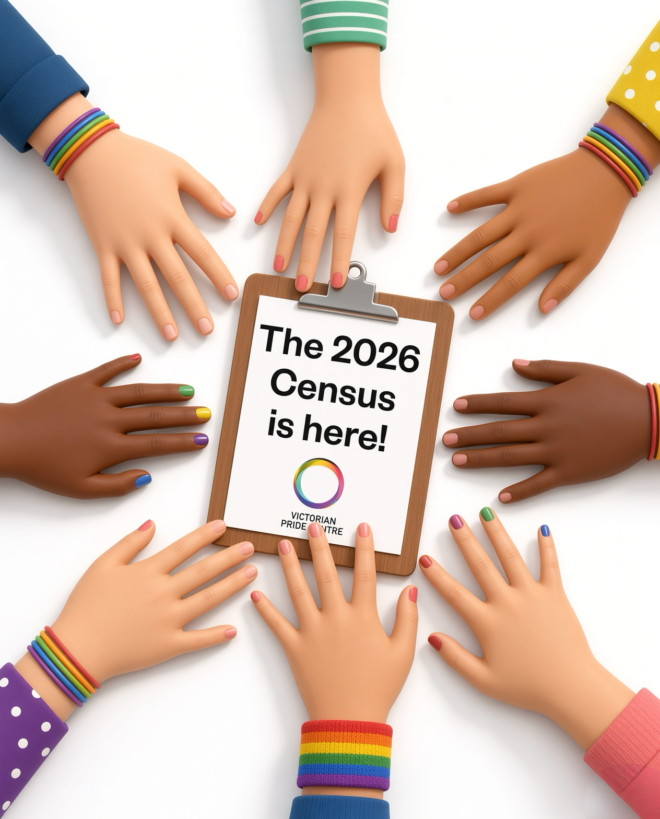
For the first time in the Census’s history, the 2026 form asked Australians aged sixteen and over how they describe their sexual orientation, and introduced a distinct gender identity question sitting alongside an updated question on sex recorded at birth. It is worth being precise about the scale of this change, because precision is the first casualty in most culture-war commentary: this is not “a number of questions” prising into private life, as it can feel when you are filling out the form late at night. It is one new optional question on sexual orientation and one on gender identity – both skippable, both the product of a genuinely long consultation process involving an LGBTIQ+ Expert Advisory Committee, and both arriving after the Albanese government’s own 2024 wobble, when it dropped the questions as “divisive” before reversing course under pressure from the community and from within its own party.
The case for the questions is not hard to steelman, and I will make it as strongly as I can before turning to my actual complaint. Australia has lagged behind Britain, Canada and New Zealand in collecting this kind of demographic data at a national level. Advocacy groups have argued for years, reasonably, that a population you do not count is a population whose needs are structurally invisible to funders and planners – you cannot design inclusive health services, aged care, or crisis support for a group whose size, distribution and age profile is unknown to the state. That is a legitimate policy argument, made by people who have thought about it more carefully than a single grumbling householder filling in a form on a Tuesday night. My quarrel is not with the inclusion of these questions. It is with what their inclusion, set against everything else that did *not* make the cut, tells us about what this government considers legible and what it prefers to leave in the dark.
The health system that goes unmeasured
The Census does ask about health – after a fashion. It retains its long-term health conditions question, expanded this cycle to include liver disease alongside the existing list of conditions like arthritis, diabetes, heart disease, and – the most commonly reported condition in the last count – mental health conditions. It asks whether people need help with daily activities because of disability, a long-term condition, or age. This is useful data, and I do not dismiss it.
But it is data about diagnosis, not about access. Nowhere on the form is a household asked when it last saw a GP, or whether it struggled to get an appointment, or whether that appointment was bulk billed or came with a bill attached. This is not a trivial omission. It is the single most consequential fact about how ordinary Australians experience the health system, and the government has spent the better part of the past two years explicitly campaigning on it. Bulk billing rates for GP consultations fell from close to 89 per cent at their pandemic-era peak to around 77 per cent by 2023–24, and over the same period total patient out-of-pocket costs for GP visits more than doubled, from roughly $780 million to $1.66 billion nationally. The proportion of people delaying or avoiding GP care altogether because of cost more than doubled too, climbing from 3.5 to 8.8 per cent. For the quarter of visits that are not bulk billed, the average gap payment sits at around fifty dollars – a sum that is trivial for some households and genuinely prohibitive for others, especially anyone needing to see a doctor regularly.
A government that has committed $8.5 billion to lifting bulk billing rates to 90 per cent by 2030, and that maintains an official Medicare Safety Net structure – an Original threshold of $594.40 in gap costs, an Extended general threshold of $2,699.10, and a lower Extended concessional and Family Tax Benefit Part A threshold of $861.20 – to cushion households once their annual out-of-pocket costs climb high enough, plainly considers this a first-order policy problem. So why does the largest, most expensive, most granular data-collection exercise the Commonwealth undertakes not ask a single question about it? The Census could have asked, at negligible additional cost to respondent burden: when did you last see a GP? Did you have difficulty getting an appointment? Were you bulk billed, and if not, what did you pay? It would have produced a dataset no health economist currently has – a genuinely national, geographically granular picture of the two-tier system that increasingly separates Australians who can afford routine care from those who cannot.
Census design is not a free-for-all, and it is worth being honest about the trade-offs before pressing the point further. Respondent burden is finite, and the ABS already runs purpose-built instruments – the Patient Experience Survey, Medicare’s own administrative claims data, the Household Expenditure Survey – that capture utilisation, cost barriers and detailed spending with a granularity a five-yearly household form was never designed to match. So the claim here is not that GP access and out-of-pocket costs are unmeasured anywhere in the system. It is that the one instrument routinely described as the nation’s most comprehensive social dataset, and the only one capable of cross-tabulating this experience down to individual electorates and demographic slices, still leaves that particular picture comparatively thin, even as it expands its resolution elsewhere.
I will confess to a personal stake here, and I think it is worth naming rather than hiding behind false neutrality, since transparency about one’s own position is part of arguing honestly. I live with Cushing’s disease, and I spend more than a thousand dollars a month on medications that fall outside the Pharmaceutical Benefits Scheme. That figure is mine alone, and I do not offer it as evidence of anything beyond my own household budget. But multiply the underlying category – chronic and rare conditions requiring treatments the PBS does not subsidise – across the tens of thousands of Australians managing something similar, and you have a second, genuinely national cost burden with no dedicated collection vehicle at all, uncounted not because it is unmeasurable but because no one with the power to ask has yet built the instrument to ask it.
My cynicism about this omission is, I admit, a matter of inference rather than proof, and I want to hold that distinction honestly rather than assert it as established fact. I cannot show you the internal ABS deliberation that decided GP access and out-of-pocket costs were not census material while liver disease was, and I am not alleging one. What I can show you is the pattern: a government running hard on a bulk-billing narrative has left itself without the one universal, electorate-level dataset that could test that narrative against the granular experience of every household in the country. Nothing about that pattern requires deliberate concealment to be worth naming. It is enough to say that the gap exists, that it falls precisely where independent scrutiny of the government’s own headline health commitment would otherwise land, and that the coincidence is worth holding up to the light rather than waving past.
Domestic violence, cost of living, and the questions that measure daily life
The same pattern holds for family and domestic violence. Australia has spent much of the past several years in open national reckoning over its rate of violence against women – royal commissions, a National Plan to End Violence against Women and Children, coronial inquests into intimate partner homicides, and near-weekly media coverage of the toll. None of that reckoning shows up as a single question on the form that is meant to be our most complete social self-portrait. A household-level census question – even a cautiously worded one, mindful of the safety risks of disclosure within a shared household form – could have contributed meaningfully to a problem every state and territory government claims to treat as a crisis.
Cost of living fares slightly better, in the sense that the Census does collect income data – wages, superannuation, investment income, pensions and government payments – and separately asks households what they pay in rent or mortgage repayments. Those figures are genuinely useful and I do not want to overstate the gap. But set side by side, income and housing cost are still two raw numbers rather than a measure of pressure. They tell you what a household earns and what it pays for shelter; they do not tell you whether what is left over after rent, energy and groceries is enough to live on, or whether a household is cutting into savings, skipping bills, or going without to make the numbers balance. A question or two on housing cost stress, or on the share of income consumed by essentials, would have captured something the existing figures cannot: the lived texture of a cost-of-living crisis that has dominated Australian politics for three years running. Again, we already know this government considers cost of living its central political problem – it says so daily. Again, the instrument best placed to measure it in fine geographic and demographic detail was left mostly silent on it.
A brief word on religion
One smaller irritation is worth recording, because it illustrates the same underlying issue in miniature. The religion question retained its 2021 design this cycle – a pick-list drawn from the Australian Standard Classification of Religious Groups, recently expanded to break Buddhism and Islam into their constituent traditions the way Christianity has long been broken into more than a hundred denominations, with a write-in “other” field for anything the list does not capture. I noticed, in the run-up to census night, a strand of online commentary complaining that plain “Christian” wasn’t offered as a direct tick-box and that some respondents felt compelled to write it into the “other” field by hand. I understand the irritation as a user-experience complaint about form design, not as a grievance about the state’s posture toward Christianity. Australia’s Constitution establishes no state religion and, under section 116, expressly forbids the Commonwealth from making any law to establish one; we are not, in any formal constitutional sense, a Christian country, however large a share of the population identifies with Christian traditions. I wrote “Jewish” into the “other” field myself, without complaint, because that is simply how a classification with more than a hundred denominational categories has to work if it is to remain useful at all. It is the same design choice running through the rest of the form: what gets a dedicated tick-box, and what gets shunted to the margins, tells you what the ABS and the government of the day have decided is worth knowing precisely, and what they are content to know only vaguely.
What legibility reveals about intention
There is an older idea, familiar to anyone who has spent time thinking about how states govern, that a census is never a neutral mirror held up to a society. It is an act of selection. Every question asked is a thing the state has decided it needs to see clearly enough to govern; every question not asked is a thing the state has decided it can continue governing without seeing at all. Seen that way, the 2026 Census tells a coherent story about this government’s priorities, whether or not that story was consciously intended. It wanted, rightly in my view, to finally see its LGBTIQ+ population with some clarity, after a decade of advocacy and a genuine consultation process. It did not, on the evidence of the finished form, feel the same urgency about seeing the state of the GP system it is spending billions to fix, the medication costs falling on people like me outside the PBS, the violence occurring inside a measurable fraction of the households filling in this very form, or the granular texture of a cost-of-living crisis it claims to be fighting on every other front.
None of this requires bad faith to explain. Census design involves genuine trade-offs – a fixed respondent burden, a finite number of questions, a topic review process that has to weigh dropping old questions against adding new ones, as the ABS’s own 2026 review process, which considered and ultimately declined to add several candidate topics, makes clear. I am not suggesting a conspiracy. I am pointing to a set of choices, made by people with the power to choose, that leave the GP access problems this government is spending billions to fix, the non-PBS medication costs borne by people with rare and chronic conditions, the violence occurring inside a measurable fraction of these households, and the lived texture of the cost-of-living crisis comparatively under-resolved at the one geographic and demographic grain the Census alone can provide – even as it moves, rightly, to resolve a different form of invisibility with real clarity.
A nation’s census should be judged not only by what it reveals, but by what it allows a government – and the rest of us – to continue seeing only dimly. On that measure the 2026 form is revealing in its own right: it finally counted a population that a decade of advocacy and genuine consultation had made newly legible, while leaving several of the most politically central domains of ordinary Australian experience still only partially in view, at the one scale that could have illuminated them most sharply.
– – –
Bakchos is the founder of Blak and Black, an Australian media and advocacy platform established in 2010. Bakchos writes from the intersecting perspectives of Wiradjuri heritage, Jewish identity, and humanism.
© Bakchos, August 2026



The 2026 Australian Census introduced its first questions on sexual orientation and gender identity — the product of years of advocacy and a genuine consultation process, and a step I support without reservation. But set against what the form left out — is this just another example of Labor governing by pressure groups?
This is the strangest census I can remember doing.
That was a dodgy fucking census.
I really don’t understand what the purpose of this census was for? The questions really make no sense, beyond they were created to satisfy particular advocacy groups, but that’s about the extent of it, as far as I can see.
Pauline Hanson will have conniptions when she sees how many people wrote Muslim in religion.
The 2026 Census counted a population that a decade of advocacy made newly legible — rightly so. But bulk billing collapsed, out-of-pocket health costs doubled, and none of it shows up on the form. What gets a tick-box is never neutral.