
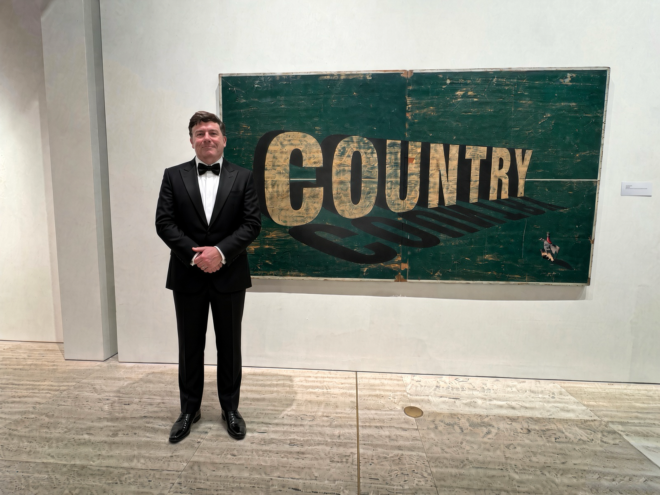
Few rituals in contemporary Australian public life carry as much layered meaning as the Welcome to Country. To a visitor at a parliamentary opening, a school assembly or a football final, it can appear to be a single, ancient, unbroken ceremony. The truth is richer and, in some respects, more impressive. The Welcome as we now know it is the product of a particular generation of Aboriginal artists, activists and elders who took older principles of permission, hospitality and safe passage and shaped them into a form that could be shared with a wider audience. It is both deeply traditional and genuinely new, and the tension between those two qualities is the source of its strength.
The older foundations
The ideas behind the Welcome are very old, but the evidence for how they were practised is uneven, and an honest account has to say so. Across the continent, Aboriginal nations were bound together by systems of law, kinship and reciprocal obligation, and Country was a living inheritance carrying responsibilities rather than property in the European sense. Because each group held custodial duties for its own Country, a stranger could not simply enter it as of right. What survives in the record is not a single ceremony but a family of protocols, recorded by different observers in different regions, that share a logic. Permission is sought, a guarantor vouches for the visitor, hospitality turns a stranger into a guest, and the guest comes under the protection of the hosts.
The Kulin Tanderrum
The fullest description comes from William Thomas, Assistant Protector of Aborigines at Port Phillip, in an account titled “Ceremony of Tanderrum” or “Freedom of the Bush”. It was sent to La Trobe, is undated, and was later printed in Bride’s Letters from Victorian Pioneers, so it can only be placed approximately in the 1840s. Thomas describes strangers who had never been in the country arriving each with a fire of bark, thought to purify the air, the women and children coming by one route and the men and youths by another. They were ushered in by people of an intermediate tribe, friends to both parties, who had helped to forge the alliance, and the elders of the visiting group were brought forward and introduced.
The hosts then lopped boughs from many different trees and built raised seats for each family, with one fire for the men and another for the women. On the first day the visitors were attended by the people whose Country they had entered and were not permitted to do anything for themselves. Water was stirred with a reed and handed to them, and a great variety of food was laid before them in silence. At night shelters were built for them. Thomas also recorded what the ceremony meant. The boughs of many trees signified a welcome to every tree in the forest, and the reed-stirred water signified that “no weapon shall ever be raised against them.”
This is a legal and diplomatic act. It converts strangers into protected guests, binds both sides to reciprocal obligations, and relies on a third party to guarantee the good faith of the visitors. Historians have drawn on it to interpret an event on the colonial frontier. Ian Clark, building on Diane Barwick’s thesis, argues that John Batman’s 1835 overtures to the Woiwurrung and Boonwurrung were probably understood by clan heads as an amateurish attempt at a tanderrum. That is a scholarly interpretation rather than a documented fact, but it gains some support from the detail that Batman used seven Aboriginal men from Sydney as cultural intermediaries, which recalls the go-between Thomas describes.
Custodians’ own accounts add to the written record. Carolyn Briggs of the Boon Wurrung Foundation has described how Bunjil taught the Boon Wurrung to welcome guests while requiring two promises of every visitor: to obey the laws of Bunjil, and not to harm the children or the land. This is oral tradition set down in 2014 rather than a colonial observation, and it is valuable precisely as a statement, by the people who hold the tradition, of what the obligation was.
Messengers and message sticks
Further north and west the same logic appears in the institution of the messenger. Alfred Howitt, writing in 1889 and again in 1904, documented messengers across south-eastern Australia who carried news and summonses between groups, often through country that was not friendly. He recorded that their persons were regarded as sacred even among hostile tribes, and that they were chosen by councils of old men. He also noted that marriages were sometimes arranged for what he called state reasons, so that someone could enter and cross a perhaps unfriendly country with safety and carry ceremonial communications, and that some of these messengers were women. Among the Wakelbura, a messenger summoning people to a ceremony showed a bull-roarer to the old men and delivered a message impressed on his memory by markings on a stick.
The recent Australian Message Stick Database (PLOS ONE, 2024) draws the sources together. Colonial observers attributed three functions to the message stick: it signalled the messenger’s permission to enter foreign territory, authenticated the message, and helped the messenger remember it. The stick was often carried in plain view, on a spear tip, through a pierced septum or in a headband, and it has been called a passport in Aboriginal English. The authors add a sober caution: commentary on message sticks was rarely informed by sustained consultation with the senders and messengers themselves, so what the colonial record preserves is an outsider’s account of an insider’s system.
Fire, smoke and the manner of arrival
Fire and smoke were the visible grammar of arrival. Thomas reported that the Boon Wurrung sent notices to their neighbours by message sticks and smoke signals, and that they held meetings every three months. For the Worora of the northern Kimberley, a 1936 account by J.R.B. Love, reported in a secondary summary, describes visitors lighting a fire stick in spinifex to announce their coming, with envoys sent ahead of the main party. These are early and specific reports of strangers announcing themselves rather than simply arriving.
Some of what is said today about smoking ceremonies needs more care. Community and council guides describe visitors passing through the smoke of a fire smothered in young manna gum, and general sources say that people lit a fire on entering another group’s country. These are modern descriptions of living practice and deserve respect as such, but no primary colonial source appears to support the popular suggestion that smoke transferred the host’s scent to the visitors. Thomas records a fire that purifies the air, which is not quite the same thing.
Central Australia
The evidence is not confined to Victoria. In May 1901, Baldwin Spencer and Frank Gillen watched and photographed an Arrernte reception of strangers at Alice Springs. According to Nicolas Peterson’s account of their work, the visitors were apparently ignored for half an hour and then invited to approach the camp. They formed a solid square and ran in with spears raised, using what Spencer and Gillen called a “curious high knee action.” The pointed delay, the formal invitation and the choreographed approach together describe a reception of strangers as structured as the Kulin tanderrum, though quite different in form.
Routes, permission and the persistence of protocol
John Mulvaney’s work on ceremonial exchange routes shows why such protocols mattered. Travel followed known paths linked to Dreaming tracks, and people familiar with the lawful routes could not be lost; only intruders could be. Later syntheses state that permission was required to cross the territory of other groups, and that message sticks served as passports.
The protocols outlived first contact. In May 1889, after more than two decades of conflict on the Queensland frontier, a five-day peace ceremony was performed on Mithaka Country. Alice Duncan-Kemp recorded its name as Mulka-mukana, the vow of peace and the seal of goodwill. Her books are the only record of it, so the account rests on a single source, but the episode suggests that the ceremonial diplomacy by which Aboriginal groups made peace was extended to newcomers as well.
What the record shows
Put together, the evidence supports a modest but important claim. Formal protocols of permission, introduction, hospitality and safe passage were real, widespread and recorded by observers from several regions, and they varied in form from place to place. What the record does not show is any single ceremony performed in the same way across the continent, or an unbroken public ritual of the kind now enacted at parliaments and stadiums. The modern Welcome rests on this older foundation without reproducing it.
Nimbin, 1973
The modern story begins to take shape in northern New South Wales. In 1973 the Australian Union of Students held its Aquarius Festival at Nimbin, on Bundjalung Country, as a gathering of the counterculture. Gary Foley, the activist and historian, pressed the organisers to seek permission from the local traditional owners before the festival began, a request that reflected the growing assertiveness of Aboriginal politics in the years after the 1967 referendum and the founding of the Tent Embassy in 1972. In response, Uncle Lyle Roberts Jr and the songman Uncle Dickee Donnelly performed a welcome.
It was not yet called a Welcome to Country, and nobody at the time was inventing a national institution. But Rhoda Roberts, Lyle Roberts’s niece, has described it as the first welcome performed in a contemporary public setting under new circumstances. It is a modest-sounding beginning, yet it established the central gesture: a non-Indigenous organisation, planning a large event, acknowledged that it stood on someone else’s Country and asked the people of that Country for permission.
Perth, 1976
The episode usually treated as the true beginning of the Welcome in its present civic form took place three years later, at the Perth International Arts Festival. M?ori and Cook Islands dancers had been invited to perform on the lawns of the University of Western Australia. As people whose own cultures place great weight on the protocols of arrival, they declined to perform until they had been welcomed by the people of the land on which they stood.
The request put the festival organisers in an awkward position, and it put an opportunity before Richard Walley of the Middar Aboriginal Theatre. Walley approached the local Noongar elders for permission, and then welcomed the visitors in the Whadjuk Noongar language, followed by a song and dance. Ernie Dingo, later one of Australia’s best-known performers, was part of the troupe. Walley has said that he called on the spirits of his ancestors and of the land to watch over the guests and to send them safely home, which is precisely the old logic of safe passage carried into a new setting.
Walley has also reflected that, before this, welcomes of that kind were not performed for non-Indigenous audiences, because it was assumed they would not understand. That observation is worth pausing on. The 1976 welcome was not an unbroken public tradition simply continuing. Those who took part have described it as a contemporary adaptation, made because Pacific visitors asked for one. It was an act of cultural generosity and confidence: a decision to open a door that had previously been kept closed, and to trust that a wider audience might come to understand what it meant.
Spreading by invitation
Once the practice had been seen, it was requested again. Tourism bodies in the Northern Territory and at the national level began to ask for welcomes, as did the organisers of the 1979 Miss Universe pageant in Perth, which was broadcast internationally. The pageant also offered an early lesson in the gap between ceremony and spectacle. Walley has recalled that the producers wanted the welcome placed in the middle of the show rather than at the beginning, and when the stage later collapsed, he and Dingo regarded it as the consequence of bad form. A welcome, on this view, belongs at the start, because permission is something you seek before you begin, not halfway through.
Naming the practice
The words themselves came later, in the 1980s. Rhoda Roberts, a Widjabul woman of the Bundjalung nation and an arts director and playwright, is credited with coining the phrase “Welcome to Country” and with insisting that a welcome open the shows she worked on. She has explained that some people wanted a “the” or an “our” placed before “Country”. She rejected both, on the principle that Country is not owned. It is a small grammatical decision that carries a large philosophical weight, because it encodes the Aboriginal understanding of land as something one belongs to rather than something one possesses.
Through festivals, broadcasting and events such as the Festival of the Dreaming, the phrase entered wider use, and by the time of the 2000 Sydney Olympics it had become familiar to audiences far beyond the arts world.
Welcome and Acknowledgement
A distinction that is sometimes blurred in public discussion deserves to be kept clear. An Acknowledgement of Country can be offered by anyone, Indigenous or not, and simply recognises the traditional owners of the land on which a gathering takes place. A Welcome to Country is meant to be given by a recognised custodian of that Country, someone with the standing to speak for it. Acknowledgements are generally associated with the reconciliation era of the 1990s and the work of the Council for Aboriginal Reconciliation, and so came somewhat later than the first contemporary welcomes. The two practices work together: one gives non-Indigenous Australians a way to show respect, the other preserves the authority of the custodians to extend hospitality.
A national ritual
The Welcome reached its most formal setting after the 2007 federal election. It was incorporated into the ceremonial opening of the federal Parliament, and was first used at the opening on 12 February 2008, the same day as the national Apology to the Stolen Generations. The coincidence gave the ceremony an unmistakable resonance: on the day the nation formally acknowledged a grievous wrong, the traditional custodians of the Parliament’s Country were invited to welcome the nation’s legislators to their place of work. The Welcome has been repeated at the opening of Parliament after subsequent elections, and has become an established part of the nation’s civic calendar.
An honest tradition
What makes the Welcome to Country compelling is that its history needs no embellishment. It does not have to be presented as an unchanged ritual stretching back sixty thousand years in its present form, because the truth is more interesting. It is the work of living people, among them Lyle Roberts, Dickee Donnelly, Richard Walley, Rhoda Roberts and Gary Foley, who understood the old principles of permission, hospitality and protection well enough to translate them for a new age, and who had the confidence to offer them to everyone. The older protocols were real, varied and, in places, richly documented, from the Kulin tanderrum to the messengers of the south-east and the formal receptions of strangers in Central Australia, and they inform the spirit of the ceremony. But the public Welcome is a distinctly modern achievement, built on that foundation.
Seen this way, the ceremony is not a hollow formality or an imposition but an invitation. It asks those who gather on a particular piece of Country to pause, to recognise that the land has custodians and a history, and to begin whatever they are about to do with a measure of respect. That it has travelled in under fifty years from a festival field in Nimbin and a university lawn in Perth to the opening of the national Parliament is a testament to the vision of those who shaped it, and to the generosity of a people who, having been so long denied a place in the nation’s public life, chose to open that life with a welcome.
– – –
Bakchos is the founder of Blak and Black, an Australian media and advocacy platform established in 2010. Bakchos writes from the intersecting perspectives of Wiradjuri heritage, Jewish identity, and humanism.
© Bakchos, October 2026




The older foundations are real and recorded across regions: William Thomas’s account of the Kulin tanderrum, Howitt on messengers whose persons were sacred, the message stick as a kind of passport, and the Arrernte reception of strangers watched by Spencer and Gillen at Alice Springs in 1901. What the record does not show is one ceremony performed the same way across the continent.
Thank you for the post Bakchos, you’ve spelled out the history of Welcome To Country well.
That’s what I understand the history of Welcome To Country to be.
Welcome to Country is a ceremony as old as the land itself.
When the choice was welcoming strangers passing through country, or fighting, Indigenous Australians would always try to opt for the peaceful solution, which was welcoming strangers to country.