
A synthesis of public reporting as of 17 August 2026. Cause of death has not been confirmed.
Background
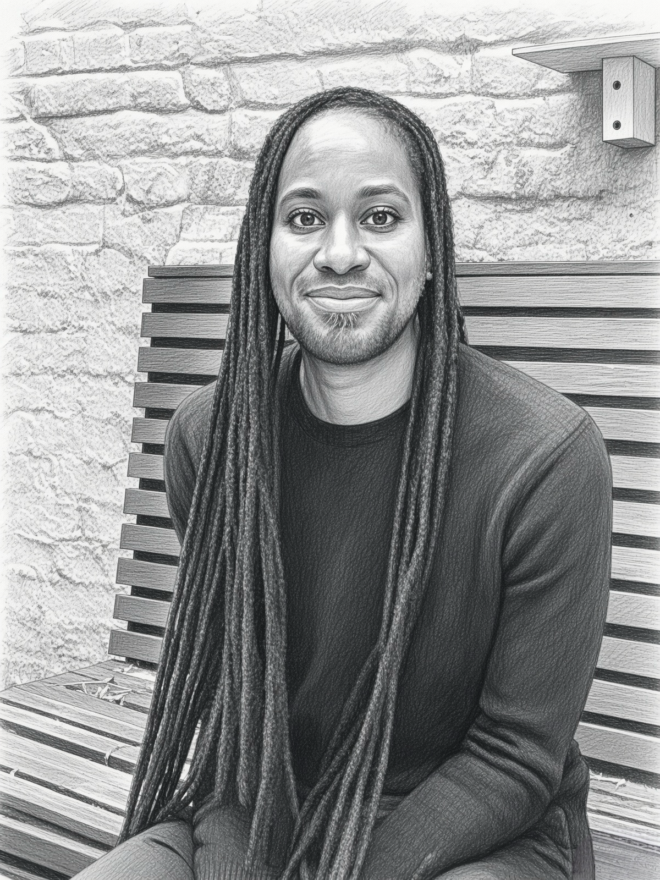
Jason Arday was a British sociologist of education whose 2023 appointment as Professor of Sociology of Education at the University of Cambridge made him, at 37, the youngest Black professor in the university’s history. His path there was unconventional: he has said he did not speak until age eleven and was diagnosed with autism and global developmental delay in childhood, later holding posts at Leeds Beckett, Roehampton, Durham and Glasgow before completing a PhD at Liverpool John Moores University in 2015. His public profile combined that personal story with scholarship on race, racism and Black students’ experience of British higher education.
Origins Of The Allegations
Concerns about Arday’s academic work did not begin with the public controversy of 2026. According to reporting by Retraction Watch and the Times, questions were first raised privately as early as 2023, when a sociologist, Martyn Hammersley, wrote to Arday, Cambridge and Liverpool John Moores University about apparent overlaps between Arday’s thesis and other scholars’ work. Two of Arday’s papers were subsequently corrected by their journals as a result. In September 2025, a Times Higher Education journalist, Jack Grove, prepared a story after independently analysing the thesis and finding issues of concern; the story did not run after Arday’s lawyers, Carter-Ruck, sent legal correspondence to the publication. The matter remained largely dormant until June 2026, when, according to Retraction Watch, someone dissatisfied with how the earlier concerns had been handled approached Nathan Cofnas, a former Cambridge research affiliate whose own tenure there had ended in 2024 amid accusations of racism connected to his self-described ‘race realist’ views on intelligence and ethnicity. Cofnas published a post in July 2026 alleging Arday had plagiarised a peer’s work in his 2015 PhD thesis, which brought the matter to wide public attention for the first time.
Subsequent reporting, drawing on Cofnas’s claim and expanding well beyond it, identified passages in the thesis resembling a 2009 dissertation by another researcher, parallels in some published articles, and inconsistencies in data, funding declarations and quoted material. Separately, questions were raised about biographical claims Arday had made publicly — including his account of running 30 marathons in 35 days and associated fundraising totals, the timeline of his early language development, and some listed academic affiliations — which several universities said they could not corroborate.
Arday’s Response
Arday admitted making citation errors and apologised, but denied lying, attributing the textual overlaps to inadequate doctoral supervision and to learning patterns associated with his autism. He maintained that no formal finding of misconduct had been made against him and described the scrutiny as disproportionate and, in his words, going well beyond ordinary scholarly disagreement.
The Liverpool John Moores Review
Liverpool John Moores University, which awarded the PhD, conducted a confidential review of the plagiarism allegations. The review was limited in scope to the thesis itself and did not extend to Arday’s later publications or his biographical claims. It concluded that Arday had made honest and reasonable errors and dismissed the allegations of plagiarism, allowing the degree to stand. Arday and his supporters cited this outcome, along with the journal corrections issued rather than retractions, as evidence against deliberate wrongdoing. Critics noted that the review’s narrow scope meant it could not speak to the concerns raised later about his post-doctoral work or personal claims.
Escalation And Resignation
Further reporting through late July and early August examined Arday’s post-doctoral publications and his non-academic claims — territory the Liverpool John Moores review had not covered. On 5 August 2026, Cambridge announced it had opened its own investigation ‘following new information about Professor Arday’s academic qualifications and honorary appointments,’ alongside ongoing misconduct complaints. Arday resigned from his professorship and his fellowship at Jesus College that same day, publishing a letter through the Good Law Project. In it, he said the ‘relentless accusations, speculation and public commentary’ had taken a profound toll on him and his family, while insisting the resignation should not be read as an admission of wrongdoing.
Death
Arday was found unresponsive at his home in Battersea, south London, on 14 August 2026, and was pronounced dead at the scene at age 41, nine days after his resignation. The Metropolitan Police described the death as unexpected but not treated as suspicious; no cause has been publicly confirmed. His family said in a statement that he had faced a sustained campaign of abuse since his Cambridge appointment. His memoir was released the same week, having gone ahead despite the controversy.
Was There Evidence The Scrutiny Was Racially Motivated?
This question does not have a single settled answer, and the available evidence points in different directions depending on which claims are examined.
Broader Context: Racism In British Higher Education
Assessing the plausibility of racial-targeting claims in Arday’s case benefits from placing it against a wider evidence base. A 2019 Equality and Human Rights Commission inquiry found that around a quarter of ethnic minority students in the UK reported experiencing racial harassment on campus, compared with roughly one in ten white British students, with Black and Asian students the most affected groups. A separate five-year analysis across 131 universities identified nearly a thousand formal complaints of racism from staff and students, of which only around a third were upheld — a low uphold rate cited by some as evidence of institutional reluctance to act, and by others as evidence that most complaints do not meet the legal threshold for discrimination.
Beyond survey data, employment tribunals have made specific findings of fact against universities. In Sharma v University of Portsmouth (2022), a tribunal ruled that a university’s failure to reappoint an Indian-heritage lecturer to a role she had held for five years was ‘tainted by race discrimination,’ noting that every ethnic minority staff member who reapplied for their post that round was unsuccessful, against near-universal reappointment for white colleagues — a disparity the judge described as statistically significant. Other tribunal rulings in education settings have upheld direct race discrimination and harassment claims in recent years, establishing that such findings are not merely anecdotal but have been reached through formal legal process.
That evidence base is itself contested. Critics of the ‘institutional racism’ framing point out that formal complaints represent a very small fraction of the student population even in the EHRC’s own figures, and argue this undercuts a systemic characterisation regardless of how serious individual cases are. Proponents counter that under-reporting, low trust in complaints processes, and patterns such as disproportionate exclusion rates for Black students point to something structural rather than incidental. This same disagreement — over how to weigh individual, legally substantiated incidents against the difficulty of establishing system-wide intent or pattern — mirrors the interpretive difficulty at the centre of the Arday case itself.
Points Cited In Support Of Racial Targeting
The broader pattern documented above — tribunal-substantiated discrimination and a sector-wide harassment gap affecting Black and Asian staff and students disproportionately — is cited by some commentators as context making racial motivation in Arday’s case more plausible on its face, even without a specific finding tying it to his case.
The allegations were substantially initiated and amplified by Nathan Cofnas, who holds and has publicly argued for views linking race and intelligence, and whose own Cambridge tenure ended amid accusations of racism. Critics argue this origin is directly relevant to assessing the motive behind the campaign, independent of whether individual factual claims were accurate.
Commentators, including academics writing after his death, argued that the volume and intensity of coverage was disproportionate to comparable cases involving white academics, citing instances where similar plagiarism findings against white scholars attracted comparatively little national attention.
Public figures, including London Mayor Sadiq Khan, described the scrutiny Arday faced as a ‘pernicious public shaming’ that people in other circumstances would not have encountered, and the campaign group Hacked Off called for scrutiny of press conduct in the case.
Arday himself, before his death, situated the criticism within what he described as broader patterns of targeting directed at Black academics.
Points Cited Against, Or Complicating, The Racial-Targeting Explanation
Cofnas’s motives do not by themselves establish that the underlying factual claims were false; the Liverpool John Moores review found genuine citation and textual errors in the thesis, even as it concluded they were not deliberate plagiarism, and further discrepancies in Arday’s non-academic claims (about marathons, fundraising totals and some listed affiliations) were independently unconfirmed or disputed by the institutions named.
Several of the questions raised — about listed honorary titles, fundraising figures and biographical timeline claims — were investigated and reported on by multiple independent outlets over time, not solely by Cofnas, and some institutions stated plainly they had no record of the affiliations claimed.
Cambridge’s own investigation, opened weeks after the initial claims, cited ‘new information’ rather than simply restating Cofnas’s original allegations, suggesting the university’s concerns were not confined to material originating from a source with a documented history of racialised commentary.
Some commentators drew a distinction between Cofnas’s stated views, which they characterised as reflecting discredited race science, and the separate, more measured conclusions reached by people who reviewed the evidence and judged that genuine inconsistencies existed regardless of who first raised them.
Comparing media intensity across cases is methodologically difficult: there is no controlled baseline against which to measure whether coverage of Arday was disproportionate, and high-profile appointments explicitly framed around diversity or ‘youngest ever’ narratives — regardless of the individual’s race — have historically attracted outsized scrutiny of exactly this kind, which complicates attributing the volume of coverage to race alone.
The same sector-wide evidence cited in support of a pattern is also double-edged: EHRC figures show formal complaints were made by a very small fraction of the overall student and staff population, which critics of the ‘institutional racism’ framing argue undercuts treating any single case as automatically part of a systemic pattern without case-specific evidence.
Both dimensions of the case appear to be factually supported to some extent: there is documented evidence of genuine inconsistencies and errors in aspects of Arday’s academic and personal claims, alongside documented evidence that the individual who first raised the allegations holds racialised views about intelligence and had his own history of controversy over race at Cambridge. Assessing intent — whether the broader public campaign was primarily driven by legitimate concern for academic integrity, by racial animus, by media incentives around a high-profile figure, or some combination of these — remains a matter of interpretation on which reasonable observers, including Arday’s own family, university colleagues, and commentators across the British press, have reached different conclusions.
Given the recency of Arday’s death, further findings — including any outcome of the Metropolitan Police’s assessment or ongoing institutional reviews — may emerge and could revise the picture presented here.
Sources
1. Retraction Watch, ‘Exclusive: News outlet killed story on plagiarism allegations after Cambridge prof hired law firm’ (27 July 2026).
2. Times Higher Education, ‘Jason Arday resigns after University of Cambridge opens investigation’ (6 August 2026).
3. The Guardian, ‘Cambridge professor Jason Arday resigns amid accusations of plagiarism’ (5 August 2026).
4. Al Jazeera, ‘Cambridge professor Jason Arday quits amid plagiarism allegations’ (6 August 2026).
5. Al Jazeera, ‘Who is DEI critic and Jason Arday accuser, Nathan Cofnas?’ (16 August 2026).
6. CNN, ‘The debate over Jason Arday’s life continues – just as viciously – despite his death at 41’ (16 August 2026).
7. CNN, ‘Cambridge professor found dead after scrutiny over academic record faced “sustained abuse,” family say’ (15 August 2026).
8. NBC News / Associated Press, ‘Youngest Black professor at Cambridge resigns as university investigates allegations of plagiarism’ (6 August 2026).
9. NBC News, ‘Jason Arday, ex-Cambridge professor accused of plagiarism, found dead a week after resigning’ (15 August 2026).
10. NPR, ‘Jason Arday, Cambridge professor accused of plagiarism, is found dead’ (15 August 2026).
11. Wikipedia, ‘Jason Arday’ (accessed 17 August 2026).
12. Good Law Project, Jason Arday’s resignation letter (5 August 2026).
13. University of Cambridge, public statement announcing investigation (5 August 2026).
14. Metropolitan Police, statement on death investigation (14 August 2026).
15. Equality and Human Rights Commission, ‘Racial harassment in higher education’ (October 2019).
16. Personnel Today, ‘University of Portsmouth: tribunal finds discrimination against lecturer’ (2022), reporting on Sharma v University of Portsmouth.
17. London Metropolitan University, Centre for Equity and Inclusion, ‘Racism in higher education’ (2022).
18. Eastern Eye, ‘Review “downplays institutional problems we have in Britain”’ (2021), comments of Prof Kalwant Bhopal, University of Birmingham.
19. The Spectator, ‘British universities aren’t institutionally racist’ (n.d.).
– – –
Bakchos is the founder of Blak and Black, an Australian media and advocacy platform established in 2010. Bakchos writes from the intersecting perspectives of Wiradjuri heritage, Jewish identity, and humanism.
© Bakchos, August 2026



The real question that matters here is if Arday were white would this have ever happened?
This is a clear case of murder by media.
Even if plagiarism was involved, Jason isn’t going to be the first, or will he be last academic who has engaged in plagiarism, really is plagiarism worth someone’s life.?
The only thing I can say here is that what happened to Mr Arday is a clear example of institutional racism in the United Kingdom. In the United Kingdom people of colour will never be considered as equals, the British still think they have their empire! They don’t! The United Kingdom is nothing and it should wake up to itself.
What happened to Jason Arday is at best a parody of justice, that exposes the racism that rots away at the core of the British academy.
There are many uncomfortable similarities between what happened to Mullins in 2004, and what happened to Jason Arday in 2026.