
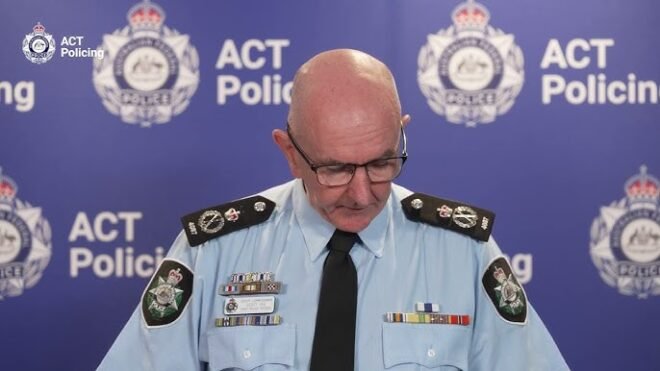
ACT Policing serves as the community policing arm of the Australian Federal Police (AFP), responsible for law enforcement in the Australian Capital Territory under a service agreement with the ACT Government. Operating in a relatively small, high-visibility jurisdiction of around 450,000 people, it handles tens of thousands of incidents each year while balancing community expectations of professionalism, fairness, and accountability. In recent years a run of independent reports, annual statistics, court findings, and journalistic investigations has exposed persistent structural problems: rising allegations of misconduct and corruption, concerning patterns in the use of force, deficiencies in complaint handling, specific incidents of alleged excessive force against First Nations people, shortcomings in the investigation of sexual offences, and operational pressures including understaffing and ageing infrastructure. ACT Policing leadership has consistently maintained that the overwhelming majority of interactions meet high standards and that problems are confined to a small number of officers rather than reflecting systemic failure. Independent oversight bodies, the courts, and the ABC’s own investigative journalism nonetheless paint a picture of recurring accountability gaps that continue to erode public confidence, particularly among the Territory’s First Nations community.
This essay draws on publicly available material from the ACT Ombudsman, the Commonwealth Ombudsman, ACT Policing’s own annual reporting, ACT Supreme Court proceedings, and contemporary journalism spanning 2024 through mid-2026. It aims to set the evidence out factually, including the official responses of ACT Policing and the AFP, without assuming that individual failures define the whole organisation. The picture is a genuinely mixed one: officers operate in a demanding environment shaped by high volumes of mental-health and intoxication-related callouts, and evolving community expectations of transparency mean scrutiny is more intense now than at any point in the force’s recent history.
Rising Allegations of Misconduct and Corruption
One of the clearest indicators of pressure on ACT Policing comes from its own internal reporting. According to the force’s 2023–24 annual reporting, discussed publicly in late 2024, the AFP recorded 220 allegations against ACT Policing members that year – nearly double the 122 recorded in 2022–23. Allegations of serious misconduct more than tripled, from 32 to 103, while corruption-related allegations more than doubled, from 8 to 17, with ten of the latter arising from a single complaint. Serious misconduct in this framework typically covers significant breaches of use-of-force policy or those causing injury; corruption covers matters such as abuse of office and perverting the course of justice.
All such matters are investigated by the AFP’s Professional Standards unit, with the Commonwealth Ombudsman providing additional oversight of serious misconduct and the Australian Commission for Law Enforcement Integrity taking referrals on corruption. Of the matters formally established in the relevant period, only a small number – roughly ten serious misconduct findings and two corruption findings – were substantiated, leading in at least one case to dismissal. The majority were either not established or finalised under a discretion not to proceed further.
Chief Police Officer Scott Lee attributed part of the increase to improved data capture following an internal audit: previously, allegations dismissed at initial triage were not consistently recorded, and the revised process now captures them, inflating the headline totals. Lee has repeatedly said he has no concerns about systemic corruption within the force, stressing that the corruption allegations involved a cohort of only five or six officers and that appropriate processes exist to deal with matters as they arise.
Legal practitioners and oversight bodies take a more sceptical view. Even allowing for improved recording, they argue, the volume of allegations – particularly those touching on force and potential corruption – coincides with a wave of external reviews that increasingly question whether internal processes are adequate to identify and manage risk before it escalates into the kind of conduct examined below.
Use of Force and Unprofessional Conduct
The most detailed independent examination of ACT Policing’s operational practice to date is the ACT Ombudsman’s own-motion investigation into use of force, commenced in April 2024 and released on 10 June 2025 under the title Use of force by ACT Policing: more to do to lessen harm. Covering the five years from January 2019 to December 2023, the 132-page report found that ACT Policing responded to 445,736 incidents in that period, of which 5,902 – just 1.3 per cent – involved a reportable use of force. Those incidents generated 6,255 individual use-of-force reports, because a single incident can involve more than one type of force. Handcuffs featured in 63 per cent of these incidents and ground restraints in 46 per cent; officers drew, aimed, or discharged a taser more than 1,600 times over the period, used a firearm in almost 320 incidents, and deployed a baton on close to 260 occasions. Roughly 47 per cent of the force incidents involved a person under the influence of alcohol or drugs, and around 26 per cent involved a person experiencing mental-health distress. Across the five years, 1,159 individual officers were recorded in at least one reportable use-of-force incident.
To test how these reports corresponded to reality, Ombudsman Iain Anderson’s investigators went beyond the paperwork: they reviewed 201 pieces of body-worn camera and CCTV footage relating to 54 selected incidents, a mix of randomly chosen and complaint-related cases. The results were uneven. The report documented genuine examples of skilled, compassionate, de-escalatory policing – among them a case in which officers handled two distressed and intoxicated teenagers on a suburban street with evident care. But in roughly a third of the 54 cases examined in depth, the footage showed officers behaving unprofessionally: impatience, aggression, and foul or abusive language that the Ombudsman found had unnecessarily inflamed already difficult situations. In one previously unreported case, an officer told a 16-year-old under arrest that he had “no rights” and then refused the boy’s requests for something to wash pepper spray from his face. In another, a man who had tried to assist police in restraining someone ended up in custody with a broken hand.
Perhaps more troubling than the conduct itself was what the report found when it compared body-worn footage against the paperwork meant to record it. Written use-of-force reports were frequently found to be inaccurate – understating a subject’s aggression, omitting an officer’s own inflammatory conduct, or, in the case of the 16-year-old, misstating when he became aggressive and in which direction he had spat. Supervisors who had themselves been present at an incident sometimes signed off on reports describing it, creating an obvious conflict of interest. The Ombudsman also found “widespread inconsistencies” in how officers completed the reports, incomplete data fields, insufficient mechanisms for the organisation to learn systematically from both good and bad examples, a pattern of misconduct allegations being dismissed before proper investigation, and gaps in the consistent use of body-worn cameras themselves.
The Ombudsman made 13 recommendations. ACT Policing accepted two in full, partially accepted eight, and rejected three outright. The response from AFP and ACT Policing leadership was notably defensive. Before the report’s public release, AFP Commissioner Reece Kershaw wrote to Anderson objecting that several recommendations went “beyond the scope of the review,” and Chief Police Officer Lee separately warned that the report’s “generalisations and assertions” risked leaving readers with the false impression of systemic problems. After publication, Kershaw went further, arguing publicly that broad characterisations drawn from a very small sample of interactions – 1.32 per cent of all incidents – unreasonably eroded community trust in law enforcement. The Australian Federal Police Association echoed this, with president Alex Caruana criticising the Ombudsman for examining only 54 of 6,255 reports, objecting that the AFPA had not been consulted or given an embargoed copy before media were, and arguing that reviewing footage from behind a desk could not fairly capture the complexity of a callout at two o’clock in the morning.
Others read the same numbers differently. Police Minister Marisa Paterson told budget estimates that while the incidents highlighted were “disappointing,” use of force remained a small part of ACT Policing’s overall work, and pointed to the existence of oversight mechanisms as evidence the system was functioning as intended. ACT Greens leader Shane Rattenbury argued instead that the government needed to confront what he called a broken system of police misconduct investigation, with far greater transparency required – not, he stressed, because most officers were the problem, but because a system that fails to hold the minority who abuse their power accountable will continue to erode public confidence in the whole. A Canberra Times editorial put the underlying tension bluntly: the question is not whether an Ombudsman’s report damages trust in police, but whether the conduct the report uncovers is what does the damage in the first place.
High-Profile Incidents and Allegations of Excessive Force
Individual cases have given the statistical picture a human face, and none more so than the case of a First Nations man – referred to under pseudonym in different reports as either “Daniel” or “Shane” for legal reasons, whose treatment at the Canberra Watch House in March 2024 is similar to that shown in a four corners investigation about NSW Police – an internal AFP finding of corrupt conduct, and an ongoing civil claim. According to court documents, the man was in a Canberra hotel room when police arrived; he was handcuffed, sprayed in the face with capsicum spray while restrained in a police van, and later taken into a cell at the Watch House, where several officers pinned him against a wall and stripped him naked. He alleges he was kneed and punched while restrained on the floor, in breach of legislation requiring that only officers of the same sex be present during a strip search – a female officer helped hold him down. He was charged with resisting and assaulting police; those charges were dismissed by the ACT Magistrates Court in November 2024 after the Director of Public Prosecutions failed to produce evidence to support them.
An internal AFP Professional Standards investigation subsequently found that the sergeant most directly involved, Scott Budd, had used excessive force and separately engaged in corrupt conduct – the latter finding relating to an email in which Budd pressured a colleague not to charge the man, apparently in an effort to manage the fallout from the incident rather than to serve justice. Budd is no longer employed by ACT Policing. Despite this internal finding, no criminal investigation into the assault has been pursued. In court proceedings seeking access to the man’s counselling records, his barrister described the case as “a very serious instance of institutional failure” and told the court that CCTV footage of the incident was “several orders of magnitude more disturbing” than footage from the Don Dale Youth Detention Centre in Darwin, which prompted a royal commission in 2016. Counsel for the Commonwealth and the named officers rejected the characterisation as “grandstanding.” The Aboriginal Legal Service (NSW/ACT), which represented the man in the original criminal matter, has described the episode as symptomatic of a “deeper disease” in ACT Policing rather than an isolated failure, and says it will monitor the ongoing civil proceedings closely.
The case sits alongside a broader pattern of concern about the treatment of First Nations people in ACT custody. The ACT Legislative Assembly’s Aboriginal and Torres Strait Islander Elected Body reported in 2026 that Indigenous over-representation in detention had continued to deepen, reaching 22.3 times the non-Indigenous rate for adults and 14.3 times for youth, and characterised this as evidence of “entrenched systemic factors rather than isolated failures.” The ACT Government has nonetheless declined to hold an independent inquiry into the treatment of First Nations detainees at the Watch House, pointing instead to existing oversight arrangements – AFP Professional Standards, the Commonwealth and ACT Ombudsman, the Commonwealth’s National Preventive Mechanism, and the National Anti-Corruption Commission – along with an Operational Practices Committee established by the Chief Police Officer in August 2024 to capture and share lessons internally. Separately, in Williams v Director-General of the Justice and Community Safety Directorate, the ACT Supreme Court found in 2025 that force used to strip-search a Ngunnawal woman in custody, along with the manner of the search itself, was incompatible with her rights to humane treatment, privacy, and protection from degrading treatment under the ACT’s Human Rights Act – a judicial finding, rather than an internal or Ombudsman one, that use of force and search practices in the Territory’s custodial system have crossed a legal line.
Other incidents reinforce the pattern without reaching the same severity. In 2025, officers stopped a bus and detained an Aboriginal teenager at gunpoint after mistaking him for a knife-wielding suspect; his family alleged racial profiling and lasting trauma, while police rejected suggestions of racism, apologised for the case of mistaken identity, and referred the matter to Professional Standards while defending the underlying decision to treat a reported knife threat as dangerous. Separately, the ACT courts have criticised officers for “bullying” a child with autism and misleading his family in order to seize his devices during an investigation, resulting in the evidence obtained being ruled inadmissible. None of these cases is representative of the tens of thousands of routine, unremarkable interactions ACT Policing has each year. But taken together, they illustrate a recurring set of concerns: contested and sometimes clearly excessive force, questions about cultural competence in encounters with First Nations Canberrans, and a persistent preference for internal rather than independent criminal investigation of the most serious allegations.
Complaint Handling, Transparency and Accountability Mechanisms
Oversight of how complaints themselves are handled has become a parallel front of criticism. In July 2025, the Commonwealth Ombudsman released its annual report on the AFP’s administration of Part V of the Australian Federal Police Act 1979 – the legislation governing complaint handling for the AFP, including ACT Policing – covering the 2023–24 financial year. Ombudsman Iain Anderson found that the AFP was not delivering a complaint-handling system that met the requirements of the legislation, in particular through its disproportionate use of a statutory discretion to take no further action on complaints that, in the Ombudsman’s assessment, ought to have been investigated. For minor misconduct complaints, the AFP’s Workplace Issues and Complaints Resolution team finalised 85 per cent of matters using this discretion. The report also found the AFP had, in some instances, applied the same discretion inappropriately to more serious matters, had made decisions not to investigate based on incomplete information without adequately seeking evidence from complainants or subject officers, and – in a finding the Ombudsman noted it had now made in every review conducted since 2009 – continued to communicate inadequately with both complainants and the officers subject to complaints.
The Ombudsman issued 19 recommendations; the AFP accepted 12 in full and partially accepted the remaining seven, and separately committed to an external review of its complaints management system. Commissioner Kershaw described this commitment as evidence the organisation was taking the findings seriously; by mid-2025 that external review was reportedly under way, with Deputy Commissioner Lee telling ACT budget estimates that the force was considering whether ACT Policing needed to “adjust our arrangements” for disclosing information about internal misconduct probes.
Legal practitioners working with complainants have been less sanguine, describing the Professional Standards process as fundamentally opaque – “Caesar judging Caesar,” in the words of one – with substantive outcomes rarely made public in any detail. This lack of transparency compounds the problem the Ombudsman identified: even where a complaint is properly investigated and a finding made, the public and often the complainant have limited means of verifying that the outcome was fair or proportionate. The combination of rising raw allegation numbers, a pattern of premature discretion not to investigate, and non-public findings creates a structural gap between the Territory’s stated commitment to police accountability and the lived experience of people who make complaints against officers.
Additional Structural and Operational Challenges
Beyond use of force and complaint handling, other long-standing problems persist. An independent Sexual Assault (Police) Review examining reports made between mid-2020 and the end of 2021 identified a “failure to properly and appropriately investigate” as the predominant reason for the Territory’s low charge rate in sexual offence matters. The review pointed to an over-reliance on early “meet and greet” or evidence-in-chief interviews that sometimes closed cases prematurely, limited follow-up engagement with identifiable suspects, adherence to outdated assumptions about how genuine victims of sexual assault are expected to behave, and insufficient victim-centred practice more generally.
Resourcing remains a persistent pressure point underlying many of these problems. Former Chief Police Officer Neil Gaughan has noted publicly that more than 48 per cent of uniformed officers at some key stations were probationary constables, a staffing profile he linked to suboptimal outcomes, avoidable court dismissals, and costs awarded against police. Ageing and sometimes non-compliant infrastructure – including facilities affected by contamination or requiring temporary closure – has also been documented. Historical non-compliance with legislative safeguards around access to telecommunications location data, involving more than 1,700 recorded instances of which only a small number were found fully compliant, resulted in no officer being disciplined. Internal workplace inspections have separately flagged safety risks, inadequate privacy protections in custody areas, and inappropriate imagery or humour circulating within stations – cultural indicators that, while less dramatic than a Watch House assault, tend to correlate with the kind of unprofessional conduct the Ombudsman documented in its use-of-force review.
None of this absolves individual misconduct, but it does provide necessary context. ACT Policing officers face genuine occupational hazards: physical assaults and threats, an intense volume of mental-health and intoxication-related callouts that other jurisdictions increasingly route to health services rather than police, and a level of public and media scrutiny disproportionate to the Territory’s comparatively low crime rate – the ACT recorded 612 offenders per 100,000 residents against 1,556 in New South Wales, according to the latest official figures. Successive ACT governments have responded with additional recruitment funding, and ACT Policing has said it is working with relevant health agencies to trial a new model for responding to mental-health-related calls from 2025.
Balancing the Record and Looking Forward
ACT Policing operates in a demanding environment in which the great majority of its more than 50,000 annual incidents are resolved without force, complaint, or controversy. Leadership has accepted a substantial number of the oversight recommendations directed at it, invested in recruitment and training, and consistently maintained – not without some statistical justification – that the problems documented above are neither systemic nor representative of the Territory’s police force as a whole. The willingness of successive Chief Police Officers to engage publicly, if defensively, with adverse findings is itself a form of accountability that should not be dismissed.
Yet the accumulation of Ombudsman findings across two separate 2025 reports, a rising trend in serious internal allegations, an ACT Supreme Court finding of rights violations in a strip-search case, an unresolved civil claim arising from an internal finding of corrupt conduct and excessive force at the Watch House, and a consistent institutional preference for internal rather than independent investigation of the most serious matters together point to genuine and ongoing problems of culture, supervision, investigation quality, and transparency. Public trust in a police service depends not only on the volume of good, unremarkable work it does each day, but on whether the minority of serious failures are handled with the rigour, independence, and openness the community has a right to expect. On the evidence reviewed here, that standard is not yet consistently being met.
In a self-governing territory that prides itself on progressive values and a codified human rights framework, the standards applied to those entrusted with significant coercive power over the public must be correspondingly high – and higher still where that power is exercised over a community, First Nations Canberrans, already vastly over-represented in custody. Greater independence in the investigation of serious force complaints, more consistent public reporting of substantiated outcomes consistent with individual privacy, deeper cultural competence training, and a genuine willingness to treat critical oversight findings as an opportunity for reform rather than a reputational threat would go a considerable way toward closing the gap between ACT Policing’s stated standards and the record examined in this essay. Sustained attention to these issues – from the Ombudsman, the courts, the media, and the community itself – remains essential if confidence in policing across the Territory is to be fully restored.
– – –
Bakchos is the founder of Blak and Black, an Australian media and advocacy platform established in 2010. Bakchos writes from the intersecting perspectives of Wiradjuri heritage, Jewish identity, and humanism.
© Bakchos, August 2026




ACT Polcing is clearly a police service without honour or integrity.
There really does need to be a royal commission into the Australian Federal Police. It’s more pressing than the current joke of a royal commission we’ve got into Zionism, or whatever the hell it’s about.
ACT Policing have a serious integrity and professionalism problem, not to mention a racism issue.
It would seem that what ACT Policing did to Bakchos, isn’t out of the ordinary for them.
ACT Policing must be the most compromised police force in the country.
Fucking filth.
Corrupt and racist police are a danger to the entire community.