Milman Parry, the Guslari and the Question of Aboriginal Oral History
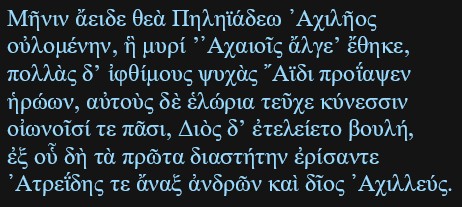
Sing, goddess, the wrath of Achilles, son of Peleus, the ruinous wrath that brought the Achaeans countless sorrows and sent so many brave souls down to Hades, leaving their bodies as prey for dogs and birds, while the will of Zeus was fulfilled: sing from the moment the two first stood apart in strife, Atreus’ son, lord of men, and godlike Achilles.
~ Homer, Iliad 1.1–7 (author’s translation) ~
This essay is a digression from the usual business of Blak and Black, though it grows out of it. It began with a comment left on the site, which argued, in effect, that everything Europeans recorded of Aboriginal oral literature amounted to unsubstantiated myth. I found the claim ignorant and condescending. It nonetheless deserves a considered answer rather than a bristling one, because behind it sits a question that is genuinely worth asking: when a society has no writing, can its songs and stories count as history, and how would we know?
There is a fair version of the sceptic’s worry. Aboriginal traditions were very largely transcribed by outsiders, among them missionaries, police, pastoralists and amateur ethnographers, who heard imperfectly, translated imperfectly and filtered what they heard through their own assumptions. A record made that way needs critical handling. But critical handling is not dismissal, and “myth” is not a synonym for “false.” The better course is to ask what oral poetry is, how it works, and what it can and cannot preserve. Milman Parry spent his short career on exactly that question, in the Balkans and in Homer, and the ethnographic record on this continent, above all the survey by Margaret Clunies Ross, allows us to set his findings beside Aboriginal practice. I came to Parry through my university studies in classics, and I have found his work a surer guide to this question than anything written about it in the comment threads of the internet.
What follows merges two earlier pieces of mine into a single argument. It holds that oral song is a form of history, that it is history in a particular sense whose strengths and limits should be stated honestly, and that those who wave away Aboriginal tradition as myth are applying a standard they would never apply to Homer.
What Parry Found
Milman Parry was born in Oakland, California, in 1902, studied at Berkeley, and took his doctorate at the Sorbonne in 1928 with a thesis on the traditional epithet in Homer. His starting observation was deceptively simple. Homer’s poems are saturated with fixed phrases such as “swift-footed Achilles” and “rosy-fingered dawn,” and generations of readers had treated them as ornament, or as the habits of a poet nodding at his desk. Parry saw that they were a system. For a given character, in a given grammatical case, there is typically one epithet that fits a given stretch of the hexameter line, and the poet reaches for it not because it is the most vivid word available but because it fills the metrical space and keeps the verse moving. The formulas were tools of composition, and a poet who commanded enough of them could build verse at speed, in front of an audience, without a written text.
Parry described the system in terms of economy and extension. A system is economical when it offers, for a given idea in a given metrical position, a single formula rather than a crowd of near-synonyms, and it has extension, or scope, when it supplies formulas across the whole range of positions and ideas a singer is likely to need. Beyond the phrase, Parry and his follower Albert Lord identified recurring themes, the typical scenes of assembly, arming, feasting, journeying and battle, which singers elaborated differently each time but along familiar lines. This cut across the quarrel that had dominated Homeric scholarship. The Analysts carved the poems into the work of many hands, while the Unitarians defended a single literary genius. Parry proposed that both were asking the wrong question, because the poems were the crystallised product of a long tradition of singers who inherited, adapted and re-performed material, and the idea of one author fixing one text did not describe how they came to exist.
Argument from the text alone could not settle the matter, and Parry knew it. He needed a living tradition in which the same techniques could be watched in action, and he drew on the earlier work of the Slovene scholar Matija Murko, who had studied South Slavic epic singing in the early twentieth century. Parry died in 1935, aged only thirty-three, in an accidental shooting. Lord carried the work forward and in 1960 published The Singer of Tales, which gave the theory its definitive form and its most useful phrase, composition in performance: the singer does not recite a fixed poem but makes it anew each time, using formulas and themes as scaffolding.
The Guslari of Yugoslavia
Between 1933 and 1935 Parry, Lord and their local assistant Nikola Vujnovi? travelled through the Kingdom of Yugoslavia recording the singers known as guslari, who accompanied themselves on the gusle, a single-stringed bowed instrument. The songs recounted the wars with the Ottomans and the Battle of Kosovo of 1389, and the singers composed them as they sang. The expeditions produced thousands of recordings on aluminium discs, among the largest collections of South Slavic oral epic ever made. Parry paid particular attention to Muslim singers in places such as Novi Pazar and Bijelo Polje, whose songs could run to many thousands of lines, in contrast to the shorter songs common among Christian singers elsewhere.
The most celebrated of them was Avdo Me?edovi? of Bijelo Polje, an illiterate man whom Parry called a Yugoslav Homer. Avdo could sing epics of twelve thousand lines or more, comparable in length to the Odyssey, among them The Wedding of Smailagi? Meho. In the famous test, he was made to hear a shorter song by another singer and then performed it himself at far greater length, keeping the story intact while elaborating it with the stock of formulas and themes he carried. The experiment showed in miniature what the theory predicted. Singers believed they sang the same song every time, yet no two performances matched word for word. What endured was the sequence of the story, its thematic skeleton and the formulaic language, while the surface was recomposed in the act of singing.
Parry was just as interested in the social machinery. Singers learned their craft by apprenticeship, absorbing formulas and themes from older men. They performed in coffeehouses and at weddings and festivals, before audiences who asked for songs and corrected mistakes, and who in doing so became part of the tradition’s quality control. The singers who learned to read and write sometimes began to fix their songs in a single form, while the great oral poets avoided writing and kept their art fluid. By the 1930s modernisation was already eroding the practice, which gives Parry’s discs a salvage value quite apart from their theoretical interest.
The songs also carried history, though of a particular sort. They recorded real events, the Ottoman conquests and the defeat at Kosovo, but blended fact with legend. The Kosovo cycle transformed a military defeat into a story of moral victory, and in doing so recorded something that a chronicle would not: what a people needed the event to mean. That distinction, between preserving what happened and preserving what a society makes of what happened, matters a good deal for what follows.
Homer and the Coming of Writing
If the guslari show how a long poem can be composed without writing, they also suggest how Homer’s poems were handed down. The Iliad and the Odyssey are conventionally dated to the eighth century BCE, some four centuries after the Bronze Age collapse of about 1200 BCE ended the Mycenaean palace world and its Linear B script. Through the centuries that followed, the memory of a heroic past, including a war at Troy traditionally placed around 1250 BCE, was carried by singers, the aoidoi, who adapted inherited stories for new audiences. The poems preserve a layered picture, with Bronze Age objects and places sitting beside Iron Age customs, which is just what long oral transmission would be expected to produce.
The Greeks took their alphabet from the Phoenicians at around the same time, and the earliest writing may well have served the performer rather than replaced him. Later tradition credits the Athenian tyrant Peisistratus, in the sixth century BCE, with commissioning a standard text for recitation at the Panathenaic festival. How much weight that tradition can bear is debated among scholars, but it points the same way, towards a moment when a fluid performance tradition was frozen on the page. The Homer we revere is therefore the written residue of an oral tradition, and the classics shelf rests on a debt to unwritten memory.
Song and Dance at the Centre of Aboriginal Tradition
My main source for the Aboriginal material is Margaret Clunies Ross’s survey, Australian Aboriginal Oral Traditions, which is careful scholarship and which I follow closely, relaying the many ethnographers she draws on. Her first point is that among Aboriginal people themselves the most important oral genres are song and dance, especially in their relationship to ritual. A ritual leader, in some regions a woman, holds high prestige through control of knowledge and of the forms in which knowledge is encoded. In Arnhem Land, ritual is called “Sunday business” in Aboriginal English and a ritual entrepreneur a “businessman,” an idiom that reflects a real feature of the system. Songs, dances, designs and whole ceremonies, though sacred and often secret, are owned by clans, performed by other clans standing in a managerial relationship to the owners, and sometimes exchanged for performance rights or for trade goods. Tradition, in other words, is property, with law attached.
The essence of much of this tradition lies in its multi-media character, which the early observers recognised when they took the word corroboree into English. Song, dance, the painting of totemic designs and the construction of ritual grounds together express the powers that were active in the Dreaming, the period when the enduring shapes of the world were made. Some totemic beings are of wide and transcendental importance, such as Baiame among south-eastern groups or the Rainbow Serpent across much of the north, while others are parochial, tied to particular clan estates. On one North Central Arnhem Land estate, Djunawunya, seven named sites were created by Giant Fishtrap, Water Goanna and Kingfisher. Fishtrap is regularly drawn as a sand sculpture at Djunawunya mortuary ceremonies, so that song, design and land form a single record of identity. It is through such ceremonies, rather than through any genre of personal eulogy, that a dead person is acclaimed.
Storytelling is valued too, but Clunies Ross argues that its function is best seen partly in its own right and partly as an adjunct to the forms of the high culture, notably song. Because song is allusive and esoteric, spoken accounts that explain it to various audiences become almost inevitable, and the less a song’s language is understood, the more prominent become the accounts of what it is about. The recorded tales of wandering creator beings and the sites they made correspond to the repertoire of sacred song and dance and act as a kind of accompanying prose. The status of story varies from place to place, as Walter Roth observed in North Queensland at the turn of the twentieth century. In some districts he found storytelling left to women and idle men and thought childish by men in their prime, while at Princess Charlotte Bay the men prided themselves on it. Anyone who generalises about “Aboriginal storytelling” as a single thing is already making an error.
A Language Made Deliberately Difficult
Aboriginal songs are characteristically allusive and often very short. Where songs accompany ritual, a brief verse may be repeated many times, as in Central Australia, or variants may be improvised by the singers from a finite stock of song words, as in Central and Eastern Arnhem Land. In most communities the language of song differs from everyday speech, sometimes markedly, through added syllables, sound changes, probable archaisms and simplified word forms, and above all through a special vocabulary. Clunies Ross illustrates this with the opening of a song from the Djambidj series, owned by the Anbarra people of North Central Arnhem Land, about the totemic Marsupial Mouse, Djodja. Apart from the creature’s name, hardly a word is ordinary Burarra, the spoken language of the singers. The words for wild honey, mouth and “big” are recognisable only as altered forms of everyday words, and at least one word she could not gloss at all.
Dense meaning and costly knowledge together make interpretation a form of power. Traditionally control of it belonged to senior men and women, especially the men, and sacred knowledge was disclosed gradually over a lifetime, with initiands in some societies required to speak in a special inverted language while being inducted. Even occasional songs often need reading on two levels. Clunies Ross cites a text by a young Arnhem Land singer, David Marrputja Munungurr, that appears to be a naturalistic description of pelicans feeding on fish, but to those in the know alludes to a Toyota truck nicknamed Pelican, for which scooping up water meant getting bogged in the mud. This is a living tradition at work, absorbing the modern world in a form only insiders can fully read.
The range of genres is wide. There were whetting songs, often sung by women, and formal incitements to battle that included insults and obscenities. Hopevale in Queensland had an extemporaneous song form that allowed people to praise or abuse others with impunity. Sorcerers’ songs, love-magic songs, gossip songs about sexual infidelity, comic songs, lullabies and curing songs are all reported. Occasional verse, made by an individual to commemorate a striking event, is often said to come to the singer in a dream-vision, in which an ancestor or Dreaming being supplies the idea. A well-known example is Paddy Biran’s Song, from Girramay country in Queensland, which laments the clearing of sacred places by a pastoral company with bulldozers and dynamite and imagines the mist lying across the country as the land’s own response to its despoliation. History, in the plain sense of the word, was being sung as it happened.
At the other end of the continuum lies song bound to ritual, connected principally with increase, initiation and death. The best-known published examples come from T. G. H. Strehlow’s Songs of Central Australia (1971), but Clunies Ross notes that much of this material will probably never be published, because Aboriginal people have made clear that they do not want such knowledge disseminated. That restraint is itself part of the answer to anyone who treats the written record as the measure of the tradition. The most important material is, by design, not on the page.
Songlines and the Deep Past
Beyond the regional survey stands the form of Aboriginal tradition best known to the wider public, the songline or Dreaming track, a sequence of songs that follows the journey of an ancestral being across country and names features along the way. Songlines work at once as maps, recording water sources, sacred places and boundaries, as records of significant events, and as law, binding the people who sing them to the land and to one another. The Seven Sisters songline, which crosses vast areas of the interior and links many language groups through the story of ancestral women pursued by a man, is among the best known, and it encodes knowledge of the night sky as well as of country.
Oral tradition can also carry observation across extraordinary spans of time. In a 2016 study, the geographer Patrick Nunn and the linguist Nicholas Reid compared Aboriginal accounts of coastal flooding, drawn from some twenty places around the continent, with the geological record of sea-level rise at the end of the last Ice Age. The correspondences suggested that the stories preserve memories more than seven thousand years old. Cases like this are exceptional, and no one should pretend that every Dreaming story can be tested against a coastline. But they show that the claim that oral tradition can preserve real observation over millennia is an empirical finding, not a romantic assertion.
The same pattern appears elsewhere. The Klamath people of Oregon preserve accounts of the eruption that formed Crater Lake about 7,700 years ago. West African griots, professional singers in the manner of the guslari, carry genealogies and histories across centuries to the accompaniment of the kora. M?ori whakapapa and waiata hold genealogies and the memory of voyages. These traditions share communal reinforcement, formulaic language that aids memory and a performance practice that keeps the material relevant, and the contrast with a static written record is instructive, because oral history engages performer and audience together and renews itself.
Where Parry’s Theory Fits, and Where It Does Not
Parry built his theory on long narrative epic in a fixed metre, sung by specialists. Aboriginal song, as Clunies Ross describes it, is mostly short, allusive and tied to ritual, and its relationship to narrative is oblique. Anyone who claimed that Aboriginal songs are Homeric, or that songlines are epics in the Balkan sense, would be wrong. The fit is real but narrower, and more interesting for it.
First, the Arnhem Land practice of improvising variants from a finite corpus of song words comes close to Parry’s picture of a formulaic system: a limited traditional vocabulary, flexibly recombined, so that each performance is new and each is recognisably the same song. Second, recurring themes, the ancestor’s journey, the making of a site, the totemic event, give singers a framework they can elaborate while keeping the whole coherent. Third, the multi-media nature of Aboriginal tradition adds supports to memory that a Balkan singer in a coffeehouse did not have: the song is anchored to a dance, a design and a place that can be visited. Fourth, the social machinery of transmission, apprenticeship, graded disclosure, clan ownership and the correction of knowledgeable listeners, parallels the Yugoslav picture and in some respects exceeds it in its institutional discipline.
There is also a matter of honesty about what “reliable” means. Parry’s work teaches that oral tradition does not preserve words so much as structures. The guslari believed they sang the same song twice and were wrong in the letter and right in the substance. It also teaches that oral history is not chronicle, since the Kosovo cycle remade a defeat as a moral triumph. So when I say that Aboriginal song is history, I mean it in two ways. In the primary sense, it is a society’s account of itself, of its law, land and origins. In particular cases, as with the flooding stories, it is verifiable memory of events. Neither claim requires that every song be treated as a transcript of the past. A historian reading Herodotus or Thucydides does not assume every sentence true, and reads critically. That is all the tradition asks, and all it deserves.
The Written Record, and the Standard We Apply
Return, then, to the comment. The written records of Aboriginal oral tradition made by Europeans, Roth in Queensland, Strehlow in Central Australia, Constance Petrie setting down her father’s experiences of the 1840s, Ronald and Catherine Berndt, are not infallible, and a reader should know who recorded, in what language, from which informants and for what purpose. But look at what Roth in fact records: variation from district to district in who tells stories and how they are regarded. That is an ethnographer noticing nuance, not a credulous collector of fairy tales. Such records are evidence like any other, and the discipline appropriate to them is source criticism, asking who made the record, how, why and with what corroboration. To declare the whole body of it unsubstantiated myth is not scepticism, it is a refusal to look.
The irony is that the same critic would almost certainly accept Homer. The Iliad as we have it is a text fixed in writing centuries after the tradition that produced it, and nobody proposes to dismiss it as unsubstantiated myth. Classicists treat it as evidence for the memory of a Bronze Age past and for the society of Archaic Greece alike. What distinguishes the two cases is not the quality of the evidence but an assumption, rarely stated, that writing is the only legitimate technology of memory. Parry’s heirs remind us that this is wrong. Writing externalises memory, and in doing so it weakens the very skills, formulaic composition and improvisation, that oral cultures cultivate to a high degree. Literacy changes how a tradition is kept, but a society without it was not a society without history.
Conclusion
Parry’s Balkan laboratory showed singers composing long poems from formulas and themes, in front of audiences who policed the tradition. The Homeric epics are the written residue of a similar tradition. Aboriginal song and dance, as the ethnographic record describes them, belong to a different tradition with its own forms, its own ownership rules and its own discipline of knowledge, and the differences are as instructive as the likenesses. Together, the three cases establish that oral poetry is a sophisticated technology for keeping what a community cannot afford to lose, and that the proper questions to put to it are those we put to any source.
Colonisation severely damaged many Aboriginal traditions, and the work of recording, mapping and teaching that survives and is renewed today is led by the communities who hold the knowledge. An honest answer to my commenter, then, is that Aboriginal literature recorded by Europeans is not nothing, and that it is not everything either, since the most important parts of the tradition were never meant for the page. It deserves to be read as we read any other evidence from a pre-literate world, with care, with source criticism, and without condescension.
Sources
The Aboriginal material draws principally on Margaret Clunies Ross, Australian Aboriginal Oral Traditions, Oral Tradition 1/2 (1986), whose references to Roth (1902), Strehlow (1971), Donaldson, Hiatt, the Berndts and others I relay at second hand.
On Parry and Lord, see Albert Lord, The Singer of Tales (1960), and Milman Parry, The Making of Homeric Verse, ed. Adam Parry (1971).
On the sea-level stories, see Patrick Nunn and Nicholas Reid, Aboriginal Memories of Inundation of the Australian Coast Dating from More than 7000 Years Ago, Australian Geographer 47 (2016).
– – –
Bakchos is the founder of Blak and Black, an Australian media and advocacy platform established in 2010. Bakchos writes from the intersecting perspectives of Wiradjuri heritage, Jewish identity, and humanism.
© Bakchos, October 2026