

For centuries, the notion of “Iranian barbarism” has lingered in Western imaginations like a stubborn shadow. It traces back to ancient Greek usage of “barbarian” for any non-Greek speaker – ironically applied to the highly organised Achaemenid Persians whose empire stretched from the Indus to the Danube and governed perhaps 44 percent of the world’s population with remarkable administrative sophistication. The stereotype was later amplified by colonial-era Orientalism, which painted the East as sensual, despotic, and backward to justify domination, and revived in modern media after 1979 through selective focus on politics while ignoring millennia of refinement.
Yet Iran – historically Persia – stands as one of humanity’s oldest continuous civilisations, its cultural achievements radiating tolerance, intellectual depth, aesthetic mastery, and humanistic insight that have enriched the entire world. Far from barbaric, Iranian culture embodies the very opposite: a sophisticated synthesis of empire-building humanism, poetic mysticism, architectural innovation, and artistic elegance that continues to inspire global heritage. This essay explores landmark achievements across three and a half millennia of Persian civilisation, demonstrating how these treasures dismantle the myth of barbarism once and for all.
I. THE ACHAEMENID FOUNDATIONS: TOLERANCE AND MONUMENTAL GRANDEUR (C. 550–330 BCE)
The story begins with Cyrus the Great, who ruled from 559 to 530 BCE and founded the Achaemenid Empire. His famous Cyrus Cylinder – a clay artefact now housed in the British Museum and widely regarded as an early charter of human rights – records his conquest of Babylon in 539 BCE. In Akkadian cuneiform, Cyrus declares that he restored temples, repatriated displaced peoples, and allowed freedom of worship: policies of unprecedented tolerance for the ancient world. Modern scholars and the United Nations have recognised its spirit as foundational to concepts of religious liberty and humane governance. This was no barbaric conqueror, but a visionary ruler whose empire model influenced later civilisations through its respect for local customs and multicultural administration. The Cylinder stands as tangible proof that Persian governance prioritised stability, mercy, and cultural pluralism rather than brute force.
Cyrus’s capital at Pasargadae, now a UNESCO World Heritage Site, introduced the chahar bagh, or “four-garden” layout – the geometric paradise garden divided by water channels that would define Persian landscape design for 2,500 years. The tomb of Cyrus itself, a simple yet majestic stone structure on a plinth, symbolises humility amid imperial power. It rises in layered stone with a gabled roof, modest in scale yet commanding in presence, reflecting the founder’s philosophy that true greatness lies in service to humanity rather than ostentatious display.
Nearby lies the empire’s ceremonial heart, Persepolis, founded by Darius I around 518 BCE and likewise UNESCO-listed. It rises on a vast terrace with monumental staircases, the Apadana audience hall supported by seventy-two towering columns, and breathtaking bas-reliefs. These carvings do not glorify slaughter: they depict twenty-three subject nations in their distinct costumes bringing tribute in harmonious procession – Medes, Egyptians, Indians, Scythians – symbolising unity under tolerant rule rather than brutal subjugation. The engineering feats – precise stone-cutting without mortar, advanced drainage systems that still function after millennia, and the integration of multicultural artistic styles from across the empire – reveal a civilisation at the pinnacle of ancient technology and aesthetics. Persepolis was burned by Alexander in 330 BCE, yet its ruins still proclaim a sophistication that belies any “barbarian” label utterly.
The Sassanid continuation at Taq-e Bostan, dating from the fourth to seventh centuries CE, features rock reliefs of armoured kings on horseback alongside intricate hunting scenes. These carvings blend martial prowess with artistic delicacy, showing kings receiving divine investiture amid detailed depictions of wildlife and royal hunts. The grottoes combine natural rock with sculpted figures in a way that merges landscape and art, foreshadowing the later Islamic integration of nature and human creation. These pre-Islamic foundations prove continuity rather than rupture, setting the stage for Iran’s subsequent cultural flowering – an unbroken thread of civilisational ambition running from Cyrus to the Safavid shahs.
II. LITERARY TREASURES: THE HUMANISTIC SOUL OF PERSIA (9TH–14TH CENTURIES CE)
Following the Islamic conquest of the seventh century, Persian language and identity not only survived but flourished through literature that became the moral and spiritual backbone of Iranian culture – and influenced the world far beyond its borders. Ferdowsi’s Shahnameh, or Book of Kings, completed around 1010 CE, is a 50,000-couplet national epic recounting mythical and historical kings from creation to the Arab invasion. Written deliberately in pure Persian to preserve cultural identity against potential erasure, it celebrates heroism, justice, and tragic humanity through legendary figures like the warrior Rostam, whose battles and moral dilemmas explore themes of loyalty, fate, and ethical kingship. Its impact endures: Iranians recite passages at Nowruz celebrations; the epic shaped Persianate societies from the Ottoman Empire to Mughal India and echoed in the narrative ambitions of European Romanticism. Ferdowsi’s work was not mere storytelling – it was an act of cultural resistance, ensuring that pre-Islamic Persian values of honour and wisdom survived and enriched Islamic civilisation alike.
Omar Khayyam, living in the eleventh and twelfth centuries, blended mathematics, astronomy, and philosophy in his Rubaiyat – short quatrains pondering wine, love, and fate with sceptical wit. Edward FitzGerald’s nineteenth-century translation made Khayyam a household name in the West, inspiring Tennyson and the Pre-Raphaelites. Far from barbaric fatalism, these verses reveal a rational, hedonistic humanism that questions dogma while celebrating life’s fleeting beauty. Khayyam’s scientific contributions – including reforms to the Persian calendar that remain more accurate than the Julian – underscore a mind equally at home in poetry and empirical inquiry.
Jalal al-Din Rumi, born in what is now Afghanistan but writing in Persian during the thirteenth century, produced the Masnavi-ye Ma’navi – a six-volume Sufi masterpiece called “the Quran of the Persian language.” Its 25,000 couplets explore divine love, spiritual transformation, and the unity of all being. Rumi’s poetry has sold millions in English translation, making him one of the best-selling poets in the United States. Goethe, Emerson, and Borges drew inspiration from him; his whirling dervish tradition remains a living performing art worldwide. The Masnavi uses parables, everyday metaphors, and profound philosophical insight to guide readers toward spiritual awakening – proving Persian literature’s extraordinary capacity for universal appeal across centuries and cultures.
Hafez, the fourteenth-century master of Shiraz, perfected the ghazal – lyrical love poems blending earthly passion with mystical longing. His Divan is so revered that Iranians practise fal-e Hafez, or bibliomancy, opening the book at random for guidance in life’s dilemmas. Witty, sensual, and profoundly philosophical, Hafez influenced European Romantics and even composers of the calibre of Beethoven. His verses capture the tension between worldly pleasure and divine yearning with unmatched elegance. Saadi Shirazi’s Gulistan (Rose Garden) and Bustan offer ethical prose-poetry on justice and compassion: his declaration that the children of Adam are limbs to one another, for in creation they have a common origin, graces the entrance hall of the United Nations – a direct rebuke to any caricature of Persian barbarism. These poets did not merely entertain; they codified Persian humanism – tolerance, love of beauty, ethical inquiry – that sustained Iranian identity through invasions and empires. Their global reach, with translations into dozens of languages and influence on figures from Goethe to modern novelists, proves Iranian culture as an exporter of civilisation, not an importer of barbarism.
Nizami Ganjavi’s Khamsa, or Five Poems, completed in the twelfth century, set enduring standards for romantic narrative poetry. Tales like Layla and Majnun explore obsessive love, spiritual quest, and the cruelty of social barriers, inspiring countless artworks, operas, and adaptations across Asia and Europe. Through poetry, Iranians turned potential cultural loss into a renaissance that shaped ethics, mysticism, and aesthetics for half the world – a contribution no barbarian people has ever made.
III. ARCHITECTURAL AND URBAN MASTERPIECES: ENGINEERING PARADISE (THE ISLAMIC ERA)
Islamic Iran elevated architecture to new heights of elegance and functionality. Isfahan’s Naqsh-e Jahan Square, built during the Safavid period under Shah Abbas I in the early seventeenth century and now a UNESCO World Heritage Site, is one of the world’s largest planned urban spaces. It is framed by the monumental Imam Mosque, Sheikh Lotfollah Mosque, Ali Qapu Palace, and the grand bazaar. Turquoise domes, soaring iwans with vaulted portals, and intricate tile mosaics create a symphony of colour and symmetry. The square’s reflective pool and harmonious proportions embody Safavid urban genius – integrating commerce, worship, governance, and leisure into one cohesive masterpiece. The Imam Mosque’s acoustics allow a whisper at one end to be heard clearly at the other, while its calligraphy and floral tilework represent the pinnacle of ceramic art. Shah Abbas’s vision transformed Isfahan into what travellers called “half the world” – a city where beauty served both spiritual and civic purposes simultaneously.
The Jameh Mosque of Isfahan, whose construction evolved from the ninth through the seventeenth centuries, functions as a living museum of Islamic architecture. It showcases Seljuk domes with their innovative double-shell design for structural strength and acoustic resonance, Safavid tiles in vibrant blues and golds, and evolving iwans that define the classic four-iwan mosque plan. Each addition reflects centuries of experimentation, proving Persian architects’ commitment to innovation within tradition. The Historic City of Yazd – another UNESCO treasure with roots in Sassanid times – exemplifies sustainable desert ingenuity. It is the world’s largest adobe settlement, featuring qanats, underground aqueducts stretching hundreds of kilometres, and badgirs or windcatchers that cool homes naturally without any form of mechanical power. Domed houses and narrow, shaded alleys create microclimates of astonishing comfort – techniques still studied by contemporary environmental architects seeking sustainable solutions.
Gonbad-e Qabus, built in 1006–1007 CE and likewise UNESCO-listed, is the world’s tallest brick tower at fifty-three metres. Its tapering cylindrical form with geometric brickwork and conical roof represents an engineering marvel of the Seljuk era. The tower’s proportions follow precise mathematical ratios, and its brick patterns create visual rhythm while providing structural stability against earthquakes. It symbolises the fusion of nomadic Central Asian energy with ancient Iranian precision – a meeting that produced not destruction but architectural poetry. The Golestan Palace in Tehran, primarily from the Qajar era of the eighteenth and nineteenth centuries, fuses traditional Persian mirror-work, colourful tiles, and European influences into opulent yet refined royal spaces. Its throne halls, gardens, and museums preserve a record of cultural adaptability, showing how Iranian artistry absorbed and transformed external elements without ever losing its core identity.
IV. ARTISTIC ACHIEVEMENTS: MINIATURES, CARPETS, AND GARDENS OF PARADISE
Persian miniature painting reached its zenith under the Timurids and Safavids, with jewel-like illustrations adorning manuscripts of the Shahnameh and Khamsa. Delicate figures, vibrant colours, intricate landscapes, and gold leaf create scenes that blend realism with idealism. Artists working in the royal ateliers of Tabriz and Isfahan mastered perspective, emotion, and narrative flow within tiny frames, influencing Mughal painting in India and Ottoman illumination in Turkey. Masterpieces such as the Great Mongol Shahnameh and Shah Tahmasp’s celebrated version rank among the finest examples of book art ever created anywhere in the world, turning literature into visual poetry and confirming that the Persian aesthetic sensibility was among the most refined in human history.
Persian handwoven carpets, especially Safavid masterpieces like the Ardabil Carpet woven in 1539–1540 and now housed in the Victoria and Albert Museum, represent the zenith of textile art. Containing over thirty million knots in silk and wool, these rugs feature medallions, floral motifs, and Quranic inscriptions symbolising paradise. Universally acclaimed as among the world’s finest, Persian carpets influenced European interiors for centuries and remain a living tradition passed through generations of master weavers. Each knot carries centuries of inherited knowledge, turning raw wool into poetry under the fingers – an art form requiring extraordinary patience, technical mastery, and sustained aesthetic vision that could only flourish within a highly civilised culture.
The Persian Garden tradition, recognised by UNESCO as an ensemble of nine sites including Pasargadae, Fin Garden in Kashan, and Shazdeh Garden in Mahan, formalises the chahar bagh layout. Four quadrants symbolise the four rivers of paradise, intersected by water channels, fountains, pavilions, and avenues of cypress and plane trees. These gardens influenced Mughal designs such as the Taj Mahal, Andalusian Spain’s Alhambra, and even English landscape gardening. Fin Garden’s turquoise pools, shaded walks, and fragrant flowers exemplify harmony between human design and nature. Gardens were not mere decoration: they embodied the Persian worldview that paradise could be realised on earth through intellect, patience, and aesthetic vision – a profoundly humanistic and civilised aspiration.
V. THE SCIENCES, PHILOSOPHY, AND GLOBAL INTELLECTUAL INHERITANCE
The myth of Persian barbarism collapses most completely when confronted with Iran’s scientific legacy. During the centuries that European scholarship stagnated through the early medieval period, Persian scholars preserved and dramatically extended the intellectual inheritance of Greece. The polymath Ibn Sina – known in the West as Avicenna – was born in Persia in 980 CE and produced the Canon of Medicine, a medical encyclopaedia that served as the standard text in European universities until the seventeenth century. His philosophical works synthesised Aristotelian logic with Islamic theology in ways that directly shaped Scholasticism, the intellectual tradition of Thomas Aquinas and the medieval European universities. A barbarian civilisation does not produce the foundational texts of Western medicine and philosophy; Iran did precisely that.
Al-Biruni, the eleventh-century Persian scholar, produced original work in astronomy, mathematics, pharmacology, and comparative religion – including a meticulous study of Indian culture that represents one of history’s first examples of anthropological fieldwork. Al-Khwarizmi, working in the ninth century under the Abbasid caliphate but within the Persian scholarly tradition, developed algebra and gave the world both the word “algorithm” (from his name) and the methods underlying modern computing. Persian astronomers produced star catalogues and observatories of extraordinary accuracy, and Persian geographers mapped the known world with a rigour that Europeans would not match for centuries. These contributions were not peripheral: they were foundational to the scientific revolution that eventually transformed the world.
The transmission of knowledge through Persian scholarly networks – from the great library at Gondeshapur in the Sassanid era to the House of Wisdom in Baghdad – ensured that classical Greek philosophy, Indian mathematics, and Chinese technology flowed together and were synthesised into new intellectual frameworks. Iran was not a passive conduit but an active creator, adding original insights at every stage. This civilisational role as a bridge and innovator in human knowledge represents perhaps the most powerful refutation of the barbarism myth: barbarism destroys knowledge; Iran preserved and augmented it for all humanity.
VI. LIVING TRADITIONS: NOWRUZ, MUSIC, AND THE CONTINUITY OF CULTURE
Iranian culture is not merely a matter of historical monuments and medieval manuscripts. Its vitality expresses itself through living traditions that have persisted across three millennia with remarkable continuity. Nowruz, the Persian New Year celebrated at the spring equinox, is among the world’s oldest continuously observed festivals. Its rituals – the Haft-Sin table with seven symbolic items, the leaping over bonfires, the ceremonial house-cleaning, the gathering of family – predate Islam by centuries and were practised under Achaemenid, Parthian, Sassanid, and Islamic dynasties alike. UNESCO has recognised Nowruz as intangible cultural heritage shared across Central and West Asia, the Caucasus, and South Asia: a festival whose reach extends from Iran to Tajikistan, Afghanistan, Azerbaijan, and the Kurdish communities of Turkey and Iraq. Far from the rigidity of a supposedly backward culture, Nowruz demonstrates a civilisational capacity for adaptive continuity – preserving ancient meaning while remaining warmly inclusive.
Persian classical music, rooted in the ancient dastgah system of modal scales and melodic frameworks, represents another living legacy of extraordinary subtlety. The setar, tar, and santur are string instruments of ancient lineage; the ney flute, whose haunting tones open Rumi’s Masnavi as the voice of the soul separated from its origin, carries one of the world’s most evocative musical traditions. Persian music was never merely entertainment: it was a vehicle for spiritual exploration, emotional refinement, and philosophical inquiry. The radif, the vast repertoire of traditional melodies codified across generations, was inscribed by UNESCO as intangible heritage in 2009, recognising a musical tradition of extraordinary depth and civilisational significance. The same culture that produced Rumi’s verses produced the musical forms in which those verses were first performed – an integrated aesthetic civilisation, not a barbaric one.
Persian cuisine, handicrafts, and ceremonial arts similarly reflect millennia of refinement. The art of ta’arof – the elaborate Persian etiquette system governing social interaction, generosity, and hospitality – encodes values of dignity, respect, and human warmth that stand in direct contrast to any caricature of barbarism. Iranian hospitality, proverbial across the Middle East and Central Asia, reflects a cultural philosophy that treats the guest as sacred. These living dimensions of Iranian culture are as much a part of the civilisational argument as Persepolis or the Shahnameh: they prove that the values embedded in the great monuments – tolerance, beauty, humanistic generosity – were not the achievements of isolated genius but the expressions of a whole culture’s deepest commitments.
VII. DISMANTLING THE MYTH: TWENTY-NINE UNESCO SITES AND A GLOBAL LEGACY
Iran’s twenty-nine UNESCO World Heritage Sites – the vast majority of them cultural rather than natural – constitute perhaps the most objective measure of civilisational achievement available. From Persepolis and Pasargadae to Yazd, Isfahan, and Susa, these sites represent a density of human achievement per square kilometre matched by few countries on earth. They span over three millennia and encompass every dimension of civilisational achievement: urban planning, religious architecture, hydraulic engineering, landscape design, and the fine arts. No barbaric culture accumulates this record. UNESCO’s designations are the considered judgement of the international community, drawing on the expertise of archaeologists, historians, architects, and cultural scholars from every tradition.
Beyond the physical monuments, Iran’s cultural legacy lives in the global literary tradition. Translations of Rumi sell in millions of copies annually in the United States and Europe; Hafez influenced Goethe’s West-Eastern Divan, one of the foundational texts of German Romanticism; Ferdowsi’s Shahnameh was translated and studied by scholars across the Islamic world for centuries, shaping the literary cultures of Persianate societies from Anatolia to Bengal. The word “paradise” itself comes from the Old Persian pairidaeza, meaning an enclosed garden – a linguistic testament to the fact that Persian culture gave Western civilisation one of its most cherished concepts. When English speakers speak of paradise, they are, unknowingly, thinking in Persian.
The Persian contribution to mathematics, medicine, astronomy, and philosophy, transmitted to Europe through Arabic translations and then through direct scholarly contact during the Renaissance, underwrites the intellectual foundations of modernity. The algebra that enables modern computing, the medical classifications that organised European medicine for six centuries, the astronomical observations that corrected ancient errors – all bear the imprint of Persian scholarly genius. A culture that makes these contributions is not barbaric: it is, by any reasonable definition, one of the great civilisational forces in human history.
From Cyrus the Great’s tolerant empire and the monumental grandeur of Persepolis to the turquoise domes of Safavid Isfahan, from Ferdowsi’s epic preservation of identity to Rumi’s ecstatic verses on divine love, from the mathematical innovations of Khayyam and Al-Khwarizmi to the living rites of Nowruz – Iranian culture has consistently elevated the human spirit across more than three thousand years. These achievements are not isolated relics. They are expressions of a culture that has consistently prioritised beauty, ethics, tolerance, and intellect as its defining values. They are monumental yet humane, profound yet accessible, ancient yet living.
CONCLUSION: A LEGACY FOR HUMANITY
The myth of Persian barbarism was always a projection born of ignorance or political agenda. It was a Greek rhetorical device repurposed by Orientalist ideology and subsequently weaponised by modern media. Against the reality of the Cyrus Cylinder, the Shahnameh, the Ardabil Carpet, the double-shell domes of Isfahan’s mosques, the qanat systems of Yazd, and the verses of Hafez, it cannot stand. The reality is a three-thousand-year tapestry of refinement that continues to grace museums, libraries, gardens, and hearts worldwide.
To truly know Iran is to stand in awe before Persepolis at sunset and feel the weight of a humane imperial vision; to lose oneself in a Hafez ghazal and discover that a fourteenth-century Persian poet has articulated something you thought only you had felt; to walk the shaded paths of a chahar bagh garden and understand why Persian speakers called it paradise. In appreciating this heritage, we honour not just Iran but humanity’s shared pursuit of beauty, wisdom, and dignity – values that no culture, however powerful its prejudices, can permanently obscure. Iran’s culture endures, radiant and unbroken, inviting the world to see beyond outdated shadows to its timeless light.


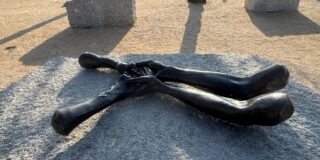

Compared to Iran it’s the west who are barbarians. Late stage capitalism is barbarism on steroids.
Iran is one of the world’s oldest continuous cultures. A culture that has bequeathed to the world countless artistic and literary gems.
Iranian/Persian culture is itself one of the jewels in the crown of humanity.
Cet essai constitue une contribution remarquable et nécessaire au débat sur la perception de la civilisation iranienne en Occident. En remontant aux origines grecques du terme « barbare » pour en démontrer l’arbitraire et l’injustice, l’auteur pose d’emblée une thèse d’une clarté exemplaire : le mythe de la barbarie persane n’est pas une vérité historique, mais une construction idéologique. Ce faisant, il offre au lecteur une invitation à redécouvrir l’une des civilisations les plus riches et les plus influentes que l’humanité ait jamais connues.
La démonstration s’appuie sur une architecture solide et convaincante. Des fondations achéménides — avec le Cylindre de Cyrus comme symbole éclatant d’une gouvernance fondée sur la tolérance et le respect des peuples — jusqu’aux traditions vivantes du Nowruz et de la musique classique persane, l’essai déroule trois millénaires de réalisations humaines avec une rigueur et une éloquence admirables. Chaque section éclaire une facette différente d’une même réalité : l’Iran n’a jamais cessé d’être un foyer de raffinement, d’innovation et de générosité intellectuelle.
Particulièrement saisissant est le traitement réservé au patrimoine littéraire persan. Ferdowsi, Rumi, Hafez, Saadi — ces noms ne sont pas de simples jalons dans une histoire de la poésie ; ils représentent une philosophie humaniste cohérente, transmise de siècle en siècle, qui a nourri des civilisations entières bien au-delà des frontières de la Perse. Que le vers de Saadi sur la fraternité des enfants d’Adam orne l’entrée des Nations Unies dit tout de la portée universelle de cette pensée. L’argument est imparable : une culture barbare ne produit pas les textes fondateurs de l’éthique universelle.
L’essai excelle également dans la mise en valeur des contributions scientifiques et philosophiques de l’Iran, souvent méconnues du grand public occidental. Ibn Sina, Al-Biruni, Al-Khwarizmi : ces savants ne sont pas de simples transmetteurs de la pensée grecque — ils en sont les transformateurs actifs, les augmenteurs, les innovateurs. Rappeler que le mot « algorithme » dérive du nom d’un mathématicien persan, ou que le Canon de la médecine d’Avicenne a dominé les universités européennes pendant six siècles, c’est restituer à l’Iran sa juste place dans la généalogie de la modernité intellectuelle.
En définitive, cet essai accomplit quelque chose de précieux et de rare : il transforme l’érudition en acte de justice. En convoquant les vingt-neuf sites du patrimoine mondial de l’UNESCO, les vers de Hafez qui ont inspiré Goethe, les tapis Ardabil qui ornent les plus grands musées du monde, et la simple étymologie du mot « paradis » — emprunté au vieux-perse — il démontre que la civilisation iranienne n’est pas un héritage lointain et figé, mais une présence vivante au cœur même de notre culture commune. Lire cet essai, c’est comprendre que connaître l’Iran, c’est mieux se connaître soi-même.
Only looking at a culture like the Iranian culture through eyes blinkered by prejudice and arrogance could someone conclude that Iranian culture is barbarous.
Richard the problem with the rise of white nationalism in the United States and to a lesser extent in Australia, white people can’t accept that anyone else, but them, is capable of doing anything of significance.
Not everything good is Christian, not everything bad is Muslim. The biggest terrorists in the world today are the United States and Israel. For the sake of humanity, I pray that the United States devours itself.
For over 3,000 years, Persian culture has been a wellspring of human achievement — from the soaring tile-work of Isfahan’s mosques to the mathematical precision of its ancient gardens, beauty and intellect have always walked hand in hand here.
Persian poetry alone changed the world. Rumi, Hafez, Omar Khayyam — these were not merely poets but philosophers of the human heart, whose verses still move readers in dozens of languages centuries after they were written. Their words remind us that longing, love, and wonder are universal.
Then there is the food — saffron-laced stews, slow-cooked lamb, jewelled rice — a cuisine that understands that a meal is an act of love. And Nowruz, the Persian New Year, one of humanity’s oldest celebrations, a festival of renewal and hope shared across borders and faiths.
Iranian culture is woven from science, art, hospitality, and poetry in equal measure. It produced algebra, chess strategy, and some of the finest carpets ever made by human hands.
To know Persian civilisation is to understand just how deep humanity’s roots of creativity truly run.
? 2,500 years ago, Cyrus the Great didn’t just build an empire — he reimagined paradise.
At Pasargadae, his capital in ancient Persia (now a UNESCO World Heritage Site), Cyrus introduced the chahar bagh — the “four-garden” layout, where geometric pathways met flowing water channels to create something the ancient world had never seen: a garden as architecture.
Divided into four quadrants by ribbons of water, this wasn’t just landscaping. It was a philosophy — order meeting nature, power expressed through beauty.
And it stuck.
That same design DNA flows through the grand gardens of the Mughal Empire, the tile-and-fountain courtyards of Andalusia, the paradise gardens of Ottoman palaces — even the word “paradise” itself comes from the Old Persian pairidaeza, meaning “walled garden.”
Next time you walk through a formal garden with symmetrical paths and a central fountain, you’re standing inside an idea that Cyrus planted in the Iranian plateau around 550 BCE.
Some legacies are written in stone. This one was written in water and geometry — and it’s still flowing.
2,500 yrs ago Cyrus the Great at Pasargadae didn’t just build an empire—he planted an idea: the chahar bagh ?—four gardens cut by ribbons of water ?. Garden as architecture, order meeting nature. That DNA flows to Mughal, Andalusian, Ottoman palaces. “Paradise” = pairidaeza.
Hi Kelly, Iran is one of the world’s great and enduring civilisations, it’s a tragedy that Trump is destroying it, because he hasn’t got the courage to face up to his crimes. Same with Netanyahu, a coward with absolutely zero integrity.
Jalal al-Din Rumi, born in 1207 in the city of Balkh in what is now Afghanistan, stands as one of the most luminous figures in the entire history of world literature. Writing in Persian during the thirteenth century, at a time when the Islamic world was reeling from the catastrophic Mongol invasions that would reduce Baghdad to rubble, Rumi produced a body of mystical verse of staggering breadth and beauty. His greatest achievement, the Masnavi-ye Ma’navi — rendered in English variously as the Spiritual Couplets or the Poem of the Inner Meaning — is a six-volume epic of some 25,000 verses that earned the reverence of subsequent generations as “the Quran of the Persian language.” That title, bestowed by the Persian poet Jami, was not hyperbole; it was an acknowledgement that the Masnavi occupied in the Sufi tradition something of the same inexhaustible, ever-renewable authority that the sacred scripture itself holds for Muslim believers.
The Masnavi is not a systematic treatise but a vast, spiralling conversation between the human soul and the divine. It opens with the image of the ney — the reed flute, cut from the reed bed and crying ever since for its origin — and in that single image encapsulates the Sufi understanding of the human condition: the soul separated from God, longing for reunion, finding in that very longing both its torment and its purpose. Rumi weaves together parables, jokes, Quranic commentary, philosophy, and ecstatic lyric in a manner that repeatedly dissolves the boundary between the sacred and the everyday. A story about a lion and a hare becomes a meditation on free will; a merchant’s misadventure becomes an allegory for the soul’s distraction by the material world.
What makes Rumi’s achievement so enduring — and so startling given the century of catastrophe in which he wrote — is precisely this insistence that love, not fear, lies at the heart of existence. The Masnavi’s central argument is that the universe itself is propelled by divine longing, and that the human being who opens to that current becomes, as Rumi puts it, a mirror in which God contemplates God. Nearly eight centuries after its composition, the Masnavi continues to be read, chanted, and memorized across the Persian-speaking world, and in translation it has found audiences far beyond it. The reed still cries; the world still listens.
Nizami Ganjavi’s Khamsa — his Five Poems, completed in twelfth-century Persia — didn’t merely survive the turbulence of its era. It defined what literature could be.
At its heart lies Layla and Majnun, a story that refuses to age. Two souls, separated not by fate alone but by the calculated cruelty of social convention, reach toward each other across an unbridgeable distance. Majnun’s love becomes madness; his madness becomes holiness. It is simultaneously the most human and the most transcendent of tales.
What Nizami achieved was nothing less than the transformation of grief into architecture — emotional and spiritual structures so finely built that poets, painters, composers, and mystics from Istanbul to Delhi spent centuries trying to live inside them. The Khamsa didn’t influence Islamic aesthetics; it became the grammar of Islamic aesthetics.
Here is the deeper wonder: Persia, facing cultural obliteration, responded not with silence but with an explosion of creative genius. Through poetry, an entire civilisation turned potential erasure into renaissance — shaping ethics, mysticism, and beauty for half the known world.
No sword accomplished what these verses did.
The Khamsa reminds us that the most durable empires are never built from conquest. They are built from imagination, from longing, from the courage to make art in the face of annihilation.
Some legacies simply cannot be burned.
I hate to think how much of the beauty of Iranian culture has been destroyed by Trump and Netanyahu.
The destruction Trump is causing to Iran is unbelievably disgusting and the consequences for the United States are going to be significant and long lasting.