
Introduction
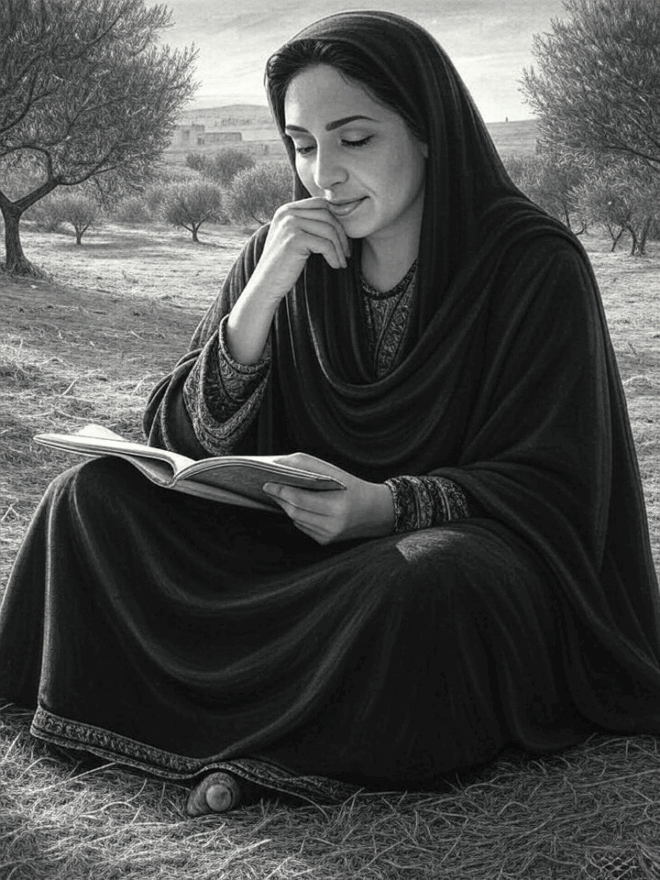
Palestinian poetry has emerged as a profound medium for preserving cultural identity and resisting systemic oppression since the 1948 Nakba, which resulted in the displacement of over 700,000 Palestinians. Poets such as Mahmoud Darwish, Refaat Alareer, Fadwa Tuqan, Samih Al-Qasim and Dareen Tatour have transformed poetry into a dual act of cultural preservation and political protest, documenting their people’s history, affirming their indigeneity and challenging colonial narratives of erasure. Described as “cultural resistance,” their work counters cultural genocide while inspiring global solidarity. However, their outspokenness has exacted a heavy toll, including censorship, imprisonment, exile and death. This paper synthesises the historical context of Palestinian poetry, examines how poets have sustained their culture and resisted occupation, provides detailed poetic examples, particularly from Tatour’s work and discusses the repercussions they faced.
Historical Context: The Roots of Palestinian Resistance Poetry and the Zionist Movement
The emergence of Palestinian poetry as a tool for cultural preservation and resistance is rooted in over a century of colonial disruption, profoundly shaped by the Zionist movement’s impact on Palestine. Understanding this context requires tracing both Palestinian cultural life and the Zionist project that precipitated their dispossession.
Ottoman Rule and Early Palestinian Cultural Life (1516–1917)
Under Ottoman rule, Palestine was a vibrant region within the Arab world, with a predominantly Muslim population alongside Christian and Jewish communities. Cities like Jerusalem, Nablus and Jaffa were hubs of Arabic literature, where poetry, rooted in oral traditions, expressed communal identity. Poets like Khalil al-Sakakini celebrated local landscapes, weaving tales of olive groves, village life and spiritual heritage into their verses. These works fostered a sense of Palestinian belonging, grounded in a shared history and culture. However, the late 19th century introduced Zionism, a political movement born in Europe that would fundamentally alter Palestine’s trajectory.
The Zionist Movement: Origins and Early Development (1880s–1917)
Zionism emerged as a response to centuries of anti-Semitism, particularly pogroms in Eastern Europe and the Dreyfus Affair in France. The term was coined by Nathan Birnbaum in 1890, but its intellectual roots trace to Moses Hess and Leon Pinsker, who advocated for Jewish self-determination. Theodor Herzl, the father of political Zionism, formalised the movement with his 1896 pamphlet Der Judenstaat, calling for a Jewish homeland to escape persecution. The First Zionist Congress in Basel, Switzerland, in 1897 established the World Zionist Organisation, articulating the goal to “establish a home for the Jewish people in Palestine secured under public law.”
The First Aliyah (1882–1903) brought 25,000–35,000 Jewish immigrants, mostly from Eastern Europe, to Ottoman Palestine, where they purchased land from absentee landlords, establishing colonies like Petah Tikva. The Second Aliyah (1904–1914) added 35,000–40,000 immigrants, influenced by socialist ideals, who founded kibbutzim and Tel Aviv in 1909. By 1914, Jews owned 2% of Palestine’s land, but strategic purchases in fertile areas displaced Palestinian tenant farmers, sparking tensions. Palestinian poets began expressing unease, with early verses lamenting land sales and foreign influence, though resistance remained diffuse.
British Mandate and the Balfour Declaration (1917–1948)
The 1917 Balfour Declaration marked a pivotal shift. Britain, having captured Palestine from the Ottomans during World War I, pledged support for “the establishment in Palestine of a national home for the Jewish people” while vaguely promising to protect “the civil and religious rights of existing non-Jewish communities.” Driven by imperial interests and Zionist lobbying by Chaim Weizmann, the declaration ignored the 90% Palestinian majority. The British Mandate, formalised in 1920 by the League of Nations, facilitated Jewish immigration, with the Jewish population growing from 60,000 in 1918 to 175,000 by 1931 and 600,000 by 1948. The Jewish Agency, established in 1929, acted as a quasi-government, promoting settlement and building institutions like the Haganah paramilitary.
Land purchases by the Jewish National Fund often evicted Palestinian peasants, fuelling resentment. By 1939, Jews owned 5.7% of Palestine’s land, amplifying their influence. Palestinian resistance intensified, culminating in the 1936–39 Arab Revolt against British rule and Zionist immigration. Poets like Ibrahim Tuqan, Fadwa Tuqan’s brother, mobilised nationalist sentiment. His Mawtini (My Homeland), later adopted as Palestine’s anthem, declared:
“My homeland, my homeland,
Glory and beauty, sublimity and splendor
Are in your hills, your valleys.
Life and deliverance, pleasure and hope
Are in your air, your atmosphere.”
The revolt, suppressed with 5,000 Palestinian deaths and British deportation of leaders, cemented poetry’s role in resistance, circulated in pamphlets and recited at gatherings.
The Nakba and Zionist State-Building (1947–1948)
The Zionist movement’s push for statehood culminated in the 1947 UN Partition Plan (Resolution 181), proposing a Jewish state on 56% of Palestine despite Jews owning less than 7% of the land and comprising 33% of the population. Palestinians rejected the plan as a violation of their rights. The ensuing 1947–48 civil war saw Zionist militias like the Haganah, Irgun and Stern Gang launch operations, culminating in the Nakba. Between 1947 and 1949, over 700,000 Palestinians – half the population – were expelled, with over 500 villages destroyed, as documented by Ilan Pappé in The Ethnic Cleansing of Palestine. Massacres like Deir Yassin (April 1948), where over 100 villagers were killed, terrorised others into fleeing. Israel’s establishment on May 14, 1948, formalised Zionist aspirations, supported by the United States and Soviet Union.
The Nakba was a cultural and existential catastrophe, severing Palestinians from their land, homes and heritage. Israel’s policies, including renaming villages and destroying cultural sites, aimed to erase Palestinian presence, prompting poets to emerge as chroniclers of memory and resistance.
Occupation and Apartheid (1967–Present)
The 1967 Six-Day War saw Israel occupy the West Bank, Gaza Strip and East Jerusalem, tripling its territory and subjecting millions to military rule. Settlements expanded, with over 800,000 settlers in the West Bank and East Jerusalem by 2025. Israel’s Law of Return (1950) granted citizenship to Jews worldwide while denying Palestinian refugees’ right of return, codified in UN Resolution 194. The Palestinian Liberation Organisation (PLO), founded in 1964, galvanised resistance, with poets aligning with its call for self-determination.
The First Intifada (1987–1993), a grassroots uprising against occupation, saw poets capture the spirit of defiance. The Oslo Accords (1993–1995), intended to foster peace, instead fragmented Palestinian territories, with Israel retaining control over 60% of the West Bank. The Second Intifada (2000–2005), sparked by Ariel Sharon’s provocative visit to Al-Aqsa Mosque, escalated violence, with over 3,000 Palestinians killed. The 2005 Israeli withdrawal from Gaza, followed by a crippling blockade, turned the strip into what the UN called an “open-air prison.” The 2014 Gaza War, which killed over 2,200 Palestinians and the 2023–2025 escalation, with over 45,000 deaths reported by Gaza’s Health Ministry, intensified cultural genocide, as libraries, universities and archives were systematically destroyed.
This historical trajectory – from Ottoman rule to British Mandate, Nakba, occupation and ongoing apartheid, driven by the Zionist movement’s evolution from ideology to state policy – created the conditions for Palestinian poetry’s role as a counter-narrative to dispossession. Each wave of colonial violence prompted poets to document loss, assert identity and resist erasure, as Ghassan Kanafani noted: “The cultural form of resistance is no less valuable than armed resistance itself.”
Poetry as Cultural Preservation
Palestinian poetry serves as a repository for a culture targeted by colonial erasure. The Nakba and subsequent occupation destroyed villages, archives and access to sacred sites like Al-Aqsa Mosque. Poets counter this by weaving memories of pre-1948 Palestine into their verses, ensuring cultural continuity. Mahmoud Darwish, often hailed as Palestine’s national poet, epitomised this role in To My Mother (1966), evoking the sensory details of his childhood in Galilee:
“I long for my mother’s bread,
My mother’s coffee,
Her touch.
Childhood memories grow up in me
Day after day.
I must be worth my life
At the hour of my death.”
This poem preserves the textures of Palestinian village life, anchoring readers in a homeland under threat. Darwish’s work, described by Edward Said as “the essential breath of the Palestinian people,” functions as a cultural archive, safeguarding narratives of indigeneity against Zionist claims that Palestinians lack historical roots.
Fadwa Tuqan, known as the “poetess of Nablus,” documented the Nakba’s devastation in The Last Knock (1957):
“The last knock at the door
Was my heart,
And the house was empty.
The wind carried away
The songs of my people.”
Her Ever Alive (1968) celebrates resilience:
“From the freshness of our spilled blood,
Life is born anew,
Ever alive, ever green.”
Tuqan’s elegiac verses bridge pre-Nakba Palestine with the fragmented present, fostering a sense of national pride and continuity. For diaspora poets, poetry reconnects them to a homeland they cannot physically access. George Abraham’s The Palestinian Exile (2018) speaks of this longing:
“I carry a land in my bones,
A map of olive groves
Drawn in the marrow.
No border can erase
The scent of za’atar in my blood.”
Similarly, Naomi Shihab Nye’s My Father and the Figtree (1991) uses the fig as a metaphor for rootedness:
“He said the fig was a fruit
That carried home inside it,
A sweetness no sea could drown.”
Dareen Tatour’s poetry, particularly in her collection I Sing From the Window of Exile, contributes to this preservation effort. Her work often reflects on the Nakba’s intergenerational trauma and the landscapes of her childhood in Reineh, such as olive trees and village springs. In one untitled poem from her collection, she writes:
“My grandmother’s voice
Carries the scent of 1948,
A village lost,
But alive in my pen.”
These verses, rooted in oral traditions and collective storytelling, ensure that Palestinian culture – its language, folklore and landscapes – remains vibrant despite physical dislocation and cultural suppression.
Poetry as Protest Against Occupation
Beyond preservation, Palestinian poetry is a powerful form of resistance, articulating defiance against colonial violence. Ghassan Kanafani, a revolutionary writer and poet, framed poetry as “Palestinian Resistance Literature,” arguing it was as vital as armed struggle. His From the Desert (1966) reflects this militancy:
“We will carve our freedom
From the stone of our chains,
From the sand of our graves.
Our hands will break
The locks of despair.”
Mahmoud Darwish’s Identity Card (1964) became an anthem of defiance, directly confronting Israeli authorities:
“Write down:
I am an Arab,
And my identity card number is fifty thousand.
I have eight children,
And the ninth will come after a summer.
Will you be angry?
Record at the top of the first page:
I do not hate people,
Nor do I encroach,
But if I become hungry,
The usurper’s flesh will be my food.”
The poem’s bold assertion of Arab identity and resilience provoked outrage among Israeli officials, who viewed it as a threat to their narrative of Palestinian invisibility. Samih Al-Qasim, another prominent poet, used irony in Birds Without Wings (1962) to depict the constraints of occupation:
“They clipped our wings,
But forgot our beaks.
We sing of freedom
From cages of stone.”
Refaat Alareer, a poet and professor, used his work to inspire hope amid Gaza’s siege. His If I Must Die (2023), written before his death in an Israeli airstrike, became a global rallying cry:
“If I must die,
You must live
To tell my story
To sell my things
To buy a piece of cloth
And some strings,
(Make it white with a long tail)
So that a child, somewhere in Gaza
While looking heaven in the eye
Awaiting his dad who left in a blaze –
And bid no one farewell
Not even to his flesh
Not even to himself –
Sees the kite, my kite you made,
Flying up above
And thinks for a moment an angel is there
Bringing back love
If I must die
Let it bring hope
Let it be a tale.”
Recited at protests worldwide, this poem transforms personal loss into a universal plea for resilience. Dareen Tatour’s Resist, My People, Resist (2015), posted on social media during a wave of Palestinian resistance, exemplifies poetry as protest:
“Resist, my people, resist them.
In Jerusalem, I dressed my wounds and breathed my sorrows,
And carried the soul in my palm
For an Arab Palestine.
I will not succumb to the “peaceful solution,”
Never lower my flags,
Until I evict them from my land.
Resist, my people, resist them.
Resist the settler’s robbery,
And follow the caravan of martyrs.
Shred the disgraceful constitution,
It has failed us, no longer holds.
Resist, my people, resist them.
Resist the one who branded us terrorists,
Resist the one who stole our homes.
For Al-Aqsa, for the olive trees,
Resist, my people, resist them.”
This poem, with its urgent call to reject compromise and honour martyrs, celebrates Palestinian struggle while condemning settler-colonialism. Its imagery of Jerusalem, Al-Aqsa Mosque and olive trees roots it in Palestinian heritage, while its rejection of a “peaceful solution” challenges narratives of submission. The poem’s directness and unapologetic tone made it a powerful act of defiance, but also a target for Israeli authorities, who arrested Tatour for “inciting violence,” underscoring poetry’s capacity to unsettle oppressive regimes.
The Price of Speaking Out
The transformative power of Palestinian poetry has made its creators targets of severe repression. Israeli authorities, recognising the influence of cultural resistance, have employed censorship, imprisonment and violence to silence poets. A 1984 report on West Bank censorship revealed that literature addressing national aspirations was heavily suppressed, with poets facing torture and imprisonment for their words.
Mahmoud Darwish, despite being an Israeli citizen, faced relentless harassment. His Identity Card was banned from Israeli school curricula until 2012 and he was arrested multiple times for his writings and public readings. In 1969, he was placed under house arrest and in 1970, he was stripped of his citizenship and exiled to Beirut. The Sakakini Cultural Centre in Ramallah, which housed his manuscripts, was ransacked by Israeli forces in 2002, an act aimed at erasing cultural heritage. Israeli defence minister Moshe Dayan likened Darwish’s poetry to “a thousand bullets,” highlighting its perceived threat.
Fadwa Tuqan faced similar suppression. Dayan compared her work to facing “20 enemy fighters.” Her poetry was banned from public recitations in the West Bank and her home in Nablus was subjected to searches. Despite these constraints, Tuqan’s work circulated through underground networks and oral performances, inspiring resistance.
Ghassan Kanafani, a leading figure in resistance literature, paid the ultimate price. In 1972, he was assassinated by a car bomb in Beirut, alongside his niece, likely by Israeli agents targeting his role in the Popular Front for the Liberation of Palestine and his influential writings. His poetry and novels, which called for revolutionary action, made him a symbol of resistance, but also a target.
Refaat Alareer was killed in a targeted Israeli airstrike on December 6, 2023, in Gaza, alongside his brother, sister and her four children. His death was part of a broader assault that killed at least 28 artists, including poets Hiba Abu Nada and Omar Abu Shawish, in two months. Abu Nada’s I Grant You Refuge (2023), written days before her death, reads:
“I grant you refuge
In the ruins of my body,
In the ashes of my home.
Take shelter in my words,
For they will outlive the bombs.”
Alareer’s If I Must Die galvanised international outrage, recited at protests and translated into multiple languages, but his martyrdom underscores the lethal risks poets face.
Dareen Tatour’s persecution for Resist, My People, Resist illustrates the use of legal mechanisms to silence dissent. Her arrest in 2015, followed by three months in prison, three years of house arrest and a five-month sentence in 2018, reflects the lengths to which Israel goes to suppress poetic expression. The trial’s focus on her poem’s translation exposed the fragility of Israel’s claims, as the defence demonstrated that “resist” was a call for cultural and political defiance, not violence. Her case drew global support, with PEN America, Amnesty International and nine Pulitzer Prize winners, including Alice Walker, condemning her prosecution as an attack on free expression. Tatour’s experience, from the trauma of incarceration to the social stigma post-release, mirrors the broader Palestinian experience of punishment for asserting identity.
The destruction of cultural infrastructure exacerbates these individual losses. In Gaza, over 352 schools, 12 universities, 65 mosques, three churches and numerous libraries, including the Great Omari Mosque’s rare manuscript collection, have been damaged or destroyed since October 2023, according to UN reports. The Al-Israa University Museum, housing 3,000 artefacts, was demolished. These acts, described by poet Mandy Shunnarah as part of a “genocidal erasure,” target the cultural foundations that poets draw upon. Mosab Abu Toha, a Gaza-based poet, documents this devastation in Things You May Find Hidden in My Ear (2022):
“A bullet in my ear,
A shrapnel shard in my lung,
A city’s scream in my throat.
Gaza whispers:
Write me, before I am gone.”
Abu Toha, who was detained and beaten by Israeli forces in 2023, exemplifies the risks poets face in bearing witness. The systematic targeting of poets and cultural heritage reveals a deliberate strategy to extinguish Palestinian identity, as their words are seen as capable of inciting rebellion and preserving a collective memory that challenges Zionist narratives.
Impact and Global Resonance
Despite repression, Palestinian poetry has transcended borders, fostering transnational solidarity and amplifying the Palestinian cause. Social media platforms like TikTok and Instagram have propelled poets to global audiences, with the hashtag #palestinianpoetry garnering over 206,500 views. Darwish’s Identity Card, Alareer’s If I Must Die and Tatour’s Resist, My People, Resist have been shared widely, translated into dozens of languages and performed at solidarity events. In 2024, University College London’s Student Centre was renamed the Refaat Alareer Student Centre, honouring his legacy. Tatour’s poem, translated into English and Hebrew during her trial, sparked campaigns for her release, organised by PEN International, Jewish Voice for Peace and prominent literary figures, making her case a global symbol of free expression under threat.
Diaspora poets play a crucial role in this resonance. Rasha Abdulhadi’s What Weapons We Carry (2021) links Palestinian struggles to broader fights against oppression:
“Our weapons are poems,
Threads of memory woven tight,
Stitched with the names
Of villages no map can find.”
Samah Fadil’s Gaza Mon Amour (2023) draws parallels with global anti-colonial movements:
“Gaza, my love,
Your scars sing to Soweto,
To Standing Rock,
To the Congo’s bleeding heart.”
Events like the Palestine Writes Festival, attended by over 1,200 people in 2023 and organisations like the Jenin Freedom Theatre amplify these voices, linking art with activism. The festival featured readings of Tatour’s and Alareer’s work, underscoring poetry’s role in mobilising communities. Palestinian poetry’s universal themes – loss, resilience and hope – resonate with oppressed groups worldwide, cementing its place in global resistance literature. Its influence is evident in the adoption of Darwish’s phrase “We love life whenever we can” as a slogan at anti-apartheid protests in South Africa and Black Lives Matter rallies in the United States. The recitation of Alareer’s If I Must Die at climate justice marches in 2024 further illustrates its cross-movement appeal. Najwan Darwish’s Nothing More to Lose (2014) captures this universality:
“I write for the wretched of the earth,
For the olive tree and the exiled seed,
For the child who dreams
Beyond the checkpoint’s gaze.”
Tatour’s global impact is particularly notable. Her play I, Dareen Tatour, co-created with Einat Weizman, has been performed in multiple countries, bringing her story to diverse audiences. Her awards, including the 2019 Oxfam Novib/PEN Award and the 2020 Norway Freedom of Expression Award, reflect her poetry’s resonance. Her work in Sweden, where she engaged with international literary communities, further amplified Palestinian voices, connecting their struggle to global fights for justice.
Conclusion
Palestinian poets, shaped by the Zionist movement’s colonial legacy – from Herzl’s vision to Israel’s apartheid policies – have transformed poetry into a powerful act of cultural preservation and resistance. Mahmoud Darwish, Refaat Alareer, Fadwa Tuqan, Samih Al-Qasim and Dareen Tatour, whose life of documenting the Nakba and resisting through Resist, My People, Resist led to imprisonment and exile, embody this struggle. Their works – Identity Card, If I Must Die, The Last Knock, Birds Without Wings and Resist, My People, Resist – document history, affirm identity and demand justice, despite censorship, imprisonment and death. Tatour’s journey, from her childhood in Reineh steeped in Nakba stories to her global recognition as a poet and activist, reflects the Palestinian experience of resilience under persecution. The Zionist project created the conditions for this resistance, as poets counter cultural erasure with words that unsettle oppressors. Their voices, echoing across borders, inspire liberation movements, ensuring the Palestinian narrative endures. As Darwish wrote, “We have on this earth what makes life worth living: April’s hesitation, the aroma of bread at dawn, a woman’s point of view about men, the works of Aeschylus, the beginning of love, grass on a stone, mothers living on a flute’s sigh and the invaders’ fear of memories.”

Poetry, my friend is food for the soul and it brings everyone together, or should bring everyone together, in joyous harmony, unfortunately poetry isn’t appreciated for what it is anymore.
Poetry is a powerful medium for recording history and in the immediate context for keeping a people’s spirits alive in the fight for freedom and justice.
Hello Mirko, poetry compresses complex grievances, hopes, and defiance into memorable, rhythmic language that sticks in the mind and spreads orally or in samizdat form even under censorship. Metaphor, irony, and ambiguity allow it to evade censors while still communicating clearly to those who share the cultural codes. Its brevity and musicality make it easy to recite, sing, or graffiti—qualities that turn private conviction into shared ritual.
Rasha Abdulhadi’s poem wastes no words. The shift from abstract claim (“Our weapons are poems”) to tactile craft (weaving/stitching) to concrete loss (unmappable villages) creates a quick escalation that rewards readers already primed by the context of displacement and cultural erasure.
G’day Bill, cultural resistance is real and necessary; it is not interchangeable with the actual instruments of power and violence that shape outcomes on the ground. The metaphor is rhetorically empowering but can feel incomplete when the surrounding political context involves far more lethal asymmetries.
Alareer was a strong advocate for storytelling as a form of resistance and expression. He edited the anthology Gaza Writes Back (2014), a collection of short stories by young Gazan writers, and co-edited Gaza Unsilenced (2015). He also co-founded We Are Not Numbers, a project that mentored and amplified the voices of young Palestinian writers in English. His own poetry and prose often addressed life under occupation and siege; his best-known poem, “If I Must Die” (written years earlier), gained widespread international attention after his death. A posthumous collection of his work, If I Must Die: Poetry and Prose, was published in 2024. On December 6, 2023, Alareer was killed in an Israeli airstrike in northern Gaza, along with several family members. He is remembered as a mentor to many students and a distinctive literary voice from Gaza.
Alareer’s death was a sad loss and yet another tragedy of Israeli aggression.
“If I must die” is sadly beautiful. It always amazes me how beauty can come from those who stare at hardship and carnage.