

I. The Act of Free Choice and the Architecture of Dispossession
In August 1969, 1,025 hand-picked representatives – chosen by Indonesia, coerced by Indonesia, and answerable to Indonesia – voted unanimously to incorporate West Papua into the Indonesian republic. Jakarta called it the Act of Free Choice. The Papuan people, and a growing body of international law scholars, have called it by a more accurate name: the Act of No Choice. Not a single Papuan was permitted to vote in a territory of nearly one million people. The United Nations accepted the result with a resolution notable for what it did not say: it did not endorse the vote, did not describe it as legitimate, and did not foreclose the question of self-determination. It filed the matter and moved on.
The road to that moment was paved in Cold War calculation. When the Netherlands decolonised West Papua, it did so under intense American pressure to preserve Indonesian stability against the spectre of communism. President Sukarno had threatened to align with Moscow if Washington withheld support for Indonesia’s territorial ambitions. Washington calculated that one people’s sovereignty was a reasonable price for geopolitical convenience. The New York Agreement of 1962, brokered under UN auspices, transferred administrative authority from the Dutch to Indonesia. The Papuans were not parties to the agreement. They were its subject matter.
What followed was not merely political absorption but what scholars of settler colonialism would recognise as a comprehensive programme of demographic, cultural, and economic transformation. Jakarta’s transmigration programme relocated hundreds of thousands of Javanese and Balinese settlers to West Papua. By the early 2000s, migrants outnumbered Indigenous Papuans in some coastal cities. The logic was colonial in the oldest sense: change who lives on the land, and the question of who owns it becomes less troublesome.
Indonesian officials reject the colonial framing. Their counter-argument deserves serious engagement before being weighed against the evidence. Jakarta maintains that West Papua was a legitimate part of the decolonisation settlement, that the territory was part of the Dutch East Indies and therefore properly accrued to Indonesia at independence, and that the 1969 Act of Free Choice – while imperfect in method – satisfied international requirements for self-determination. The special autonomy law of 2001, Jakarta argues, demonstrates Indonesia’s commitment to Papuan cultural and economic development. Infrastructure investment has, by measurable indicators, improved life expectancy, literacy, and connectivity across Papua’s provinces.
These arguments warrant acknowledgement. West Papua’s development deficits were real and deep at the time of incorporation: access to health, education, and markets was minimal for most of the territory’s population. Indonesia has invested in infrastructure that would not otherwise exist. That some Papuans have benefited from those investments is demonstrable: a minority of urban Papuans, particularly in Jayapura and Merauke, have built businesses, careers, and political positions within the Indonesian system, and some community leaders have publicly supported integration, citing access to national markets, healthcare networks, and educational institutions unavailable under Dutch colonial administration. Some Papuan parliamentarians have endorsed the food estate programme on development grounds. These are genuine perspectives, not fabrications of Jakarta’s information apparatus, and any account of West Papua that writes them out of the picture is incomplete. That some in Jakarta believe sincerely in the project of national unity as a public good is not in question. What is in question is whether those investments, however genuine, justify the method of their delivery – military enforcement, demographic transformation, and the suppression of political expression. Development delivered at gunpoint is not development freely chosen. And the historical record of the 1969 vote does not sustain the claim of legitimacy: a process involving 1,025 representatives from a population of nearly one million, selected under military pressure, satisfies no credible standard of self-determination then or now.
The conflict has not been without violence on both sides. The Free Papua Movement – the OPM, Organisasi Papua Merdeka – has conducted attacks on Indonesian military and police personnel, on mining infrastructure, and, in some documented cases, on civilians and workers caught in conflict zones. Indonesian security forces and their families have suffered casualties. The OPM’s more extreme factions have been responsible for acts that warrant condemnation irrespective of the justice of the broader independence cause. Acknowledging this does not equalise the parties. The systematic, state-directed suppression of an entire population’s political rights, documented across decades by Amnesty International, Human Rights Watch, and the UN Human Rights Committee, belongs to a different moral and legal category from the armed resistance of an occupied people. But intellectual honesty about the conflict requires noting that the violence runs in both directions.
II. The Grasberg Paradigm: Gold, Copper and Structural Violence
To understand what is now unfolding in the forests of Merauke, one must first understand Grasberg. Situated in the Sudirman Range at approximately 4,000 metres above sea level, the Grasberg mine is the largest gold mine and among the largest copper mines on earth. Its operations, conducted under PT Freeport Indonesia – the local subsidiary of the American giant Freeport-McMoRan – began formally in 1972, though the contracts enabling them were signed in 1967, when Suharto’s New Order was barely two years old.
The Amungme and Kamoro peoples, on whose ancestral land the mine sits, were not consulted when Freeport and Suharto’s regime signed their 1967 Contract of Work. They were not offered equity stakes, meaningful royalties, or enforceable environmental protections. What they received was displacement, toxic contamination, and the particular alienation of watching outsiders grow rich on the minerals beneath their sacred mountains. The Amungme regard Puncak Jaya – the mountain the mine has progressively devoured – as the head of their mother. The extraction of its copper and gold is not, in their framework, an economic transaction. It is a desecration.
The environmental record is measurably severe. Grasberg generates billions of tons of industrial waste over its operational life, and riverine tailings disposal – the practice of channelling mine waste into the Ajkwa River system – has buried downstream habitats under grey sludge. At historical peak production, tailings discharge reached figures comparable to those cited in earlier reporting; Freeport has since implemented modified management protocols, and some reduction in direct riverine impact has been documented by independent auditors. The legacy damage to the Ajkwa system and the ongoing contentious nature of riverine disposal, however, remain unresolved. The Kamoro people downstream have watched their fishing grounds transformed, their riverbanks altered beyond recovery, and their objections consistently subordinated to the economics of the operation.
Grasberg contributes approximately 33 per cent of Papua’s entire provincial economy. This is cited as evidence of the mine’s benefit. It is also evidence of a colonial economy’s defining characteristic: an occupied territory so thoroughly monopolised by extractive interests that it cannot imagine an economic future independent of those who are extracting it.
Indonesian proponents of the Grasberg operation point to its contribution to national revenue, to employment, and to the regional economy of Mimika. These are real contributions. Freeport Indonesia pays substantial royalties and taxes to the Indonesian state; employment at the mine supports tens of thousands of workers and their families. The question is not whether the mine generates economic activity – it does – but who determines the terms on which that activity occurs, who bears its costs, and whether those whose land it occupies have ever been in a position to negotiate freely. The answer on each count is the same: the Amungme and Kamoro were not at the table in 1967, they are not effectively at the table now, and the profits flow to Jakarta and Phoenix, Arizona, while the tailings flow into their river.
The OPM has attacked the mine and its infrastructure multiple times, including a 1977 assault that blew up the main slurry pipeline. Indonesia’s military response has been consistent: additional troop deployments, collective punishment of surrounding communities, and the classification of organised Papuan political expression as separatism warranting suppression. The cycle of extraction, resistance, and repression has been Grasberg’s constant rhythm for more than half a century. It is structural to the operation, not incidental to it.
III. The Food Estate: Three Million Hectares and Two Thousand Excavators
If Grasberg represents the extraction of West Papua’s mineral wealth, the Merauke Food and Energy Estate – MIFEE – represents something different in scale and method: the extraction of the land itself. Designated a National Strategic Project under Indonesian law, the project allocates nearly three million hectares of southern Papua’s forests, wetlands, and savannahs for conversion into monoculture plantations for sugarcane and rice, with ethanol production as an additional objective. Three million hectares is approximately the size of Belgium. Its conversion, if completed, would constitute the single largest deforestation event in recorded human history.
Indonesia’s food-security rationale deserves acknowledgement. The country of 280 million people faces genuine pressures on agricultural production, with rice import dependency a persistent economic vulnerability. The Prabowo administration has identified food sovereignty as a national strategic priority, and the argument that a vast, underutilised territory should contribute to national food production has domestic political traction. The question – as with the Grasberg employment argument – is not whether the objective is legitimate but whether the method respects the rights of those on whose land the objective is being pursued.
It does not. The ground-breaking ceremony in July 2024, attended by then-President Widodo, had the quality of a colonial proclamation. Widodo planted the first sugarcane, described Merauke as Indonesia’s future ‘food barn’, and spoke of the region’s flat terrain and abundant water as opportunities awaiting realisation. That those resources had sustained the Marind, Yei Nan, and Muyu peoples for thousands of years was not a complication he paused to address. National Strategic Project status granted the state eminent domain powers to expel civilians whose presence was inconvenient to the project’s geometry.
Hundreds of mechanical excavators arrived by barge in August 2024, deployed to the villages of Wanam and Wogikel. Soldiers came first, planting wooden stakes in customary land. The excavators followed, bulldozing community forests and farms before affected communities had been notified or offered any meaningful consultation. Yasinta Moiwend, an Indigenous woman from Ilwayab subdistrict, described the moment with a precision that no bureaucratic language can absorb: ‘Without us knowing, backhoes have already entered our villages.’ The Jhonlin Group – owned by influential Bornean tycoon Andi Syamsudin Arsyad, known as Haji Isam – has ordered two thousand excavators from a Chinese manufacturer for the clearing operation. This is not development with a consent problem. It is an industrial occupation of Indigenous land.
The environmental consequences are being measured in real time. Satellite monitoring by TheTreeMap detected significant land clearings inside PT Global Papua Abadi’s concession from June 2024. The Nusantara Atlas found that primary forest loss in Papua rose ten per cent between 2023 and 2024, reaching 25,300 hectares. One third of all primary forest loss is directly linked to the Merauke PSN. Between June 2024 and June 2025, approximately 9,835 hectares of primary forest were destroyed – making the project the single largest driver of deforestation on earth in that period, with 2025 data indicating acceleration. Critics who dismiss the three-million-hectare figure as aspirational rather than operational are correct that actual clearance to date represents a fraction of the concession total. The point does not hold as a rebuttal. Infrastructure already built – forty kilometres of a planned 135-kilometre access road completed by mid-2025, seaport facilities under construction, and two thousand excavators on order – demonstrates that the ambition is not rhetorical. The gap between current clearance and planned scale reflects the early stage of a programme designed to run over years, not its abandonment. The time to assess whether a fire is serious is not after the entire building has burned.
The carbon consequences are proportionate to the scale. An analysis by Indonesia’s Centre of Economic and Law Studies calculated that deforestation of two million hectares would release an additional 782 million tons of carbon dioxide – more than doubling Indonesia’s annual emissions. The forests being cleared are old-growth ecosystems: Melaleuca swamp forests, peat-swamp forests, mangroves, dryland forests, and wooded savannahs that cannot be restored on any human timescale once destroyed. The NGO Mighty Earth described the project as ‘creating a zone of death in one of the most vibrant spots on Earth.’ Indonesia’s counter-argument – that the land is available, needed, and productive – runs directly into the reality that fifty thousand Indigenous Papuans face displacement over the project’s lifespan, that they have not consented, and that the national food-security rationale does not, under any applicable international standard, override that absence of consent.
IV. Prabowo, The Military and the Acceleration
Indonesia’s presidential transition in October 2024 brought Prabowo Subianto to power. As commander of Kopassus – Indonesia’s special forces – during the Suharto era, Prabowo was associated with operations in East Timor and West Papua that human rights organisations have documented as involving serious violations of international humanitarian law. His election did not produce reconsideration of the Merauke project. It produced acceleration.
Under Prabowo, the transmigration programme has been restarted. More than three thousand additional troops have been deployed to Merauke, functioning not only as a security presence but as direct participants in the agricultural programme: driving excavators, spraying pesticides, and patrolling rivers and villages alongside armed members of elite combat units whose personnel have been implicated in extrajudicial killings. TikTok videos posted by soldiers document armed units accompanying excavators through forests that were, until recently, Indigenous hunting grounds and food sources.
People across Merauke’s subdistricts are finding that vast tracts of their customary land have been staked and closed without process, compensation, or recourse to any legal mechanism independent of the dispossessing state. The Indonesian Human Rights Commission – Komnas HAM – has found that the plantation project’s monoculture model threatens the forests vital to Indigenous livelihoods, including sago and tubers that constitute traditional food systems. Komnas HAM’s findings have not altered the project’s trajectory.
By June 2025, forty kilometres of a planned 135-kilometre road had been built through the concession area. Once completed, it will connect to the MIFEE and Trans-Papua highway networks, opening previously inaccessible forests to further extraction and settlement. The road is not merely infrastructure. It is the mechanism by which remoteness – which had partially protected these forests and their peoples – is permanently dissolved.
V. The International Framework and Its Failures
West Papua sits at the intersection of multiple international legal frameworks, none of which has proven adequate to halt the dispossession in progress. The UN Declaration on the Rights of Indigenous Peoples establishes the right to free, prior, and informed consent before projects affecting Indigenous lands are approved. This standard has been comprehensively violated in Merauke. FPIC, in the context of a National Strategic Project enforced by military units, is not merely unfulfilled. It is structurally impossible to fulfil under the conditions in which the project is being executed.
Indonesia is the world’s fourth most populous democracy, a major trading partner, and a strategic anchor in Southeast Asia. These facts have consistently ensured that international concern registers as diplomatic language rather than diplomatic action. The West Papuan people have been waiting, since 1969, for the international community to conclude that their rights are as real as their resources. The gap between those two conclusions remains wide. UN Special Rapporteurs have raised West Papua repeatedly; the Human Rights Council has received detailed documentation. The political will to act on that documentation has not materialised in proportion to the evidence presented.
The complicity extends beyond governments. British companies and investors have profited from Grasberg’s gold and copper, from liquefied natural gas extraction, and from palm oil plantations across West Papua’s forests. The British government has continued to export arms to Indonesia and provide military training that strengthens the security apparatus deployed against Papuan dissent. Australian governments have maintained warm relations with Jakarta while occasionally expressing human rights concerns – a formulation that performs both positions simultaneously without committing to either. The United States, which bears particular historical responsibility for the 1962 arrangement, has prioritised its strategic relationship with Jakarta over any sustained engagement with the consequences of the deal it brokered.
The Indonesian sovereignty argument – that West Papua is a settled matter of territorial integrity, that reopening it would destabilise the entire archipelago, and that international criticism amounts to interference in domestic affairs – is not without logic. Indonesia is a large, diverse state managing significant centrifugal pressures; the precedent of secessionist success in one province has implications for others. That argument, however, cannot answer the question of what legitimately distinguishes the Papuan case from East Timor, where the international community eventually did act. The answer Jakarta prefers – that East Timor was different – is correct in one respect: the international response was different. Whether the underlying justice of the Papuan claim is different is a question that has received no credible negative answer.
VI. What the Excavators Mean
There is a temptation to discuss what is happening in West Papua through the language of policy failure or development gone wrong. This language misidentifies the problem. It is possible that individual Indonesian officials believe sincerely in the food-security rationale, in the infrastructure investment argument, in the sovereign integrity of their state. Sincerity and colonial function are not mutually exclusive. A project can be genuinely motivated by national interest and simultaneously constitute a violation of international law. The MIFEE project does not fail the test of being a colonial enterprise because its proponents lack good intentions. It fails the test because it displaces Indigenous people without consent, destroys irreplaceable ecosystems at planetary scale, and is enforced by military power that makes meaningful objection impossible.
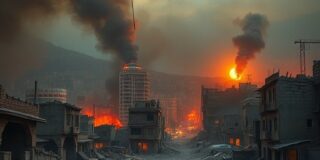
The excavators arriving by barge – hundreds of them, then orders for thousands more – are not incidental to this analysis. They are its substance. The image of mechanical excavators imported in industrial quantities to clear the world’s largest forest in Indonesian-occupied territory is not a metaphor. It is the literal mechanism of dispossession, visible from satellite, audible in the communities whose forests are being converted to mud, and documented in the social media posts of the soldiers who accompany them. The scale of the machinery matches the scale of the ambition: to transform three million hectares of Indigenous land into plantation monoculture before international opposition can coalesce into meaningful consequence.
The question the international community has avoided since 1969 has not gone away. It has accumulated more evidence in support of the answer the Papuan people have always given.
The Marind, Yei Nan, Muyu, Amungme, and Kamoro peoples are not footnotes to an economic development narrative. They are the people whose dispossession makes the narrative possible. Their sago palms, their fishing grounds, their sacred mountains, their customary law, and their self-determination are not obstacles to be managed. They are the moral and legal substance of the claim that what is happening in West Papua is a colonial enterprise in progress, and that its national-interest justifications, while real as political facts, do not constitute legal or ethical authority for what is being done.
Australia’s proximity – geographical, historical, and strategic – places particular obligations on Australian governments and civil society. The border between West Papua and Papua New Guinea is also the border between occupied Melanesia and independent Melanesia. What happens on the Indonesian side of that border produces refugees, destabilises regional ecology, emits carbon with global consequences, and establishes a precedent: that Indigenous sovereignty can be extinguished by sufficient force applied with sufficient patience, and that the international community’s response will be proportionate not to the scale of the violation but to the strategic value of the violator.
Conclusion: The Weight of the Machinery
West Papua’s story is, at its foundation, the story of what happens when the mechanisms of international order are designed to accommodate the interests of states rather than the rights of peoples. The New York Agreement was not a document of liberation. It was a document of transfer. What was transferred was not sovereignty – the Papuan people never consented – but administrative control, and with it the power to determine what would be extracted and who would receive the proceeds.
Indonesian arguments about sovereignty, national interest, and development investment are not trivial. They are the arguments that every colonial power has made, in every era, with varying degrees of sincerity and varying degrees of material truth. Some colonial infrastructure did benefit some colonised people. Some colonial administrators did believe in their civilising mission. These facts have never been held, by serious historians or by international law, to constitute retrospective justification for the suppression of self-determination. They should not be so held now.
From Grasberg’s altered river system to Merauke’s flattened forests, the logic has been consistent: West Papua’s wealth exists to serve others, and West Papua’s people are to be managed, relocated, or replaced as the requirements of extraction dictate. The machinery has changed over six decades – from the dredges of the 1960s to the open-pit excavators of Grasberg to the two thousand units ordered for the Merauke clearance – but the principle has not. The excavators can clear the forest. They cannot clear the claim.
Against that calculus, the Papuan people continue to insist on a different accounting. They protest in white mud on the banks of rivers that have been closed to them. They post videos of excavators entering their villages without notice. They appear before UN committees and human rights commissions, making the same case they have made since 1969, with more evidence and less optimism but no less insistence. Their claim is not complicated: the land is theirs, the resources are theirs, the decision about their future is theirs. No act of no choice, however elaborately administered, has changed that fact.
– – –
Bakchos is the founder of Blak and Black, an Australian media and advocacy platform established in 2010. Bakchos writes from the intersecting perspectives of Wiradjuri heritage, Jewish identity, and humanism.
© Bakchos, June 2026


Despite what Julia Gillard would have us believe, what Indonesia is doing in West Papua is a slow motion genocide.
The genocide in West Papua is starting to pick up speed.
What Indonesia is doing in West Papua is genocide and ecocide.
Colonialism has always been about exploitation. Nothing has changed.
Paulo the reality is that colonial powers have never been interested in developing the people they are colonising. They’ve only ever been interested in exploiting the people that land and the resources for the benefit of the coloniser not the colonised. What is going on in West Papua is absolutely no different.
There is no question in my mind about what Indonesia is doing in Irian Jaya. It’s called genocide, and it’s happening on Australia’s doorstep.
Your comment sums up the evils of colonialism well:
“Indonesian arguments about sovereignty, national interest, and development investment are not trivial. They are the arguments that every colonial power has made, in every era, with varying degrees of sincerity and varying degrees of material truth. Some colonial infrastructure did benefit some colonised people. Some colonial administrators did believe in their civilising mission. These facts have never been held, by serious historians or by international law, to constitute retrospective justification for the suppression of self-determination. They should not be so held now.”
Bakchos it’s good to see you taking an interest in West Papua again. West Papua is the world’s forgotten genocide.