
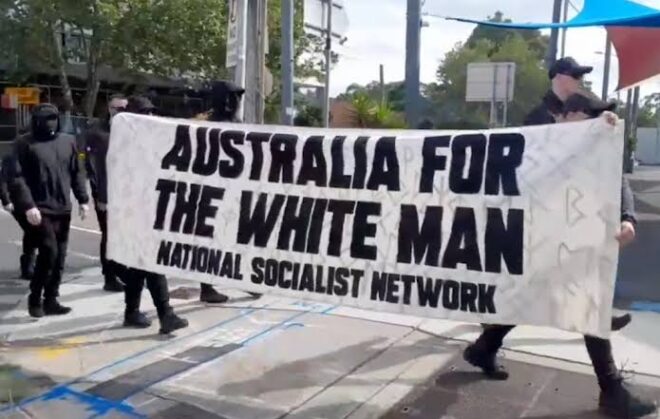
Pauline Hanson has drawn fresh criticism after telling British podcaster Tommy Robinson that Australia’s “migration issues” trace back to 1973, when the Whitlam government “opened up and got rid of the White Australia policy” and “started bringing in the different migrants.” She has since denied advocating a return to the policy, proposing instead restrictions on migration from Muslim-majority countries and deportation of visa overstayers. Whatever her intent, the exchange has revived debate about a policy most Australians know only in outline. Before anyone forms a view on what Hanson said, it is worth establishing precisely what the White Australia policy was, who supported it and why, when it actually ended, and – separately – what today’s migration debate does and does not have in common with it.
The Legal Record
There was no single Act called “the White Australia Policy.” The term describes a policy setting expressed across a cluster of federation-era statutes. The central instrument was the Immigration Restriction Act 1901, one of the first laws passed by the new Commonwealth Parliament. Rather than an explicit racial bar – which risked friction with Japan and other regional powers – it used the dictation test: an immigration officer could require an arriving person to write fifty words dictated in any European language of the officer’s choosing. If the applicant passed in one language, the test could be repeated in another. In practice it was applied almost exclusively to non-European arrivals and functioned as a mechanism of near-total exclusion of Chinese, Japanese, Indian and Pacific Islander migration, building on colonial-era restrictions several colonies had already imposed after the Chinese gold-rush migrations. A companion law, the Pacific Island Labourers Act 1901, provided for the mass deportation of South Sea Islander workers, many of whom had been brought to Queensland’s cane fields through “blackbirding” – a practice that in substance amounted to kidnap and coerced labour.
The dismantling was gradual and cross-partisan, not a single 1973 rupture. The Chifley government (Labor) began actively recruiting non-British European migrants after the Second World War to meet postwar labour shortages, while non-European migration remained tightly restricted. The Menzies government (Liberal-Country Coalition) removed the dictation test through the Migration Act 1958. The Holt government (Coalition) went further in 1966, formally ending race as a bar to permanent entry and admitting limited numbers of skilled non-European migrants. The Whitlam government (Labor) completed the process in 1973 and passed the Racial Discrimination Act 1975, making racially selective migration criteria unlawful as a matter of Commonwealth law. Immigration minister Al Grassby’s own description – that in 1973 “the last vestiges” of the policy were swept away – is accurate as a statement of completion, not commencement. Hanson’s account compresses a multi-decade process that accelerated from the late 1950s into a single act by a single Labor prime minister. That is not a minor imprecision; it is the load-bearing error the rest of her argument depends on.
An Uncomfortable Bipartisan Record
It is tempting, and politically convenient for some, to treat White Australia as a conservative project that a heroic Labor government later dismantled. The actual record is less flattering to Labor than that. The ALP’s 1901 federal platform explicitly called for a White Australia policy, alongside a citizen army and compulsory arbitration. Labor and the union movement were, for the first half-century of federation, among the policy’s most consistent institutional supporters – not chiefly on grounds of “racial purity” theorising, though that language was common across the political spectrum at the time, but because the labour movement feared that migrants willing to work for lower wages would undercut hard-won gains in pay and conditions. Chris Watson, who formed the world’s first Labor government in 1904, and the Australian Workers’ Union both took this position; the union’s refusal to admit Pacific Islander and Asian workers to its membership was a live sectarian issue by the 1900s, and the Industrial Workers of the World’s Sydney branch denounced the ALP’s position on precisely these grounds in 1907. This is not a marginal footnote – worker-protection anxiety about wage competition was, alongside racial ideology, one of the two central pillars of public support for restriction, and it was Labor’s pillar as much as anyone’s. It is worth naming because it complicates any account – Hanson’s included – that treats the policy’s abolition as the singular achievement of one side of politics against the resistance of the other. Support for exclusion in this period was close to a national consensus; opposition to it, where it existed, tended to come from business interests wanting access to cheap labour, colonial administrators managing relations with Japan, and a small number of humanitarian voices – not from a coherent progressive bloc as the term would be understood today.
The Parallel System for Aboriginal People
The Immigration Restriction Act governed entry to Australia; it had nothing to say, on its face, about people already here. Aboriginal and Torres Strait Islander people were not excluded by it because we required no admission. But the same decades saw state and territory governments legislate an entirely separate apparatus of control over Aboriginal lives, operating on the same underlying premise – a nation to be secured as white – applied to the population the border laws could not touch. Protection Acts across New South Wales (1909), Queensland (1897), Western Australia (1905) and other jurisdictions gave government-appointed Protectors and Boards authority over where Aboriginal people could live, whom they could marry, what became of wages earned in pastoral and domestic work, and, most consequentially, the removal of children from their families – a policy later given the name Stolen Generations, and one whose stated administrative rationale was demographic absorption. Aboriginal people did not receive the federal vote in all jurisdictions until 1962; the 1967 referendum amended the Constitution to permit Commonwealth legislation for Aboriginal affairs and inclusion in the census; the legal fiction of terra nullius was not overturned until Mabo in 1992. These were not the same laws as the Immigration Restriction Act, and conflating them risks imprecision the historical record doesn’t support. But they were contemporaneous, ideologically related expressions of the same settler-nation-building project, administered by the same governments, often defended in the same parliamentary language. Understanding one without the other gives an incomplete account of what “White Australia,” as a lived national settlement rather than a single statute, actually meant.
Where the Analogy to Today Breaks Down
Here the argument has to be made carefully, because it cuts against the grain of how this history is often deployed. By the standards of 1901, and by the standards of today, an explicit racial bar on entry – a law that excludes people from a country because of their ancestry, applied via a test everyone involved understood to be a sham – is indefensible. That much should not be controversial across the political spectrum.
But it does not follow that every contemporary debate about migration volume, composition, or selection criteria is a disguised revival of that project, and treating it as such forecloses questions that are legitimately empirical rather than moral. Australia’s current migration system does not select on race. It selects, through points tests, employer sponsorship, family reunion streams and a capped humanitarian intake, on criteria that are facially neutral even where their downstream demographic effects are not. Whether a given intake level is sustainable for housing and infrastructure; whether particular visa categories are being used as intended; whether integration outcomes – labour-market participation, English-language acquisition, intergenerational social attitudes – vary meaningfully across source countries and visa streams, and if so why; whether social cohesion, as distinct from cultural diversity, is being adequately resourced and measured: these are open empirical questions that serious researchers, not just political actors, are actively contesting. The Scanlon Foundation Research Institute’s 2025 Mapping Social Cohesion report shows that the proportion of Australians agreeing multiculturalism has been good for the country remains high at around 83–84 per cent, a modest decline from peaks near 85–86 per cent in prior years. Other related measures have fallen more noticeably: for example, agreement that “accepting immigrants from many different countries makes Australia stronger” has declined from the high 70s to the mid-to-high 60s over recent years. These shifts are occurring alongside net overseas migration of roughly 301,000 in 2025 and a public debate, across the major parties and One Nation, about whether that figure is appropriately calibrated for housing, infrastructure and social cohesion. None of this requires, or licenses, an appeal to 1901. The claim that not all migration streams integrate equally, and that volume and source can matter for social cohesion, is a testable proposition about labour markets, settlement services and social attitudes; it is not, in itself, an argument for racial exclusion, and treating it as automatically equivalent to one – as some responses to Hanson have been quick to do – is its own kind of historical imprecision, just running in the opposite direction.
What the History Actually Settles
What the history of the White Australia policy settles is narrower than either side of the present argument tends to claim. It does not settle contemporary questions about intake levels, visa design, or the empirical study of integration outcomes – those are matters for economists, demographers and settlement researchers, and the answers should follow the evidence rather than historical analogy in either direction. What it does settle, as a matter of legal and administrative record, is this: for more than seventy years Australian law explicitly used ancestry as a test for entry, employed a transparently dishonest mechanism to do so, subjected South Sea Islander families to mass deportation after an industry had been built on their coerced labour, and did all of this with sustained, cross-partisan support. Contemporaneously, a parallel state architecture stripped Aboriginal people of authority over their own families, movement and wages. Hanson’s account gets the mechanics of this history wrong in ways that favour a simple declinist narrative. The correction, however, should not overcorrect into treating every empirical question about migration policy as illegitimate by association. History here is a warning against racial hierarchy legislated as policy and against arbitrary exclusion dressed up as procedure. It is not a veto on the harder, evidence-based argument about what a well-run, non-discriminatory migration system should look like in 2026.
– – –
Bakchos is the founder of Blak and Black, an Australian media and advocacy platform established in 2010. Bakchos writes from the intersecting perspectives of Wiradjuri heritage, Jewish identity, and humanism.
© Bakchos, July 2026



Pauline Hanson operates a 15 year old brain. The brain she had when she left school at 15. The brain she had when she stopped bothering to learn, to think, read, to develop mentally and morally.
My beef with Hanson is that she has squandered her opportunities. There are many people with limited opportunities for education who strive to learn from others. Hanson has had 30 years and a substantial income with which to educate herself. She is a malcontent, never grateful for her opportunities, always blaming someone else for her lot. But she wants the benefits – the income, the pension, the educated people who will ensure she has good health care a legal protection. She’s just too lazy to pursue education herself. She wants the quick fix. She’s addicted to attention and that’s what she values. “Look at me, look at me”. Kimmie from Kath and Kim.
Kelly I agree with your comment, but I think the worst thing about Pauline Hanson is that she has not made an effort to improve herself over her 30 years in parliament. She’s still the same narrow mind bigot that she was when she left school at 15. She hasn’t matured. She hasn’t grown up and she hasn’t tried to extend herself. She shouldn’t be in parliament, the fact that she is, shows the strength of Australia’s democracy, but it’s a travesty, she’s there taking our tax money and doing SFA..
Pauline Hanson clearly has no concept of what the White Australia policy was, nor does she seem to understand that the White Australia Policy will never be able to be resurrected.
Pauline Hanson is a stupid person. There is no point trying to explain anything to her. She’s not interested in learning and she’s definitely not interested in expanding her mind. I enjoyed reading the post though..