

Pauline Hanson has spent three decades in and around Australian politics making one thing abundantly clear: her primary concern has never been the everyday Australian. It has always been Pauline Hanson. That pattern is not a recent development or a media exaggeration. It is the through-line of her entire public life, and it remains as consistent today as it was when she first entered the national stage in 1996.
But the claim needs a qualification the first draft of this essay did not give it enough weight. The self-referential quality of Hanson’s politics is real, durable, and worth documenting in detail. It is not, however, a personal idiosyncrasy unique to her – a character flaw that somehow explains Australian politics on its own. It is better understood as a particularly enduring Australian instance of a mechanism that recurs, with local variations, across populist movements internationally: the claim by a leader to personally embody “the people” against a corrupt or indifferent elite, in a way that makes the leader’s own experience and grievances functionally indistinguishable from the movement’s platform. What makes Hanson worth thirty years of sustained attention is not that she invented this mechanism, but how long she has sustained it, how many times it has survived apparent extinction, and how much electoral energy it commands in Australia in 2026 – more, by some measures, than at any point since 1998.
A Chronology Worth Tightening
The essentials, laid out in sequence, are these. Hanson entered federal parliament as an independent member for the Queensland seat of Oxley in March 1996, having been disendorsed by the Liberal Party during the campaign over comments about Indigenous Australians. Her maiden speech to the House of Representatives that September warned Australia was in danger of being “swamped by Asians,” argued Indigenous Australians received unwarranted advantages, and framed multiculturalism as a threat to a singular national identity. She founded Pauline Hanson’s One Nation in April 1997. The party’s only major electoral triumph came almost immediately: eleven seats and 22.7 per cent of the primary vote at the June 1998 Queensland state election, a result that briefly made it the most successful new political party in postwar Australian history. Collapse followed just as quickly – preselection disputes, defections, and a botched Senate preference strategy at the October 1998 federal election left the party without federal representation. In August 2003, Hanson was convicted of electoral fraud over the party’s registration and sentenced to three years’ imprisonment; she served eleven weeks before the Queensland Court of Appeal quashed the conviction in November of that year. A period out of federal politics followed – unsuccessful runs, minor-party experiments, reality television – until Hanson was elected to the Senate for Queensland in July 2016, twenty years after her maiden speech. In August 2017 she wore a burqa into the Senate chamber to protest the chamber’s refusal to debate a ban on full-face coverings; the then Attorney-General, George Brandis, set aside his prepared remarks to tell her that mocking a religious garment in the nation’s parliament diminished it. The party then settled into a period of modest, stable minor-party representation through the late 2010s and early 2020s.
The recent acceleration is the part of the chronology most in need of tightening, because its individual episodes are easy to narrate separately and easy to misread in isolation. At the May 2025 federal election, One Nation recorded 6.4 per cent of the national House vote – its second-best result ever – and won additional Senate seats in New South Wales and Western Australia, doubling its federal Senate representation to four. In August 2025, Senator Warwick Stacey resigned for health reasons; Hanson’s own former political adviser, Sean Bell, was appointed to the seat the following month. In October 2025, Hanson announced the party would drop her name from its formal registration, becoming simply One Nation. In November 2025, she wore a burqa into the Senate chamber a second time, over the same still-unresolved legislative demand, and was again censured. In December 2025, Barnaby Joyce – a former Deputy Prime Minister forced from the Nationals leadership amid his own controversies – formally defected to One Nation, becoming its sole House member and announcing his intention to contest a Senate seat under its banner. In February 2026, Hanson faced public criticism for failing to declare a flight on a private jet belonging to Gina Rinehart’s Hancock Prospecting, taken between Melbourne and Sydney the previous October. And on 21 March 2026, One Nation recorded its strongest result in South Australian history, taking three Legislative Council seats and four Assembly seats on a primary vote of 22.8 per cent – up from 2.6 per cent at the 2022 state election. Read in sequence rather than as scattered news items, these ten months describe a single, coherent development: a minor party built around one person’s grievances converting a national mood into the most durable institutional gains of its thirty-year history, at the exact moment its founder began – on her own initiative, on her own timeline – to formally separate the party’s brand from her name.
The Structure Of The Argument, Not Just Its Content
What has remained constant across this chronology is not any single policy position but the structure of the argument beneath all of them. Hanson has not, across thirty years, typically presented a body of empirical claims to be tested and revised in light of evidence. She has presented her own experience – as a small business owner, a mother, a white working-class Queenslander – as though it were self-evidently representative of the nation as a whole, treating disagreement as proof that the disagreeing party does not understand “ordinary” Australia. Most politicians draw on personal experience to illustrate a broader argument; Hanson has tended to use personal experience as the argument itself, with policy detail supplied afterward to justify a conclusion already reached. This matters because it forecloses the thing that would normally correct a political position over time: contact with inconvenient data. A politics built on tested claims can be revised when the tests come back differently. A politics built on the presumed universality of one person’s experience has no equivalent mechanism, and the record suggests it has rarely been used.
Policy Through The Personal Lens – What The Data Actually Shows
It is worth testing that claim against the primary material in the three policy areas Hanson has returned to most consistently, because the honest answer is more complicated, in each case, than a simple morality tale would suggest.
On immigration and social cohesion, the 2025 Mapping Social Cohesion report – the eighteenth in the annual Scanlon Foundation Research Institute series run with the Australian National University – found that 51 per cent of Australians now believe immigration levels are too high, the highest proportion recorded since the survey began in 2007. That is a genuine data point in Hanson’s favour, and it would be evidentiarily dishonest to omit it. But the same survey found around 83 per cent of Australians, including a majority of those who think immigration levels are too high, continued to agree that multiculturalism has been good for the country, and the Scanlon-Monash social cohesion index itself held steady for a third consecutive year. The report’s authors also identified a specific and troubling asymmetry within that broadly stable picture: markedly lower acceptance of people of Islamic faith and of Australians of Asian and African background than of migrants generally, alongside record-low reported belonging among migrants from non-English-speaking countries. Hanson’s platform draws heavily on the first data point – rising unease about migration levels – while showing little sign of engaging with the second and third: that the unease coexists with sustained public support for multiculturalism as a project, and concentrates disproportionately on specific religious and ethnic groups rather than migration as such. A politics genuinely responsive to the data would have to hold both findings at once; a politics organised around a pre-existing personal grievance can use the first while ignoring the second.
On Indigenous affairs, the relevant primary document is the 1991 Royal Commission into Aboriginal Deaths in Custody, which examined 99 deaths between 1980 and 1989 and produced 339 recommendations. Assessments of implementation diverge sharply enough that the divergence is itself instructive: a 2018 Deloitte Access Economics review commissioned by government found 64 per cent of recommendations fully implemented, 14 per cent mostly implemented, 16 per cent partly implemented, and 6 per cent not implemented at all, a finding thirty-three Indigenous affairs academics subsequently disputed as methodologically unsound and likely to overstate genuine progress; a later government review put the “fully or mostly implemented” figure at 78 per cent, consistent with Deloitte’s own fully-plus-mostly total. What is not contested, because it comes from the Australian Bureau of Statistics and the Australian Institute of Criminology rather than from either side of that dispute, is the outcome the recommendations were meant to change: Aboriginal people were roughly eight times more likely to be imprisoned than non-Aboriginal people at the time of the 1991 report, roughly ten times more likely a decade later, and are around fifteen times more likely today, rising to close to twenty times in Western Australia specifically. Hanson’s consistent position – that Indigenous Australians receive advantages unavailable to others, and that redress for structural disadvantage amounts to reverse discrimination – has never, across thirty years, engaged with this specific and well-documented trajectory. It is not that the case for her position is unarguable in principle; it is that the version she has made has not, on the public record, been tested against the imprisonment data, the implementation disputes, or sustained engagement with the communities the Commission examined.
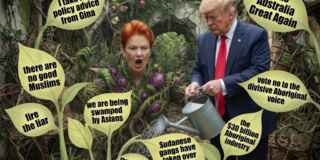
On economic populism, One Nation’s platform has consistently framed ordinary Australians as victims of “elites,” multinational corporations, and foreign interests. The party’s own Australian Electoral Commission disclosures are public and searchable, which makes the framing testable rather than merely rhetorical – and the February 2026 disclosure that Hanson had not declared a flight on a mining billionaire’s private jet, whatever its scale in absolute terms, sits awkwardly against thirty years of rhetoric about exactly this kind of arrangement involving exactly this kind of donor relationship. The test here is not whether the lapse was large. It is whether a party whose entire economic narrative depends on the distinction between ordinary people and moneyed influence can afford to blur that distinction and still make the argument with a straight face.
The Steelman, Given Room To Stand
Before any of that is weighed against her, the strongest case for Hanson deserves to be made on its own terms, without the rebuttal crowding in before it has finished.
The most serious version of that case, made across three decades by analysts considerably more sympathetic to her project than this one, is that Hanson gave early and sustained voice to a genuine, durable constituency the major parties spent long periods actively ignoring: regional and outer-suburban working-class Australians who bore the costs of tariff reduction, financial deregulation, and rapid demographic change more directly than the professional and political classes who designed those policies, and who had, by the mid-1990s, watched both major parties converge on a broadly similar economic settlement that offered them no distinct political home. The historian Judith Brett, no defender of Hanson’s substance, made a version of this argument at the time: that One Nation’s first rise reflected a real failure of representation, not merely a media invention or a spasm of prejudice, and that treating it as either understated the scale of the constituency and the legitimacy of at least some of its grievances. On this reading, Hanson’s persistence is not narcissism but fidelity – she kept faith with an argument mainstream politics tried repeatedly to wish away, and the 2025–26 resurgence is evidence the underlying grievances were real and unaddressed, not manufactured by a single ageing leader’s force of personality. No politician survives a wrongful conviction, rebuilds from federal irrelevance, and returns to the Senate after a decade in the wilderness without a genuine and durable base of people who see something in her worth defending. Dismissing that base as false consciousness or media manipulation is, on this account, itself a version of the elite condescension Hanson has spent her career campaigning against – and it has the further defect of being empirically falsified by thirty years of results.
A second, narrower argument concerns institutional accountability specifically. A minor party leader operating with a fraction of the major parties’ compliance staff and vetting infrastructure will make administrative errors – the undeclared Rinehart flight among them – and such lapses, while fair game for scrutiny, do not by themselves establish hypocrisy any more damning than comparable failures by major-party figures who are rarely subjected to equivalent coverage. Minor parties and insurgent figures are routinely held to a standard of purity major-party incumbents are not, precisely because they position themselves as different from the establishment; applying that standard evenly, rather than more strictly to the insurgent than the incumbent, is a fair demand of any critic, this one included.
A third argument is structural rather than personal: that the concentration of a party’s identity around a single leader, while a genuine risk to internal democracy and organisational continuity, is a pattern found across the ideological spectrum in Australian and comparative politics, not a defect specific to Hanson or to her part of it. On this reading, the move to drop her name from the party’s registration is better read as evidence of institutional maturation – an overdue but genuine attempt to build something that survives her – than as continuity of self-interest dressed up as reform.
These three arguments, taken together, are not negligible, and a fair reckoning has to concede real ground to the first of them in particular: Hanson’s staying power cannot be explained solely by manipulation or media amplification, and something in her message has connected, repeatedly, with anxieties the political mainstream answered badly or not at all. That is a legitimate indictment of Australian politics more broadly, independent of what one thinks of Hanson’s own answers to those anxieties.
Weighing The Steelman Against The Record
Where the case for fidelity runs into difficulty is not in its account of the constituency, which is largely right, but in its account of Hanson’s relationship to that constituency’s more complicated realities. A politics of fidelity to a constituency ought to show some capacity to be corrected by that constituency’s own inconvenient data over time – updated by the Scanlon Foundation’s finding that concern about immigration levels coexists with sustained majority support for multiculturalism, for instance, or by the specific and worsening imprisonment data that should complicate a simple advantage-and-reverse-discrimination account of Indigenous affairs. Across thirty years, the record shows very little of that kind of updating. What it shows instead is the same grievance restated in largely the same terms with the flashpoint of the moment attached to an unchanging core – Asian immigration in 1996, Islam and Muslim Australians after 2001, “the Canberra elite” and foreign interference from the 2010s onward. A politics of fidelity is answerable to the people it claims to represent in a way that shows up as revision. A politics of self-reference does not need to be corrected, because the person doing the representing and the person setting the terms of representation are, in the end, the same person.
The accountability argument fares better on its own narrow terms – scrutiny of minor parties probably is asymmetric, and that asymmetry is worth naming honestly rather than waved past for rhetorical convenience. But it does not resolve the specific tension it is invoked to resolve. The Rinehart flight is not notable because Hanson runs a small operation with limited compliance resources; it is notable because it sits beside thirty years of rhetoric built specifically on the distinction between ordinary Australians and the moneyed interests that supposedly capture major-party politics. A party that constructed its entire economic identity on that distinction owes its own supporters a higher, not a lower, standard of transparency about exactly this kind of arrangement – regardless of the standard fairly or unfairly applied to others.
The structural argument is the one that most needs situating in a wider frame, because it is largely correct as a description of populist movements generally rather than a distinctive feature of Hanson’s. This is worth dwelling on, because it changes what the whole essay is actually claiming.
A Recurring Type, Not A Unique Aberration
The political scientist Cas Mudde’s widely used definition of populism describes it as a “thin-centred ideology” that divides society into two homogeneous camps, the pure people and the corrupt elite, and holds that politics should express the general will of the former – a thin ideology that then attaches itself to a “host” ideology, most often nativism, to become an operating political programme. The host ideology matters as much as the thin one, because it is where the supposedly separate question of policy adaptation actually lives. Nativism, in Mudde’s sense, is not itself a fixed target; it is a structural claim that the nation belongs, in the first instance, to a native in-group, and that other groups are by definition a lesser or conditional part of it. That structural claim can attach to whichever out-group is most electorally salient at a given moment without changing at all. Judged against that standard, One Nation’s shift in emphasis from Asian immigration in 1996, to Islam and Muslim Australians after 2001, to “the Canberra elite,” China, and foreign interference from the 2010s onward is not evidence of three different policy positions responding to three different bodies of evidence. It is the same host ideology relocating its target as the news cycle supplies a new one, which is precisely what Mudde’s framework predicts a thin ideology will do. Measured against that test, there is little sign of the platform adapting in the sense that would matter – revising a substantive position in response to data, as distinct from redirecting the same underlying claim toward a new target. One structural feature of the broader model, observed across very different national contexts, is the tendency for the leader to become the literal embodiment of “the people” in a way that collapses the ordinary distinction between representative and represented. When the leader is the people, the leader’s personal grievances, personal vindication, and personal narrative are not incidental to the politics; they are its substance. Donald Trump’s persistent framing of his own legal and business setbacks as attacks on his supporters rather than on him personally follows this pattern closely. So does Nigel Farage’s decades-long insistence, across UKIP, the Brexit Party, and Reform UK, that his own repeated electoral failures and re-inventions were evidence of an establishment conspiracy against ordinary Britons rather than against him. Marine Le Pen’s long project of rebranding the Rassemblement National around her own personal respectability, and the Alternative für Deutschland’s structuring of internal disputes around loyalty to specific leading figures rather than policy platforms, both show variations on the same mechanism. Jair Bolsonaro’s framing of his own prosecutions as persecution of the Brazilian people he claimed to embody is a further instance. None of this is unique to any one part of the ideological spectrum, and none of it is unique to Hanson.
Nor is it new to Australia. Hanson’s rhetorical lineage runs back through Arthur Calwell’s mid-century defence of the White Australia policy and Geoffrey Blainey’s 1984 intervention arguing Asian immigration was proceeding too fast for social cohesion – a controversy that shaped the immigration debate for a decade before Hanson entered parliament – and through Joh Bjelke-Petersen’s brand of Queensland populism, built explicitly around a folksy, aggrieved, plain-speaking persona set against a distant and untrustworthy establishment. What distinguishes Hanson from most of these predecessors and contemporaries is not the mechanism but its durability: thirty years, a wrongful conviction survived, a decade of federal irrelevance survived, and – as of March 2026 – an electoral position stronger than at any point in the party’s history. On the Mudde framework, the self-referential quality this essay opened by treating as diagnostic of Hanson specifically is better understood as diagnostic of populism as a political form, of which Hanson is simply the most enduring Australian instance to date. That reframing does not weaken the argument against her; if anything it strengthens it, because it means the pattern documented here is not a personal foible correctable by a change of leader or a rebranded party name, but a structural feature of the politics itself – one the mere renaming of One Nation cannot, by its own logic, resolve, since the mechanism requires a person to embody the people, not merely a brand to represent them.
That claim, however, is a claim about mechanism, not a prediction about durability, and honesty requires separating the two. Whether a One Nation without Hanson at its head would retain anything like its current electoral energy is a genuinely open empirical question this essay cannot settle in advance. Personality-driven populist vehicles elsewhere have shown sharply divergent fates once their founding figure departs – some, like sections of the broader European populist right, have institutionalised and outlasted their founders; others have collapsed or fragmented within a single electoral cycle once the person embodying the movement was no longer available to embody it. The rebrand to simply “One Nation” is best read, on the evidence available in mid-2026, as a bet that the party can be the former rather than the latter – a bet Hanson herself is placing, on her own terms, without yet having been tested by the one event that would actually answer the question: her own departure. Nothing in the argument above requires that bet to fail. It requires only that the self-reference documented here be recognised for what it is while she remains in charge of placing it.
Conclusion
The result, across three decades, is a public conversation that keeps circling the same limited terrain, for reasons that are structural as much as personal. Everyday Australians facing genuine pressures – cost of living, housing, healthcare access, regional decline – deserve representatives who treat their varied experiences as relevant data rather than background noise, and whose positions show some capacity to be revised by evidence that complicates a preferred story. There is a real and serious argument, made honestly by people who are not being merely credulous, that Hanson has spent thirty years keeping faith with a constituency the major parties failed. That argument survives contact with the record on its account of the constituency and largely does not survive contact with the record on its account of Hanson’s own responsiveness to that constituency’s more complicated realities – the immigration data that cuts against a simple story, the imprisonment data that cuts against a simple story, the donor relationship that cuts against the party’s own founding narrative. What the record shows instead is a politics that elevates one person’s story and treats every other story, including the parts of her own constituency’s story that complicate the message, as optional – resilient enough to survive collapse, imprisonment, a decade in exile, and now a decade of return, in part because a politics organised around the leader as embodiment of the people does not need to be corrected by anyone outside itself. That is not a failing unique to Pauline Hanson. It is the mechanism of a certain kind of politics, of which she has simply proven, in Australia, the most durable practitioner yet. After thirty years, and with One Nation stronger than at any point in its history, that is no longer an open question. It is simply who she has always been – and the scale of her current success does not settle the argument about her politics. It raises the stakes of it, for her and for whatever version of this politics outlasts her.
– – –
Bakchos is the founder of Blak and Black, an Australian media and advocacy platform established in 2010. Bakchos writes from the intersecting perspectives of Wiradjuri heritage, Jewish identity, and humanism.
© Bakchos, July 2026


Pauline Hanson is a racist bitch who is as fake as her fake red hair.
If I were an indigenous person I would be deeply offended by all the hatred that continually spews from Pauline Hansen‘s mouth. She knows the $40 billion that she calls the aboriginal industry is absolute rubbish. If she doesn’t know that, she’s even fumber than I already think she is, which would be a difficult task indeed.
Pauline Hanson is a racist disgrace.
The racist old hag should just disappear up Gina ass and leave the government to the grownups.
Hanson is sending the unambiguous message to men that their violence against women is just fine by her.
Pauline Hanson is just a vicious waste of space.
Mark I agree that the current iteration of the ALP is a bitter disappointment, but Pauline Hanson has no obvious redeeming qualities, despite what you say about transparency.