
In line with community protocol, Blak and Black advises Aboriginal and Torres Strait Islander readers that this article contains the name and images of a person who has died.
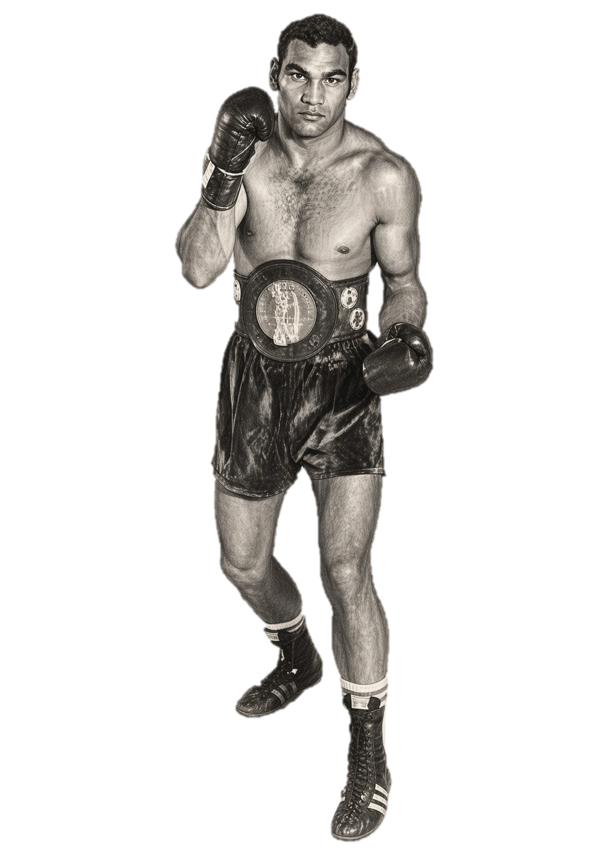
Tony Mundine has died in Sydney at the age of 75, following a heart attack, with family around him. His son Anthony confirmed the news while flying home to say goodbye. The tributes have already started rolling in from every corner of Australian boxing – from Danny Green to Billy Dib to fighters two generations his junior who never saw him throw a punch but grew up knowing his name regardless. That is the measure of the man. You did not need to have watched Tony Mundine fight to understand what he meant. You only needed to have grown up Black in this country to know what it meant that he did.
Because before there was a story about a champion, there was a story about a mission.
Baryulgil
Tony Mundine was born on 10 June 1951 in Baryulgil, a small Aboriginal community on the Clarence River near Grafton in northern New South Wales. Baryulgil is not a place that features in the official mythology of Australian sport, and there is a reason for that. It was home to an asbestos mine, and for decades the men, women and children of that community – many of them Mundine’s own family – lived, worked and played in the shadow of it, breathing in a poison the state knew about and did next to nothing to stop. Tony worked that mine himself as a young man, alongside stock work, before boxing gave him another road out. Baryulgil would go on to become one of this country’s most devastating case studies in institutional negligence toward a Blak community, its asbestosis and mesothelioma death toll a quiet, ongoing scandal that never received a fraction of the national attention it deserved. It is worth saying plainly, in the week we lose him: the same nation now writing warm tributes to Tony Mundine spent his childhood poisoning the town he was born in and calling it employment.
He got out through rugby league first – a promising centre three-quarter for a Grafton side, good enough to be offered a start with the Redfern All Blacks in the South Sydney Junior Rugby League at seventeen. But it was boxing, not league, that would carry the Mundine name into Australian legend, and it started the way so many Blak fighters of his generation started: in Jimmy Sharman’s travelling tent shows, taking on all comers for five pounds for three or four rounds when the show rolled through Grafton each October. Half a dozen tent fights was enough to tell McQuillan, and eventually the whole country, that this kid had something. Ern McQuillan signed him to train out of Newtown instead of sending him back to the mine over the off-season, and the trajectory of Tony Mundine’s life changed for good.
To understand what Baryulgil did to the people who grew up there, and what it therefore took for a boy from that town to become a national champion, you have to sit with the scale of it. The mine at Baryulgil operated for decades, producing chrysotile asbestos, and the tailings from it were spread through the community – used, in some accounts, to surface the very roads the children of Baryulgil walked and played on. Aboriginal men made up the bulk of the workforce, doing the most dangerous jobs for the lowest pay, with none of the protective equipment or ventilation standards that would have been considered non-negotiable at a mine employing white workers anywhere else in the state. The dust followed them home. It followed their families.
Generations of Baryulgil people would go on to die of asbestosis and mesothelioma, diseases with decades-long latency periods, meaning the mine kept killing people long after it closed. It has never received the royal commission, the compensation scheme, or the national reckoning that a disaster of that scale would have received had it happened to a white country town. That is the environment Tony Mundine was born into and worked in as a young man before boxing offered him an exit. It is not incidental to his story. It is the foundation of it.
A Career Without Precedent
What Tony Mundine went on to do in the ring has genuinely no equal in Australian boxing history. He remains the only Australian fighter to win professional titles across four separate weight divisions – middleweight, light-heavyweight, cruiserweight and heavyweight – a feat of durability, discipline and sheer physical range that nobody before or since has matched. His final professional tally reads 96 fights: 80 wins, 64 of them by knockout, 15 losses and a single draw. And of those 15 losses, not one – not a single one – came at the hands of another Australian. In sixteen years as a professional, across four weight classes, no countryman ever beat Tony Mundine. Think about what that means for a Blak fighter turning pro in 1969, in a country that was not yet a decade past the 1967 referendum, fighting in front of crowds and judges and a boxing establishment that did not always extend him the respect his record demanded.
He won the Australian middleweight title in April 1970, knocking out Billy Choules at just eighteen years old. Two years later he stepped up to heavyweight – a division he had no business winning at roughly 74 kilograms – and stopped Foster Bibron, a man carrying over twenty extra kilograms on him, in the eleventh round in Brisbane. That win alone tells you everything about what kind of fighter Tony Mundine was: not the biggest man in the room, but the hardest to put away, and the hardest to keep down. He would reclaim a version of that heavyweight title again in 1977, just to prove the first time wasn’t a fluke.
In between, he added the Commonwealth middleweight title in 1972, stopping Bunny Sterling, and then in one of the genuinely great nights of his career, travelled to Paris in November 1973 and beat Emile Griffith – a three-time former world champion – on unanimous decision. Griffith was one of the finest fighters of his era; beating him, anywhere, against anyone, was a statement. Mundine made it on the road, in a foreign ring, as a Blak kid from a mission town nobody in Paris had ever heard of.
The following year, still in Paris, he suffered a knockout loss to Bennie Briscoe – a reminder that even a fighter of Mundine’s calibre was operating against genuinely elite international company on a regular basis, not simply cleaning up soft domestic opposition between world-title tilts. Seven months later came his one shot at a genuine world title: a challenge to the legendary Carlos Monzón for the WBA world middleweight crown in Buenos Aires, in front of a hostile Argentine crowd, against arguably the greatest middleweight of his generation. Mundine was stopped in the seventh round. It was the only world title fight of his career, and he did not win it – but he made it, which in itself was an extraordinary achievement for an Aboriginal fighter from northern New South Wales in 1974, and he never spoke of that night with anything but pride. In his own words, reflecting on that fight in later years: he was just a boy from Baryulgil who found himself travelling the world, doing something he loved, on the biggest stage the sport could offer. That a loss could sit in a man’s memory as a triumph tells you something about where he started and how far he had to travel to get there.
That willingness to keep testing himself against the best available, win or lose, is part of what separates a champion of Tony Mundine’s stature from a merely good fighter who padded a record against overmatched opponents. He kept fighting and kept winning titles well into his thirties – the Australian and Commonwealth light-heavyweight crowns in 1975, the Australian cruiserweight title in 1981 – taking on quality opposition throughout, including tough losses to genuinely world-class operators like Mate Parlov, Yaqui Lopez and Murray Sutherland. He finally hung up the gloves in March 1984, after a sixteen-year professional career, with a points loss to Alex Sua in Auckland.
Fighting in a Country That Wasn’t Watching Fairly
It is worth pausing on the era in which Tony Mundine built this record, because it shapes how remarkable it really is. He turned professional in 1969, two years after the referendum that finally counted Aboriginal people in the national census and gave the Commonwealth power to legislate for Indigenous affairs – a moment often mischaracterised as having granted citizenship, when in truth it changed far less, far more slowly, than the popular memory of it suggests. Aboriginal fighters had a long and largely uncelebrated history in Australian boxing by that point, going back through the tent-show circuits that gave men like Mundine their first taste of the ring – spaces where Blak fighters could earn a wage and prove themselves, but rarely on terms that offered dignity or safety. The tent show was, in its own brutal way, one of the only doors open to a talented Aboriginal teenager in regional New South Wales in the mid-1960s. That Tony Mundine walked through it, and kept walking, until he was fighting for world titles in Buenos Aires and headlining cards in Paris, is a story of individual will operating against a set of structural conditions designed to keep men like him contained, regional, and unseen.
He fought during a period when Australian sports media was not exactly generous in its coverage of Aboriginal athletes, when the assumption of Blak inferiority still shaped how commentators, promoters and judges alike approached a fighter who did not fit the mould of who a champion was supposed to be. And still he won – not once, not in a single division, but across four of them, against Australians and international opposition alike, for the better part of two decades. There is a reason his unbeaten record against fellow Australians carries particular weight in the way this week’s tributes have been framed: in a sport and a country that did not always extend him a fair hearing, the record book itself became the argument. Nobody could talk their way around ninety-six fights and eighty wins. Nobody could talk their way around a heavyweight title won by a middleweight-sized man. The numbers did the talking Tony Mundine was too busy fighting to have to do himself.
After the Ring
Retirement did not mean stepping away from the sport, or from his community. Tony Mundine took over the Redfern gym, right beside The Block – the beating heart of Blak Sydney – and spent decades training fighters out of it, most famously his own son. Anthony Mundine had been a rugby league star in his own right before his father brought him into boxing, and under Tony’s guidance he went on to become a genuine world champion, an IBO middleweight and WBA super-middleweight titleholder. Watching Tony in his son’s corner for those world title fights, you were watching something rare: not just a trainer, but a father passing down a craft he had spent his own life mastering against odds that should never have been there in the first place. That lineage runs three generations deep now, with grandson Rahim Mundine also fighting professionally – a young man who, only last week, won his fourth career bout from as many professional fights, a detail that lands with particular weight given the timing of his grandfather’s passing.
In 1986, Tony Mundine was awarded the Medal of the Order of Australia for his services to sport and to Aboriginal youth – recognition, official and formal, of a role he had already been playing informally for years out of that Redfern gym: mentor, role model, elder statesman of a sport that had given a mission kid from Baryulgil a way to be seen, on his own terms, by a country that too often refused to see Blak excellence at all. In 2004 he received the Ella Award for Lifetime Achievement in Aboriginal and Torres Strait Islander Sport, and the following year was inducted into the Australian National Boxing Hall of Fame. He was, by any honest reckoning, one of the finest fighters this country has produced, Blak or white, and one of the most consequential.
The Redfern gym Tony Mundine ran for decades sat, quite literally, in the shadow of The Block – the small cluster of streets that became the symbolic and actual heart of urban Aboriginal Sydney from the 1970s onward, a place of both fierce community solidarity and relentless state neglect and, at various points, outright hostility from police and government alike. A boxing gym in that setting was never just a boxing gym. For generations of young Blak men and women in Redfern and beyond, it was structure, discipline, mentorship and a place to put youthful energy and anger somewhere productive, run by a man who had lived every one of those pressures himself and come out the other side a champion. Tony Mundine did not lecture the kids who came through his gym about what was possible for them. He simply stood there as proof of it, sixteen years and four weight divisions deep into an answer to the question of what a Blak fighter from a mission town could become.
What he Leaves Behind
The tributes flowing in over the last day tell their own story about the space Tony Mundine occupied in Australian life. Danny Green, one of this country’s most respected boxers, called him a gentleman deserving of enormous respect, someone he drew inspiration from watching on television as a kid, a fighter his own late father admired. Billy Dib described him as one of Australia’s greatest fighters and, more simply, a genuinely good man. Anthony’s own words, posted as he flew home, carried the rawest grief of all – a son thanking a father for a lifetime of love and support, for showing him strength, promising there would only ever be one Tony Mundine.
He was right. There will not be another career like his – four weight divisions, unbeaten by any Australian across ninety-six fights, a Griffith win in Paris, a shot at Monzón in Buenos Aires, a heavyweight title won against a man twenty kilograms heavier than him. But the boxing record, extraordinary as it is, is not really the whole story, and Tony Mundine would probably be the first to say so. The whole story starts in Baryulgil, in an asbestos mine this country should never have allowed to operate the way it did in a community it never properly protected. It runs through Jimmy Sharman’s tents, through Ern McQuillan’s gym in Newtown, through Redfern, through three generations of a fighting family that turned a legacy of survival into a legacy of excellence.
I can add a personal note of my own here. I crossed paths with Tony a number of times over the course of my career, and every single encounter left the same impression: a man of honesty and integrity, straightforward in a way that was rare and always welcome. It was a genuine pleasure whenever our paths crossed, and that is not something I say lightly about many people in public life.
Tony Mundine did not just win titles. He proved, repeatedly and unanswerably, in front of a country that did not always want to watch, that a Blak kid from a mining town in northern New South Wales could be the best in the nation across four weight divisions and never once lose to a countryman. That record stands. It will keep standing long after this week’s grief has settled into something quieter. And there is something fitting, even in the grief of this week, in the fact that his passing comes days after his grandson Rahim won his fourth professional bout. The line runs unbroken now: Baryulgil to Newtown to Paris to Buenos Aires to Redfern, mission kid to Australian champion to father of a world champion to grandfather of a young professional just beginning to write his own record. Tony Mundine spent his life proving what a Blak fighter from a town this country tried to poison and forget could become. He spent his retirement making sure that proof kept multiplying, one fighter at a time, out of a gym in the heart of Blak Sydney. That is not a small legacy. It is not even, really, a boxing legacy, though the boxing alone would be enough to secure his place in this country’s sporting history. It is a legacy of a family, and in a real sense a community, refusing to be diminished by the conditions it was handed.
Vale, Tony Mundine. There was only one of you, and this country – however slow it has always been to admit it – is better for having had you in it.
– – –
Bakchos is the founder of Blak and Black, an Australian media and advocacy platform established in 2010. Bakchos writes from the intersecting perspectives of Wiradjuri heritage, Jewish identity, and humanism.
© Bakchos, September 2026